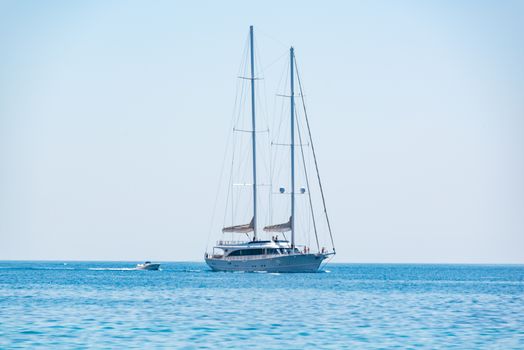
The Night I Dumped the Mega-Cruise Concept Forever
I stepped off the swaying wooden passerelle of a 52-foot Dufour monohull and felt the cool, salt-rimmed Aegean breeze smack my face. The air didn’t smell of diesel fumes or industrial kitchen exhaust—the standard perfume of the mega-cruise docks I had grown to detest. It smelled of wild thyme drifting from the volcanic cliffs of Milos, mixed with the sharp, clean tang of deep ocean water.
Behind us, the sails were neatly flaked over the boom. Our skipper, a sun-baked local named Spiros who navigated by the stars and the scent of incoming weather, was already pouring us glasses of crisp, bone-dry Assyrtiko wine.
```
[ Private Yacht ] <--- No Lines, No Crowds ---> [ Mega-Cruise Ship ]
- Anchors in tiny coves - Parks in industrial ports
- Powered by the wind - Burns heavy fuel oil
- Local, fresh-caught seafood - Mass-produced buffet food
- 8-12 guests max - 5,000+ passengers
```
Just three miles across the bay, a 15-story cruise liner sat anchored, humping its auxiliary engines to keep the air conditioning running for 5,000 passengers. From our quiet anchorage, we could see the tiny orange tender boats shuttling hundreds of tourists to a crowded dock.
Meanwhile, my crew of six sat barefoot on the teak deck, watching the sunset turn the cliffs of Kleftiko a deep, bruised purple. We had spent the afternoon swimming through sea caves that no cruise ship tender could ever hope to reach. That was the moment I realized: the era of the giant cruise ship is waning. A quiet, wind-powered revolution is taking its place.
---
1. The Death of the Mega-Ship (Why We’re Jumping Ship)
Let’s be honest. The traditional cruise industry is facing a reckoning. Cities like Venice, Amsterdam, Barcelona, and Santorini are actively banning or strictly limiting giant ships to combat overtourism and environmental degradation. Travelers are tired of feeling like cattle, shuffled through pre-packaged excursions and trapped in windowless corridors.
```
+------------------------------------------------------------------------+
| THE SHIFT IN OCEAN TRAVEL |
+------------------------------------+-----------------------------------+
| TRADITIONAL CRUISING | MODERN SAILING ADVENTURES |
+------------------------------------+-----------------------------------+
| Rigid, pre-planned itineraries | Flexible, wind-dependent routes |
| Discharges tons of greywater | Low impact, wind-driven propulsion|
| Massive crowds in tourist traps | Secluded bays and local villages |
| Standardized international food | Farm-to-table local provisioning |
+------------------------------------+-----------------------------------+
```
Sailing adventures as alternative to cruises emerging this year are not just about luxury; they are about autonomy. When you travel on a sailing yacht, the ocean is not a barrier between destinations—it is the destination. You learn to read the wind, you anchor in bays inaccessible to land travelers, and you fall asleep to the gentle, rhythmic motion of the hull rather than the vibration of massive marine engines.
---
2. Decoupling the Jargon: Catamaran vs. Monohull vs. Cabin Charter
If you’ve never booked a sailing trip, the industry terminology can feel like a foreign language. Here is a breakdown of the three primary ways to get on the water this year without owning a boat or knowing how to tie a bowline.
The Monohull: For the Purists
The classic single-hull sailboat. When the wind catches the sails, the boat heels (leans) to one side. It is an exhilarating, traditional sailing experience.
*