The Hook: A Breath of Ancient Dust and Damp Moss
I stepped off the back of a weathered Yamaha motorbike, the engine clicking as it cooled in the humid shade of the Cambodian scrub. The air didn't just smell like rain; it smelled like wet iron and crushed ferns. Before me, the forest parted to reveal Prasat Thom—a seven-tiered sandstone pyramid that looked less like a temple and more like a staircase for giants. There were no tour buses. No selfie sticks. Just the rhythmic, metallic drone of cicadas and the heavy silence of a city that had been swallowed by the jungle for a millennium.
This is Koh Ker. And as of recently, it is officially a UNESCO World Heritage site. While the masses choke the causeways of Angkor Wat, the savvy traveler—the one who listens to the advisors I interview weekly—is heading three hours north. This is the new era of heritage travel: sites that demand effort but reward you with a soul-stirring connection to the past that "accessible" tourism has long since lost.
---
1. Koh Ker: The Pyramid of the Usurper King (Cambodia)
For decades, Koh Ker was a footnote in Khmer history, a brief 20-year stint where King Jayavarman IV moved the capital away from Angkor. Travel advisors are now pivoting clients here because it offers a "Lost World" aesthetic that Angkor hasn't possessed since the 1990s.
The Insider Intel:
The centerpiece is Prang, a 36-meter-high pyramid. Unlike the ornate carvings of the Bayon, Koh Ker is defined by its sheer scale and brutalist sandstone blocks. It feels Mayan, almost alien to the region.
- Pro-Tip: Don't just climb the wooden staircase at Prang. Head to Prasat Krahom (the Red Temple) just before it. The brickwork here is crumbling in a way that allows the sunlight to bleed through at 4:00 PM, creating a strobe effect on the floor that is a photographer’s dream.
- The Authentic Detail: Look for the "lingas"—monolithic stone phalluses—that are still in situ. Most were looted, but the ones remaining are massive, carved from single blocks of stone that weigh tons.
---
2. Zagori: The Stone Kingdom of the Pindus (Greece)
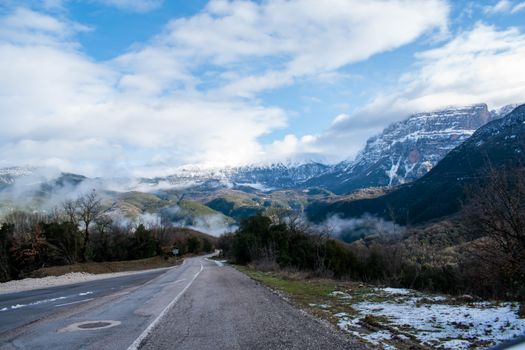
When you think of Greece, you think of white-washed walls and blue domes. Zagori, located in the Epirus region, is the antithesis of that. It is a landscape of grey limestone, deep emerald gorges, and 46 stone villages (the Zagorohoria) connected by arched bridges that look like they were spun by spiders.
Why Advisors Love It:
It represents "Slow Travel" in its purest form. The UNESCO designation protects not just the buildings, but the ancient transhumance routes—the paths shepherds used to move livestock.
- Pro-Tip: Everyone goes to the Beloi viewpoint for the Vikos Gorge. Instead, hike to the Monastery of Agia Paraskevi in Monodendri. There is a narrow, dizzying path that hugs the cliffside beyond the monastery. It’s not for the faint of heart, but it offers a vertical perspective of the world’s deepest gorge that no drone can replicate.
- The Flavor: Order Alevropita. It’s a thin, crispy flour pie with feta and butter. It’s the "peasant food" that fueled the stonemasons who built this kingdom.
---
3. The Viking-Age Ring Fortresses (Denmark)
Forget the Hollywood version of Vikings. The five ring fortresses (Aggersborg, Fyrkat, Nonnebakken, Trelleborg, and Borgring) recently added to the UNESCO list reveal a civilization of startling geometric precision.
The Structural Marvel:
These aren't just mounds of dirt. They are perfectly circular earthworks, divided into four quadrants by two roads that cross at the exact center.
- Pro-Tip: Visit Aggersborg at sunset. It is the largest of the five, and the way the low sun catches the circular ramparts highlights the mathematical perfection of the site.
- The Detail: Bring a high-quality pair of binoculars. At Fyrkat, you can see the post-holes where the great longhouses once stood. The sheer scale of the timber required for these builds tells a story of a King (Harald Bluetooth) who had absolute control over the landscape.
---
4. Gedeo Cultural Landscape: The Coffee Forest (Ethiopia)
This is where the "tapestry of culture" cliché dies and reality begins. Gedeo is a living landscape. It’s a place where the community has practiced agroforestry for millennia, growing Enset (false banana) and high-grade coffee under the canopy of indigenous trees.
The Advisor’s Edge:
This isn't a "museum" site. It’s a functioning ecosystem. The UNESCO status recognizes the Gedeo people's ability to maintain soil fertility and biodiversity on steep mountain slopes.
- Pro-Tip: The Chelba Tutiti megaliths are the hidden highlight. There are over a thousand standing stones here, some over six feet tall. Visit during the "small rains" (March-May) when the coffee trees are in bloom; the scent is an intoxicating mix of jasmine and orange blossom.
- The Logistics: You need a 4x4 and a local fixer. This is not a "book on Expedia" destination.
---
5. Eise Eisinga Planetarium: The Ceiling of the Stars (Netherlands)
In the small town of Franeker sits the world’s oldest functioning mechanical planetarium. Built between 1774 and 1781 by a wool comber in his living room, it is a masterclass in DIY genius.
The Authority Factor:
While the world looks to the James Webb telescope, Eisinga’s wooden gears and clockwork mechanisms still accurately predict the positions of the planets today.
- Pro-Tip: The "hidden entrance" is actually just the front door of a modest canal house. Look for the blue facade.
- The Insider Detail: Look at the pendulum clock in the cabinet. It has to be manually wound, and the weights disappear into the floor. The precision is such that Eisinga had to account for the thickness of the paint on the planets to ensure the gears wouldn't jam.
---
Quick Facts: Logistics & Budget
| Site | Best Time to Visit | Est. Daily Cost ($) | How to Get There |
| :--- | :--- | :--- | :--- |
| Koh Ker | Nov - Feb (Dry/Cool) | $80 - $150 | 3hr private car from Siem Reap |
| Zagori | Sept - Oct (Fall colors) | $120 - $200 | Fly to Ioannina, then rent a car |
| Viking Forts | June - August | $150 - $250 | Train from Copenhagen to Slagelse |
| Gedeo | Oct - Dec (Harvest) | $100 - $180 | Fly to Hawassa, then 4x4 hire |
| Eise Eisinga | Year-round | $130 - $210 | Train from Amsterdam to Franeker |
---
Authenticity: Beyond the Plaque
When we talk about "New UNESCO World Heritage sites worth visiting travel advisors suggest," we are talking about the vibrancy of the unpolished.
In Zagori, authenticity isn't a gift shop; it's the fact that the "roads" are still the same hand-laid cobblestones (kalderimia) that have tripped up mules for five centuries. In Ethiopia, it’s the taste of bulla (Enset porridge) served in a hut that has no electricity but holds a thousand years of agricultural wisdom.
Travel advisors are moving away from the "Greatest Hits" of Europe because those sites have become commodities. A site like Koh Ker or the Viking Fortresses offers something the Colosseum cannot: Solitude. The ability to stand in a place of global significance and hear nothing but your own breathing is the ultimate luxury in 2024.
The Final Verdict for the Modern Traveler
If you want to rank your travel experiences by depth rather than distance, these five sites are your North Star. They represent a shift in global heritage—a move toward recognizing indigenous landscapes, scientific ingenuity in private homes, and the brutal beauty of Northern European earthworks.
Pack a pair of rugged boots, a decent prime lens (35mm is best for these scales), and an open mind. The world just got a little bigger, and these sites are waiting for someone to notice them before the crowds do.
*