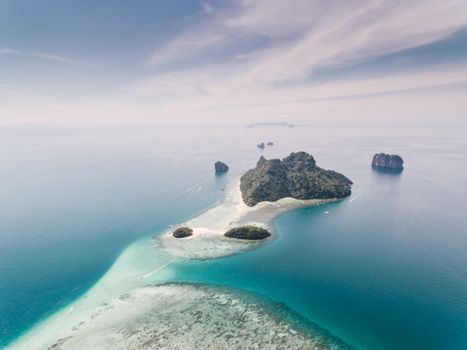
The hum of the engine was a lullaby, the vast expanse of the cerulean sea an endless canvas. Salt spray kissed my face, and the sun, a benevolent orb, warmed my skin. Ahead, a faint silhouette emerged from the haze – a jagged, emerald jewel rising from the depths. This wasn't just another island; it was a promise. A promise of solitude, discovery, and the kind of untamed beauty you only dream of.
For years, I chased the 'next big thing' in travel – the Instagrammable hotspots, the bustling cities, the well-trodden paths. But something was missing. A deep, gnawing craving for authenticity, for places untouched, for experiences that resonated beyond a perfectly posed photo. It was during a particularly uninspired period, scrolling through endless travel blogs and feeling utterly disconnected, that a whisper of an idea began to form: what if the real magic lay not where everyone else was going, but where almost no one could?
This epiphany led me down a rabbit hole, researching remote archipelagos, protected marine parks, and uncharted territories. The common thread? Most were inaccessible by commercial ferries or regular tours. They demanded a different approach: a private boat. At first, the idea felt extravagant, even daunting. But as I delved deeper, I realized it wasn't just about luxury; it was about access. Access to pristine ecosystems, to moments of profound solitude, to a version of myself I hadn't yet met. These aren't just islands; they are portals. And embarking on these private boat journeys didn't just change my travel itinerary – it changed my life forever.
Join me as I recount three such journeys, each to an island paradise that demanded effort to reach but offered rewards beyond measure. I'll share the magic, the practicalities, and why these exclusive escapes might just be the life-altering adventure you've been searching for.
The Call of the Uncharted: Why Private Boats Are Your Only Key
Imagine a world where the only footprints on the sand are yours, where the only sounds are the lapping waves and the distant cry of a seabird. This isn't a fantasy; it's the reality of these private boat-only islands. They are, by their very nature, protected – often by challenging navigation, strict environmental regulations, or simply their sheer remoteness.
This exclusivity is precisely what preserves their magic. No bustling jetties, no throngs of tourists, no hawkers. Just you, your chosen companions, and the raw, untamed wilderness. A private boat isn't just a mode of transport; it's your floating sanctuary, your basecamp for exploration, and your key to unlocking experiences that package tours can only dream of.
The freedom is unparalleled. Want to linger at a secluded cove until sunset? Done. Fancy an impromptu snorkel in a hidden lagoon? Absolutely. Wake up with the sunrise over a deserted beach, dive into crystal-clear waters before anyone else, and chart your own course through an aquatic wonderland. This isn't just travel; it's an immersion. It's about shedding the constraints of schedules and crowds and reconnecting with the rhythm of nature. My first taste of this freedom, watching an untouched island emerge on the horizon, felt like stepping into a dream I didn't know I had.
Island #1: The Whispering Sanctuary of Komodo – Where Dragons Guard Paradise (Indonesia)
My first true private boat island experience took me to the heart of Indonesia's Komodo National Park. While parts of Komodo are accessible by shared tours, to truly experience its mystical allure – to witness the dragons in quiet reverence, discover hidden pink beaches, and dive into untouched coral gardens – a private charter is essential.
Our vessel, a traditional Indonesian Phinisi named "The Serenity," was a beautifully crafted wooden sailboat that felt both ancient and luxurious. We set sail from Labuan Bajo, the gateway, leaving behind the bustling port for the emerald islands that dot the Flores Sea.
The Magic:
Waking up anchored off Padar Island, the iconic tri-colored beach (pink, white, black sands) spread out before us, bathed in the soft glow of dawn, was a moment that etched itself into my soul. We were the first to hike to the summit, watching the sun paint the landscape in hues of gold and amber, with not another soul in sight. It felt like we had stumbled upon the very first sunrise.
Then came the dragons. On Rinca Island, guided by a local ranger with a forked stick, we walked among the ancient Komodo dragons. It wasn't a zoo experience; it was a primal encounter. These magnificent, prehistoric creatures, descendants of dinosaurs, moved with a slow, powerful grace. Seeing them in their natural habitat, unperturbed by crowds, was a humbling reminder of nature's raw power and indifference. It stripped away all pretense, leaving me with a profound respect for the wild.
Beyond the dragons, the underwater world was equally transformative. Snorkeling in secluded bays, vibrant coral reefs teemed with kaleidoscopic fish, majestic manta rays glided effortlessly, and sea turtles munched on seagrass. It was an aquarium without glass, a symphony of marine life.
Personal Anecdote:
One afternoon, after a particularly exhilarating dive, our captain steered us to a tiny, unnamed cove. The water was so clear it was invisible, revealing a pristine white sand bottom. We spent hours there, swimming, reading, and simply existing in perfect silence. It was in that moment, completely disconnected from the world, that I felt an overwhelming sense of peace and clarity. The constant chatter of my mind quieted, replaced by the gentle rhythm of the ocean. It was an awakening.
Practical Tips for Komodo:
* Best Time to Visit: April to December (dry season) for optimal visibility and fewer storms.
* Boat Options: Phinisi boats are iconic. They range from rustic budget options to luxurious crewed charters. Expect to pay anywhere from $1,500 - $5,000+ per day for a good quality private charter, depending on size, amenities, and crew. This usually includes meals, activities, and sometimes park fees.
* Permits: You'll need to pay Komodo National Park fees (around IDR 150,000-250,000 per person per day, plus a trekking fee for dragons). Your charter company usually handles this.
* What to Pack: Reef-safe sunscreen, hat, sunglasses, swimwear, light clothing, sturdy hiking sandals/shoes, motion sickness medication, underwater camera, and a good book.
* Sustainability: Choose operators committed to responsible tourism. Avoid touching coral or marine life.
Island #2: The Sapphire Labyrinth of the Exumas – Where Freedom Finds Its Form (Bahamas)
From the ancient allure of Indonesia, my next private boat adventure took me to the Caribbean's jewel: the Exuma Cays in the Bahamas. This chain of 365 islands, stretching over 100 miles, is a boater's paradise. While day trips exist, to truly explore its hidden wonders – the swimming pigs, the iguanas, the epic sandbars, and the countless deserted beaches – a private yacht charter is non-negotiable.
We chartered a 45-foot catamaran from Nassau, a vessel perfectly suited for navigating the shallow, vibrant turquoise waters of the Exumas. The catamaran offered stability, spaciousness, and the ultimate vantage point for soaking in the breathtaking scenery.
The Magic:
The Exumas are a kaleidoscope of blues. The water shifts from impossibly clear aquamarine to deep sapphire, often within meters. Each day was a new discovery. One morning, we found ourselves surrounded by the famous swimming pigs of Big Major Cay, their snorts and playful nudges bringing pure joy. Another afternoon, we fed grapes to the endangered Bahamian rock iguanas on Allen Cay, feeling like intrepid explorers.
But the true magic for me lay in the spontaneous discoveries. Our captain, a seasoned local, would often point to a patch of impossibly clear water and say, "Let's check this out." These detours led us to secret grottoes, vibrant coral reefs teeming with nurse sharks, and sandbars that materialized out of the ocean at low tide, pristine and utterly deserted. Walking on a sandbar miles from land, surrounded by nothing but the vast ocean, felt like walking on water itself. It was a moment of profound spiritual connection to the elements.
Personal Anecdote:
We spent one unforgettable evening anchored in a quiet cove near Staniel Cay. After a fresh seafood dinner prepared by our onboard chef, we lay on the catamaran's trampolines, gazing at a sky ablaze with stars. With no light pollution for miles, the Milky Way stretched across the heavens like a diamond dust path. It was a humbling experience, realizing the vastness of the universe and how small, yet significant, our place in it was. That night, I truly understood what it meant to feel free.
Practical Tips for the Exumas:
* Best Time to Visit: December to May for cooler, drier weather and calmer seas. Avoid hurricane season (June-November).
* Boat Options: Catamarans are popular for their stability and shallow draft. Motor yachts offer speed and luxury. Bareboat charters (you sail yourself) are an option if you're qualified, but a crewed charter (captain, chef) is highly recommended for first-timers.
* Cost: Private catamaran charters can range from $8,000 - $25,000+ per week, depending on size, age, and crew. This typically includes the boat, crew, and basic provisions, but fuel and premium drinks are often extra.
* Must-Sees: Swimming Pigs, Thunderball Grotto, Compass Cay (nurse sharks), Exuma Cays Land and Sea Park.
* Logistics: Fly into Nassau (NAS), then take a small plane to Staniel Cay (TYM) or a water taxi to your charter pick-up point.
* Provisions: Your charter company can help provision the boat. Consider local fresh fish from fishermen you might encounter!
Island #3: The Ancient Echoes of Raja Ampat – At the Edge of the World (Indonesia – West Papua)
My most recent and arguably most transformative private boat journey took me to Raja Ampat, Indonesia. Often called the "Last Paradise," this archipelago in West Papua boasts the most biodiverse marine ecosystem on Earth. Reaching it is an expedition in itself, and exploring it without a private liveaboard boat is virtually impossible.
From Sorong, we boarded another magnificent Phinisi, specifically designed for diving and exploration. This journey felt different from the start; it was less about luxury and more about pure, unadulterated adventure into a truly remote frontier.
The Magic:
Raja Ampat is a place where every dive or snorkel reveals something new. Giant manta rays performing balletic dances, schools of barracuda swirling in synchronized patterns, pygmy seahorses clinging to gorgonian fans, and an explosion of coral colors that defy description. It's not just the quantity of marine life, but the sheer health and vibrancy of the ecosystem. It's a living, breathing testament to what our oceans once were and what they desperately need to remain.
Above water, the karst islands rise dramatically from the turquoise sea, cloaked in dense jungle. Kayaking through mangrove forests, discovering hidden lagoons, and hiking to viewpoints that offer panoramic vistas of a thousand islands felt like stepping into a National Geographic documentary. We even had the privilege of visiting a remote village, where we were greeted with warmth and curiosity by the local Papuan community, a humbling reminder of different ways of life.
Personal Anecdote:
There was a moment, after a particularly challenging hike to the viewpoint on Pianemo, looking out over the iconic mushroom-shaped islands, where I felt an overwhelming sense of insignificance and profound connection all at once. The world felt ancient, vast, and utterly perfect. It was a realization that true wealth isn't measured in possessions, but in experiences like these – moments of pure wonder that recalibrate your soul. Raja Ampat didn't just change my life; it fundamentally shifted my understanding of the planet and my place within it. It taught me humility and inspired a deeper commitment to conservation.
Practical Tips for Raja Ampat:
* Best Time to Visit: October to April offers calmer seas and better visibility for diving, though Raja Ampat is generally good year-round.
* Boat Options: Liveaboard Phinisi boats are the primary way to explore. They cater to divers and snorkelers. Prices vary wildly based on luxury, duration, and itinerary.
* Cost: Expect to pay $3,000 - $10,000+ per person for a 7-10 day liveaboard trip, often including all meals, diving/snorkeling, and park fees. Private charters for smaller groups can be even more.
* Permits: A Raja Ampat Marine Park Fee (PIN) is mandatory, around IDR 1,000,000 (approx. $70 USD) for foreigners, valid for one year.
* Getting There: Fly to Sorong (SOQ) via Jakarta or Makassar. Your liveaboard will typically pick you up from the airport.
* Connectivity: Expect very limited to no cell service or Wi-Fi. Embrace the digital detox!
* Conservation: Choose eco-certified operators. Support local communities directly if possible.
Planning Your Own Uncharted Journey: Practicalities & Preparations
Inspired to set sail on your own life-changing adventure? Here's what you need to know to turn that dream into a reality.
- Choosing Your Vessel:
- Catamaran: Stable, spacious, shallow draft (great for accessing coves), popular for families and groups.
- Monohull (Sailboat): Classic sailing experience, more heel, but often more intimate.
- Motor Yacht: Speed, luxury, more space, but higher fuel costs.
- Phinisi (Indonesia): Traditional, charming, often designed for diving/liveaboard experiences.
- Crewed vs. Bareboat Charter:
- Crewed: Highly recommended for remote destinations. Includes captain, chef, and often a host/deckhand. They handle navigation, cooking, and local logistics, allowing you to relax and explore.
- Bareboat: You are the captain and crew. Requires sailing experience and certifications. Generally cheaper but demands more responsibility.
- Budgeting for Your Escape:
- Charter Cost: This is the biggest variable. It depends on boat size, age, luxury level, destination, and season. Expect anywhere from $1,000/day for a modest bareboat catamaran to $10,000+/day for a luxury crewed yacht.
- APA (Advance Provisioning Allowance): For crewed charters, this is typically 20-30% of the charter fee, covering fuel, food, drinks, port fees, and other expenses. Unused APA is refunded.
- Flights & Transfers: Don't forget the cost of getting to your departure port.
- Permits & Fees: National park fees, diving permits, local taxes.
- Tips for Crew: Customary and appreciated (10-20% of the charter fee, split among the crew).
- Insurance: Travel and medical insurance are crucial. Consider charter cancellation insurance.
- Route Planning & Flexibility:
- Work with your charter company or captain to design an itinerary. Be clear about your interests (diving, snorkeling, hiking, relaxation).
- Embrace flexibility! The beauty of a private boat is adapting to weather, unexpected discoveries, or simply a desire to linger longer in a magical spot.
- Safety & Logistics:
- Communication: In remote areas, satellite phones or Starlink internet might be available on larger charters. Inform loved ones of your itinerary.
- Medical: Ensure your boat has a well-stocked first-aid kit. Know where the nearest medical facilities are (they might be far!).
- Local Knowledge: A good captain and crew are invaluable. They know the safe anchorages, the best snorkeling spots, and how to navigate local customs.
- Embrace Sustainability:
- Leave No Trace: Pack out everything you pack in. Do not litter.
- Reef-Safe Products: Use reef-safe sunscreen and avoid harsh chemicals.
- Respect Wildlife: Maintain distance, do not touch or feed animals.
- Support Locals: Buy from local communities where possible, choose eco-conscious operators.
- Mental Preparation:
- Digital Detox: Prepare for limited connectivity. Use it as an opportunity to truly unplug.
- Embrace the Unknown: Things might not always go perfectly. A flexible mindset is key to enjoying the adventure.
- Pack Light: You'll be living in swimwear and light clothing. Soft-sided luggage is best.
The Transformation Awaits: Your Own Horizon
These aren't just trips; they are pilgrimages to the wild, untamed corners of our world. They demand a certain level of commitment and investment, but the return is immeasurable. The mysterious islands reachable only by private boat have a way of stripping away the superficial, connecting you to something primal and profound. They taught me patience, resilience, and the sheer, unadulterated joy of discovery. They reminded me that true beauty often lies beyond the easy reach, waiting for those brave enough to seek it out.
If you've felt that same yearning for something more, that whisper of the uncharted, then consider this your call to adventure. The world is vast, and its most precious secrets are often guarded by the ocean. What's stopping you from charting your own course? From finding your own life-changing island?
Have you dreamt of an exclusive island escape? Share your dream destination or tips for private boat travel in the comments below! And don't forget to share this post with your fellow wanderlusters – let's inspire more unforgettable journeys!
---