The Prague Fatigue is Real (And There’s a Cure)
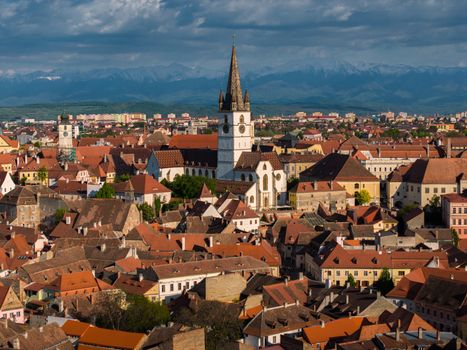
I stepped off the night train in Sibiu, and for a moment, I thought I was being watched. Not by the locals—who were busy nursing strong coffees in the morning mist—but by the houses themselves. High up on the heavy, tile-shingled roofs, almond-shaped attic windows squinted down at me like heavy-lidded eyes.
The air didn't smell like the exhaust fumes and overpriced cinnamon dough of Prague’s Old Town Square. It smelled of burning beechwood, damp limestone, and the sharp, fermented tang of local telemea cheese. There were no "Free Walking Tour" umbrellas, no Segway tours, and no $12 beers. It was 6:00 AM, and I had a 12th-century citadel all to myself.
Prague is magnificent, don't get me wrong. But let’s be honest: the "City of a Hundred Spires" has become a victim of its own beauty. It’s a museum where the locals can no longer afford to live. If you’re craving the feeling of stepping through a temporal rift into the Middle Ages—without the Disney-fied gloss—you need to look where the travel advisors aren't pointing.
Here are the seven medieval towns that are objectively more charming, more authentic, and more rewarding than Prague.
---
1. Sibiu, Romania: The City with Eyes
While everyone else is flocking to Bran Castle for a fake Dracula experience, the real soul of Transylvania lives in Sibiu. Founded by Saxon settlers in the 12th century, this town is split into the "Upper Town" (wealthy and fortified) and the "Lower Town" (industrial and atmospheric).
The charm here is subtle but piercing. The "Eyes of Sibiu"—those iconic ventilation slats in the roofs—give the city a sentient quality. Walking through the Huet Square feels like navigating a living oil painting.
- The Insider Detail: The Bridge of Lies is the town’s centerpiece. Legend says if you tell a lie while standing on it, the bridge will collapse. I saw a teenager try to break up with his girlfriend there; he moved to the cobblestones first. Smart kid.
- Pro-Tip: Skip the main square restaurants. Head to Pasajul Scărilor (The Stairs Passage) at sunset. There’s a tiny wine cellar there where the owner serves Fetească Neagră that tastes like liquid velvet.
2. Quedlinburg, Germany: 1,300 Years of Half-Timbered Perfection
If you think Rothenburg ob der Tauber is the pinnacle of German medievalism, Quedlinburg is here to hold your beer. Located in the Harz Mountains, this UNESCO site boasts over 1,300 half-timbered houses spanning five centuries.
Unlike Prague, which feels monumental and grand, Quedlinburg feels intimate. The streets are so narrow in the Schloßberg district that you can practically touch the history on both sides of the road.
- The Insider Detail: Look for the Ständerbau, built in 1310. It’s one of the oldest half-timbered houses in Germany. The walls lean at angles that defy modern physics.
- Pro-Tip: The "hidden entrance" to the best view of the town is a small, unmarked gate behind the St. Servatius Church. It leads to a terrace that overlooks the red-tiled roofs of the entire valley. Visit at 8:00 AM when the mountain mist is still clinging to the spires.
3. Monsanto, Portugal: The Village Under the Rocks
In 1938, Monsanto was voted "the most Portuguese village in Portugal," and it has remained frozen in time ever since. This isn't your typical medieval town with soaring cathedrals. This is a village built into the granite.
Giant boulders weighing hundreds of tons serve as roofs, walls, and floors for the tiny cottages. It’s a brutalist, prehistoric version of medieval charm that makes Prague’s Baroque architecture look like a dollhouse.
- The Insider Detail: The climb to the Castelo de Monsanto is steep, but halfway up, you’ll find a cave that was used as a shelter during the Reconquista.
- Pro-Tip: Stay at a local casa rather than a hotel. Ask the host for pão de forno (oven bread) and local honey. The "supermarket" is often just a van that honks its horn in the square at 9:00 AM.
4. Tallinn, Estonia: Where Hanseatic Meets High-Tech
Tallinn’s Old Town (Vanatallinn) is perhaps the best-preserved Hanseatic town center in the world. While Prague is crowded with tourists, Tallinn manages a strange, beautiful balance: it is a medieval fortress that runs on 5G.
The lower town is a labyrinth of merchant houses, while Toompea Hill offers the kind of panoramic views that make photographers weep. The limestone walls are thick, the gates are imposing, and the vibe is distinctly Nordic-Gothic.
- The Insider Detail: Most tourists hit the Town Hall Square. You should head to St. Catherine’s Passage. It’s a hidden alleyway where guilds of artists still practice glass-blowing and weaving using traditional methods.
- Pro-Tip: For a truly medieval meal that isn't a gimmick, go to III Draakon in the Town Hall basement. There are no lights (only candles), you have to fish your own pickles out of a barrel, and the elk soup costs about 3 Euros.
5. Sighisoara, Romania: The Inhabited Citadel
Back to Transylvania, because one town isn't enough. Sighisoara is one of the few medieval citadels in Europe that is still fully inhabited. People don't just visit here; they live, grocery shop, and walk their dogs within the 14th-century walls.
The color palette here is what Prague wishes it had: dusty pinks, ochres, and sage greens. The Clock Tower dominates the skyline, and the covered Scholars' Stairs (176 steps) lead up to a church that feels like it’s at the edge of the world.
- The Insider Detail: Everyone talks about Vlad the Impaler being born here (you can visit his house, it’s now a mediocre restaurant). Instead, look for the Tinsmiths' Tower. You can still see the bullet holes from the Ottoman sieges.
- Pro-Tip: Visit in late October. The mist in the cemetery at the top of the hill is peak Gothic atmosphere, and the crowds are non-existent.
6. Ghent, Belgium: The Gritty, Cooler Older Sister
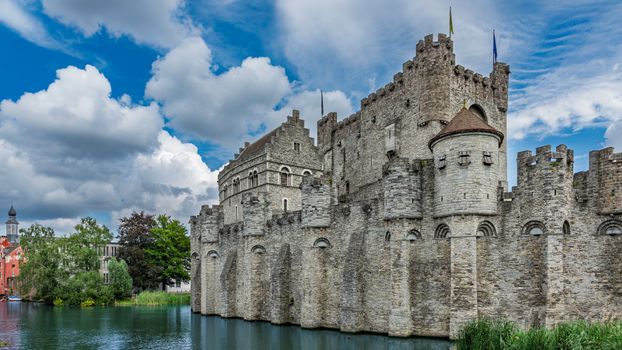
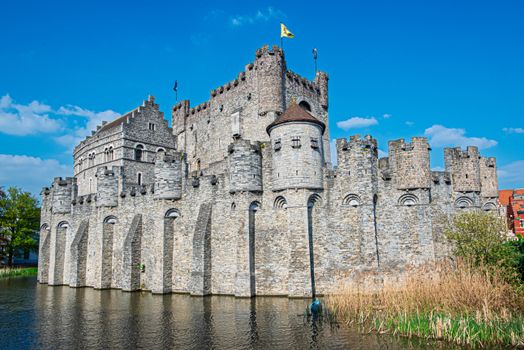
Bruges gets all the credit for being the "Venice of the North," but Ghent is where the actual magic happens. Ghent was once the second-largest city in Europe (after Paris), and its wealth is reflected in the Graslei and Korenlei quays.
Ghent feels "lived in." It has a massive student population, which means the medieval backdrop is contrasted with vibrant street art and a world-class craft beer scene. It’s less "fairytale" and more "epic historical drama."
- The Insider Detail: The Adoration of the Mystic Lamb (the Ghent Altarpiece) is the most stolen artwork in history. Seeing it in St. Bavo’s Cathedral is a religious experience even for atheists.
- Pro-Tip: Rent a kayak. Seeing the Gravensteen Castle from the water level at night, when it’s illuminated by floodlights, is infinitely better than the standard walking tour.
7. Kotor, Montenegro: The Fjord-Side Fortress
Imagine a medieval town that looks like it was dropped into a Norwegian fjord, but with Italian weather. Kotor is a limestone labyrinth tucked into the corner of Boka Bay.
The town is a maze designed to confuse invaders. Even with a map, you will get lost—and that’s the point. The walls don't just surround the town; they climb vertically up the mountain to the Fortress of San Giovanni.
- The Insider Detail: Kotor is the city of cats. There is even a museum dedicated to them. The locals treat them like royalty, and they add a layer of surreal charm to every cobblestone alley.
- Pro-Tip: Start the climb to the fortress at 6:30 AM. You’ll beat the heat and the cruise ship crowds. Look for the "cheese man" halfway up—a local who sells homemade pomegranate juice and goat cheese from a window in the mountain wall.
---
Quick Facts & Logistics
| Town | Best Time to Visit | Est. Daily Budget ($) | How to Get There |
| :--- | :--- | :--- | :--- |
| Sibiu | May - Sept | $45 - $60 | Fly to SBZ or train from Bucharest |
| Quedlinburg | Dec (Christmas Markets) | $80 - $110 | Train from Berlin (3 hrs) |
| Monsanto | April - June | $70 - $90 | Car rental from Lisbon (3 hrs) |
| Tallinn | June (White Nights) | $90 - $130 | Fly to TLL or Ferry from Helsinki |
| Sighisoara | Sept - Oct | $40 - $55 | Train from Brasov (2.5 hrs) |
| Ghent | Year-round | $100 - $150 | Train from Brussels (30 mins) |
| Kotor | May or September | $70 - $100 | Fly to TIV or bus from Dubrovnik |
---
The Verdict: Why Settle for the Tourist Path?
Prague will always be there, but these towns offer something the Czech capital is slowly losing: a sense of discovery. When you walk through the gates of Sighisoara or look into the "eyes" of a house in Sibiu, you aren't just a consumer of a travel product. You’re a witness to history that hasn't been polished for a gift shop.
Pack your bags, leave the "Top 10" lists behind, and go find the medieval Europe that still breathes.
*