The Call of the Blue: Why Citizen Science is Redefining Ocean Travel
I stepped off the wooden panga into knee-deep, crystal-clear Baja brine, the sharp metallic sting of salt air catching in my throat while the scent of warm outboard motor oil drifted away on the dawn breeze. Pulling my neoprene mask over my face, my fingers were sticky with zinc sunscreen and sea foam. In my right hand, I didn’t just hold a pair of fins—I held a weighted waterproof survey slate, a pencil attached by a coiled lanyard, and a precise assignment: count, log, and record every juvenile yellowtail snapper within a five-meter transect tape laid across the reef floor.
For decades, Marine Protected Areas (MPAs) operated behind administrative curtains. Travelers paid their park entrance fee, snapped photos of megafauna, and returned to their resorts. But a quiet revolution has taken root across the globe's oceans this year. Park authorities, constrained by limited monitoring budgets and vast maritime territories, are turning to trained traveler-volunteers to gather essential data.
By joining these emerging programs, you aren't just observing nature; you are actively feeding open-source databases that inform global conservation policy, fisheries management, and climate resilience research. Here are the top emerging marine protected areas where you can dive in and contribute to frontline science right now.
---
1. Cabo Pulmo National Park, Mexico: Apex Predator & eDNA Mapping
Located off the eastern coast of Mexico's Baja California Peninsula, Cabo Pulmo is famous in conservation circles as one of the most successful marine recoveries on Earth—boasting a 463% increase in total fish biomass since its establishment. But as sea surface temperatures fluctuate, researchers need real-time monitoring to track apex predator movements and reef health.
```
+-----------------------------------------------------------------------+
| FIELD LOG: CABO PULMO |
| Focus: Apex predator bio-ID & Environmental DNA (eDNA) collection |
| Water Temp: 22°C - 28°C | Visibility: 15 - 30 meters |
+-----------------------------------------------------------------------+
```
What You'll Do as a Citizen Scientist
Travelers work alongside local marine biologists from community-led scientific initiatives. Your primary task involves underwater photo-identification of bull sharks (Carcharhinus leucas) and mobula rays. Using specialized software platforms like Sharkbook, you'll crop and upload distinct dorsal fin notch patterns and spot patterns on shark abdomens. Advanced divers also assist with collecting 1-liter water samples at depth for environmental DNA (eDNA) filtering—a non-invasive method used to detect hidden species passing through the park without ever seeing them.
Insider Pro-Tip
Visit the reef edge at precisely 7:30 AM during the early morning boat departure slot out of Cabo Pulmo village. The light angle at this hour hits the shallow granite reefs at a 45-degree angle, rendering abdominal spots on bull sharks significantly clearer for algorithmic photo-ID processing.
---
2. Dampier Strait & Misool, Raja Ampat, Indonesia: Coral Heat-Resilience & Manta ID
Raja Ampat sits at the heart of the Coral Triangle, harboring over 75% of all known coral species. With global ocean warming, marine scientists are scrambling to identify "super corals"—individual colonies displaying genetic resilience to thermal stress.
```
+-----------------------------------------------------------------------+
| FIELD LOG: RAJA AMPAT |
| Focus: Photogrammetry of heat-resilient corals & MantaMatcher uploads |
| Water Temp: 28°C - 30°C | Visibility: 12 - 25 meters |
+-----------------------------------------------------------------------+
```
What You'll Do as a Citizen Scientist
Operating from local eco-resorts and liveaboard research vessels operating across the Dampier Strait, citizen scientists use standardized underwater cameras attached to scaling frames to take overlapping photos of specific coral heads. These photos are processed through 3D photogrammetry software to track growth rates year-over-year.
Additionally, every time you dive famous cleaning stations like Manta Ridge or Blue Magic, you'll capture belly shots of Oceanic and Reef Manta Rays (Mobula birostris and Mobula alfredi). You will upload these to MantaMatcher.org, the global database that tracks migration corridors and tail scars caused by illegal fishing gear.
Insider Pro-Tip
Download the MantaMatcher offline submission kit onto your laptop or tablet before leaving Sorong. Wi-Fi in the Dampier Strait is non-existent, but pre-sorting your photos by spot patterns on boat transit days allows fast batch uploading as soon as you reconnect to mainland signals.
---
3. Azores Marine Park, Portugal: Ocean Acoustics & Microplastic Trawling
Rising from the Mid-Atlantic Ridge, the Azores archipelago is a critical sanctuary for migratory cetaceans. The regional government recently expanded the Azores Marine Park, creating the largest marine protected area network in the North Atlantic.
```
+-----------------------------------------------------------------------+
| FIELD LOG: THE AZORES |
| Focus: Sperm whale acoustic hydrophone monitoring & surface trawling |
| Water Temp: 17°C - 22°C | Visibility: 20 - 40 meters |
+-----------------------------------------------------------------------+
```
What You'll Do as a Citizen Scientist
Aboard research sailing yachts operating out of Horta harbor on Faial Island, citizen scientists step into the role of marine acoustic technicians. You will lower directional hydrophones into the water column every two nautical miles to record and analyze the distinctive click trains (codas) of sperm whales (Physeter macrocephalus).
Between cetacean sightings, you'll deploy specialized manta trawls—fine-mesh nets towed behind the vessel—to collect microplastic samples from the sea surface. You'll isolate, classify, and log synthetic polymer filaments using portable field microscopes directly in the ship's galley laboratory.
Insider Pro-Tip
When conducting acoustic monitoring, always mute the vessel’s depth sounder and auxiliary generator 60 seconds before dropping the hydrophone. The high-frequency ping of boat electronics creates acoustic interference that masks the 12-kHz vocalizations of diving sperm whales.
---
4. Ningaloo Coast Marine Park, Australia: Megafauna Telemetry & Turtle Nesting
Stretching 300 kilometers along Western Australia’s remote coast, Ningaloo Reef is one of the world's largest fringing reefs. While famous for whale shark swims, emerging programs this year focus heavily on green and loggerhead turtle telemetry along the coastal fringe of Exmouth Gulf.
```
+-----------------------------------------------------------------------+
| FIELD LOG: NINGALOO REEF |
| Focus: Whale shark spot pattern mapping & turtle nest temperature logging|
| Water Temp: 22°C - 26°C | Visibility: 10 - 20 meters |
+-----------------------------------------------------------------------+
```
What You'll Do as a Citizen Scientist
By day, participants join snorkel patrols to photograph the spot patterns behind the gills of whale sharks (Rhincodon typus), feeding photos into the Wildbook for Whale Sharks machine-learning algorithm.
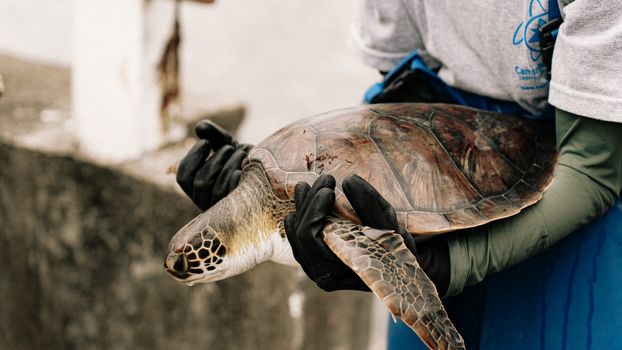
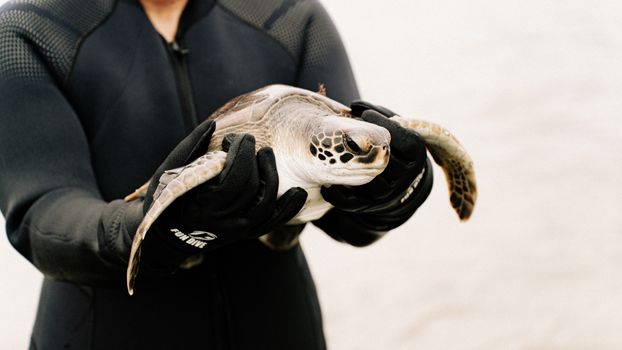
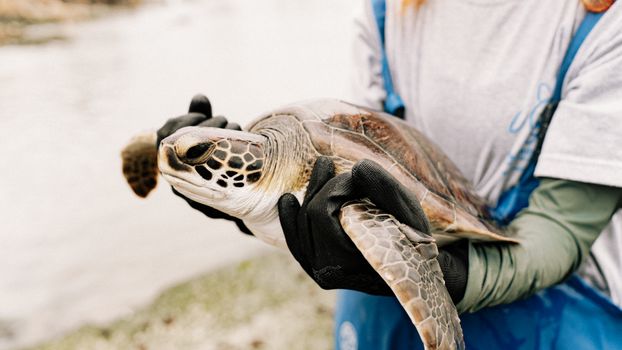
By night, during the nesting season, volunteers walk designated sectors of Jurabi Coastal Park under red-light torches. You will record nesting female activity, measure carapace lengths, and plant tiny digital temperature loggers inside turtle nests to monitor how warming sand impacts sex ratios in hatchlings.
Insider Pro-Tip
Skip the overcrowded commercial whale shark tours leaving from Exmouth Marina. Book a dedicated scientific spotter berth with researchers operating out of Tantabiddi Depot. These research vessels stay out past 2:00 PM when commercial boats return to shore, offering undisturbed wildlife interactions and high-quality data logging conditions.
---
5. Turneffe Atoll Marine Reserve, Belize: Seagrass Carbon Sinks & Manatee Tracking
Located 30 miles off the coast of Belize City, Turneffe Atoll is the largest and most biologically diverse coral atoll in the Mesoamerican Reef system. While tourists flock to the nearby Great Blue Hole, Turneffe's sprawling mangroves and seagrass beds are quietly becoming a battleground for blue carbon research.
```
+-----------------------------------------------------------------------+
| FIELD LOG: TURNEFFE ATOLL |
| Focus: Seagrass biomass core sampling & West Indian Manatee mapping |
| Water Temp: 26°C - 29°C | Visibility: 10 - 30 meters |
+-----------------------------------------------------------------------+
```
What You'll Do as a Citizen Scientist
Working out of island research stations, citizen scientists assist marine ecologists in assessing seagrass health (Thalassia testudinum). Armed with PVC core samplers and quadrats, you’ll dive into shallow lagoons to measure canopy height, epiphytic algae growth, and sediment organic carbon content.
You will also participate in drone-assisted aerial surveys over northern lagoons to log sightings of the vulnerable West Indian Manatee (Trichechus manatus), recording feeding trail patterns through the seagrass beds.
Insider Pro-Tip
Pack a double-layer high-UPF sun-shirt and heavy-duty botanical bug spray. The northern mangrove channels of Turneffe are teeming with sandflies (no-see-ums) during the low-tide glassouts. Plan your core sampling precisely two hours before high tide to maximize water visibility and keep sandflies at bay with sea breezes.
---
Comparative Quick-Facts Guide
| Marine Protected Area | Core Citizen Science Task | Target Species | Best Months to Visit | Est. Daily Cost ($ USD) | How to Get There |
| :--- | :--- | :--- | :--- | :--- | :--- |
| Cabo Pulmo (Mexico) | Bull Shark Photo-ID & eDNA | C. leucas, Mobula rays | Oct – Dec | $180 – $320 | Fly to SJD; 2-hour 4x4 drive north via East Cape road. |
| Raja Ampat (Indonesia) | Photogrammetry & Manta ID | M. alfredi, Hard corals | Oct – Apr | $250 – $550 | Fly to Sorong (SOQ); ferry to Waisai; private boat transfer. |
| The Azores (Portugal) | Hydrophone Acoustics & Microplastics | P. macrocephalus, Dolphins | May – Sep | $200 – $400 | Fly to Horta (HOR) on Faial Island via Lisbon (LIS). |
| Ningaloo Reef (Australia)| Whale Shark spot-ID & Nest Loggers | R. typus, Green Turtles | Mar – Jul (Sharks) / Nov – Feb (Turtles) | $220 – $450 | Fly to Learmonth (LEA); 35-minute shuttle to Exmouth. |
| Turneffe Atoll (Belize) | Seagrass Core Sampling & Drone Surveys| T. manatus, Nassau Grouper | Feb – May | $210 – $380 | Fly to Belize City (BZE); 90-minute boat transfer from marina. |
---
How to Prepare Your Tech & Mindset for Field Science
Stepping into field science requires a shift in mindset from a traditional vacationer to a working expedition crew member. To ensure your data is scientific-grade, come prepared with the right toolkit and mental approach:
1. Master Your Buoyancy Control
If you are participating in scuba-based research like transects or photogrammetry, flawless buoyancy is mandatory. Dangling gauge consoles or uncontrolled fin kicks can destroy decades of coral growth in seconds. Practice hovering horizontally without sculling your hands before arriving at the research site.
2. Standardize Your Gear
* Waterproof Field Slate: Heavy-duty plastic slate with attached graphite pencil and metric scale markings along the edges.
* Offline Bio-Apps: Pre-download iNaturalist, eReefs, MantaMatcher, and Sharkbook. Ensure you know how to tag GPS coordinates manually when operating outside cellular coverage.
* Compact Red-Light Flashlight: Crucial for night-time turtle nesting monitoring to avoid disorienting wildlife.
* Rigid Calipers & Transect Tape: Many programs supply these, but bringing your own 30-meter fiberglass underwater measuring tape ensures you are field-ready on day one.
3. Embrace Data Precision Over Coverage
In citizen science, bad data is worse than no data. If you are unsure whether a coral species in your quadrat was Acropora palmata or Acropora cervicornis, note it down as an unverified observation rather than guessing. Marine scientists rely on absolute accuracy to publish peer-reviewed papers that ultimately dictate legal protections for these sanctuaries.
---
The Lasting Impact
When you participate in citizen science within emerging Marine Protected Areas, your trip doesn't end when you wash the salt out of your dive gear. Long after you return home, your uploaded photos continue running through neural networks, your water samples yield genetic sequences, and your spatial mapping helps scientists defend fragile underwater ecosystems from industrial exploitation.
The ocean's most vulnerable sanctuaries no longer need passive tourists—they need active guardians. Grab your slate, strap on your fins, and leave a legacy beneath the surface.
---