The Morning My Dive Gear Smelled Like Epoxy and Salt Brine
I stepped off the sun-baked wooden dock in Key Largo at 6:15 AM, the humid Atlantic air instantly coating my skin in a fine layer of sweat and sea spray. The harbor was dead quiet except for the low rumble of twin Yamaha 250s idling on a 36-foot Newton dive boat. I lugged a 15-liter dry bag packed with a damp 3mm neoprene suit, my trusty Scubapro regulators, and a pair of wire cutters that had seen better days.
"First time scraping nursery trees?" asked Captain Dave, handing me a metal putty knife and a mug of lukewarm gas-station coffee.
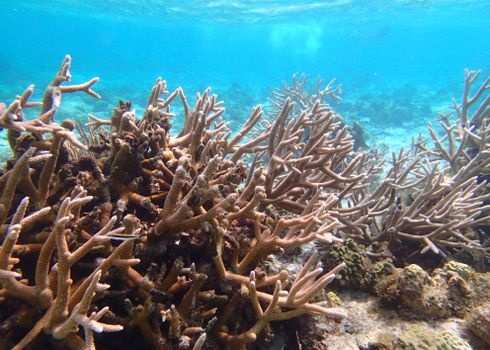
An hour later, I was hovering 30 feet below the turquoise surface at the Coral Restoration Foundation’s offshore nursery. Around me, dozens of fiberglass PVC "trees" swayed in the surge, each hung with dangling fragments of Acropora cervicornis (staghorn coral) suspended by monofilament line. My job wasn't just to look; it was to scrape algae off the PVC branches with my putty knife so macroalgae wouldn't smother the growing coral recruits. Later that afternoon, we were taking those harvested colonies to Pickles Reef, using two-part underwater epoxy to weld them directly onto the dead limestone substrate.
When my pressure gauge hit 700 PSI and I surfaced, my fingertips were raw, my shoulders ached, and I was utterly hooked. I wasn't an eco-tourist paying to watch marine life from a distance; I was a active participant in reef engineering.
If you are a diver or snorkeler tired of watching global bleaching events unfold on your social media feeds, here is the good news: according to recent marine restoration data, public participation is no longer a gimmick. It is a vital, scientifically verified engine driving large-scale ocean recovery.
---
1. The Hard Data: Why Citizen Divers Are Moving the Needle
For years, skeptics labeled volunteer coral planting as "eco-tourism greenwashing." But recent peer-reviewed data has flipped that narrative on its head.
Following the severe global bleaching events recorded by NOAA between 2023 and 2024, marine scientists faced an unprecedented labor bottleneck. Laboratory facilities can mass-produce resilient coral genotypes through micro-fragmentation—a process where corals are cut into tiny 1-cm pieces to stimulate rapid growth—but marine biologists simply do not have the manual hours required to outplant millions of fragments across thousands of hectares.
```
+-------------------------------------------------------------------------------+
| CITIZEN SCIENCE REEF RESTORATION DATA |
+------------------------------------+------------------------------------------+
| Metric | Impact / Statistic |
+------------------------------------+------------------------------------------+
| Average 1-Year Outplant Survival | 68% - 82% (In protected restoration zones)|
| Outplant Efficiency (Coralclip®) | 4x faster than traditional epoxy methods |
| Volunteer Hours Contributed (2024) | > 180,000 hours across global hubs |
| Cost Reduction for Marine NGOs | 45% lower labor overhead per reef acre |
+------------------------------------+------------------------------------------+
```
Data published in journals like Frontiers in Marine Science highlights that managed restoration plots utilizing volunteer divers maintain up to an 80% higher coral cover after two years compared to unmanaged control sites. By donating your dive skills, underwater labor, and program fees, you directly lower the cost per outplanted coral fragment while enabling labs to scale up outplanting campaigns.
---
2. Key Largo, Florida: Coral Restoration Foundation (CRF)
If you want to experience the largest open-ocean coral nursery system on Earth, start in the Florida Keys. The Coral Restoration Foundation (CRF) has perfected the volunteer-to-restoration pipeline.
What You Do
CRF runs dedicated "Dive Programs" open to certified Open Water divers. You spend the morning in an interactive classroom learning about the history of the Florida Reef Tract, coral anatomy, and outplanting methodology. In the afternoon, you head out for a two-tank dive:
* Dive 1: Nursery maintenance. You dive into CRF’s massive offshore tree nurseries, using brushes and scrapers to remove hydroids and algae from suspended coral fragments.
* Dive 2: Outplanting. You take mature fragments to an active reef restoration site (such as Carysfort Reef or Pickles Reef). You clean a patch of bare limestone, mix a golf-ball-sized dollop of two-part epoxy underwater, and firmly press three staghorn fragments into place to form a self-fusing "thicket."
> Pro-Tip: Book your program at least two months in advance for the May–September season. Water temperatures are warm (around 82°F/28°C), meaning you only need a 3mm shorty suit, but bring a pair of durable dive gloves—handling epoxy and algae scrapers without them will tear up your cuticles.
Local Insider Knowledge
After a hard day of outplanting, skip the tourist-trap seafood spots on Highway 1. Head straight to Mrs. Mac's Kitchen (the original location at MM 99.4). Order the blackened mahi-mahi tacos and a slice of key lime pie with a three-inch-tall meringue peak.
---
3. Bonaire: Reef Renewal Foundation Bonaire (RRFB)
Bonaire is famous for shore diving, but off the coast of Klein Bonaire, Reef Renewal Foundation Bonaire (RRFB) is pioneering advanced micro-fragmentation and larval propagation techniques that welcoming traveling divers.
```
+---------------------------------------------------------------------------------+
| BONAIRE RESTORATION AT A GLANCE |
+-----------------------------------+---------------------------------------------+
| Parameter | Details |
+-----------------------------------+---------------------------------------------+
| Primary Species Handled | Acropora cervicornis, Orbicella faveolata |
| Certification Level Required | PADI Open Water (Advanced recommended) |
| Outplanting Method | Bamboo pins, monofilament, epoxy potting |
| Primary Hub | Kralendijk / Klein Bonaire |
+-----------------------------------+---------------------------------------------+
```
The Volunteer Experience
RRFB works through local dive operators like Buddy Dive Resort and Wannadive. To participate, you take a two-day PADI Reef Renewal Diver Specialty Course.
Unlike standard nursery maintenance, RRFB trains volunteers in micro-fragmentation of slow-growing boulder corals like Orbicella faveolata (mountainous star coral). You will learn how to mount tiny coral fragments onto cement "pucks" using specialized non-toxic gel, place them in benthic trays, and later outplant those fused pucks onto degraded reef structures.
> Pro-Tip: Master your buoyancy before coming here. Bonaire’s marine park enforces a zero-tolerance policy for reef contact. If you crash into the sandy bottom while trying to wedge an epoxy pin into the reef, the divemaster will pull you from the outplanting team immediately. Practice hovering horizontally with a half-full tank before signing up.
---
4. Nusa Penida, Bali: Coral Catch & Ocean Gardener
If you are heading to Southeast Asia, skip the party hubs of Seminyak and catch the 45-minute speedboat from Sanur to Nusa Penida. Here, ocean restoration blends cutting-edge engineering with local community empowerment.
The Technology: MARRS Reef Stars
In Nusa Penida, strong currents make traditional hanging nurseries difficult. Instead, organizations like Ocean Gardener and Coral Catch utilize the Mars Assisted Reef Restoration System (MARRS).
Volunteers help assemble hexagonal, sand-coated steel structures called "Reef Stars." On land, you attach live coral fragments to these steel frames using heavy-duty zip ties. Divers then descend to damaged rubble fields—often destroyed by historical dynamite fishing—and connect the Reef Stars together underwater in a massive, interlocking web that stabilizes shifting coral rubble.
```
/ \ / \ / \
/ \-----/ \-----/ \
/ \ / \ / \
| Reef |-| Reef |-| Reef | <-- Interlocking Steel "Reef Star" Web
\ / \ / \ / Stabilizes Loose Rubble Fields
\ /-----\ /-----\ /
\ / \ / \ /
```
What It Feels Like
Diving off Ped or Toyapakeh is high-octane drift diving. You descend into cool 22°C (71°F) upwellings, hook yourself into the substrate with a reef hook, and work collaboratively to sink and chain down the heavy metal frames while batfish and hawksbill turtles circle overhead.
> Pro-Tip: rent a scooter in Nusa Penida to reach the dive centers on the northern coast, but check your brakes—the island's roads are notoriously steep and pitted. Stop at Warung Lesehan Penida for a post-dive plate of Nasi Campur and fresh coconut water.
---
5. Great Barrier Reef, Australia: Coral Nurture Program
Australia’s Great Barrier Reef has suffered multiple mass bleaching events over the past decade, but a unique partnership between tourism operators and UTS (University of Technology Sydney) researchers has yielded the Coral Nurture Program.
The Breakthrough: Coralclip®
Traditional outplanting uses underwater epoxy or plastic zip ties, which are slow to apply and introduce synthetic materials into the ocean. The Coral Nurture Program uses the Coralclip®—a stainless-steel spring clip hammered directly into bare rock.
```
[ Coral Fragment ]
||
+-----------||-----------+
| (S) Stainless Steel |
| Coralclip® |
+------------||----------+
================||================== [ Natural Reef Rock Substrate ]
```
A diver can attach a coral fragment in under 10 seconds using a Coralclip®, making outplanting up to four times faster than epoxy methods.
How to Join
Tour operators out of Port Douglas and Cairns (such as Wavelength Reef Charters and Passions of Paradise) offer citizen science day trips where high-level recreational divers assist marine biologists in finding naturally broken coral fragments ("corals of opportunity"), loading them into catch bags, and clipping them into designated restoration sites on Opal Reef or Hastings Reef.
> Pro-Tip: Take the trip between November and December if you want a chance to witness mass coral spawning—an extraordinary underwater phenomenon where entire reef systems release billions of eggs and sperm simultaneously, turning the night ocean into a living pink snowstorm.
---
6. Required Skillset & Buoyancy Precision
Before you pack your fins, understand this: hands-on coral restoration is manual labor underwater. It requires a specific set of dive skills to ensure you do more good than harm.
```
+-------------------------------------------------------------------------------+
| RESTORE-READY DIVER SKILL MATRIX |
+----------------------+--------------------------------------------------------+
| Skill | Mandatory Standard |
+----------------------+--------------------------------------------------------+
| Buoyancy Control | Ability to hover motionless 1 foot off bottom without |
| | sculling hands or touching fins down. |
| Trim | Perfectly horizontal profile; knees bent at 90 degrees |
| Finning Technique | Frog kick only. Scuba flutter kicking kicks up sediment|
| | that smothers delicate coral recruits. |
| Air Consumption | Low SAC rate; working underwater consumes gas 30% |
| | faster than recreational cruising. |
+----------------------+--------------------------------------------------------+
```
If you aren't confident in your trim, take a PADI Peak Performance Buoyancy course or the SSI equivalent before enrolling in a scientific outplanting dive.
---
7. How to Spot Greenwashing vs. Genuine Science
As interest in eco-tourism surges, unaccredited operators have started offering "coral planting" experiences that are ecologically useless—or worse, harmful. Use this checklist to vet any program before booking:
- Scientific Oversight: Does the program partner with a university or accredited marine institute (e.g., NOAA, UTS, Marine Conservation Society)? If there are no marine biologists on staff, walk away.
- Permitting: Is the organization legally permitted by local marine park authorities to collect and outplant fragments? (Unpermitted collection is poaching).
- Long-Term Monitoring Data: Ask the operator: "Where can I view your outplant survival rates from last year?" Legitimate programs map their outplant blocks with GPS and run 3-month, 6-month, and 12-month monitoring transects.
- Material Sustainability: Are they using inert materials (stainless steel, local granite, cement pucks) or dumping unvetted plastics and non-marine resins into the sea?
---
Logistics, Costs & Planning Guide
```
+--------------------------------------------------------------------------------------------------------------------+
| GLOBAL CORAL RESTORATION DIRECTORY |
+---------------------+-------------------+---------------------+------------------+---------------------------------+
| Location | Lead Organization | Est. Cost (USD) | Best Season | Minimum Certification |
+---------------------+-------------------+---------------------+------------------+---------------------------------+
| Key Largo, USA | Coral Restoration | $120–$250 / day | May – October | PADI Open Water |
| | Foundation | | | |
| Kralendijk, Bonaire | Reef Renewal | $220 / 2-day course | Year-round | PADI OW + Buoyancy Assessment |
| | Bonaire | | | |
| Nusa Penida, Bali | Ocean Gardener / | $400–$900 / week | April – October | Advanced Open Water (40+ dives) |
| | Coral Catch | | | |
| Port Douglas, AUS | Coral Nurture | $280–$450 / day | Oct – November | Advanced OW / Deep Diver |
| | Program | | | |
+---------------------+-------------------+---------------------+------------------+---------------------------------+
```
How to Get There & Transit Logistics
- Florida Keys: Fly into Miami International Airport (MIA), rent a car, and drive 1 hour south along US-1 to Key Largo. No border passes or complex permits are required for US residents.
- Bonaire: Direct flights land at Flamingo International Airport (BON) via Delta, United, and KLM. Pay the mandatory $75 Visitor Entry Tax online prior to arrival.
- Nusa Penida, Bali: Fly into Ngurah Rai International Airport (DPS) in Denpasar. Take a taxi to Sanur Harbor, then book a 45-minute fast ferry (e.g., Maruti Express or Ekajaya) to Toyapakeh or Sampalan Port in Nusa Penida.
- Great Barrier Reef: Fly into Cairns Airport (CNS). Rent a campervan or hop on the local Translink shuttle 1 hour north to Port Douglas Marina for outer reef departures.
---
Final Thoughts: The Shift from Observer to Ocean Architect
Diving used to be a purely observational sport: take pictures, leave bubbles, touch nothing. But as marine ecosystems face accelerating pressure, passive observation is no longer enough.
Participating in a hands-on coral restoration program fundamentally changes your relationship with the ocean. You cease to be a tourist passing through a fragile ecosystem; you become an active custodian of its future. The next time you drop beneath the waves, you won't just be looking for marine life—you'll be building its home.
---