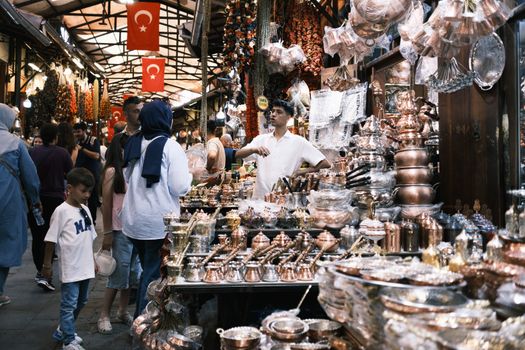
The aroma of cardamom-infused coffee filled the air, a familiar comfort in the bustling souk of Marrakech. I watched, mesmerized, as my host, a genial carpet merchant named Omar, poured yet another tiny glass of mint tea, his eyes twinkling. I’d already had five, possibly six, and politely, perhaps too politely, tried to decline. “Shukran, Omar, but I am truly full,” I’d insisted, patting my stomach. He’d merely chuckled, refilled my glass, and gestured for me to drink. It was then, amidst the vibrant chaos, that I realized my polite refusal was, in fact, an invitation for more. My Western understanding of hospitality was completely upended, and it was glorious.
That moment, a beautiful collision of cultures, is precisely why I travel. Beyond the postcard views and delicious food, it’s the unexpected, the quirky, the downright mind-blowing local customs that truly embed a place in your soul. They’re the secret handshake of a culture, the nuanced language spoken not just with words, but with gestures, traditions, and an entirely different rhythm of life.
Forget what you think you know. These aren't just polite manners; these are deeply ingrained practices that will surprise, challenge, and ultimately enrich your understanding of humanity. So, pack your open mind and your sense of adventure, because we’re about to dive into some truly unforgettable cultural experiences that will blow your mind and transform your next trip!
---
1. Japan: The Art of the Gift (and its Polite Refusal)
My first trip to Japan was a masterclass in elegant confusion. I’d carefully selected a beautiful, locally-made scarf for my host family in Kyoto, meticulously wrapped it, and presented it with a bow. To my surprise, my host, Mrs. Tanaka, didn't immediately accept it. Instead, she politely refused, several times, with gentle hand gestures and soft apologies. My heart sank – had I offended her? Was the gift wrong?
The Mind-Blowing Custom:
In Japan, the act of giving and receiving gifts (or omiyage) is an intricate dance of humility and respect. It's common, and often expected, for the recipient to initially refuse a gift multiple times. This isn't a rejection; it's a display of modesty, a way of saying, "You shouldn't have gone to such trouble for me." The giver is then expected to insist, equally politely, that the gift is a small token. This back-and-forth can go on for several minutes, a beautiful ballet of mutual deference, until the gift is finally accepted with grace.
My Anecdote:
After my initial panic, my Japanese friend, Kenji, gently nudged me. "Insist," he whispered. So, I did. I reiterated that it was a small token of my gratitude for their hospitality. Only then, with a warm smile, did Mrs. Tanaka accept, bowing deeply. Later, she presented me with an equally beautifully wrapped box of traditional sweets. The exchange taught me that true generosity in Japan isn't just about the item; it’s about the thoughtful ritual surrounding it.
Practical Tips for Your Trip:
* Always have small gifts: Carry individually wrapped, high-quality snacks (like Kit Kats in unique Japanese flavors, available at any convenience store for ¥150-300), or small souvenirs from your home country.
* Wrap with care: Presentation is key. Even a simple gift becomes special with elegant wrapping.
* Be prepared to insist: When offering a gift, expect a polite refusal and be ready to insist, gently but firmly, that you wish for them to have it.
* Return the gesture: If someone gives you a gift, it's polite to offer one back, ideally of similar value.
Instagram-Worthy Moment:
A beautifully wrapped omiyage package next to a traditional Japanese tea set, symbolizing the delicate art of giving.
---
2. India: The Head Wobble – A Symphony of Ambiguity
I was haggling for a silver bracelet in a vibrant Jaipur market. I asked the vendor, "Is this pure silver?" He looked at me, gave a slight, rhythmic tilt of his head from side to side, and continued to smile. "Yes?" I ventured, confused. He wobbled again. "No?" I tried. Another wobble. I stood there, utterly baffled, until another tourist explained to me the profound, yet confusing, meaning of this ubiquitous Indian gesture.
The Mind-Blowing Custom:
The Indian head wobble is perhaps one of the most enigmatic and charming forms of non-verbal communication you'll encounter. It's not a definitive "yes" or "no" in the Western sense, but rather a versatile expression that can mean "yes," "okay," "I understand," "maybe," "I'm listening," or even "continue." It’s a fluid, almost dance-like motion that signals agreement, acknowledgement, or thoughtful consideration. Its exact meaning often depends heavily on context, the accompanying facial expression, and even the speed of the wobble.
My Anecdote:
I once asked a train station attendant in Delhi if my train was on time. He gave me a vigorous, almost enthusiastic wobble. Reassured, I waited. An hour later, the train was still nowhere in sight. When I asked again, he gave the exact same wobble. It turned out that first wobble meant "Yes, I heard you," and the second meant "Yes, I heard you again, but the train is still late." It took several days of careful observation and asking for verbal confirmation ("Haan ya nahin?" - "Yes or no?") to begin to grasp its nuances.
Practical Tips for Your Trip:
* Observe and adapt: Pay attention to the context and the speaker's tone. A quick, sharp wobble often means "yes" or "okay," while a slower, more deliberate one might mean "I'm considering it."
* Don't assume: If clarity is crucial (e.g., confirming directions, prices, or timings), politely ask for a verbal "yes" (haan) or "no" (nahin).
* Try it yourself: Locals often find it endearing when foreigners attempt the wobble. It’s a fun way to connect!
Instagram-Worthy Moment:
A candid shot of a local giving a classic head wobble, perhaps in front of a colorful market stall or a bustling street scene.
---
3. Thailand: Head High, Feet Low – Navigating Sacred Spaces
It was my first time visiting a Wat (Buddhist temple) in Bangkok, the air thick with incense and reverence. I was so engrossed in the intricate gold leaf and serene Buddha statues that I almost committed a major faux pas. As I knelt to take a photo, my foot instinctively pointed towards a large Buddha image. Just in time, my Thai guide gasped, gently pulling my leg away.
The Mind-Blowing Custom:
In many Southeast Asian cultures, particularly Thailand, the head is considered the most sacred part of the body, while the feet are the lowest and most profane. This belief profoundly influences social etiquette. Touching someone's head (even a child's) is a huge no-no, as is stepping over someone, or pointing your feet at a person, a religious image, or even food. It's an act of deep disrespect. Conversely, showing respect involves lowering your head and ensuring your feet are tucked away.
My Anecdote:
After my temple near-miss, I became acutely aware of my feet. I learned to carefully position myself when sitting on the floor, always tucking my feet beneath me or to the side. One evening, at a local's home, I watched as a young child accidentally kicked an elder's arm while playing. The parents immediately made the child perform a wai (a prayer-like bow) and apologize profusely. It highlighted just how deeply ingrained this respect for the body, especially the head and feet, is from a very young age.
Practical Tips for Your Trip:
* Remove shoes: Always remove your shoes before entering temples, homes, and sometimes even small shops. Look for shoe piles outside.
* Mind your feet: Never point your feet at anyone or anything sacred. When sitting, tuck your feet to the side or behind you. Avoid stepping over people or food.
* Don't touch heads: Never touch a local's head, even playfully. This applies to adults and children.
* Dress modestly: Especially in temples, cover your shoulders and knees. Carry a sarong or scarf for impromptu temple visits.
Instagram-Worthy Moment:
A serene temple interior, with a close-up of beautifully arranged shoes outside a doorway, symbolizing respect.
---
4. Bolivia: The Humble Coca Leaf – More Than Meets the Eye
High in the Andes, on a bumpy bus ride from La Paz to Copacabana, the altitude sickness was hitting me hard. Nausea, headache, dizziness – the works. My seatmate, an elderly Aymara woman, noticed my distress. With a kind smile, she offered me a small pouch of dried green leaves. "Coca," she gestured. My immediate thought? Drugs. My mind was blown when I learned the truth.
The Mind-Blowing Custom:
For thousands of years, indigenous Andean communities in Bolivia, Peru, and other parts of South America have chewed coca leaves (or brewed them into tea, mate de coca). Far from being a recreational drug, it's a deeply cultural, medicinal, and social practice. Coca leaves are a mild stimulant, similar to coffee, and are primarily used to alleviate altitude sickness, suppress hunger and fatigue, and for spiritual rituals (Pachamama offerings). It’s a vital part of daily life and cultural identity, and completely legal and widely accepted in these regions.
My Anecdote:
My initial apprehension quickly faded as the woman patiently showed me how to chew the leaves: take a small wad, place it between your cheek and gum, and let the juices slowly release. Within an hour, my headache had lessened, and the nausea subsided. I continued to chew coca leaves throughout my time in Bolivia, not only for altitude but as a way to connect with locals. Sharing a pouch of coca leaves with a market vendor or a guide became a natural icebreaker, a gesture of shared cultural understanding. I even saw construction workers chewing it to stay energized on long shifts.
Practical Tips for Your Trip:
* Accept with grace: If offered coca leaves or mate de coca, accept it as a gesture of hospitality and cultural sharing.
* Try it for altitude: It genuinely helps with altitude sickness. You can buy leaves at any market (a small bag costs about 5-10 Bolivian Soles, ~ $0.70-$1.50 USD) or order mate de coca in restaurants.
* Understand the context: Remember its cultural and medicinal significance. It’s not a recreational drug in this context.
* Don't take it home: While legal to consume in Andean countries, it's illegal to take coca leaves across international borders.
Instagram-Worthy Moment:
A close-up of a hand holding a small pouch of coca leaves against a stunning Andean mountain backdrop.
---
5. Jordan & Morocco: The Left Hand Taboo and the Endless Tea
My journey through the Middle East and North Africa was a feast for the senses, but also a challenge to my ingrained habits. In a bustling restaurant in Amman, I instinctively reached for a piece of mansaf (a traditional Jordanian lamb dish) with my left hand. My Jordanian friend, Omar, gently but firmly intercepted my hand, offering a polite but stern look.
The Mind-Blowing Custom:
In many Islamic cultures, the left hand is traditionally considered unclean, reserved for bodily hygiene. Therefore, it's a significant taboo to eat, shake hands, give or receive gifts, or touch anything sacred with your left hand. Always use your right hand for these interactions. This custom is deeply rooted in religious and hygienic practices, and failing to observe it can cause offense.
Coupled with this, the hospitality, particularly the offering of tea or coffee, is legendary – and relentless! As I learned with Omar the carpet merchant, politely declining often means "please give me more."
My Anecdote:
After my mansaf mishap, I was hyper-aware of my right hand. I found myself in Petra, after a long hike, invited into a Bedouin tent for tea. The host poured three small glasses of incredibly sweet, strong tea. I drank them quickly, parched, and politely said "shukran" (thank you). He immediately refilled it. I repeated my thanks. He refilled it again. It was only after my guide explained that the only way to politely stop the flow of tea was to gently turn your glass upside down or place your hand over the top, that I found respite. For the Bedouin, offering tea is a profound act of welcoming, and repeatedly filling your cup is a sign of immense generosity. To stop drinking too soon can be seen as rejecting their hospitality.
Practical Tips for Your Trip:
* Right hand rule: Always use your right hand for eating, shaking hands, and exchanging items. Practice this consciously until it becomes second nature.
* Tea etiquette: When offered tea or coffee, accept gracefully. If you truly don't want more, learn the local gesture for stopping (often placing your hand over the glass or turning it upside down, but observe locals first).
* Embrace hospitality: Don't be afraid to accept invitations for tea or food. It's a wonderful way to connect. Just be mindful of the left-hand rule.
Instagram-Worthy Moment:
A beautifully intricate mosaic or a desert landscape, with a hand holding a tiny glass of mint tea, ready to be refilled.
---
6. Sweden: Lagom & Fika – The Goldilocks of Life
I arrived in Stockholm, buzzing with excitement and my usual fast-paced, "get-it-done" mentality. I had a packed itinerary and was eager to maximize every moment. I met a local friend, Astrid, for coffee. After about 15 minutes, I started to subtly check my watch, ready to move on. Astrid just smiled, took another slow sip of her coffee, and leaned back. "We have Fika," she said, as if that explained everything. And it did.
The Mind-Blowing Custom:
Sweden operates on the principle of Lagom, a concept that translates roughly to "just enough," "not too much, not too little," or "in moderation." It's a philosophy of balance, simplicity, and collective well-being that permeates every aspect of life. This ethos is beautifully encapsulated in Fika, the Swedish tradition of taking a dedicated break for coffee and a pastry (often a kanelbulle, cinnamon bun), usually with colleagues, friends, or family. It's not just a coffee break; it's a sacred social ritual, a moment to slow down, connect, and appreciate the present, embodying the 'just enough' mindset.
My Anecdote:
My first Fika with Astrid was an eye-opener. There was no rush, no talk of work, just genuine conversation and the shared enjoyment of coffee and pastries. It wasn't about productivity; it was about presence. I learned that trying to rush a Fika is considered rude, and over-ordering food or drink can be seen as excessive. The Swedes truly embrace the "Goldilocks" principle – everything should be just right. I later saw this in everything from their minimalist design to their approach to work-life balance. It was a refreshing antidote to my often-stressed, always-on lifestyle.
Practical Tips for Your Trip:
* Embrace Fika: Actively seek out Fika opportunities. Don't rush it. Enjoy the moment of connection. Many cafes offer Fika deals (coffee + pastry) for around 50-70 SEK (~$5-7 USD).
* Practice Lagom: Don't be overly boastful, don't over-consume, and appreciate simplicity. In social settings, punctuality is highly valued, but once you're there, relax and enjoy.
* Observe queues: Swedes are big on queuing. Wait your turn patiently.
Instagram-Worthy Moment:
A perfect Fika spread: a steaming cup of coffee, a warm kanelbulle, and perhaps a good book, set against a cozy cafe backdrop.
---
7. New Zealand: The Hongi – A Breath of Connection
I stood nervously, facing a powerfully built Māori elder, part of a welcoming ceremony (pōwhiri) on New Zealand’s North Island. We had just witnessed an incredibly moving haka, and now it was time for the hongi, the traditional Māori greeting. My guide had explained it, but the actual moment felt incredibly profound, unlike any greeting I’d experienced.
The Mind-Blowing Custom:
The hongi is far more than a handshake; it's a sacred exchange of breath and spirit. When two people press their noses and foreheads together, they are said to be sharing the ha (the breath of life) and the whakapapa (genealogy or connection). It symbolizes the coming together of two people, not just physically, but spiritually. It’s an intimate and deeply respectful gesture, usually performed after a pōwhiri or upon meeting someone in a formal Māori setting.
My Anecdote:
As the elder approached, I took a deep breath. We pressed our foreheads and noses together, and in that brief moment, I felt an incredible sense of connection, of shared humanity. It wasn't just a physical touch; it was a profound acknowledgement of presence and spirit. It felt like being truly seen and welcomed. It was a humbling and incredibly moving experience that instantly forged a bond deeper than any handshake ever could. It truly felt like a transfer of vital energy, a reminder of our shared origins.
Practical Tips for Your Trip:
* Respect the context: The hongi is usually part of a formal welcome or a significant meeting. Don't initiate it casually unless you're explicitly invited.
* Follow the lead: If you are part of a pōwhiri or a formal greeting where a hongi is expected, observe how others do it and follow their lead.
* Be present: When performing the hongi, take a moment to be present, make eye contact, and appreciate the depth of the gesture.
Instagram-Worthy Moment:
A respectful, artful shot of a hongi in progress, perhaps with traditional Māori carvings in the background, conveying the sacredness of the moment.
---
Ready to Be Amazed?
These are just a handful of the countless mind-blowing local customs waiting to surprise you around the globe. They are the true gems of travel, the moments that peel back the layers of our own assumptions and reveal the rich tapestry of human experience. They challenge us, humble us, and ultimately, connect us.
My journey to understanding Omar's endless tea, the Indian head wobble, or the sacred hongi wasn't just about learning etiquette; it was about learning empathy, patience, and the profound beauty of diversity. These experiences don't just make for great stories; they make you a better, more understanding traveler and a more connected human being.
So, next time you plan a trip, look beyond the highlights reel. Seek out the local customs, the surprising traditions, and the nuanced ways people live their lives. Be open, be respectful, and be ready to have your mind absolutely blown. You’ll return home with more than just souvenirs – you’ll have a changed perspective, a deeper understanding, and a treasure trove of unforgettable memories.
What’s the most surprising local custom you’ve encountered on your travels? Share your stories in the comments below! Let's inspire each other to dive deeper into the world's incredible cultures.