Beyond the Siem Reap Circuit: The Unsung Stone Giants
I stepped off the night train into the thick, humid air of Maharashtra at 5:15 AM, the scent of crushed marigold garlands, diesel exhaust, and wet earth hitting my nose before my boots even touched the platform. My boots were still caked with the fine red dust of Siem Reap, where I had spent three exhausting days jockeying for elbow room among 4,000 tourists to snap a picture of Angkor Wat’s iconic lotus towers.
Don't get me wrong: Angkor Wat is an engineering miracle. But when you are dodging bullhorns and plastic poncho vendors, the spiritual thunder of the place gets muffled.
Two hours later, standing on a narrow cliff edge above Cave 16 at Ellora, India, I looked down into a canyon carved entirely by human hands. No bricks were laid here. No mortar was mixed. Artisans simply chipped away 200,000 tons of solid volcanic basalt rock, working from the top of the mountain downward, to reveal a freestanding multi-story temple complex twice the size of the Parthenon. The silence was absolute, broken only by the whip of the morning wind and the distant call of a kingfisher.
That was the moment I realized: mainstream travel itineraries are stuck in a feedback loop. Travel advisors keep pitching the same handful of mega-monuments because they are easy to book. But if you want bone-chilling, raw, architectural magic, you need to look beyond the brochure.
Here are five mind-boggling temple sites across Asia that surpass Angkor Wat in structural complexity, sheer atmosphere, and preservation—minus the suffocating crowds.
---
1. Kailasa Temple (Ellora Caves, India): The Top-Down Monolith
```
Location: Maharashtra, India
Primary Deity: Shiva
Built: 8th Century CE (Rashtrakuta Dynasty)
Architectural Style: Dravidian monolithic rock-cut
```
Why It Beats Angkor Wat
Angkor Wat was assembled block by block. Kailasa Temple (Cave 16) was excavated. Ancient craftsmen used only chisels, hammers, and iron spikes to cut a massive U-shaped trench into a solid basalt cliffface, leaving behind a central block that was then sculpted into a sprawling, three-story Hindu temple.
Because it was carved from the top down, the sculptors could never make a mistake; a single crack in the stone would have ruined decades of work. The scale is staggering. Life-sized elephant statues carved directly into the rock floor support the upper tiers, while intricate bas-relief panels detailing the Ramayana stretch across the base.
The Sensory Experience
Walk through the rock-carved gateway and the ambient sound of the outside world instantly drops off. The air smells of wet damp limestone and cold iron. As you touch the carved basalt walls, feel the chisel grooves made by workers over 1,200 years ago.
Insider Pro-Tips
* The Secret Vantage Point: Skip the main courtyard floor first. Head up the steep dirt trail on the left cliff face surrounding the pit. From the cliff edge, you can look straight down onto the roof of the vimana (main tower) to fully comprehend the sheer volume of rock removed.
* Timing: Arrive at 7:30 AM when the gates open. The morning light strikes the eastern carvings directly, and you will likely have the entire canyon to yourself for the first ninety minutes.
---
2. Koh Ker & Prasat Prang (Cambodia): The Lost Jungle Pyramid
```
Location: Preah Vihear Province, Cambodia
Built: 10th Century CE (King Jayavarman IV)
Architectural Style: Khmer (Koh Ker Style)
Key Feature: 7-tiered step pyramid (Prasat Prang)
```
Why It Beats Angkor Wat
While Angkor Wat sits right on the doorstep of Siem Reap's five-star resorts, Koh Ker was lost to the dense Cambodian jungle for centuries, ringed by landmines until clearings began in the late 2000s.
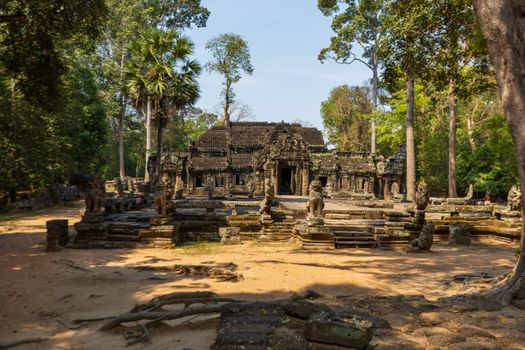
Instead of the sprawling, horizontal design of typical Khmer architecture, the main shrine of Koh Ker—Prasat Prang—is a stark, 7-tiered, 36-meter-high stone step pyramid. It looks strikingly like a Mayan monument dropped into the heart of Southeast Asia. Surrounded by thick green canopy and strangler fig trees, it carries a visceral, untamed energy that Angkor lost long ago.
The Sensory Experience
The drive out is a blast of hot, iron-rich dust. Walking through the forest to the base of Prasat Prang, the air is heavy with the hum of thousands of cicadas and the scent of rotting teak leaves and wild jasmine.
Insider Pro-Tips
* Avoid the Highway Tour Buses: Most day tours hit Koh Ker at noon after visiting Beng Mealea. Rent an automatic scooter or hire a private driver from Siem Reap to arrive by 8:00 AM.
* The Hidden Entrance: Don't just climb the modern wooden staircase up the pyramid. Explore the scattered rubble ruins of Prasat Krahom (The Red Temple) near the entrance, where ancient carved lintels lie half-buried in moss and tree roots.
---
3. Prambanan & Borobudur (Central Java, Indonesia): The Volcanic Twin Marvels
```
Location: Yogyakarta, Java, Indonesia
Built: 8th and 9th Centuries CE
Architectural Style: Classical Javanese (Buddhist & Hindu)
Key Feature: Volcanic stone stupas and soaring jagged towers
```
Why They Beat Angkor Wat
Instead of just one sprawling complex, Java gives you a double blow of ancient brilliance within an hour’s drive of each other: Borobudur (the world’s largest Buddhist monument) and Prambanan (a soaring, jagged complex of 240 Hindu temples).
Constructed from dark grey volcanic andesite stone, these temples sit right in the shadow of Mount Merapi, an active volcano that occasionally dusts the carvings in fresh ash. Borobudur is built as a three-dimensional cosmic mandala; climbing it symbolizes the journey to enlightenment. Prambanan’s central tower dedicated to Shiva rises 47 meters into the sky, sharper and more aggressively detailed than Angkor’s rounded lotus towers.
The Sensory Experience
Before dawn at Borobudur, the cool mist rolls off the Propro river valley. The air smells faintly of sulfur mixed with burning clove cigarettes (kretek) from nearby villages. As sunlight breaks over the stone bell-shaped stupas, carved Buddha faces peep out through the latticed rock.
Insider Pro-Tips
* Skip the Overpriced Official Sunrise Deck: Instead of paying top dollar for the official park sunrise pass, head to Punthuk Setumbu Hill at 5:00 AM. You’ll watch the sun rise over the jungle canopy with Borobudur floating on a sea of morning mist in the foreground.
* Prambanan Hidden Gem: Walk 10 minutes north of the main Prambanan plaza to Sewu Temple. It’s part of the same park, far less visited, and features massive stone guardian statues (Dwarapala) guarding a sprawling Buddhist complex.
---
4. Wat Phu (Champasak, Laos): The Sacred Mountain Sanctuary
```
Location: Champasak Province, Southern Laos
Built: 5th to 15th Centuries CE
Architectural Style: Early Khmer
Key Feature: Terraced hillside complex leading to a freshwater spring
```
Why It Beats Angkor Wat
Angkor Wat is flat, sprawling, and grand. Wat Phu is vertical, intimate, and deeply integrated into the natural landscape. Situated at the base of Mount Phu Kao—a mountain shaped naturally like a Hindu lingam—this complex is older than Angkor Wat itself, serving as the blueprint for later Khmer sanctuary layouts.
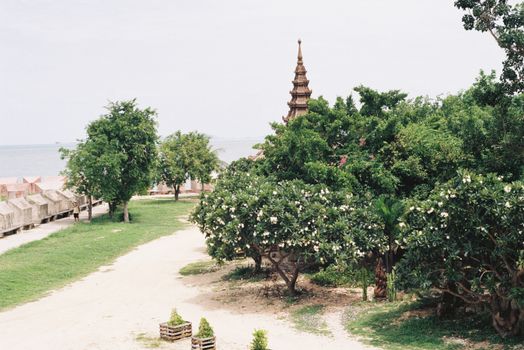
The site is arranged in a series of ascending terraces linked by frangipani-lined stone staircases that climb up the hillside to a sanctuary where a natural cold-water mountain spring still trickles over ancient carved stones.
The Sensory Experience
The scent of fallen white frangipani blossoms coats the stone steps. The sound of water dripping from the mountain rock into the dimly lit sanctuary creates a cool, sacred atmosphere where local pilgrims still light beeswax candles and burn stick incense.
Insider Pro-Tips
* Visit in the Late Afternoon: Unlike Angkor, which floods with crowds at sunset, Wat Phu empties out by 3:30 PM. The late-afternoon sun illuminates the Mekong River plain stretching out behind you as you look down from the top terrace.
* The Crocodile Stone: Hike 50 meters past the main upper sanctuary along the cliff base to find the mysterious carved Crocodile Stone and Elephant Rock, ancient sites likely used for early pre-Khmer sacrificial rituals.
---
5. Brihadisvara Temple (Thanjavur, India): The Impossible Granite Fortress
```
Location: Tamil Nadu, India
Built: 1010 CE (King Raja Raja Chola I)
Architectural Style: Dravidian Chola Architecture
Key Feature: 66-meter granite tower with an 80-ton single-stone capstone
```
Why It Beats Angkor Wat
The Brihadisvara Temple (often called the Big Temple) is an engineering impossibility. The entire structure is made of pure granite—one of the hardest stones on Earth—in a region where there are no granite quarries for dozens of miles.
The main vimana (temple tower) reaches 66 meters into the sky and was the tallest structure in the world when completed in 1010 CE. At the very peak sits the Kumbam: a single, carved bulbous block of granite weighing approximately 80 tons. How ancient engineers raised an 80-ton stone to the height of a 16-story building without modern cranes remains a subject of intense debate; local legends say they built a four-mile-long inclined earth ramp just to roll it into place.
The Sensory Experience
The floor stones heat up under the southern Indian sun, forcing you to walk barefoot along the smooth granite walkways. The scent of crushed sandalwood paste, burning camphor, and fresh jasmine garlands fills the inner sanctum while priests chant Vedic hymns that echo through the stone halls.
Insider Pro-Tips
* Evening Aarti Ritual: Visit around 5:30 PM. As the sun sets, yellow floodlights illuminate the orange-gold granite tower, and the evening Aarti (fire ritual) begins at the massive Nandi bull statue at the front entrance.
* Look for the Ancient Frescoes: Walk through the outer corridor walls surrounding the inner sanctum to view 1,000-year-old Chola dynasty wall paintings that retain their vivid vegetable-dye colors.
---
Logistics, Costs & Best Seasons Comparison
Navigating these locations takes a bit more planning than buying an all-inclusive tour to Siem Reap, but the payoff is absolute freedom. Here is what you need to know before you pack your bags:
| Temple Complex | Location | Est. Entry Fee ($USD) | Best Time to Visit | How to Get There |
| :--- | :--- | :--- | :--- | :--- |
| Kailasa Temple | Maharashtra, India | ~$7.00 (foreigners) | Oct – March | Fly to Aurangabad (IXU); 45-min taxi or local bus to Ellora. |
| Koh Ker | Preah Vihear, Cambodia | ~$15.00 | Nov – Feb | 2.5-hour private car or moto drive from Siem Reap. |
| Prambanan & Borobudur | Java, Indonesia | ~$25.00 per site | April – October | Fly to Yogyakarta (YIA); hire a driver or use Grab/Gojek rideshare. |
| Wat Phu | Champasak, Laos | ~$6.00 | Nov – March | Fly to Pakse (PKZ); 1-hour tuk-tuk or scooter ride south along the Mekong. |
| Brihadisvara Temple| Tamil Nadu, India | Free (minimal site fee) | Nov – February | Train or drive 1.5 hours from Trichy Airport (TRZ). |
---
Practical Travel Advice for Independent Explorers
1. Etiquette & Respect
These sites are not dead museums; they are active places of worship.
* Clothing: Shoulders and knees must be covered at all times. Carry a lightweight sarong or scarf in your daypack—it works as a sun wrap, ground mat, or shoulder cover on short notice.
* Footwear: At Indian temples like Brihadisvara, shoes are strictly prohibited inside the outer courtyard perimeter. Wear slip-on shoes or sandals and bring an old pair of socks if you are sensitive to sun-baked stone floors.
2. Hiring Local Guides vs. Self-Guided
While Angkor Wat has thousands of licensed guides waiting at the gate, these secondary sites require a bit more strategy.
* For Kailasa and Brihadisvara, hire a local guide directly at the ticket counter. Verify their official ASI (Archaeological Survey of India) badge. A good guide will explain the intricate mythological panels that you would otherwise miss.
* For Koh Ker and Wat Phu, download offline maps (Maps.me or Google Maps) along with architectural PDF guides ahead of time, as cell coverage can drop off in the surrounding valleys.
---
The Verdict: Which Temple Should You Visit First?
If you want sheer, jaw-dropping architectural scale that defies modern engineering, book a ticket to India and stand inside Kailasa Temple.
If you want the wild, lost-world jungle energy that Ta Prohm at Angkor Wat used to have thirty years ago, head straight into the Cambodian countryside to Koh Ker.
Angkor Wat will always hold its place in travel history, but true adventure lies just off the paved highway. Leave the selfie sticks behind, step into the mist, and let these unsung stone monoliths rewrite your understanding of human history.
---