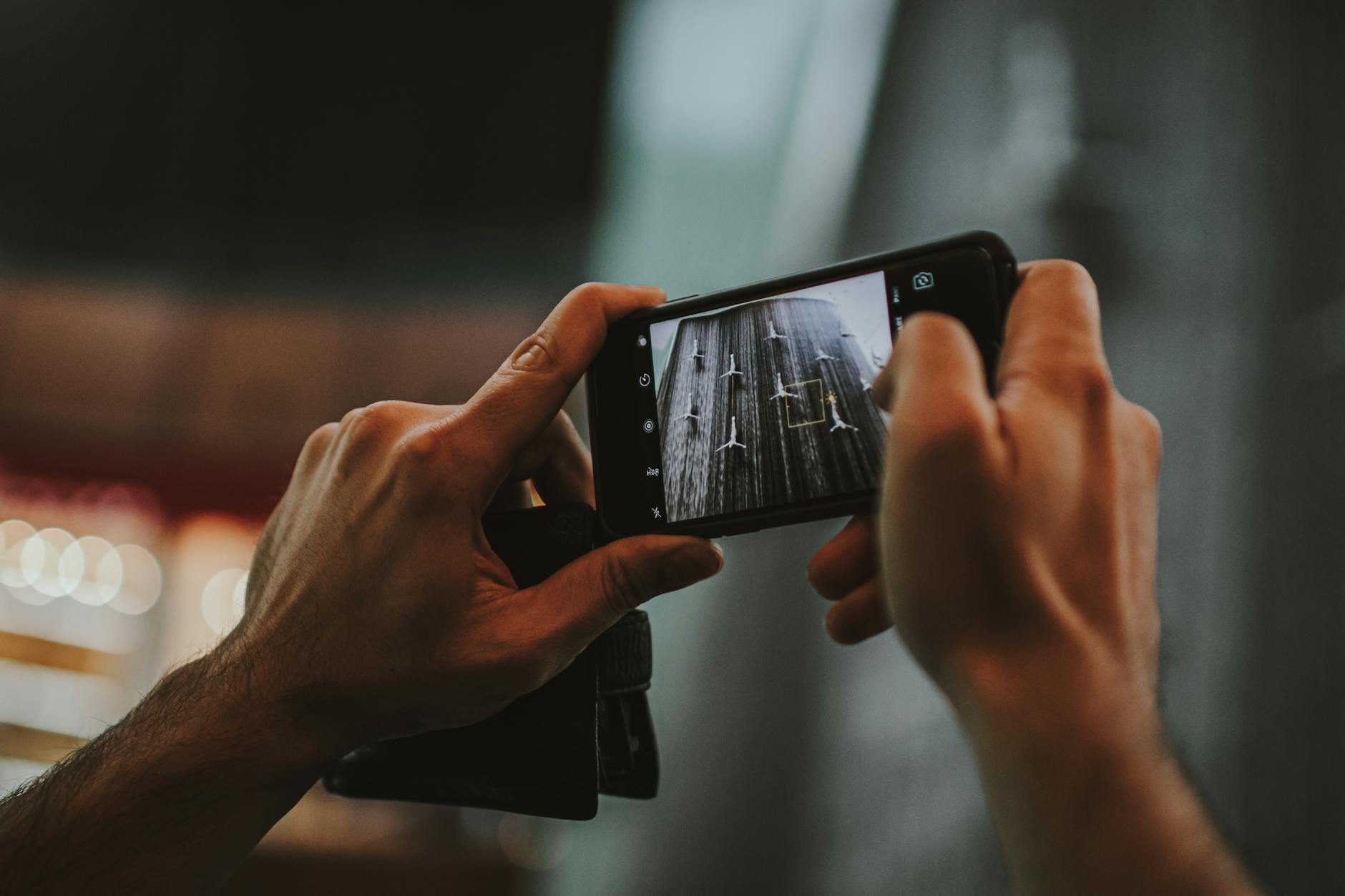
Your Phone, Your Lens: Capturing Unseen Beauty Before the World Catches On
I remember standing on a cobbled street in Lisbon, just a few blocks away from the bustling tourist traps of Alfama. The sun was dipping, painting the sky in fiery oranges and soft purples, casting long, dramatic shadows down a narrow alleyway. A lone tram rumbled past, its vintage yellow contrasting beautifully with the ancient stone walls. My camera bag, usually heavy with my DSLR, was back at the hostel. All I had was my trusty phone. "This," I thought, "is too good to miss."
I took the shot. Not just one, but a series, playing with angles, light, and the unexpected reflection in a tiny puddle. That evening, when I posted it, the comments flooded in: "Where is this?!" "Is that really a phone photo?!" "Looks like a painting!" It became one of my most shared posts, not because it was a famous landmark, but because it felt real, unique, and utterly captivating. And it was captured before that specific alleyway became a hotspot on every tour map.
That moment solidified something I’d been feeling for a while: you don't need fancy gear to create Instagram-worthy travel photos. You need an eye for the unique, a knack for composition, and the willingness to explore before everyone else does. So, if you're ready to ditch the tourist traps and capture the soul of a place with just the device in your pocket, read on.
1. The Art of the 'Undiscovered' Eye: Spotting Gold Where Others See Dust
The first step to taking 'before mainstream' photos is finding the 'before mainstream' places. This isn't about avoiding famous landmarks entirely, but about looking beyond the postcard view. It's about finding that tucked-away café, that vibrant local market, or that quiet street corner that tells a story.
My Approach:
* Wander Purposefully (and Unpurposefully): I often set aside time in a new city just to walk without a specific destination. Turn down that intriguing alley, peek into that unassuming doorway. In Marrakech, I once stumbled upon a tiny, bustling spice market hidden deep within the souks, away from the main square. The colors, the textures, the genuine interactions – it was a goldmine for my phone camera. Prices? Purely local, a fraction of what you'd pay in the tourist zones.
* Look for Local Life: Forget staged shots. Observe. A street musician in Barcelona, a child playing football in a piazza in Rome, an elderly couple sharing coffee in a Parisian boulangerie. These are the moments that truly capture the essence of a place.
* Follow Your Curiosity: If something catches your eye – a specific color palette, an interesting architectural detail, a unique pattern – explore it. Don't dismiss it just because it's not a famous monument.
Actionable Tip:
Before your next trip, research local blogs or Instagram accounts that focus on 'hidden gems' rather than just general travel. Ask your Airbnb host or hotel staff for their favorite local spots – places they go, not where they send tourists. Often, these are free to explore, offering authentic experiences without the crowds.
2. Mastering Light & Shadow: Your Phone's Best Friend
Light is the single most important element in photography, and your phone, despite its smaller sensor, can wield it beautifully. The key to 'before mainstream' photos often lies in capturing familiar scenes in unfamiliar light, or unfamiliar scenes in perfect light.
My Go-To Strategies:
* Embrace Golden Hour (and Blue Hour): This is non-negotiable. The hour after sunrise and the hour before sunset bathe everything in soft, warm, magical light. It makes even mundane scenes look ethereal. I've captured breathtaking shots of empty beaches in Thailand and misty rice paddies in Vietnam during these times, simply because the light transformed them. Early mornings are best for avoiding crowds at popular spots, too!
* Play with Shadows: Don't fear midday sun! Instead of shying away from harsh light, use it creatively. Look for dramatic shadows, interesting patterns, or use them to create stark silhouettes. In a small town in Sicily, I once shot a series of photos of laundry hanging out to dry, using the intense midday sun to create graphic, high-contrast shadows against the pastel walls. It turned an everyday scene into art.
* Reflections are Your Secret Weapon: Puddles, windows, shiny surfaces – reflections can add depth, symmetry, and a unique perspective. After a rain shower in Kyoto, I used a puddle to capture a perfect reflection of a traditional temple, doubling its impact and creating a surreal effect that a direct shot wouldn't have achieved.
Actionable Tip:
Pay attention to the direction of light. Shoot into the sun for dramatic silhouettes, or with the sun behind you for vibrant, well-lit subjects. For textural details (like an old brick wall or intricate carving), use side lighting to enhance depth. Your phone's auto-exposure is good, but don't hesitate to tap on your screen to adjust exposure – bright areas get darker, dark areas get brighter, helping you balance the scene.
3. Composition Secrets for Viral Potential: Making the Ordinary Extraordinary
Even the most beautiful subject can fall flat with poor composition. Conversely, a mundane scene can become captivating with thoughtful framing. This is where you elevate your phone photography from a snapshot to a genuine work of art that people will want to share.
My Composition Playbook:
* The Rule of Thirds (and When to Break It): Imagine a tic-tac-toe grid over your screen (most phones have a grid overlay option). Place your main subject along the lines or at their intersections. This creates a balanced, aesthetically pleasing image. However, don't be afraid to break it for strong symmetry (like a perfectly centered archway or leading line) or to emphasize negative space.
* Leading Lines & Frames: Use natural elements to guide the viewer's eye. A winding road, a fence, a river, or even a row of trees can lead the eye directly to your subject. Similarly, use natural frames – an archway, a window, tree branches – to add context and depth. I once framed a distant, lesser-known castle in the Scottish Highlands through the branches of an ancient, gnarled tree, adding a sense of mystery and age.
* Perspective is Everything: Don't just shoot from eye level. Get low to the ground for a dramatic, immersive view (think of a bustling market from a child's perspective). Climb high (safely!) for a unique overview. Experiment with tilting your phone for dynamic angles. In a small fishing village in Portugal, I got down on my knees to capture the colorful fishing boats from water level, making them feel monumental against the vast ocean.
* Negative Space: Sometimes, what you don't include is as important as what you do. Using large areas of empty space (sky, water, a plain wall) can draw attention to your subject and create a sense of calm or drama.
Actionable Tip:
Turn on your phone's gridlines (usually in camera settings). Before pressing the shutter, take a moment to look around your frame. Is there anything distracting? Can you adjust your position slightly to create a better leading line or frame? Try taking the same shot from 3-4 different angles or compositions.
4. Editing Magic: Elevate Your Phone Snaps (Without Overdoing It)
This is where your 'before mainstream' photo truly shines. A little post-processing goes a long way, but the goal isn't to create something artificial. It's to enhance the natural beauty you've captured, making colors pop, details sharper, and the overall mood more impactful.
My Favorite Phone Editing Apps (and How I Use Them):
* Snapseed (Free): My absolute workhorse. I use it for precise adjustments.
* Tune Image: Global adjustments like brightness, contrast, saturation, ambience (which subtly brightens shadows and darkens highlights).
* Selective: This is gold! You can select specific areas (e.g., a dark face, a dull sky) and adjust their brightness, contrast, saturation, and structure independently. This is how I bring out details in shadows without blowing out highlights.
* Healing: Great for removing small distractions like a stray piece of litter or a distant power line.
* Perspective: Corrects skewed lines if you shot at an awkward angle.
* Lightroom Mobile (Free with paid features): Excellent for more advanced color grading and batch editing if you shoot a lot.
* Light: Precise control over exposure, highlights, shadows, whites, and blacks.
* Color: Adjust temperature (warm/cool), tint, vibrance, and saturation. The 'Mix' tool allows you to adjust individual color hues, saturation, and luminance – perfect for making that blue sky pop or toning down overly green foliage.
* Detail: Sharpening and noise reduction.
* VSCO (Free with paid filters): For quick, consistent aesthetic filters. I use it sparingly, often dialing down the intensity of a filter to about 30-50% to maintain a natural look. My favorites for travel are the A-series (Analog) or C-series (Chromatic) for a slightly vintage, film-like feel.
Actionable Tip:
Start with subtle adjustments. Often, a slight increase in contrast, a boost in shadows, and a touch of vibrance are all you need. Avoid over-saturating or adding too much clarity, which can make photos look artificial. The goal is to make it look like you saw it, but better. Always zoom in to check for noise or over-sharpening.
5. Beyond the Pose: Capturing Authentic Moments & Local Life
The 'before mainstream' photo isn't just about the location; it's about the feeling, the authenticity, the story. This often means focusing on candid moments and the real interactions that define a place.
My Approach to Authenticity:
* Be Patient and Observe: Don't just point and shoot. Sit down, order a coffee, and watch the world go by. In a bustling market in Hanoi, I spent 20 minutes just observing the vendors and shoppers before I even thought about taking a picture. The genuine smiles, the haggling, the movement – these are the shots that tell a story.
* Ask Permission (When Appropriate): If you're photographing people, especially close-ups, a quick nod and a smile, or even a simple "May I?" (if you know the local phrase), goes a long way. Most people are happy to be photographed if you're respectful. I've had incredible interactions and even shared laughs with locals simply by asking permission. Sometimes, a small tip for street performers or vendors is also a kind gesture.
* Capture the Details: It's not always about the grand landscape. A meticulously arranged fruit stall, a pair of worn-out leather shoes outside a mosque, a child's hand holding a colorful toy – these small details can evoke the spirit of a place as powerfully as any wide shot.
Actionable Tip:
Set your phone to burst mode (usually by holding down the shutter button) when capturing fast-moving scenes or people. You can then select the best frame from the sequence. This increases your chances of getting that perfect, fleeting candid moment.
6. The 'Before Mainstream' Mindset & Responsible Sharing
This is the ethical heart of capturing those truly unique, undiscovered moments. Finding these places is one thing; sharing them responsibly is another.
My Guiding Principles:
* Deep Dive Research: Beyond generic travel guides, I scour local history blogs, niche photography forums, and even obscure academic papers about a region. Sometimes, a tiny mention of an ancient ruin or a local festival will spark an idea.
* Consult Locals, Not Just Google: Strike up conversations with shopkeepers, taxi drivers, or fellow travelers who seem to be off the beaten path. They often hold the keys to truly local experiences. In a small town in rural Spain, a friendly café owner told me about a hidden waterfall only accessible by a short hike – it was breathtaking and completely deserted.
* Wander Off the Map: Literally. While safety is paramount, sometimes the best discoveries are made by simply turning left when everyone else turns right. Just remember to be aware of your surroundings and respect private property.
* The Ethics of Sharing: This is crucial for 'before mainstream' content. If you find a truly pristine, delicate, or culturally sensitive hidden gem, consider the impact of sharing its exact location.
* General Rule: For popular-but-lesser-known spots (like a specific alley in a famous city), go ahead and geotag if you wish.
* Hidden Gems: For truly secret spots, remote natural wonders, or places that could be negatively impacted by mass tourism, consider not geotagging precisely. Instead, tag the broader region or city, and let your caption inspire exploration without giving away the exact coordinates. For that hidden waterfall in Spain, I posted a photo with the tag "Andalusia, Spain" rather than the precise GPS coordinates. It inspired curiosity without risking its pristine condition.
* Respect Local Culture: Always be mindful of local customs and traditions when photographing.
Actionable Tip:
When you post a 'before mainstream' shot, use your caption to tell the story of how you found it, rather than just where it is. This encourages your audience to develop their own 'undiscovered eye' rather than just replicating your itinerary. Engage with comments by offering hints ("It's a short walk from the main square in X city!") rather than exact directions.
Your Phone, Your Story, Your Unseen World
The beauty of phone photography is its accessibility. It's always with you, always ready to capture that fleeting moment of magic. By training your eye to see beyond the obvious, mastering the nuances of light and composition, and enhancing your shots with thoughtful editing, you can transform your travel feed into something truly unique and inspiring.
So, next time you're exploring, put down the heavy gear (or don't even pack it!). Trust your phone, trust your eye, and go find those moments that haven't yet made it onto every other travel blog. Capture them, share them responsibly, and inspire others to seek out the authentic, unseen beauty of our world.
Now go forth, explore, and show us the hidden wonders you discover with just the device in your hand! What's the most unexpected, 'before mainstream' shot you've ever captured with your phone? Share your stories (without giving away all your secrets!) in the comments below or tag us on Instagram with #TripsoraUnseen!
---