We’ve all been there. Standing at the airline counter, heart pounding, as the agent eyes your perfectly packed (or so you thought!) carry-on. They ask you to place it in the dreaded sizing cage. It’s a tight squeeze, a little nudge, a hopeful prayer… and then, the dreaded words: "I'm sorry, that's oversized. That'll be $60." Or worse, the gate agent, just minutes before boarding, slapping you with a $100 fee because your bag is just an inch too wide.
My first encounter with the baggage fee beast was on a low-cost carrier from Dublin to Berlin. I was a wide-eyed newbie, fresh out of college, thinking my trusty hiking backpack would pass as a carry-on. Oh, the naiveté! That $60 fee for a bag I thought was "small enough" ate into my carefully budgeted hostel fund and left a bitter taste in my mouth. It was a painful lesson, but one that forged my resolve: never again.
Fast forward a decade, hundreds of flights, and countless passport stamps, and I can proudly say I haven't paid a dime in baggage fees since that fateful trip. And guess what? It's not about magic or secret airline connections. It's about smart packing, knowing the rules better than the airlines themselves, and a few clever tricks the Instagram travel elite might not want you to know (because, let's be honest, their sponsored luggage isn't always practical for us mere mortals).
Ready to reclaim your travel budget and fly free? Let's dive in.
---
1. The Unsung Hero: Mastering Your Personal Item
This is where most travelers stumble, and it's also your biggest weapon against baggage fees. Many budget airlines (and even full-service carriers on basic economy fares) offer one free personal item. This isn't just a purse or a tiny laptop bag; it's a strategic piece of luggage you can maximize.
The Golden Rule:
Know your airline's specific dimensions. These vary wildly, and an inch here or there can cost you.
* Spirit Airlines: 18 x 14 x 8 inches (45 x 35 x 20 cm)
* Ryanair: 40 x 25 x 20 cm (approx. 15.7 x 9.8 x 7.8 inches)
* EasyJet: 45 x 36 x 20 cm (approx. 17.7 x 14.1 x 7.8 inches)
* Frontier: 18 x 14 x 8 inches (45 x 35 x 20 cm)
Notice how some are slightly taller, others wider? A bag that works for Ryanair might be too big for Spirit. Always check. My go-to strategy involves investing in a high-quality, soft-sided travel backpack specifically designed to fit these personal item dimensions. Brands like Osprey, CabinZero, or even certain well-designed Amazon basics offer fantastic options that fit snugly under the seat.
Packing Strategy for Your Personal Item:
* Heavy at the Bottom: Distribute weight evenly, with heavier items (shoes, toiletry bag) at the bottom.
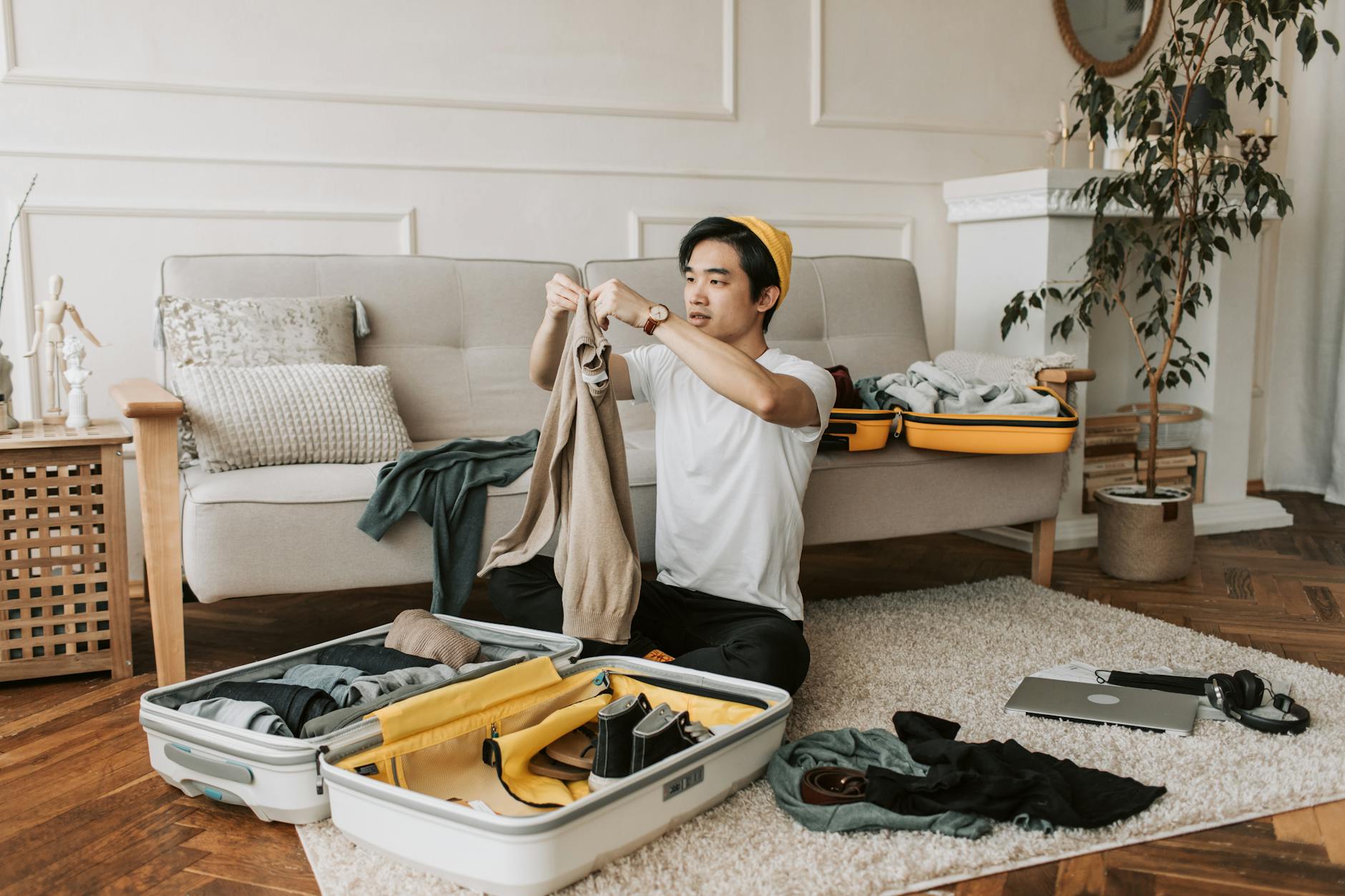
* Roll, Don't Fold: Rolling clothes saves space and minimizes wrinkles. Tightly roll everything – t-shirts, underwear, even thin sweaters.
* Utilize Every Nook: Stuff socks into shoes. Fill empty spaces with smaller items.
* The "Squish Test": A personal item needs to be squishable. If it's a rigid hard case, it might not fit if it's packed to the brim. Soft-sided backpacks are your best friend here.
Personal Anecdote: I once packed for a 5-day trip to Rome using only a personal item backpack that perfectly fit Ryanair's dimensions. It included three outfits, pajamas, a small toiletry bag, a Kindle, and even a travel adapter. The trick? A carefully curated capsule wardrobe and knowing exactly what I really needed versus what I wanted to bring. The feeling of breezing past the baggage check, knowing I'd saved €50, was priceless.
---
2. Wear Your Wardrobe: The Layering & Pocket Power Play
This is the ultimate "hack" that influencers rarely show because it's not always the most fashion-forward look, but it's incredibly effective. If it's on your body, it's not in your bag, and it's not subject to baggage fees.
The "Onion" Method:
* Wear Your Bulkiest Items: Always wear your heaviest shoes (boots, sneakers) on the plane. Layer your heaviest sweater or jacket, even if you plan to take it off immediately upon boarding.
* Strategic Layering: If you're going from a cold climate to a warm one, layer up. Wear a long-sleeve shirt under a sweater, under a jacket. You can always peel them off once you're past security and on the plane.
* The Travel Vest/Jacket: This is my secret weapon. Brands like Scottevest specialize in jackets and vests with an insane number of pockets. You can stash a tablet, phone, passport, wallet, snacks, even a small book or a pair of socks in these pockets. Airlines consider anything in your pockets part of your attire, not your luggage. I've seen people stuff entire outfits into these vests!
Personal Anecdote: Flying from a chilly London winter to the beaches of Portugal, I wore a massive winter coat, a thick jumper, and my heaviest boots. I looked like a Michelin Man, but my personal item backpack was light as a feather. As soon as I cleared security, I stripped off the layers, neatly folded my coat over my arm, and stowed it in the overhead bin (or under the seat if it's small enough). The initial awkwardness was a small price to pay for bypassing a £50 baggage fee.
---
3. The Black Magic of Compression: Packing Cubes & Smart Rolling
Once you've decided what's going in your bag, how you pack it makes all the difference. This isn't just about neatness; it's about maximizing every cubic inch.
Packing Cubes: Your New Best Friend:
* If you're not using packing cubes, you're leaving money on the table. These zippered fabric containers compress your clothes, organize your bag, and make finding things a breeze.
* Various Sizes: Get a set with different sizes. Use a large one for main clothes, a medium for underwear/socks, and a small one for toiletries or electronics.
* Compression Cubes: Some cubes offer an extra zipper that further compresses the contents, saving even more space. These are particularly useful for bulkier items like sweaters.
Rolling vs. Folding:
* For most items, rolling your clothes tightly will save more space and prevent wrinkles better than folding. It also makes your clothes more compact and easier to fit into odd-shaped pockets of your bag.
* The Bundle Method: For wrinkle-prone items, some travelers swear by the "bundle method" where you wrap smaller items around a central core. It's more time-consuming but can be effective.
The Vacuum Bag Dilemma:
* Vacuum seal bags are fantastic for space but beware: they don't reduce weight. If you're trying to avoid a checked bag, they can help you fit more into your carry-on or personal item. However, if your airline has a strict weight limit for carry-ons (which many do, especially international flights), you could still get hit with a fee. Use with caution for carry-ons, and mostly for bulky, lightweight items like sweaters or jackets.
Personal Anecdote: My friend Sarah was notorious for overpacking. Before our trip to Vietnam, I convinced her to try packing cubes. She went from struggling with a bulging suitcase to fitting everything into a compliant carry-on. She sent me a triumphant selfie from Hanoi airport, her bag neatly tucked into the overhead bin, thanking me for converting her.
---
4. The Carry-On Conundrum: Know Your Limits (and Push Them Safely)
If a personal item simply isn't enough, and you've decided to pay for a carry-on (or if your fare includes one), you still need to be incredibly vigilant. Airlines are cracking down, especially on budget carriers, and gate agents are often incentivized to catch oversized bags.
Dimensions AND Weight:
* Most airlines have both dimension and weight limits for carry-on bags. While dimensions are often checked visually or with a sizer, weight limits are increasingly enforced, especially at check-in counters.
* Typical Carry-On Dimensions: Usually around 22 x 14 x 9 inches (56 x 36 x 23 cm) including wheels and handles.
* Typical Carry-On Weight Limits: Can range from 7kg (15 lbs) to 10kg (22 lbs) on budget carriers, while some full-service airlines are more lenient or don't have a strict weight limit for carry-ons (e.g., in the US, but always check!).
Your Toolkit for Success:
* Portable Digital Luggage Scale: This is a non-negotiable investment. Weigh your bag at home. No surprises at the airport. You can get one for under $15 on Amazon.
* Soft-Sided Carry-On: Again, soft sides offer more flexibility. Hard shells are great for protection, but they don't give an inch if your bag is slightly over.
* The "Stuff Your Pockets" Backup: If your carry-on is just over the weight limit, quickly transfer heavier items (books, portable chargers, toiletries) into your jacket pockets or personal item.
The "Gate Check" Gamble:
* Sometimes, if the flight is full, airlines will offer to "gate check" your carry-on for free. This means they take it at the gate and put it in the cargo hold, returning it to you at baggage claim. This can be a blessing if you've got a slightly oversized bag, but it's not a guarantee and can lead to delays.
* Pro Tip: If you know your bag might be borderline, get to the gate early. If they announce free gate checks, volunteer! It saves you the fee and ensures your bag still travels. But never count on this.
Personal Anecdote: I once witnessed a passenger at a Frankfurt airport gate trying to force a rigid carry-on into the sizer. It was clear it wouldn't fit. The gate agent, without hesitation, pulled out the credit card machine. The passenger was charged €100 for an oversized carry-on. The look on his face was pure despair. Lesson learned: measure twice, pack once.
---
5. The Unconventional Saves: Shipping & Buying Local
Sometimes, the smartest move is to think outside the bag completely.
Shipping Ahead:
* For longer trips, specialized equipment (e.g., ski gear, dive equipment, professional camera setups), or when moving abroad, shipping items via postal service or a courier can sometimes be cheaper than multiple checked baggage fees.
* Research Costs: Compare shipping costs to baggage fees. Factor in insurance and delivery times. For example, sending a box of clothes via USPS to Europe might be cheaper than paying for an extra bag each way on a budget airline for a month-long trip.
Buying Essentials at Your Destination:
* Toiletries, basic clothing items (like an extra t-shirt, socks, or even a cheap pair of flip-flops) are often cheaper to buy at your destination than paying a baggage fee to bring them.
* Travel-Size vs. Full-Size: While travel-size toiletries are great, for longer trips, consider buying full-size shampoo, conditioner, and body wash upon arrival. It saves space and weight in your carry-on and is often more economical than buying multiple tiny bottles.
* Borrow or Rent: If you need something specific for an activity (e.g., a wetsuit for surfing, hiking poles), check if you can rent it locally.
Personal Anecdote: Planning a month-long trip through Southeast Asia, I realized my camera gear and a few specific hiking items would push me over the carry-on weight limit. Instead of paying for a checked bag on a series of budget flights, I researched local availability of some items (like a specific type of insect repellent and a sun hat) and decided to buy them there. For my bulky camera tripod, I found a lightweight travel version that broke down small enough for my personal item. It required planning, but it saved me at least $150 in potential fees.
---
6. Loyalty, Credit Cards, and Status: Playing the Airline's Game
Don't underestimate the power of loyalty programs and specific credit cards. These can be your golden ticket to free baggage.
Airline Co-Branded Credit Cards:
* Many airline-specific credit cards offer a free checked bag (sometimes even for a travel companion) as a perk. This can easily offset the annual fee of the card if you fly frequently.
* Examples:
* United Explorer Card: First checked bag free for you and one companion on United flights.
* Delta SkyMiles Gold American Express Card: First checked bag free for you and up to eight companions on Delta flights.
* Citi® / AAdvantage® Platinum Select® World Elite Mastercard®: First checked bag free for you and up to four companions on American Airlines flights.
* The Catch: You usually need to purchase the flight with that specific card for the benefit to apply. Always read the fine print.
Airline Loyalty Status:
* Even entry-level elite status with an airline can often grant you a free checked bag. As you climb the tiers, the benefits increase, sometimes including multiple free bags.
* How to Earn Status: Fly frequently with one airline or its alliance partners. Some credit cards also offer "status boosts" or waive spending requirements.
* Codeshares: Be aware that if you book a flight through one airline but it's operated by another (a codeshare), the baggage rules of the operating airline usually apply. Always double-check.
Personal Anecdote: For years, I flew American Airlines for most of my domestic trips. Getting their co-branded credit card was a no-brainer. It instantly saved me $30-$35 per checked bag, per flight. Even on short weekend trips to places like Miami or Cancun, where I wanted a slightly larger bag, this card paid for itself in just two round-trip flights. My friend, who travels with her family, uses her Delta card to get free bags for all of them – a massive saving!
---
7. The Last Resort & The Mindset Shift: What to Do If All Else Fails
Despite all your best efforts, sometimes things go awry. Maybe you bought too many souvenirs, or you underestimated the weight of your new camera lens.
If You Get Caught:
* Pay Online in Advance: If you realize you need a checked bag before you get to the airport, pay for it online through the airline's website or app. It is almost always cheaper than paying at the airport counter, and significantly cheaper than paying at the gate.
* Be Polite: Gate agents and check-in staff are just doing their job. Arguing or being rude won't get you a free pass and will only make a stressful situation worse. A polite smile and asking "Is there anything I can do?" might, might, lead to a bit of leniency, but don't count on it.
* Consolidate or Donate: If you're really stuck, and have a little extra time, consider consolidating items into a travel companion's bag (if they have space) or, in a pinch, donating items you don't desperately need to an airport charity bin (if available) rather than paying an exorbitant fee.
The Mindset Shift: Travel Light, Live Freely.
* Beyond the financial savings, learning to pack light fundamentally changes your travel experience.
* More Mobility: No more struggling with heavy suitcases up cobblestone streets or through crowded train stations.
* Less Stress: No worrying about lost luggage or waiting at the carousel.
* More Freedom: The ability to be spontaneous, hop on a last-minute flight, or change plans without being burdened by your possessions.
This isn't just about avoiding fees; it's about embracing a more liberating way to explore the world. Influencers might show you perfectly styled outfits for every single photo op, but true travel freedom comes from carrying less and experiencing more.
Personal Anecdote: One time, after a particularly enthusiastic souvenir shopping spree in Marrakech, I realized my personal item was bulging and definitely over the weight limit. I quickly checked the airline's app – an airport checked bag would be $75. Online? $40. I paid immediately, saving myself $35 and a potential gate agent confrontation. It was a good reminder that even the pros can miscalculate, but having a backup plan (and knowing how to pay the least amount) is crucial.
---
Conclusion: Your Fee-Free Future Awaits!
You now have the insider knowledge, the battle-tested strategies, and the personal anecdotes to confidently navigate the tricky world of airline baggage fees. This isn't just about saving money (though that's a huge bonus!); it's about empowering yourself as a traveler, making your journeys smoother, lighter, and more enjoyable.
So, ditch the baggage fee anxiety. Embrace the art of smart packing, master your personal item, wear your wardrobe strategically, and leverage every trick in the book. The airlines might try to nickel-and-dime you, but with these tips, you'll be flying past the check-in counter with a knowing smile, ready for your next adventure, completely baggage-fee-free.
Now it's your turn!
What's your ultimate baggage fee hack? Have you ever had a close call or a triumphant win against the airlines? Share your best tips and personal stories in the comments below! And don't forget to tag @TripsoraOfficial on Instagram with your perfectly packed, fee-free bags. Let's inspire a revolution of smart, budget-conscious travelers!
---