The $100 Souvenir: My Wake-Up Call to Baggage Fee Freedom
Let me tell you a story, one that still makes my wallet wince. It was 2018, and I was wrapping up an incredible two-week backpacking trip through Southeast Asia. My final stop was the stunning island of Bali, a place that, despite its beauty, became the scene of my most infuriating travel expense. I was flying from Denpasar to Singapore on a budget carrier – let's call them "Air Stingy" – and I had, in my youthful naivete, accumulated a few too many sarongs, trinkets, and "I Heart Bali" t-shirts. My backpack, usually a paragon of minimalist packing, was bulging at the seams.
At the check-in counter, the agent gave my bag a suspicious once-over, then plonked it onto the scale. A red number flashed: 11.5 kg. My allowance? A paltry 7 kg. My heart sank. The fee? A cool $100 USD for the excess weight. One hundred dollars! For 4.5 kilograms! I could have bought a week's worth of delicious street food for that. I frantically tried to redistribute items, stuffing a sarong into my already full daypack, wearing two t-shirts, but it was no use. I paid it, begrudgingly, feeling like a complete amateur.
That moment was my travel epiphany. I vowed right then and there: never again. Since that day, I’ve traveled across continents – from the bustling markets of Marrakech to the serene fjords of Norway, the ancient ruins of Rome to the vibrant streets of Tokyo – all without paying a single cent in baggage fees. And in this comprehensive guide, updated for November 2025, I’m going to share every single one of my battle-tested strategies with you, so you can join the ranks of fee-free travelers. Get ready to save hundreds, reduce stress, and travel smarter than ever before!
1. The Carry-On Crusade: Mastering the Overhead Bin & Underseat Space
This is the cornerstone of fee-free travel. Your carry-on and personal item are your golden tickets. Airlines, particularly budget carriers like Spirit, Ryanair, EasyJet, and Wizz Air, have made checking a bag an expensive add-on, often costing more than the flight itself. Even major carriers like American, Delta, and United can charge $30-$40 for a first checked bag on domestic flights. But a carry-on (fitting in the overhead bin) and a personal item (fitting under the seat in front of you) are almost universally free.
Your Strategy for November 2025:
- Know Your Airline's Specs (and the Sizer!): This is paramount. Don't assume. Check your airline's website before you pack. A standard carry-on size is often around 22 x 14 x 9 inches (56 x 36 x 23 cm), but budget airlines often have stricter limits, especially for weight (e.g., 7-10 kg). Spirit and Frontier, for instance, only include a personal item for free on their basic fares, charging for carry-ons that go in the overhead bin. Ryanair is notorious for its strict 10kg limit and sizer. Always check!
- Invest in the Right Luggage: A high-quality, lightweight carry-on suitcase is your best friend. Look for brands like Monos, Away, or Osprey if your budget allows. For more affordable options, Amazon Basics or Rockland often have compliant bags. The key is to maximize interior space while minimizing the bag's own weight. For your personal item, a spacious yet soft-sided backpack (like an Osprey Farpoint 40 or a standard school backpack) or a large tote bag works wonders. The flexibility of soft-sided bags allows them to squish into those tight sizers.
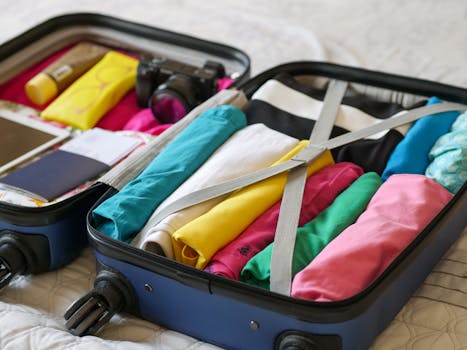
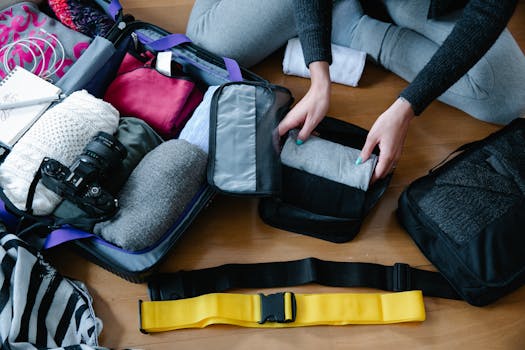
- The Power of Packing Cubes: I cannot stress this enough. Packing cubes are revolutionary. They compress your clothes, organize your items, and make it easier to fit more into less space. My favorite brand is Eagle Creek, but there are many affordable options online. Using different colored cubes for different categories (e.g., shirts, pants, underwear) makes finding things a breeze.
- The "Personal Item" Loophole (and how to use it): This is where many travelers fail to maximize. Your personal item is often overlooked. While your rolling carry-on goes in the overhead, your personal item (backpack, large purse, laptop bag) goes under the seat. Critically, many airlines don't weigh this item, only check its dimensions. This means you can load it up with heavier items like shoes, toiletries, books, or electronics to keep your main carry-on underweight. My personal item is almost always a sturdy backpack, packed to the brim, and it has saved me countless fees.
Personal Anecdote: My first completely carry-on-only trip was a whirlwind week in Rome. I meticulously planned my outfits with packing cubes, wore my bulkiest shoes on the plane, and packed my backpack with my camera gear and toiletries. Walking off the plane, bypassing the baggage carousel, felt like a superpower. I was out of the airport and into a taxi while others were still waiting, wondering if their luggage had made the flight. The freedom was intoxicating!
2. Wear Your Wardrobe: The Layering & Pocket Strategy
This might sound extreme, but trust me, it works. If you're teetering on the edge of a weight limit, or simply need to bring a few extra bulky items, wear them!
Your Strategy for November 2025:
- The "Onion" Method: Wear your heaviest coat, bulkiest sweater, and heaviest shoes on the plane. Even if it's hot outside, you can always shed layers once you're through security and comfortable on the plane. A winter coat can weigh 2-3 kg, instantly saving you from an overweight bag fee.
- Pockets are Your Friends: Jackets, cargo pants, and vests with multiple pockets are mini-suitcases. Stuff them with small, heavy items like chargers, portable power banks, snacks, travel documents, and even small books. Just remember to empty them for security!
- The Scarf/Pashmina Hack: A large scarf or pashmina is incredibly versatile. Wear it as an accessory, use it as a blanket on a chilly flight, or even stuff a few small items inside it and tie it up. It rarely counts as an extra item.
Personal Anecdote: Flying from a chilly London to a slightly warmer Lisbon, I once wore a winter coat, a chunky knit sweater, and my heaviest boots. I looked a bit ridiculous, like a Michelin man, but my carry-on was perfectly within the 7kg limit. Once onboard, I folded my coat and sweater neatly and used them as an extra pillow. Mission accomplished!
3. Strategic Packing: The Art of Less is More
Beyond the carry-on, what you pack and how you pack it makes a huge difference. This isn't just about saving money; it's about making your travel experience smoother and lighter.
Your Strategy for November 2025:
- The Capsule Wardrobe Concept: Plan your outfits so that every top can go with every bottom, and you can mix and match easily. Stick to a color palette. For a week-long trip, you often only need 3-4 bottoms, 5-7 tops, 1-2 outer layers, and 2 pairs of shoes (one on your feet, one packed).
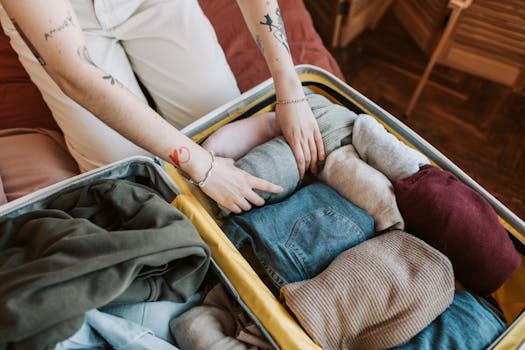
- Roll, Don't Fold (Mostly): For most items, rolling clothes tightly saves space and minimizes wrinkles better than folding. For bulkier items like sweaters or jackets, a tight fold might work best. Experiment to see what works for your specific items and luggage.
- The "Vacuum Seal" Caveat: While vacuum seal bags save space, they don't reduce weight. In fact, by compressing items, they can make your bag denser and heavier, making it more likely to exceed weight limits. Use them cautiously, primarily for very bulky but light items like winter coats or extra blankets if you're driving, not flying.
- Travel-Sized & Solid Toiletries: Ditch the full-sized bottles. Buy reusable travel-sized bottles (under 100ml/3.4oz for liquids in carry-ons) and fill them with your preferred products. Even better, switch to solid toiletries: shampoo bars, conditioner bars, solid toothpaste tabs, and solid deodorant. They save space, weight, and bypass liquid restrictions entirely. Lush and Ethique offer great options.
- Digitalize Everything: Instead of carrying guidebooks, maps, and stacks of printouts, use your smartphone or tablet. Download offline maps, e-books, and digital copies of all your reservations and documents. This significantly reduces weight.
Personal Anecdote: For a two-week trip to Japan, I challenged myself to pack only a small carry-on and a backpack. I meticulously planned my capsule wardrobe, used solid toiletries, and relied entirely on my phone for navigation and entertainment. It felt incredibly liberating to navigate crowded train stations and tiny hotel rooms without wrestling a giant suitcase. I even managed to bring back a few small souvenirs!
4. Leveraging Airline Loyalty & Credit Cards: The Smart Traveler's Secret Weapon
This is where you turn travel expenses into travel perks. Many airline-branded credit cards and higher-tier loyalty statuses offer free checked bags as a standard benefit. The annual fee for these cards often pays for itself after just one or two round-trip flights.
Your Strategy for November 2025:
- Airline Co-Branded Credit Cards:
- Delta SkyMiles Gold American Express Card: Often provides your first checked bag free for you and up to 8 companions on the same reservation for Delta flights. Annual fee is typically $0 for the first year, then around $99. One round-trip checked bag can cost $60-$80, so this pays for itself quickly.
- United Explorer Card (Chase): Offers the first checked bag free for you and one companion on the same reservation for United flights. Annual fee is usually $0 for the first year, then $95.
- AAdvantage Aviator Red World Elite Mastercard (Barclaycard): Provides the first checked bag free for you and up to four companions on domestic American Airlines flights. Annual fee is $99.
- Southwest Rapid Rewards Cards (Chase): Southwest already allows two free checked bags per passenger, but their credit cards offer other perks like bonus points and anniversary points that can lead to free flights.
- Premium Travel Credit Cards: Cards like the Chase Sapphire Reserve or Amex Platinum Card don't typically offer free checked bags directly. However, they provide generous travel credits that can be used to offset baggage fees. For example, the Amex Platinum often has an airline fee credit that can reimburse you for incidental airline charges, including checked bags (on a pre-selected airline).
- Airline Elite Status: Even low-tier elite status with an airline (e.g., Silver Medallion on Delta, Premier Silver on United, AAdvantage Gold on American) often includes a free checked bag. You can earn status through flying a certain number of miles/segments or spending a certain amount on their co-branded credit cards.
Personal Anecdote: I once had to check a bag for a family trip to Florida because we were bringing beach gear. Thanks to my United Explorer Card, both my husband and I got our first checked bags free, saving us $140 round-trip. The card's $95 annual fee was easily justified, and we even earned points towards our next adventure! It's not just about avoiding fees; it's about maximizing value.
5. The "Personal Item" Maximize: Beyond the Backpack
We touched on the personal item earlier, but let's dive deeper. This isn't just a place for your laptop; it's a strategic extension of your luggage.
Your Strategy for November 2025:
- Understand the Dimensions (and the "Squish Factor"): While airlines list specific dimensions for personal items (e.g., 18 x 14 x 8 inches), they are often less strictly enforced than carry-on dimensions, especially if your bag is soft-sided. A duffel bag or a large tote can often hold significantly more than a rigid laptop bag and can be squished to fit under the seat.
- Heavy Items First: As mentioned, load your personal item with your heaviest items. This could be your camera, laptop, tablet, books, shoes, or even dense toiletries. The goal is to get as much weight out of your main carry-on as possible, especially if your airline has a strict carry-on weight limit.
- The "Travel Pillow" Hack (Use with Caution!): This is a cheeky, last-resort hack. Some travelers buy a zippered travel pillow cover and fill it with clothes instead of actual pillow stuffing. They then carry it on, claiming it's a "travel pillow." While it can work, it's technically circumventing rules, and an eagle-eyed agent might call you out. Use at your own risk!
- The Shopping Bag Maneuver: If you buy something at the airport after security (like a duty-free item or a snack), it's usually allowed as an extra item without counting towards your carry-on limit. If you're slightly over, you can sometimes move a few small items into an airport shopping bag. Again, this is a bit of a gray area, but often works.
Personal Anecdote: My friend Sarah is a master of the personal item. She travels for months at a time with just a massive tote bag and a small backpack. Her tote, which she meticulously packs, somehow holds an entire week's worth of clothes, toiletries, and even a small hair dryer. She swears by a lightweight, foldable duffel that expands when needed but squishes down when not. She's never paid a baggage fee in her life.
6. Shipping & Renting: When All Else Fails (or for Special Trips)
Sometimes, no matter how hard you try, a carry-on just won't cut it. This is especially true for long-term travel, moving, or trips requiring specialized gear. In these cases, paying a baggage fee might seem inevitable, but there are smarter alternatives.
Your Strategy for November 2025:
- Shipping Services: For extended trips (e.g., studying abroad, moving temporarily) or for specific items (golf clubs, ski equipment, diving gear), shipping your luggage ahead can be cheaper and less stressful than checking multiple oversized bags. Services like Luggage Forward, SendMyBag, or even standard postal services (USPS, FedEx, UPS) can be great options. Compare costs carefully, especially for international shipments, and factor in delivery times.
- Renting at Your Destination: Don't own ski gear but want to hit the slopes in Aspen? Rent it there! Planning a camping trip in Patagonia? Rent tents and sleeping bags locally. Many destinations offer rental services for specialized equipment, often at competitive prices. This saves you the hassle and cost of transporting bulky items. For example, in Iceland, you can rent waterproof jackets and hiking boots, which can be heavy and take up a lot of space.
- Buy Upon Arrival, Donate Before Departure: For items like basic toiletries, specific snacks, or even cheap t-shirts, consider buying them at your destination and leaving them behind or donating them before you fly home. This works particularly well for long trips where you might need more supplies than your carry-on can hold initially.
Personal Anecdote: A few years ago, I planned a hiking trip to the Canadian Rockies with a group. Instead of everyone checking their heavy hiking boots, poles, and camping stove, we decided to ship the bulkier items via FedEx to our first hotel. It cost us less than checking four separate bags, and the convenience of having everything waiting for us was priceless.
7. The Pre-Flight Weigh-In: Be Prepared, Not Surprised
The last thing you want is to be caught off guard at the airport check-in or gate. A few simple steps before you leave home can save you a world of stress and money.
Your Strategy for November 2025:
- Get a Travel Luggage Scale: This is a non-negotiable, inexpensive travel essential. For about $10-$15 on Amazon, you can get a digital luggage scale that will give you precise readings. Weigh your carry-on and personal item before you leave home. Know your limits and stick to them.
- Practice Packing: Do a dry run. Pack everything you intend to bring, weigh it, and see if it fits. If you're over, start shedding items. This is also a great time to practice using your packing cubes and rolling techniques.
- Emergency Redistribution Plan: If, despite your best efforts, you find yourself slightly over the limit at the airport, have a mental plan. What's the heaviest item you can wear? What can you quickly move to your personal item? What can you ditch or donate if absolutely necessary?
Personal Anecdote: I learned this the hard way at a tiny airport in Croatia. My carry-on was 1 kg over, and the gate agent was relentless. I ended up having to wear two sweaters, a jacket, and stuff my travel book into my already full pocket. I looked like a hot mess, but I avoided the €50 fee. From that day on, my travel scale became my most trusted companion. No more frantic repacking sessions on the airport floor!
Your Fee-Free Future Starts Now!
The era of begrudgingly paying exorbitant baggage fees is over. With these battle-tested strategies, you're not just saving money; you're gaining freedom. Freedom from waiting at baggage carousels, freedom from the stress of unexpected charges, and freedom to travel lighter and smarter. November 2025 (and every month after!) can be your gateway to a world of fee-free adventures.
Imagine the extra cash you'll have for delicious local meals, unforgettable experiences, or even extending your trip a little longer. That $100 I paid in Bali? That could have been a stunning cooking class, a thrilling snorkeling trip, or a fancy dinner overlooking the ocean. Don't make my mistake!
Start implementing these hacks on your very next trip. Practice makes perfect, and soon you'll be a baggage fee ninja, gliding through airports with ease and a smug smile.
What are your best baggage fee hacks? Have you ever had a memorable "never again" moment? Share your stories and tips in the comments below! Let's build a community of fee-free travelers!
---