The Whispers of the Wild: How Hidden Forest Temples Rewrote My Story
There was a time, not so long ago, when I felt utterly lost. Not lost in a geographical sense – my GPS was always impeccably charged – but lost within myself. The relentless hum of city life, the endless scroll of social media, the pressure to constantly do and achieve had slowly, insidiously, eroded my sense of peace. I craved something real, something ancient, something that spoke to the soul beyond the noise. I booked a one-way ticket to Southeast Asia, hoping to find a distraction, but what I stumbled upon instead were hidden temples, tucked away in emerald forests, that didn't just distract me – they utterly transformed me.
This isn't a story about grand, famous temples teeming with busloads of tourists. This is about the ones you have to earn. The ones guarded by ancient trees, where the air hums with cicadas and the scent of damp earth and incense. These aren't just architectural marvels; they are living, breathing sanctuaries that hold centuries of devotion, wisdom, and an undeniable, palpable energy. They changed my life, and I truly believe they can change yours too.
The Call of the Wild & The Whisper of the Past: Why Seek Hidden Temples?
Why bother with the effort, the sweat, the occasional mosquito bite, when you can visit easily accessible, magnificent temples? The answer, for me, is authenticity. While iconic sites like Angkor Wat or Borobudur are breathtaking, they often come with crowds that can dilute the spiritual experience. Hidden forest temples offer something different: an intimate encounter with history, nature, and your own inner landscape.
Imagine standing before a moss-covered stupa, its golden gleam muted by centuries of jungle embrace, with only the sounds of the forest for company. There’s a profound silence that settles over you, a sense of timelessness that connects you directly to the past. These temples aren't just relics; they're living testaments to human devotion, to the enduring power of faith, and to nature's relentless reclaiming of its own. They force you to slow down, to be present, and to listen – not just to the rustling leaves, but to the quiet stirrings within your own heart. It's a pilgrimage, not just a sightseeing trip, and the journey itself becomes part of the revelation.
Whispers in the Jungle: My First Encounter (Beng Mealea, Cambodia)
My first truly transformative experience came in Cambodia, a country brimming with ancient wonders. Everyone goes to Angkor Wat, and rightly so, but I yearned for something more raw, more untouched. That's how I found myself bouncing along a dusty, unpaved road in a tuk-tuk, heading towards Beng Mealea, about 40 miles east of Siem Reap. My driver, a kind man named Sareth, had initially raised an eyebrow when I insisted on going "beyond the main temples."
The journey itself was an adventure. We passed through sleepy villages, past children waving from their stilted homes, and into increasingly dense jungle. The air grew thick with humidity and the symphony of unseen creatures. When we finally arrived, it wasn't a grand entrance with manicured lawns. It was a clearing, and beyond it, a colossal sandstone temple complex swallowed whole by the jungle.
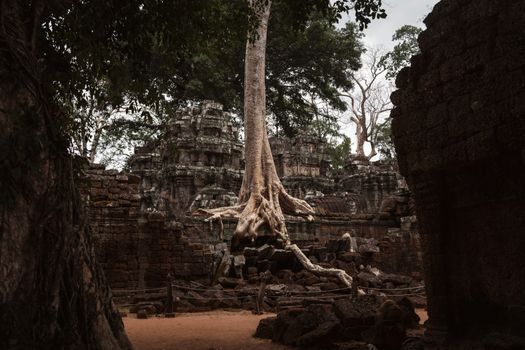
Beng Mealea is not restored; it's a magnificent ruin, a testament to nature's power. Giant fig trees have wrapped their serpentine roots around ancient walls, cracking foundations, and lifting massive stone blocks as if they were pebbles. It felt like walking into a real-life Indiana Jones movie. I spent hours clambering over fallen stones, squeezing through narrow passages, and marveling at the intricate carvings that still peeked out from beneath layers of moss. There were very few other tourists, and often, I was completely alone, the only sounds being my own footsteps and the distant chirping of birds.
Standing in the heart of that crumbling, yet majestic, sanctuary, I felt an overwhelming sense of humility. The sheer scale of human ambition juxtaposed with nature's patient, relentless power was awe-inspiring. It taught me about impermanence, about resilience, and about finding beauty in decay. It was here, amidst the silent majesty of Beng Mealea, that I first felt that profound shift within me – a sense of peace I hadn't known in years.
- Location: Beng Mealea, Siem Reap Province, Cambodia.
- Getting There: Best by tuk-tuk or private car from Siem Reap. It's about a 1.5-hour drive. Negotiate a price for the day (expect $30-50 USD depending on bargaining skills and vehicle).
- Entrance Fee: Included in the Angkor Pass, or a separate ticket might be required (around $5-7 USD). Check current regulations.
- Pro Tip: Wear sturdy shoes for climbing over rubble. Bring plenty of water and bug spray!
Serenity Amidst the Green: The Mountain Monastery (Wat Palad, Thailand)
My next revelation came in Northern Thailand, near the bustling city of Chiang Mai. While Doi Suthep, perched high on the mountain, draws crowds, I was told about a "hidden temple" further down the mountain, accessible only by a forest trail: Wat Palad (also known as Wat Pha Lat). This time, I went on foot.
The hike began at the base of the mountain, a winding, sometimes steep, path known as the Monk's Trail. The forest was thick, providing a cool canopy from the Thai sun. The air was filled with the scent of damp earth and exotic flowers, and the only sounds were my own breath, the crunch of leaves underfoot, and the distant chirping of unseen birds. It was a meditative walk, each step taking me further away from the city's chaos and deeper into nature's embrace.
After about an hour of trekking, I started to hear the gentle rush of water. Rounding a bend, I saw it: a cluster of elegant, Lanna-style temples nestled beside a waterfall, seamlessly blending with the surrounding jungle. Wat Palad is utterly enchanting. Moss-covered stone statues of Buddha sat serenely, overlooking the flowing water. Intricate Naga (mythical serpent) balustrades guarded staircases, and golden stupas glinted through the emerald leaves. Unlike Beng Mealea, this temple was still actively used by monks, and their saffron robes added vibrant splashes of color to the verdant landscape.
I spent hours there, sitting by the waterfall, listening to the soothing sounds of nature, and observing the monks going about their quiet routines. The atmosphere was one of profound tranquility. It wasn't just the beauty of the place, but the palpable sense of peace and devotion that permeated every stone. It was a gentle reminder to slow down, to breathe, and to find stillness amidst the constant motion of life. It taught me that true peace isn't found in grand gestures, but in quiet moments of connection.
- Location: Wat Palad (Wat Pha Lat), Doi Suthep-Pui National Park, Chiang Mai, Thailand.
- Getting There: Hike the Monk's Trail from the base of Doi Suthep Road (look for the start near the Chiang Mai Zoo entrance). Takes 45-90 minutes depending on fitness. Alternatively, a red songthaew (shared taxi) can drop you off, but the hike is part of the experience.
- Entrance Fee: Free.
- Pro Tip: Go early in the morning for cooler temperatures and even fewer people. Wear comfortable hiking shoes. Dress respectfully (shoulders and knees covered) as it's an active temple.
Beyond the Map: Unveiling Truly Secret Sanctuaries (Laos & Myanmar)
After these initial experiences, I was hooked. I started actively seeking out the truly hidden gems, the ones that weren't even on most tourist maps. This led me to more remote corners of Southeast Asia, particularly in Laos and Myanmar, where ancient spiritual traditions still thrive in relative isolation. These weren't always easy to find, often requiring local guides, motorbike rides down barely-there tracks, and a willingness to embrace the unknown.
I remember one particular instance in a lesser-known region of Laos. I'd heard whispers from a local guesthouse owner about an ancient stupa deep in the forest, rarely visited. With a local guide on the back of my rented scooter (cost me about $7/day for the scooter, $15 for the guide), we navigated treacherous dirt paths, crossing shallow streams, and pushing through thick foliage. The air was heavy with the scent of tropical flowers and the earth. After what felt like hours, we emerged into a small clearing.
There it stood: a crumbling, brick stupa, perhaps only 20 feet tall, but radiating an immense presence. It was covered in moss and vines, almost entirely reclaimed by the jungle, yet its form was still clearly discernible. Around it, scattered on the forest floor, were fragments of pottery and ancient offerings. There was no entrance fee, no gift shop, no other soul in sight. Just the stupa, the forest, and me. My guide explained that local villagers still came here occasionally to make offerings, keeping the spirit of the place alive.
This experience, and others like it, taught me the true meaning of discovery. It wasn't about checking off a list; it was about the journey, the effort, the trust in local knowledge, and the profound reward of connecting with something so ancient and pure. These places weren't just life-changing; they were soul-altering. They stripped away the layers of modern life, revealing a simpler, more connected existence. They taught me to trust my instincts, to embrace serendipity, and to find beauty in the forgotten corners of the world.
- Specifics: These truly "hidden" spots are often not named on maps or shared widely to preserve their sanctity. The best way to find them is to talk to locals, especially guesthouse owners or guides in remote areas. Be respectful of their privacy and traditions.
- Cost: Often free, but always compensate local guides fairly for their time and knowledge (negotiate, but be generous).
- Pro Tip: Learn a few basic phrases in the local language. A genuine smile and respectful demeanor go a long way.
Your Own Path to Discovery: Practical Tips for Finding Hidden Temples
Inspired to find your own life-changing sanctuary? Here’s how you can embark on your own adventure:
- Do Your Research (But Not Too Much!): Start by looking for lesser-known temples near popular sites. Guidebooks often mention a few, but delve into travel forums, local blogs, and even academic papers for clues. Look for places described as "remote," "jungle-covered," or "requiring a trek."
- Hire a Local Guide: This is paramount. Local guides not only know the way, but they also understand the history, culture, and etiquette of the site. They ensure your safety, enrich your experience, and you directly support the local economy. Negotiate a fair price beforehand.
- Embrace the Journey: The path to these temples is often as rewarding as the destination itself. Don't rush. Take in the sights, sounds, and smells of the forest. Be open to detours and unexpected encounters.
- Be Prepared:
- Footwear: Sturdy, comfortable hiking shoes are a must.
- Clothing: Light, breathable, long-sleeved shirts and pants to protect against sun, insects, and scratches. Always dress respectfully (shoulders and knees covered) for religious sites.
- Water & Snacks: Carry plenty of water. Remote areas won't have shops.
- Bug Spray: Essential in tropical forests.
- First Aid Kit: Basic supplies for minor cuts or scrapes.
- Power Bank: Keep your phone charged for emergencies and photos.
- Cash: Many remote areas are cash-only.
- Respect the Sacred: These are active places of worship for many.
- Ask Permission: If you see locals, a simple nod or "hello" (in their language if possible) goes a long way.
- Observe Silence: Keep your voice down.
- No Touching: Do not touch statues or ancient structures.
- Leave No Trace: Pack out everything you pack in. Leave the place cleaner than you found it.
- Go Early: Beat the heat and the few other potential visitors. The morning light also creates magical photo opportunities.
- Be Flexible & Open: Sometimes you'll find exactly what you're looking for, sometimes something even better. The magic often lies in the unexpected.
The Unseen Path: My Continuing Journey
My search for hidden temples continues. Each one offers a unique lesson, a different perspective, and a renewed sense of wonder. They've taught me patience, resilience, and the profound beauty of solitude. They've reminded me that true wealth isn't measured in possessions, but in experiences, in connections, and in the quiet moments of peace found far from the madding crowd.
These aren't just ruins; they are portals. Portals to the past, to nature's raw power, and to a deeper understanding of yourself. So, if you're feeling a similar longing, if the hum of modern life has grown too loud, perhaps it's time to trade the paved roads for a forest trail. Seek out the whispers in the wild, the secrets guarded by ancient trees, and let a hidden temple change your life forever.
What hidden gems have you discovered on your travels? Share your stories and inspire others in the comments below!
---