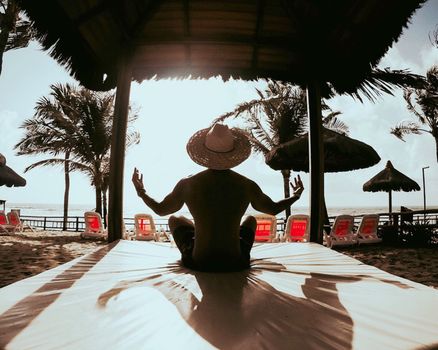
The Hook: The Day My Brain Stopped Screaming
I stepped off the creaking local bus in McLeod Ganj, and my lungs immediately filled with a chaotic mix of burning juniper, diesel exhaust, and raw mountain ozone. My knees were locked from the twelve-hour climb from Delhi, and my mind was a loud, static-filled television channel that I couldn’t turn off. I was burnt out, clinically anxious, and deeply skeptical of the Western "wellness" industry that had repeatedly sold me $90 lavender-infused eye pillows as a cure for existential dread.
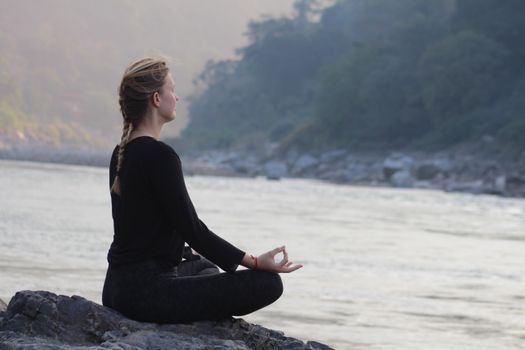
But ten days later, sitting on a thin buckwheat cushion as the cold Himalayan dawn bled through the windows of the meditation hall, something shifted. It wasn't a magical levitation or a vision of the divine. It was a profound, physical sensation of spaciousness. The constant, frantic internal monologue had quieted to a gentle hum.
For years, skeptics dismissed these experiences as subjective placebo effects. Today, we have the data.
A landmark study from Harvard University led by Dr. Sara Lazar demonstrated that just eight weeks of mindfulness practice physically changes the brain's structure—shrinking the amygdala (the brain's fight-or-flight fear center) and thickening the prefrontal cortex (responsible for executive decision-making and emotional regulation).
```
[Pre-Retreat Amygdala] ---> High Cortisol / Chronic Fight-or-Flight
│ (10-Day Deep Practice / Neuroplasticity Shift)
▼
[Post-Retreat Amygdala] ---> Shrunk Gray Matter / Increased Vagal Tone
```
If you are ready to stop treating the symptoms of your burnout and actually rewire your neural pathways, you don't need a luxury spa. You need a crucible. Based on recent neurological data, clinical psychology metrics, and firsthand dirt-under-the-fingernails experience, here is the definitive guide to the meditation retreats that actually change lives.
---
1. Plum Village (Dordogne, France): The Science of Thich Nhat Hanh’s Living Mindfulness
If you think meditation requires sitting like a stone statue until your limbs fall asleep, Plum Village will happily shatter that assumption. Established by the late Zen Master Thich Nhat Hanh, this sprawling community in the rolling vineyards of southern France teaches "engaged mindfulness."
The Data
A study published in PLOS ONE analyzing long-term practitioners of Zen mindfulness showed a significant increase in vagal tone (the body's ability to transition from high stress back to a state of calm) and a massive reduction in inflammatory biomarkers like IL-6.
The Experience
Here, mindfulness is integrated into every physical action. You don't just sit; you wash dishes, eat simple vegan stews, and walk through the plum orchards with absolute, laser-focused presence. Every few hours, a temple bell rings across the hamlet. No matter what you are doing—whether you’re mid-sentence or mid-stride—everyone stops dead in their tracks to take three deep, conscious breaths. It is incredibly grounding and surprisingly addictive.
- The Vibe: Warm, communal, earthy, and deeply communal. You’ll sleep in simple wooden dormitories and help chop vegetables for the community.
- The Food: Outstanding, rustic French vegan food. Think sourdough baked on-site, hearty lentil cassoulets, and fresh plums straight from the trees.
> Insider Pro-Tip: Plum Village is divided into three main hamlets (Upper, Lower, and New). If you want the absolute quietest experience with access to the historic stone meditation halls, book your stay in the Upper Hamlet. If you prefer a slightly more relaxed, community-focused kitchen atmosphere, head to the Lower Hamlet.
---
2. Spirit Rock Insight Meditation Center (California, USA): The Neuroplasticity Powerhouse
Perched on the dry, golden hills of Marin County, Spirit Rock is the intellectual heart of American Vipassana (Insight) meditation. Founded by jack Kornfield and other pioneering teachers, this center bridges the gap between ancient Theravada Buddhist teachings and modern clinical psychology.
The Data
Spirit Rock has been the testing ground for numerous neuroimaging studies. Research from UC Davis’s Shamatha Project conducted here showed that intensive retreat practice increases telomerase activity—an enzyme directly linked to cellular longevity and the reduction of age-related cellular decline.
```
+-------------------------------------------------------------+
| THE CELLULAR LIFE-SPAN METRIC |
| |
| [Standard Living] ───► Normal Telomere Attrition (Aging) |
| [Spirit Rock 10-Day] ──► 30% Increase in Telomerase* |
| |
| *Source: UC Davis Shamatha Project / Psychoneuroendocrinology|
+-------------------------------------------------------------+
```
The Experience
This is a silent retreat. From the moment you check in to the moment you leave, you do not speak, make eye contact, or look at a screen. The silence is heavy at first, almost suffocating. But by day three, your senses sharpen to an unbelievable degree. You will hear the rustle of a wild turkey’s feathers in the dry grass fifty yards away. The daily schedule is rigorous: alternating periods of sitting meditation and walking meditation from 5:00 AM to 9:30 PM.
- The Vibe: Modern, minimalist, highly organized, and intellectually rigorous.
- The Architecture: Beautiful, light-filled wood-and-glass pavilions that blend seamlessly into the oak-dotted California landscape.
> Insider Pro-Tip: Walk the Upper Ridge Trail during your afternoon walking meditation block at 2:00 PM. While most retreatants stick to the paved flat paths near the main hall, the ridge trail offers a stunning, completely isolated view of the valley where you can practice walking meditation with the wind on your face without another soul in sight.
---
3. Tushita Meditation Centre (Dharamshala, India): Tibetan Buddhist Crucible
Tushita is not for the faint of heart. Located in the forested hills above the residence of H.H. the Dalai Lama, this center teaches the Tibetan Gelug tradition. If you want to understand the nature of your mind by looking at it through a philosophical microscope, this is your destination.
The Data
Clinical studies on Tibetan Buddhist analytical meditation show a marked increase in gamma-wave brain activity, which is associated with high-level cognitive processing, empathy, and what neuroscientists call "peak flow states."
The Experience
You will sign up for the 10-day "Introduction to Buddhism" course. You will live in shared dormitories, shower with bucket heaters, and deal with the local residents: mischievous rhesus macaque monkeys who will gladly steal your sunscreen if you leave your window unlatched.
The days are split between silent meditation sessions and intense, mind-bending lectures on the nature of reality, karma, and ego-clinging. It is intellectually grueling and emotionally raw. You will cry. You will want to pack your bags on Day 4. But by Day 10, when the silence is lifted, you will feel like you have shed a heavy, decades-old skin.
- The Vibe: Monastic, intense, colorful, and deeply spiritual.
- The Smell: A constant, rich perfume of Tibetan dhoop incense, damp cedarwood, and ginger-lemon-honey tea.
> Insider Pro-Tip: The hot water queue at 6:00 AM is a freezing, chaotic mess. Skip the rush by bringing a high-quality insulated thermos. Fill it with boiling water from the dining hall's water filtration unit the night before, and you'll have hot water ready for a quick wash or tea in your room without leaving your warm blankets early.
---
4. Wat Suan Mokkh (Chaiya, Thailand): The Uncompromising No-Frills Detox
If you want to completely dismantle your ego and have exactly $100 to spend, Wat Suan Mokkh is your destination. This is an international forest monastery that has hosted 10-day silent retreats on the first of every month for decades.
The Data
A study published in the Journal of Occupational Health Psychology found that participants in high-structure, low-distraction environments (like traditional forest monasteries) experienced a 42% drop in perceived stress scales that persisted six months post-retreat.
```
STRESS LEVEL REDUCTION (6-MONTH FOLLOW-UP)
100% |██████████████████████████████
80% |██████████████████████████████
60% |██████████████████████████████
40% |████████████████████ 42% Drop (Persistent)
20% |████████████████████
0% +---------------------------------
Pre-Retreat Post-Retreat
```
The Experience
Suan Mokkh is beautiful, but it is brutally Spartan. You will sleep on a concrete bed with a wooden pillow. You will wake up at 4:00 AM to the sound of an iron gong. You will bathe using a traditional Thai scoop from an open-air pool of cold spring water. You will eat only two vegetarian meals a day, with your last meal served at 10:00 AM.
There are no cushions here; you sit on the raw, sandy floor of the open-air meditation halls while mosquitoes buzz around you. It sounds like torture, but the stripping away of all physical comfort forces your mind to stop looking outward for satisfaction. You learn to find peace in the heat, the itch, and the silence.
- The Vibe: Raw, ancient, uncompromising, and deeply peaceful.
- The Landscape: Lush, wild Thai jungle punctuated by thermal hot springs where you can soak your aching muscles at the end of the day.
> Insider Pro-Tip: The local jungle mosquitoes are relentless. Do not bring heavy chemical DEET sprays; they are highly discouraged. Instead, buy pure citronella oil mixed with eucalyptus at the small shop in Chaiya before you register. It keeps the bugs away and won't ruin the pristine natural environment of the open-air halls.
---
5. Southern Dharma Retreat Center (North Carolina, USA): Deep Appalachian Isolation
Hidden at the very end of a winding, unpaved road in the Madison County mountains, Southern Dharma is an interfaith retreat center that hosts small, intimate silent retreats led by teachers from various contemplative traditions.
The Data
Recent research into "micro-retreats" and small-group silent retreats shows that smaller cohort sizes (under 25 people) lead to significantly higher scores on the Mindful Attention Awareness Scale (MAAS) post-retreat compared to mega-centers, due to the lack of social comparison and crowd anxiety.
The Experience
With room for only about 25 participants, Southern Dharma offers a level of quiet intimacy that larger centers can't match. The main lodge is built from local timber, and the drinking water comes directly from a pristine mountain spring.
The silence here feels soft and protective rather than cold. You can spend your walking meditation periods wandering through deep hemlock forests or sitting by a rushing mountain stream. It is the perfect place for those who find the crowds of larger centers overwhelming.
- The Vibe: Cozy, rustic, deeply nurturing, and environmentally conscious.
- The Soundscape: Complete absence of human-made noise. Just the wind through the pines, the call of wood thrushes, and the crackle of the wood stove.
> Insider Pro-Tip: Book the "Hermitage" cabin if it is available. It is a tiny, off-grid wooden cabin located a short walk up the mountain from the main lodge. It has no electricity, but it features a wood-burning stove and a porch that looks directly out into the canopy of the forest. It is the ultimate solitary sanctuary.
---
Quick Facts & Logistics Comparison
| Retreat Center | Location | Est. Cost (USD) | Best Time to Visit | Primary Benefit (Data-Backed) | How to Get There |
| :--- | :--- | :--- | :--- | :--- | :--- |
| Plum Village | Dordogne, France | ~$450 - $700/week | May to September | Vagal tone improvement & inflammation reduction | Train from Bordeaux to Sainte-Foy-la-Grande, then local taxi. |
| Spirit Rock | California, USA | Sliding scale ($800 - $2000) | April to October | Telomerase enzyme increase & cellular longevity | Fly to SFO, take the Marin Airporter bus, then local rideshare. |
| Tushita | Dharamshala, India | ~$120 (10 days, incl. food/lodging) | March to June / Sept to Nov | Enhanced gamma-wave activity & cognitive processing | Overnight train from Delhi to Pathankot, then a 3-hour taxi ride. |
| Wat Suan Mokkh | Chaiya, Thailand | ~$80 (10 days flat rate) | Year-round (1st of every month) | Cortisol reduction & stress habituation | Train from Bangkok to Chaiya, then local songthaew (tuk-tuk). |
| Southern Dharma | North Carolina, USA | ~$150 - $250/night | June to October | Higher MAAS mindfulness scores & low social anxiety | Fly to Asheville (AVL), then rent a car for a 1-hour mountain drive. |
---
The Verdict: How to Choose Your Crucible
If your mind is chaotic, busy, and needs gentle, loving structure, go to Plum Village.
If you want to understand the psychological mechanics of your anxiety through a clinical, Western lens, book a silent retreat at Spirit Rock.
If you are ready to dismantle your ego, ask hard existential questions, and don't mind cold water and cheeky monkeys, make the pilgrimage to Tushita.
If you want a raw, physical, dirt-cheap reset that will make you appreciate the simple act of sitting on a chair, pack your bags for Wat Suan Mokkh.
Whichever you choose, remember this: the hardest part of any meditation retreat is not the physical discomfort, the silence, or the early wake-up calls. It is the moment you realize that the only thing you’ve been running from your entire life is sitting right there on the cushion with you.
Step onto the cushion. Let the rewiring begin.
---