The Whisper of Ancient Pines: My First Breath of True Qi Gong
I stepped off the train in a small, dusty town nestled at the foot of the Wudang Mountains, and the air itself felt different. It wasn't just the crisp, pine-scented coolness that kissed my cheeks, a welcome respite from the humid chaos of Beijing. It was a palpable stillness, a deep, resonant hum that seemed to emanate from the very stones beneath my feet. The faint scent of burning incense, mingled with the earthy aroma of damp soil and wild herbs, was an invitation, a silent promise of something profound. This was it. This was where the journey truly began, seeking out the elusive Qi Gong masters who were opening their ancient doors to a world eager to learn.
For years, I’d devoured books, practiced diligently in city parks, and felt the subtle shifts within myself. But I craved the source, the living lineage, the direct transmission of knowledge from those who had dedicated their lives to this ancient art. The challenge? Navigating the labyrinth of information, finding genuine masters, and understanding the practicalities of immersing oneself in such a tradition as a foreigner. That’s where the wisdom of seasoned travel advisors, those who’ve walked these paths before, becomes invaluable. They’ve sifted through the whispers, discerning the true from the tourist façade, and pointed me towards the experiences that truly nourish the soul.
The Wudang Mountains: Where Heaven Meets Earth
My primary quest led me to the sacred Wudang Mountains, a UNESCO World Heritage site steeped in Taoist philosophy and renowned as a cradle of Qi Gong and Tai Chi. The sheer scale of the mountains is breathtaking – jagged peaks shrouded in mist, ancient temples clinging precariously to cliff faces, and winding stone paths that have been trodden by pilgrims for centuries.
The Golden Palace of Heaven (Jindeng Jianggong):
While not a place to learn Qi Gong in a formal sense, standing before this gilded marvel, perched at the highest point, is an experience that ignites the spirit. The intricate architecture, the glint of gold in the sunlight, and the panoramic views are a testament to the dedication and spiritual pursuit of those who built it. It's a powerful reminder of the dedication required in Qi Gong practice.
Pro-Tip:
Visit the Golden Palace at sunrise. The soft, golden light illuminating the intricate details is utterly mesmerizing, and the crowds are significantly thinner. The silence, broken only by the distant chime of bells, is profound.
Authentic Training Sanctuaries:
Beyond the iconic landmarks, the true magic lies in the smaller, often overlooked, training centers and hermitages scattered throughout the mountains. These are the places where genuine masters, often living a simple, dedicated life, are more inclined to accept dedicated foreign students. I’ve heard tales of retired masters who, seeing a sincere spark, will invite earnest practitioners into their humble abodes for personal instruction.
Insider Language:
When seeking these places, don't ask for a "school." Instead, inquire about "cultivation places" (xiūliàn dì) or "practice retreats" (duànliàn tà). This subtle shift in language can open doors.
Shaolin Temple: The Birthplace of Kung Fu and Qi Gong
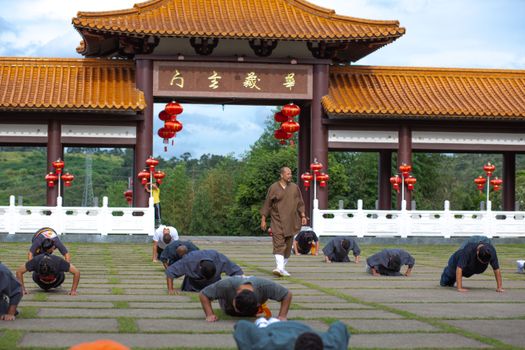
No discussion of Chinese martial arts and internal energy would be complete without mentioning the legendary Shaolin Temple, the birthplace of Zen Buddhism and Kung Fu. While often perceived as a tourist attraction, the Shaolin Temple and its surrounding areas still harbor deep wells of authentic Qi Gong knowledge.
The Shaolin Temple Itself:
Visiting the main temple complex is a must for historical context. Witnessing the monks perform their incredible feats of strength and discipline is inspiring. However, for direct Qi Gong instruction from masters, one often needs to look beyond the main tourist path.
Pro-Tip:
Many former Shaolin monks and disciples have established their own training centers in the villages surrounding the temple. These offer a more intimate and focused learning environment. Look for centers that emphasize "Qi Gong for health" (jiànkāng qìgōng) or "internal cultivation" (nèigōng).
The Five Animals Qi Gong:
Shaolin is famously associated with the Five Animals forms (Tiger, Crane, Leopard, Snake, and Dragon). Learning these from a master who understands the underlying energetic principles, not just the physical movements, is a game-changer. It’s about embodying the spirit and power of each animal.
Authenticity:
The aroma of burning sandalwood is a constant in the temple courtyards. Listen for the rhythmic chanting of monks and the distinct "thwack" of practice staffs. These sensory details ground you in the ancient tradition.
Other Regions and Traditions: Beyond the Famous Peaks
While Wudang and Shaolin are prominent, the pursuit of Qi Gong mastery is a nationwide endeavor. Travel advisors often highlight regions and specific lineages that offer unique and profound learning experiences.
Mount Emei (Sichuan Province):
Known for its stunning natural beauty and Buddhist heritage, Mount Emei also has a strong tradition of Qi Gong, often integrated with Buddhist meditation practices. The serene atmosphere here is conducive to deep introspection.
Pro-Tip:
Seek out smaller, family-run training centers in the foothills of Emei. These often have a more personalized approach and a direct lineage to local masters.
The "Hidden Masters" of Rural Villages:
Some of the most profound Qi Gong practitioners are not in grand temples but in humble villages, living unassuming lives. These masters may not advertise their skills but are known within local communities. Building trust and showing genuine respect is key to gaining access.
Insider Language:
When inquiring about masters, use terms like "elder" (lǎorén) or "virtuous practitioner" (dàodé xiūliànzhě). This shows reverence and understanding of the cultural context.
What to Expect: The Realities of Learning from a Master
Embarking on this journey is not just about learning movements; it's about a shift in lifestyle and perspective.
Daily Life:
Expect early mornings (often before dawn), simple living conditions, and a disciplined routine. Meals are usually communal and vegetarian, focusing on nourishing the body. The focus is on consistent practice and mindful living.
Pro-Tip:
Pack light, comfortable, and breathable clothing. Natural fabrics like cotton and linen are ideal. Bring a good pair of walking shoes for mountain trails.
The Teacher-Student Relationship:
This is deeply rooted in respect and dedication. Masters often impart wisdom not just through instruction but through their very presence and example. Be prepared to listen, observe, and absorb.
Authenticity:
The scent of freshly brewed herbal tea is a common offering. The sound of a wooden clapper signaling meditation times is a gentle, consistent rhythm. These small details speak volumes about the dedication to a mindful life.
The Language Barrier: Bridging the Communication Gap
This is often the biggest hurdle for foreign students. However, it’s not an insurmountable one.
Learning Basic Mandarin:
Even a few key phrases can make a significant difference. Words like "thank you" (xièxie), "please" (qǐng), "understand" (dǒng), and "difficult" (nán) will be greatly appreciated.
Pro-Tip:
Download a good translation app and have it ready. Many masters, though not fluent in English, are adept at communicating through gestures, demonstrations, and patient repetition.
Finding English-Speaking Facilitators:
Some larger training centers or more internationally-oriented masters may have students or staff who can assist with translation. Travel advisors can often help identify these resources.
The Power of Non-Verbal Communication:
Qi Gong itself is a form of communication. The flow of energy, the precision of movement, and the shared intention can transcend verbal language.
Logistics and Budget: Planning Your Qi Gong Pilgrimage
Embarking on this journey requires careful planning. Here’s a general overview.
| Aspect | Estimated Cost ($USD) | Best Time to Visit | How to Get There |
| :------------ | :-------------------- | :----------------- | :------------------------------------------------------------------------------- |
| Tuition/Fees | $300 - $1500+ / month | Spring (Mar-May), Autumn (Sep-Nov) | Varies greatly by program. Some masters accept donations. |
| Accommodation | $100 - $500 / month | Mild temperatures | Often provided at training centers; otherwise, guesthouses or simple hotels. |
| Food | $100 - $300 / month | Avoid extreme heat/cold | Simple, local eateries or communal meals. |
| Visa | $100 - $200 | N/A | Apply well in advance through your local Chinese embassy or consulate. |
| Flights | $800 - $2000+ | N/A | Major international airports (e.g., Beijing, Shanghai, Xi'an) then domestic travel. |
| Local Transport | $50 - $150 / month | N/A | Buses, trains, taxis. |
Pro-Tip:
Always clarify what is included in the fees. Some programs include accommodation and meals, while others do not. Be prepared for unexpected expenses.
Best Time to Visit:
Spring and autumn offer the most pleasant weather for outdoor practice and travel. Summers can be very hot and humid, while winters can be extremely cold, especially in mountainous regions.
How to Get There:
The most common route is to fly into a major Chinese city (e.g., Beijing, Shanghai, Xi'an) and then take a domestic flight or high-speed train to the nearest city to your chosen training location. From there, local transport (bus, taxi) will be needed.
---
My journey to find masters accepting foreign students was more than a trip; it was an immersion into a way of life, a profound connection to an ancient practice. The scent of pine, the taste of simple, nourishing food, and the gentle resonance of a master's voice guiding me through a movement – these are the memories that linger, the true treasures of this transformative pursuit. If you feel the call of Qi, listen closely, do your research, and embrace the adventure. The masters are waiting, and the path to deeper understanding is clearer than you might think, especially with the right guidance.
---