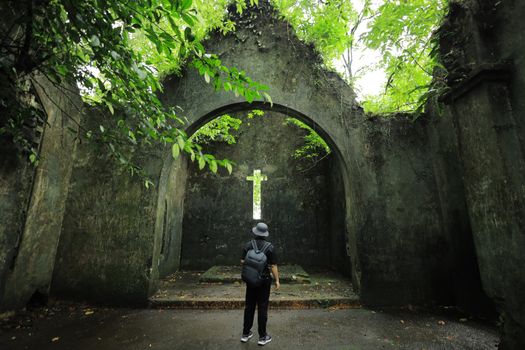
Uncover Secret Forest Temples: Your Ultimate Guide to Trending Ancient Sanctuaries
There's a whisper traveling through the global travel community, a rustle of leaves that speaks of ancient stones and forgotten paths. It’s the sound of travelers seeking something deeper, something more authentic than the well-trodden tourist circuits. We're talking about hidden temples, sanctuaries shrouded in mist and embraced by the wild tendrils of the forest – and let me tell you, they are trending right now.
My own journey into this mystical realm began quite by accident. I remember the oppressive heat of a Cambodian afternoon, the kind that makes your clothes stick and your determination waver. I’d spent days navigating the grandeur of Angkor Wat, marveling at Bayon’s smiling faces, but something felt… missing. The crowds, the selfie sticks, the relentless buzz of commerce – it was beautiful, yes, but not quite the spiritual immersion I craved. Then, a local tuk-tuk driver, seeing the longing in my eyes, offered a cryptic suggestion: "Beng Mealea. Forest temple. Quiet." That short, simple phrase changed everything.
The bumpy ride, the encroaching jungle, the sudden silence as we pulled up to a structure devoured by roots and moss – it was like stepping into a forgotten dream. No throngs, just the symphony of chirping insects and the occasional rustle of leaves. That day, scrambling over crumbling stones and ducking under ancient archways, I understood the allure. It wasn't just a temple; it was an experience. And it's an experience that more and more adventurers are chasing, trading postcard-perfect views for raw, untamed history.
So, if you're ready to swap the queues for quiet contemplation, and the paved paths for jungle trails, keep reading. I'm taking you deep into the heart of what makes these hidden forest temples the hottest trend in travel, complete with personal tales, practical tips, and specific locations to spark your next unforgettable journey.
Why Are Forest Temples Trending Right Now? The Allure of the Untamed
In an increasingly connected and often overwhelming world, the desire for disconnection, for authentic discovery, has never been stronger. Travelers are actively seeking experiences that offer solitude, mindfulness, and a genuine connection to history and nature. Hidden forest temples tick every single one of these boxes.
- Escape the Crowds: Let's face it, popular sites can be exhausting. These forest sanctuaries offer a rare commodity: peace. You can wander, explore, and simply be without jostling for space or waiting for the perfect photo op.
- Authentic Discovery: There’s an unparalleled thrill in feeling like an explorer, uncovering something that feels almost forgotten. These aren't just ruins; they're living testaments to ancient civilizations, often less restored, allowing you to witness history in its rawest form.
- Mindfulness and Spirituality: The dense forest canopy, the quiet hum of nature, the ancient stones – it all conspires to create an atmosphere conducive to reflection and introspection. Many of these sites were built as places of worship, and that sacred energy still resonates.
- Instagram-Worthy, Naturally: While escaping the crowds is key, the visual appeal is undeniable. Imagine moss-covered statues, colossal tree roots embracing stone walls, shafts of sunlight piercing through the canopy. These are the backdrops for truly unique and breathtaking photographs that tell a story far beyond a typical landmark selfie.
- Sustainable and Responsible Travel: Often, visiting lesser-known sites can help distribute tourism revenue to local communities outside major hubs, promoting a more sustainable form of travel.
This trend isn't just about pretty pictures; it's about a shift in how we experience the world, prioritizing depth over breadth, and personal connection over mere sightseeing.
My Journey to Beng Mealea: Cambodia's Jungle-Claimed Masterpiece
My first real taste of the forest temple trend was at Beng Mealea, about 60-70 kilometers east of Siem Reap, Cambodia. Forget the manicured lawns and restored structures of Angkor Wat. Beng Mealea is Angkor's wild, untamed cousin, a sprawling sandstone complex largely left to the jungle's embrace.
Getting there involved a bumpy 1.5-hour tuk-tuk ride through rural villages and rice paddies. The cost for a return trip from Siem Reap usually runs around $25-35 USD, depending on your negotiation skills and how long you want to stay. The entrance fee for Beng Mealea is a separate $5 USD (it's not included in the Angkor Pass).
As I approached, I could see massive stone blocks strewn like giant's toys, swallowed by strangler figs and colossal tree roots. It felt less like an archaeological site and more like an Indiana Jones set. There are no designated paths in many areas; instead, you clamber over fallen lintels, duck under crumbling archways, and navigate narrow passages. Some sections have wooden walkways, but the real adventure lies off them.
I hired a local guide for an extra $10 USD at the entrance, and it was one of the best decisions I made. He wasn't just a guide; he was a storyteller, pointing out carvings hidden beneath layers of moss, explaining the temple's history, and showing me safe routes through the rubble. He even helped me climb onto a particularly large stone block for a panoramic view of the jungle canopy reclaiming the temple. The air was thick with humidity and the earthy scent of decay and rebirth. The only sounds were the distant chirping of cicadas and the occasional hoot of a bird. It was pure magic.
Practical Tips for Beng Mealea:
* Best Time to Visit: Early morning (before 9 AM) or late afternoon (after 3 PM) to avoid the midday heat and the few tour groups that do visit.
* What to Wear: Sturdy closed-toe shoes with good grip are essential for climbing over uneven terrain. Light, breathable clothing is a must.
* Bring: Plenty of water, insect repellent, and a hat.
* Local Guides: Highly recommended for safety, historical context, and finding the best viewpoints. They rely on tourism for their livelihoods.
* Photography: The soft morning or late afternoon light filtering through the trees is incredible. Look for details – moss, roots, intricate carvings.
Japan's Mystical Forests: Koyasan's Okunoin Cemetery
Japan might conjure images of neon-lit cities or serene Zen gardens, but it also harbors some of the most profound and beautiful forest sanctuaries. One that particularly captivated me was Okunoin Cemetery on Mount Koya (Koyasan), a sacred Buddhist mountain in Wakayama Prefecture. While not a "temple" in the traditional sense, it's a vast and ancient cemetery leading to the mausoleum of Kobo Daishi, the founder of Shingon Buddhism, and embodies the spirit of a hidden forest sanctuary.
The journey to Koyasan itself is part of the experience. From Osaka, you take a train to Gokurakubashi, then a scenic cable car up the mountain. A Koyasan World Heritage Pass (around ¥3,000-4,000, including transport and bus within Koyasan) is a good option.
Stepping into Okunoin is like entering another world. Thousands upon thousands of moss-covered tombstones, ancient trees, and silent statues line a 2-kilometer path that winds through a dense cedar forest. The air is cool, even in summer, and the atmosphere is profoundly spiritual. I visited during a light drizzle, and the mist clinging to the trees made it feel even more ethereal. There's a palpable sense of peace and reverence.
Along the path, you'll see unique and moving memorials, some centuries old, others more modern. Many are adorned with small, knitted hats and bibs, offerings to Jizo Bodhisattva, the protector of children and travelers. The path eventually leads to Torodo Hall (Lantern Hall), glowing with thousands of donated lanterns, and then to Kobo Daishi's mausoleum. Photography is not allowed inside the mausoleum, encouraging a moment of quiet reflection.
My personal anecdote from Okunoin involves the sheer silence. Despite other visitors, everyone seemed to instinctively lower their voices, moving with a respectful hush. I remember stopping at a small bridge, watching the water flow, and feeling an incredible sense of timelessness. It was a profound reminder of life's fleeting nature and the enduring power of faith.
Practical Tips for Okunoin:
* Best Time to Visit: Any time of year offers a unique beauty. Autumn for fall foliage, winter for snow-dusted serenity. Early morning or late afternoon enhances the mystical atmosphere.
* What to Wear: Comfortable walking shoes. Dress respectfully, as it is a sacred site.
* Accommodation: Consider staying overnight at a shukubo (temple lodging) in Koyasan. It's an incredible experience, including vegetarian Buddhist meals (shojin ryori) and morning prayers. Prices vary but expect around ¥10,000-20,000 per person per night.
* Respect: Maintain silence, especially near the mausoleum. Do not touch or disturb any offerings.
Bali's Lesser-Known Jungle Gems: Pura Gunung Kawi Sebatu
While Bali is famous for its beaches and rice paddies, its spiritual heart lies in its countless temples. Beyond the heavily touristed Pura Ulun Danu Bratan or Tanah Lot, there are incredible jungle sanctuaries waiting to be discovered. One such place that embodies the trending forest temple vibe is Pura Gunung Kawi Sebatu. Often confused with the more popular Gunung Kawi in Tampaksiring, this temple offers a much more serene and authentic experience.
Located in the village of Sebatu, near Tegallalang (about an hour's drive north of Ubud), this water temple is set amidst lush greenery and natural springs. To get there, I hired a scooter for about 70,000 IDR ($5 USD) a day, navigating winding roads through picturesque villages – an adventure in itself! A taxi or private driver would cost around 300,000-500,000 IDR ($20-35 USD) for a half-day trip. The entrance fee is a modest 15,000 IDR (approx. $1 USD).
Pura Gunung Kawi Sebatu is a working temple, actively used by locals for purification rituals. It’s a complex of courtyards, shrines, and bathing pools fed by crystal-clear spring water. What struck me most was the tranquility. Unlike other temples where you might find busloads of tourists, here I encountered only a few local families performing their daily rituals, offering canang sari (flower offerings) and bathing in the holy waters.
I spent a peaceful hour just sitting by one of the pools, listening to the gentle gurgle of the springs and the distant sounds of the jungle. The air was thick with the scent of frangipani and incense. There's a stunning inner courtyard with intricate carvings and vibrant offerings, all enveloped by towering trees. It felt like a true sanctuary, a place where the veil between the sacred and the mundane was thin. I even saw a group of monkeys playfully scampering through the trees, adding to the wild, natural charm.
Practical Tips for Pura Gunung Kawi Sebatu:
* Best Time to Visit: Early morning for the best light and fewest people. You might even witness local ceremonies.
* What to Wear: As a sacred site, respectful attire is mandatory. Sarongs and sashes are required (and usually provided at the entrance, or you can bring your own). Shoulders should be covered.
* Respect: If you see locals performing rituals, observe quietly from a distance. Do not enter the bathing pools unless invited or you are participating in a purification ceremony (and know the etiquette).
* Combine With: This temple can be easily combined with a visit to the Tegallalang Rice Terraces or other attractions north of Ubud.
Your Forest Temple Quest: Practicalities and Preparation
Embarking on a forest temple adventure requires a bit more planning than a typical city tour. Here's what you need to know to make your journey safe, respectful, and truly unforgettable:
- Do Your Research: The "trending" aspect means some of these places might gain popularity quickly. Look for recent reviews, check opening hours, and confirm entrance fees.
- Pack Smart:
- Footwear: Absolutely essential! Sturdy, comfortable closed-toe shoes with good grip are non-negotiable for uneven terrain, roots, and potentially slippery stones. Hiking sandals could work for some, but I always prefer proper shoes.
- Clothing: Light, breathable layers are best. Long pants or skirts are often required for modesty at sacred sites. A light rain jacket is a good idea, as forest weather can be unpredictable.
- Essentials: Sunscreen, hat, insect repellent (a strong one!), a reusable water bottle (stay hydrated!), and a small first-aid kit.
- Camera Gear: A wide-angle lens for capturing the expansive views and a prime lens for detail shots are great. Don't forget extra batteries!
- Hire Local: For many hidden sites, a local guide is invaluable. They know the safest paths, can share historical insights, and help you navigate cultural nuances. This also directly supports the local economy. Always agree on a price beforehand.
- Respect Culture and Nature:
- Dress Code: Always err on the side of modesty. Shoulders and knees covered is a good general rule.
- Silence: These are often sacred spaces. Keep your voice down, especially during ceremonies.
- Leave No Trace: Pack out everything you pack in. Do not disturb wildlife, carvings, or natural elements.
- Offerings: Do not touch or move offerings.
- Safety First: Uneven terrain, potential wildlife (monkeys are common, be aware of your belongings), and remote locations mean you need to be vigilant. Inform someone of your plans, especially if venturing far off the beaten path.
Capturing the Magic: Beyond the Instagram Moment
While the visual appeal of these forest temples is undeniable and perfect for sharing on social media, the true magic lies in the experience.
- Golden Hour is Your Friend: The soft light of early morning or late afternoon filtering through the canopy creates incredible dappled light and long shadows, perfect for photography.
- Look for Details: Don't just focus on the grand scale. Zoom in on moss growing on a Buddha statue, the intricate carvings swallowed by a tree root, or the way light catches a single leaf.
- Mindful Photography: Take your photos, but then put your camera away. Spend time simply observing, listening, and feeling the energy of the place. The best memories aren't always captured through a lens.
- Share the Story, Not Just the Shot: When you do share, tell the story of your journey, the challenges, the feelings, and the respect you gained. Inspire others to seek similar experiences responsibly.
Conclusion: Your Next Adventure Awaits
The trend of seeking out hidden forest temples is more than just a passing fad; it's a testament to our innate human desire for wonder, solitude, and connection to something ancient and profound. From the root-bound ruins of Beng Mealea to the serene, mist-shrouded paths of Koyasan's Okunoin, and the tranquil spring-fed sanctuaries of Bali, these places offer a journey not just to a destination, but within yourself.
So, are you ready to trade the familiar for the forgotten? To listen to the whispers of history carried on the forest breeze? Pack your sturdy shoes, open your mind, and prepare for an adventure that will nourish your soul and fill your feed with genuinely unique stories. Go forth, explore responsibly, and uncover the magic of these trending, hidden sanctuaries.
What hidden gems have you discovered? Share your favorite forest temple experiences in the comments below! Let's inspire each other to explore deeper.
---