Uncover the Secret Gems: Countries Where Kids Reign Supreme (Locals' Hidden Secret)
The tiny hand in mine was sticky with mango, her eyes wide with wonder as a beaming Vietnamese woman, no younger than my own grandmother, offered her a complimentary, perfectly ripe rambutan. "Con đẹp quá!" she cooed, gently patting my daughter's head – "You are so beautiful!" It wasn't just a polite gesture; it was genuine adoration, a warmth that enveloped us like the humid Hanoi air. This wasn't a one-off. Throughout our trip, from bustling markets to serene temples, my daughter, then just four, became an unofficial ambassador, unlocking smiles, free treats, and levels of hospitality I'd never encountered as a solo traveler.
It hit me then: while many places brand themselves "family-friendly," there's a profound difference between accommodating children and revering them. This isn't about splash pads and kids' clubs (though those are great too!). This is about cultural DNA, about places where children are seen as blessings, the future, the very heart of the community. These are the destinations where your kids won't just be tolerated; they'll be celebrated, cherished, and often, treated like tiny, adorable royalty. And in doing so, they'll open doors for you to truly connect with locals in ways you never thought possible. These are the travel secrets the locals don't necessarily advertise to the masses, because it's just how they are.
Ready to discover where your little ones can reign supreme? Let's dive in.
1. Vietnam: The Land of Tiny Emperors and Empresses
Our journey through Vietnam was a masterclass in child adoration. From the moment we landed, it felt like my kids had a superpower. My son, usually shy, found himself showered with attention. On a bustling street in Hoi An, a tailor stopped measuring a customer to offer him a small, intricately folded paper crane. At a pho stall in Ho Chi Minh City, the owner, noticing my daughter struggling with chopsticks, patiently showed her how to use them, then brought out a tiny, kid-sized spoon just for her.
Why Vietnam?
Vietnamese culture places immense value on family, and children are at the very core of it. They represent hope, continuity, and joy. You’ll notice locals, even strangers, will often make eye contact with your child, smile, and sometimes even gently touch their head (a sign of affection, not disrespect, here). This isn't just politeness; it's a deep-seated cultural reverence.
Personal Anecdote:
One sweltering afternoon in Hue, we were trying to navigate a particularly crowded market. My youngest, overwhelmed, started to fuss. Before I could even react, a woman selling fresh produce immediately offered her a small, perfectly peeled banana, refusing payment. Another vendor fanned her gently with a palm leaf. It was a spontaneous, collective act of kindness that brought tears to my eyes. My daughter quickly stopped crying, captivated by the unexpected generosity.
Practical Tips for Traveling with Kids in Vietnam:
* Food: Vietnamese cuisine is incredibly kid-friendly. Think fresh spring rolls (gỏi cuốn), mild pho (phở), banh mi (bánh mì) sandwiches (hold the chili!), and endless fresh fruit. Don't be afraid to ask for "không ớt" (no chili). Locals will appreciate your effort and often go out of their way to prepare something special for your child.
* Transport: Taxis and Grab (Asia's Uber) are plentiful and affordable. For a truly memorable experience, try a cyclo ride in Hoi An or a gentle boat trip through the Mekong Delta – the gentle pace and novelty are a hit with kids.
* Activities: Water puppetry shows (especially in Hanoi) are mesmerizing for all ages. Hoi An's lantern-lit streets become a magical playground after dark. In the Mekong Delta, kids will love watching daily life unfold on the river, feeding fish, and perhaps even trying their hand at making coconut candy.
* Cost: Vietnam is incredibly budget-friendly. A delicious bowl of pho might cost 30,000 VND (~$1.30 USD), and a family meal at a local restaurant is unlikely to break the bank. This makes longer stays and more experiences accessible.
2. Italy: La Dolce Vita, Especially for Bambini
Ah, Italy. The land of passion, pasta, and… pinchable cheeks! If you want your child to feel like a celebrity, take them to Italy. From the moment my son, with his bright blonde hair, stepped onto Italian soil, he became "il bambino d'oro" – the golden child. Grandmas ("nonnas") would stop us in the street just to coo over him, restaurant staff would engage him in playful banter, and even stoic shopkeepers would offer a small treat.
Why Italy?
Family is paramount in Italian culture, and children are not just tolerated in adult spaces; they are integral to them. Meals are multi-generational affairs, and children are expected to be present, engaged, and often, the center of attention. There’s a palpable joy that radiates whenever a child is around.
Personal Anecdote:
We were having dinner at a small, family-run trattoria in a quiet Roman neighborhood. My son, then about six, had finished his pizza and was getting restless. The waiter, noticing this, didn't scold him. Instead, he brought out a small ball of pizza dough and a tiny rolling pin, inviting him into the kitchen for a "pizza-making lesson" with the chef. For the next 15 minutes, my son was in pure bliss, kneading dough, adding toppings, and feeling like the most important person in the restaurant. The resulting (slightly lopsided) mini-pizza was the highlight of his trip.
Practical Tips for Traveling with Kids in Italy:
* Eating Out: Italians eat late, but most restaurants are happy to accommodate families with early reservations. Don't be surprised if waiters spoil your kids with extra breadsticks or a free scoop of gelato. Embrace the noise and lively atmosphere – children are part of the symphony!
* Gelato Culture: This isn't just a treat; it's a cultural institution. Daily gelato (or even twice daily!) is practically mandatory. It's a fantastic way to cool down and keep spirits high.
* Transport: Italy's train system is efficient and comfortable. Kids love the high-speed trains (Frecciarossa). Book in advance for better prices (e.g., Florence to Rome can be €30-€50 per person).
* Activities: Rome offers gladiatorial school experiences and pizza-making classes. In Florence, the antique carousel in Piazza della Repubblica is a timeless joy. Beaches along the Amalfi Coast or Puglia offer endless opportunities for sandcastles and splashing. Many museums offer specific kids' trails or audio guides.
3. Japan: Where Politeness Meets Playfulness
Japan might seem like an unlikely candidate with its reputation for formality and quiet efficiency, but scratch beneath the surface, and you'll find a profound reverence for children that is truly heartwarming. It's a culture built on respect, order, and community, and that extends beautifully to its youngest members.
Why Japan?
In Japan, children are seen as innocent and pure, deserving of protection and gentle care. The concept of omotenashi (wholehearted hospitality) is deeply ingrained, and it often shines brightest when directed towards children. Public spaces are meticulously clean and safe, and there's an incredible infrastructure designed to make life easier for families.
Personal Anecdote:
We were navigating a crowded Tokyo subway station, my toddler daughter strapped into her carrier. As we approached the ticket barrier, a station attendant, noticing my struggle, immediately came over, not only opening a wider gate for us but also bowing slightly to my daughter as she passed through. Later, on a bullet train, another passenger offered my son a small, intricately folded origami crane, a silent gesture of kindness that transcended language barriers. It’s these small, incredibly thoughtful acts that make Japan so special for families.
Practical Tips for Traveling with Kids in Japan:
* Public Transport: Japan's public transport is legendary – punctual, clean, and safe. Stroller-friendly spaces are common, and priority seating for families is respected. Kids love the Shinkansen (bullet train) experience! A Japan Rail Pass can be a great investment for extensive travel.
* Convenience Stores (Konbini): These are lifesavers. Stocked with fresh, healthy snacks, drinks, and even hot meals, they're perfect for quick, affordable kid-friendly provisions.
* Safety: Japan is one of the safest countries in the world. You'll feel incredibly comfortable letting your kids explore within appropriate bounds.
* Activities: Tokyo boasts countless kid-friendly attractions: the Ghibli Museum (book months in advance!), Ueno Park (zoo, museums), and themed cafes. In Kyoto, even exploring temples can be an adventure, with beautiful gardens and fascinating architecture. Many department stores have entire floors dedicated to children's play areas and toys.
* Cost: Japan can be pricier, but smart planning helps. Look for family passes for attractions. Food can be affordable at local eateries and konbini. A simple noodle bowl might be 800-1200 JPY (~$5-8 USD).
4. Peru: Pachamama's Littlest Treasures
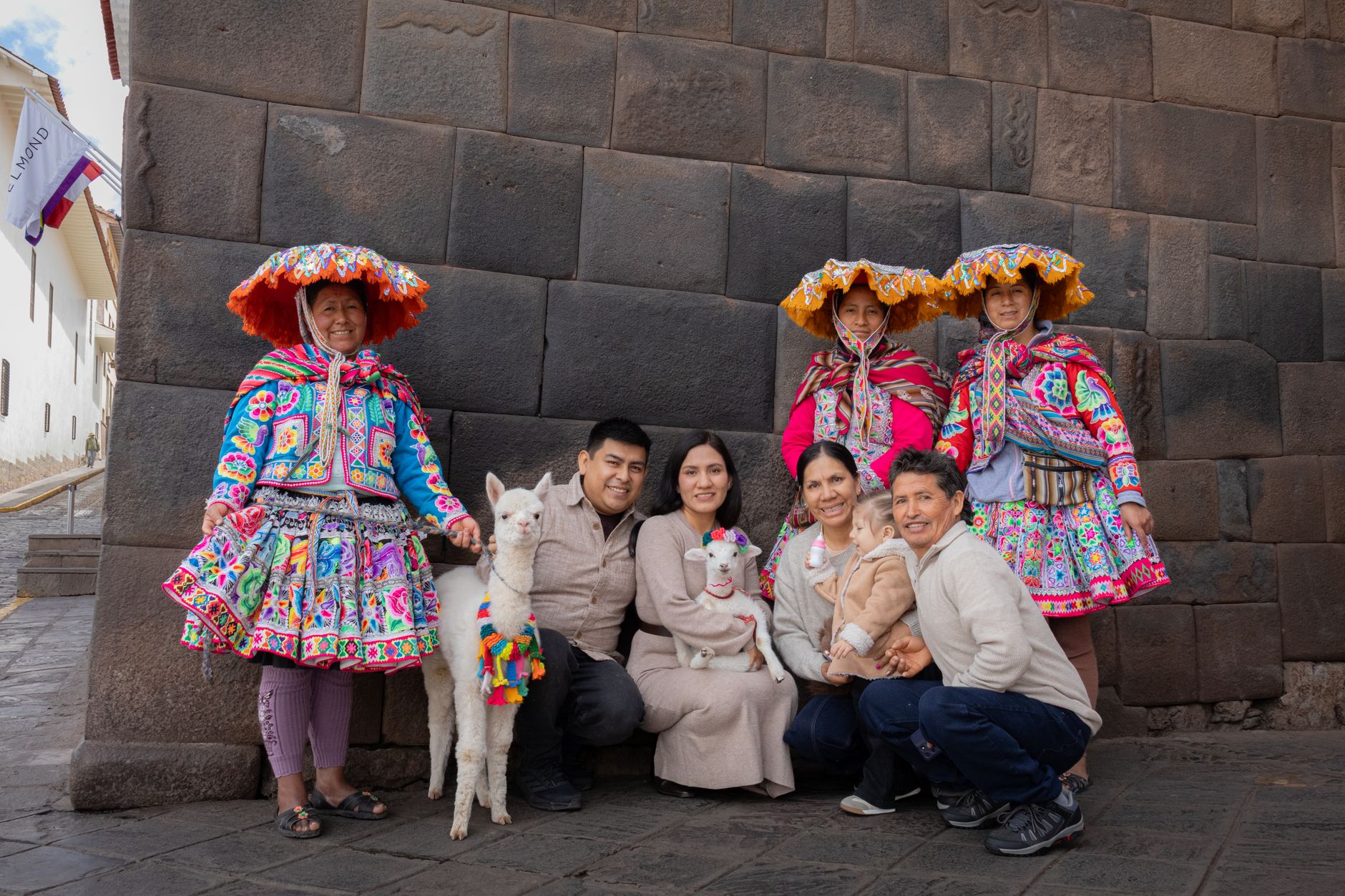
Our journey through Peru, particularly the Sacred Valley and Cusco, revealed a culture deeply connected to its indigenous roots, where children are seen as precious gifts, intrinsically linked to the land and community. The warmth and genuine curiosity directed towards our children were unlike anywhere else.
Why Peru?
In many Andean communities, children are considered blessings from Pachamama (Mother Earth). They are an integral part of daily life, learning from a young age through observation and participation. There's a communal sense of responsibility and affection for all children.
Personal Anecdote:
While browsing the vibrant San Pedro Market in Cusco, my daughter, mesmerized by the colorful textiles, pointed to a small, hand-woven llama figure. The vendor, an elderly woman in traditional dress, smiled warmly, then gently took my daughter's hand and placed the llama in it, refusing payment. She said something in Quechua, which our guide later translated as "a gift from Pachamama." This wasn't a sales tactic; it was a pure, heartfelt gesture of welcome and generosity. These are the moments that truly define "locals don't want tourists to know" – they're not transactional, they're cultural.
Practical Tips for Traveling with Kids in Peru:
* Altitude Sickness: This is crucial. Acclimatize slowly in Cusco (2-3 days minimum) before heading to higher altitudes. Keep kids hydrated, and consult your pediatrician about medication if concerned.
* Respectful Interaction: Encourage your children to greet locals with a "Hola" or "Buenos Días." Many indigenous children may be shy but will respond to a friendly smile. If you take photos, always ask permission, especially if children are involved.
* Local Markets: These are sensory explosions for kids. The colors, sounds, and smells are captivating. Allow them to pick out a small souvenir or try a local fruit.
* Activities: In the Sacred Valley, visit working llama and alpaca farms where kids can feed and interact with the animals. Explore the ancient ruins of Ollantaytambo (less strenuous than Machu Picchu for little legs) and imagine life in the Inca Empire. Cusco offers chocolate-making workshops that are a big hit.
* Cost: Peru is very affordable outside of high-end tourist services. Local meals are inexpensive (a "menu del día" can be 10-15 soles, ~$2.50-4 USD), and market goods are bargains.
5. Costa Rica: Pura Vida for the Pura Niños
Costa Rica’s "Pura Vida" philosophy extends beautifully to its youngest visitors. This isn't just a phrase; it's a way of life that embraces simple joys, community, and a deep connection to nature. For families, this translates into an incredibly welcoming and laid-back atmosphere where children are encouraged to explore and connect with the natural world.
Why Costa Rica?
The Ticos (Costa Ricans) are famously friendly and gentle. They adore children and are often delighted to see families enjoying their beautiful country. The emphasis on nature, conservation, and outdoor living makes it an ideal place for kids to thrive.
Personal Anecdote:
We were on a guided nature walk in Manuel Antonio National Park, searching for sloths. My youngest was getting tired and a bit whiny. Our guide, instead of rushing us, knelt down, pulled out a small, colorful picture book of local animals, and started pointing out the ones we might see. He then engaged my older son in a "spotting game" – who could see the first monkey? His patience and genuine desire to make the experience magical for my kids transformed a potential meltdown into a moment of pure engagement and excitement.
Practical Tips for Traveling with Kids in Costa Rica:
* Eco-Lodges: Many lodges are specifically designed with families in mind, offering kid-friendly activities, pools, and spacious accommodations. Look for ones with nature trails on-site.
* Outdoor Activities: Costa Rica is an adventure playground. For older kids, there's zip-lining, white-water rafting, and surfing lessons. For younger ones, gentle nature walks, exploring beaches (Manuel Antonio, Tamarindo), and spotting wildlife (monkeys, sloths, toucans) are fantastic.
* Safety in Nature: While generally safe, be mindful of wildlife (don't feed monkeys!), use plenty of insect repellent, and stay on marked trails.
* Food: Kids will love fresh fruit (mango, pineapple, papaya), "gallo pinto" (rice and beans), and fresh seafood. Most restaurants are accustomed to children and can prepare simple meals.
* Cost: Costa Rica can be more expensive than other Central American countries, especially for tours and accommodations. Look for family packages and consider self-catering options to save on food.
Why This Matters: Beyond the Tourist Trail
Traveling with children is an adventure in itself, but experiencing these cultures where kids are genuinely revered adds an entirely new dimension. It's not just about seeing sights; it's about feeling a profound human connection.
- For Your Children: They learn invaluable lessons in empathy, cultural understanding, and the universality of kindness. They experience being cherished and celebrated, building their confidence and sense of belonging in the world. They become more adaptable and open-minded.
- For You, the Parent: These interactions alleviate the stress of traveling with kids. When locals genuinely adore your children, you feel more relaxed, welcomed, and less self-conscious about occasional tantrums or noise. It opens up opportunities for deeper conversations and connections with locals, transforming your trip from a mere vacation into a truly immersive cultural exchange.
- The "Secret" Aspect: These profound cultural interactions aren't typically advertised in glossy brochures. They are discovered in the smiles of strangers, the unsolicited acts of kindness, and the genuine warmth that permeates daily life. By seeking out these places, you're not just taking a trip; you're uncovering a deeper, more authentic truth about human connection.
These are the moments that make travel truly transformative – the ones that money can't buy, and the memories that will last a lifetime.
Ready to Let Your Little Ones Be Crowned?
So, next time you're planning a family adventure, look beyond the usual "family-friendly" labels. Seek out these incredible countries where children are not just welcomed, but truly cherished. Let your little ones lead the way, not just with their boundless energy, but with their innate ability to unlock the purest form of human connection.
Have you experienced this kind of child-adoring culture in your travels? Share your stories and tips in the comments below! Let's inspire more families to discover these hidden gems and create unforgettable memories where their kids are treated like the royalty they are.
---