Whispers of Stone: How Free Abandoned Castles Changed My Life Forever
There was a time, not so long ago, when my travel dreams felt… distant. I’d scroll through Instagram, mesmerized by majestic European castles, but the thought of crowded ticket lines, guided tours, and hefty entrance fees always brought me back down to earth. My budget, my desire for authentic connection, and a growing weariness of the well-trodden path left me yearning for something more. Something raw. Something free.
That longing led me down a winding, overgrown path to a revelation: abandoned castles. Not the meticulously preserved, postcard-perfect fortresses, but the forgotten ones. The crumbling ruins nestled on hillsides, swallowed by forests, or clinging precariously to cliffsides. These weren't just buildings; they were silent storytellers, waiting patiently for someone to listen. And let me tell you, listening to their whispers didn't just change my travel itinerary; it fundamentally shifted my perspective on history, adventure, and my own place in the world.
This isn't just a blog post; it's an invitation. An invitation to step off the beaten path, embrace the unknown, and discover the profound beauty of forgotten grandeur. It's an invitation to explore magnificent abandoned castles for free, just as I did, and perhaps, find a piece of yourself along the way.
The Irresistible Allure of the Forgotten: Why Abandoned Castles?
Why choose a crumbling ruin over a pristine palace? The answer, for me, lies in authenticity and intimacy. When you step into an abandoned castle, you're not just a tourist; you're an explorer, an archaeologist of your own making. There are no velvet ropes, no "do not touch" signs (though always respect the site, of course!), and no throngs of people blocking your view. It's just you, the wind, the rustling leaves, and centuries of history laid bare.
These places offer a tangible connection to the past that no museum can replicate. You can touch the cold, lichen-covered stone, imagine the lives lived within those walls, and feel the sheer weight of time. There's a thrill in discovering a hidden archway, a forgotten staircase, or a fragment of a fresco peeking through the ivy. It’s an adventure that engages all your senses and sparks your imagination in ways a curated experience simply cannot. And the best part? The profound sense of discovery, the breathtaking views, and the deep historical immersion often come without a price tag.
My First Love: Château de Valois, France – A Whisper in the Loire Valley
My journey into the world of free castle exploration began somewhat by accident, deep in the French countryside. I was road-tripping through the Loire Valley, initially lured by its famous châteaux, but feeling increasingly disconnected by the commercialism. One rainy afternoon, I pulled over in a tiny village called Saint-Pierre-des-Corps, seeking shelter and a coffee. Chatting with a local at the boulangerie, I mentioned my love for history. His eyes twinkled. "Ah, but have you seen the old Château de Valois?" he asked, pointing vaguely towards a dense patch of woods on a distant hill. "No one goes there anymore. Just the sheep."
That was all the invitation I needed. The next morning, armed with a map (a hastily drawn one from the baker), a bottle of water, and a heart full of curiosity, I set off. The path was barely discernible, overgrown with brambles and wild roses. After about a 45-minute hike uphill, pushing through thick undergrowth, I saw it: a towering silhouette against the morning sky, partially swallowed by ancient oaks.
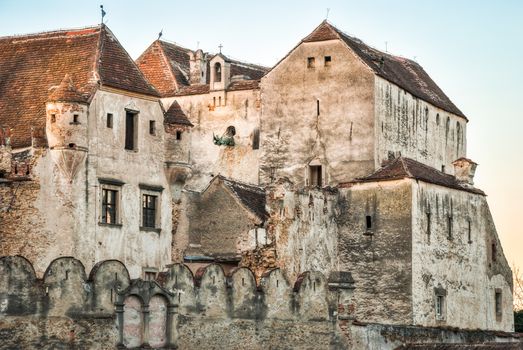
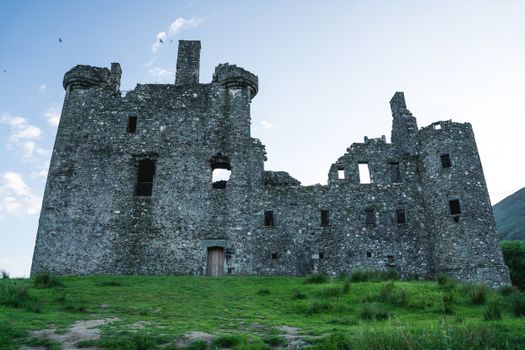
Château de Valois was magnificent in its decay. Two massive stone towers still stood sentinel, their battlements crumbling like ancient teeth. The central keep was roofless, open to the elements, but the intricate carvings around a collapsed archway hinted at its former glory. I spent hours there, clambering carefully over fallen stones, imagining knights and ladies, feasts and sieges. I found an old fireplace, still black with soot, and a narrow spiral staircase, its steps worn smooth by centuries of feet, leading to nowhere but the sky. The air was cool and damp, smelling of earth and wet stone. A lone raven circled overhead, its call echoing through the empty chambers. It wasn't just a castle; it was a living poem, and I was its sole audience. That day, something shifted in me. I realized that the most profound travel experiences often lie hidden, waiting to be discovered, not paraded.
Practical Tip for Finding Your Own Valois: Look for less-known historical sites on local maps, especially in regions known for their history. Ask locals! They often hold the keys to the most incredible, unadvertised gems.
Whispers of the Past: Kaiserburg Rauenstein, Germany – A Black Forest Secret
My next significant free castle adventure took me to the heart of Germany's Black Forest, where tales of folklore and ancient spirits still cling to the dense pine trees. I'd heard whispers of Kaiserburg Rauenstein, a medieval fortress perched high on a craggy peak, supposedly accessible only by a challenging forest trail. This time, my research was a bit more deliberate: satellite maps, old German hiking forums, and cross-referencing with historical archives.
The hike itself was an adventure. I started at dawn, the forest floor still damp with dew, the air crisp and fragrant with pine. The trail was steep and muddy in places, marked only by faint blazes on trees. After nearly two hours of ascent, just as I was starting to doubt my directions, the trees parted, and there it was: a colossal ruin, its grey stones stark against the vibrant green of the forest.
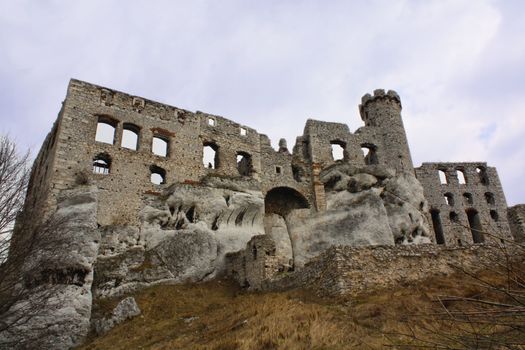
Kaiserburg Rauenstein felt more wild, more untamed than Valois. Sections of its outer walls had collapsed into the valley below, leaving gaping wounds. But the main keep still stood, a formidable presence. Inside, the courtyard was a tangle of wildflowers and thorny bushes. I climbed carefully to what would have been the highest accessible point, a crumbling turret, and was rewarded with an utterly breathtaking panoramic view of the Black Forest stretching out to the horizon. The silence was absolute, broken only by the wind whistling through the empty window frames.
I spent the better part of a day exploring, sketching in my journal, and simply sitting, absorbing the profound solitude. I found a small, almost perfectly preserved archway leading to what might have been a chapel, and imagined the quiet prayers once offered there. It was a humbling experience, a powerful reminder of nature's relentless reclaiming power and the fleeting nature of human ambition. It taught me patience, perseverance, and the immense reward of earning your view.
Practical Tip for Rauenstein-like Adventures: Always wear sturdy hiking boots. Bring plenty of water, snacks, and a headlamp – you never know how long you'll want to stay, or if you might get caught out after dark. Inform someone of your route and expected return time.
The Path Less Traveled: Rocca Calascio, Italy – A Mountain Fortress in Abruzzo
Italy, a land of ancient wonders, also holds its share of free, forgotten gems. Rocca Calascio, a medieval mountaintop fortress in the heart of Abruzzo, is perhaps one of the most iconic free-to-explore ruins I’ve ever encountered. While it's gaining popularity due to its stunning beauty and appearances in films, it's still entirely free to wander, and the journey there is an experience in itself.
I arrived in the small, picturesque village of Calascio late one afternoon, having driven through the stunning Gran Sasso e Monti della Laga National Park. The castle loomed high above, a majestic crown on the mountain peak. The next morning, I began the upward trek from the village. It's a well-marked, but steep and rocky path, winding through sparse pastures where sheep graze, their bells tinkling in the crisp mountain air.
The reward for the climb is immediate and overwhelming. Rocca Calascio stands almost perfectly preserved in its ruined state, its four circular towers and central keep creating an unforgettable silhouette against the deep blue Italian sky. The views are simply mind-blowing – 360 degrees of rolling mountains, deep valleys, and distant villages.
I spent hours walking through the open courtyards, climbing the spiral staircases within the towers (the main keep is often locked, but the outer towers are open), and sitting on the ancient walls, feeling the warmth of the sun-baked stone. The air was filled with the scent of wild herbs and the distant bleating of sheep. It felt like stepping onto a movie set, yet it was real, tangible history, entirely mine to explore. This place, with its raw beauty and challenging ascent, solidified my belief that the most profound experiences are often those you work hardest for. It deepened my appreciation for the rugged beauty of the Italian landscape and the resilience of its past inhabitants.
Instagram Moment: Rocca Calascio at sunset or sunrise is pure magic. The golden light bathing the ancient stones makes for unbelievably dramatic photos. Bring a good camera and be prepared for an early start or late finish to catch the best light.
Coastal Drama: Dunluce Castle, Northern Ireland – A Cliff-Edge Spectacle
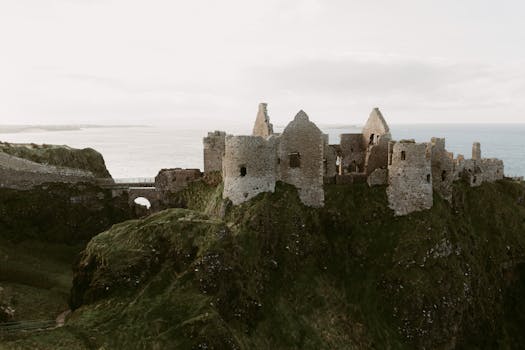
While the interior of Dunluce Castle often requires an entrance fee (managed by the National Trust), the sheer drama of its location, perched precariously on a basalt outcrop on the Causeway Coast, makes it an absolutely stunning free experience to view and appreciate from the surrounding public paths. This castle taught me that sometimes, the most impactful exploration isn't about what's inside, but the story the landscape tells.
I arrived on a blustery, moody afternoon, the kind Northern Ireland excels at. The waves of the North Atlantic crashed against the cliffs below, sending spray high into the air. From the public coastal path, the castle looked like something out of a myth – a phantom ship run aground, slowly dissolving into the sea. The wind howled around me, carrying the scent of salt and damp earth.
I walked the circumference of the headland, finding various vantage points that offered different perspectives of the ruin. From one angle, you could clearly see the collapsed kitchen, which famously fell into the sea during a stormy night in the 17th century, taking several servants with it. From another, the sheer scale of the cliff and the isolation of the castle were breathtaking.
Even without entering the paid area, I spent hours captivated. The raw power of the ocean, the dramatic history etched into the stone, and the sheer resilience of the structure against the elements left an indelible impression. It was a powerful reminder that history isn't always neatly contained within walls; sometimes, it's woven into the very fabric of the landscape, free for anyone to witness and feel.
Photography Tip: The dramatic weather conditions along the Causeway Coast are perfect for atmospheric, moody shots. Don't be afraid of grey skies or rain – they often add incredible character to your photos. A wide-angle lens is fantastic here.
Your Own Quest: How to Find and Explore Free Abandoned Castles
Inspired yet? Good! Now, let's talk practicalities. Finding these hidden gems requires a bit of detective work, a dash of daring, and a whole lot of respect.
- Research is Your Best Friend:
- Google Maps Satellite View: This is my secret weapon. Zoom in on rural areas, especially those with historical significance. Look for unusual stone structures, clearings in forests, or ruins on hilltops.
- Local History Forums & Blogs: Search for terms like "abandoned places [region]," "castle ruins [country]," or "unmaintained historical sites." Local enthusiasts are often eager to share their knowledge.
- Old Maps: Sometimes, castles that no longer exist on modern tourist maps are still marked on older, more detailed topographical maps.
- Ask Locals (Politically!): As with Château de Valois, a friendly chat with a local can reveal treasures. Just be respectful and don't push if they're hesitant.
- Books & Websites: Look for books on forgotten heritage or obscure historical sites in your chosen region.
- Safety First, Always:
- Structural Integrity: Many abandoned castles are unstable. Never climb on crumbling walls, enter areas that look unsafe, or venture into dark, unlit spaces without proper gear and knowledge. Your life is not worth a photo.
- Go with a Buddy: Especially for more remote or challenging sites, always explore with at least one other person.
- Tell Someone Your Plans: Let a friend or family member know exactly where you're going and when you expect to return.
- Appropriate Gear: Sturdy hiking boots, long pants (for brambles), a backpack with water, snacks, a first-aid kit, a fully charged phone, and a headlamp are essential.
- Weather Check: Be aware of local weather conditions. Rain can make ruins dangerously slippery.
- Respect the Site and the Land:
- Leave No Trace: This is paramount. Pack out everything you pack in. Do not leave any trash. Do not disturb wildlife.
- Respect Private Property: Not all abandoned sites are publicly accessible. Always be aware of property lines and "no trespassing" signs. If in doubt, admire from afar.
- Do Not Damage or Remove Anything: These sites are historical treasures. Do not climb on fragile structures, carve into stones, or take "souvenirs." Leave them as you found them for others to discover.
- Be Mindful of Local Regulations: Some ruins are protected, even if unmaintained. Check local guidelines.
Beyond the Walls: The Life-Changing Impact
Exploring these free abandoned castles has been more than just a series of unforgettable trips; it's been a profound journey of self-discovery.
- A Deeper Connection to History: History ceased to be abstract dates and names in a textbook. It became tangible, visceral, alive. I learned to read the stories etched in stone, to feel the echoes of past lives, and to appreciate the enduring power of human endeavor.
- Enhanced Resilience and Self-Reliance: Navigating overgrown paths, researching obscure locations, and often being entirely alone in these vast ruins built a quiet confidence in my ability to explore and adapt.
- A Shift in Perspective: Seeing these grand structures slowly reclaimed by nature is a powerful lesson in impermanence and the cyclical nature of life. It fosters a sense of humility and a deeper appreciation for the present moment.
- Unleashed Creativity: The sheer beauty and mystery of these places are an endless source of inspiration for writing, photography, and simply dreaming.
- Sustainable and Budget-Friendly Travel: It proved that some of the most enriching travel experiences don't cost a fortune. It's about how you engage with a place, not how much you spend.
Your Adventure Awaits!
So, are you ready to trade the crowded tourist traps for the thrilling whisper of forgotten history? Are you ready to lace up your boots, do a little digging, and embark on an adventure that promises not just incredible sights, but a deeper connection to yourself and the world?
The world is full of these silent sentinels, waiting patiently for a curious soul to rediscover them. They are free, they are magnificent, and they are waiting to tell you their stories. Trust me, these aren't just castles; they are portals to a past that will change your present.
What forgotten places are calling to you? Share your dream abandoned castle adventure in the comments below, or better yet, share your own discoveries! Let's inspire each other to explore the magic beyond the guidebook.
---