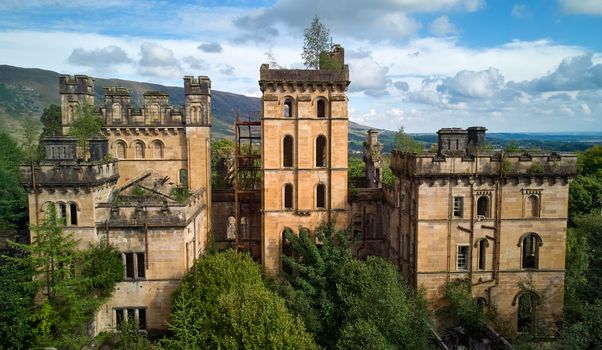
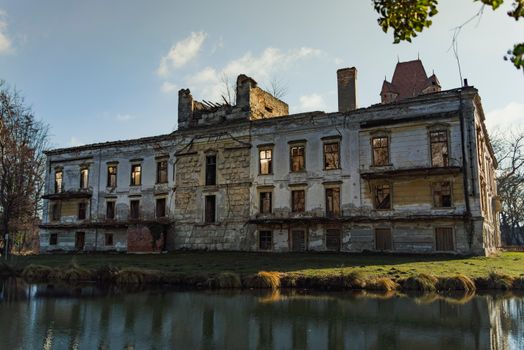
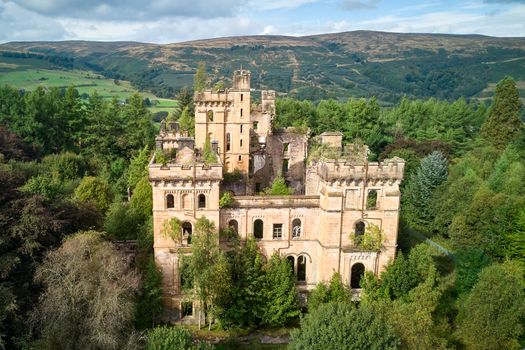
The crisp autumn air bit at my cheeks, carrying the scent of damp earth and distant woodsmoke. My boots crunched on fallen leaves, each step a rhythmic whisper on a path long forgotten by most. Ahead, shrouded in a veil of November mist, loomed the silhouette of a forgotten tower – a sentinel against the relentless march of time. My heart quickened, not from the uphill climb, but from the thrill of discovery, the quiet promise of untold stories etched into crumbling stone. This wasn't a crowded museum or a manicured heritage site; this was raw, untamed history, waiting to be rediscovered.
That morning, years ago, exploring a nameless ruin in the Scottish Highlands, sparked an obsession. An obsession with abandoned castles. Places where the past isn't just displayed, but felt, breathed, and lived. And there's no better time to chase this unique thrill than November.
Welcome, fellow adventurers, to Tripsora! Today, we’re diving deep into the most atmospheric, hauntingly beautiful, and utterly captivating abandoned castles you can explore for free this November 2025. Forget entry fees and guided tours; we're talking about genuine exploration, a connection to history that’s as personal as it is profound.
Why November is Your Castle Exploration Sweet Spot
While summer sees throngs of tourists and spring offers vibrant blooms, November holds a magic all its own for the intrepid castle explorer. Here’s why this often-overlooked month is your secret weapon:
- Atmosphere, Atmosphere, Atmosphere: Imagine ancient stones wreathed in mist, skeletal trees reaching like gnarled fingers towards a brooding sky, and the silence broken only by the wind’s mournful sigh. November delivers gothic grandeur in spades, creating an unparalleled backdrop for photography and introspection. It’s the season of secrets, perfect for places steeped in history.
- Fewer Crowds: This is perhaps the biggest perk. With summer holidays long gone and Christmas markets yet to fully bloom, November offers a blissful reprieve from mass tourism. You’ll often have these magnificent ruins almost entirely to yourself, allowing for a truly immersive and personal experience.
- Dramatic Light: The low, weak sun of late autumn casts long, dramatic shadows, highlighting the textures of ancient masonry and creating stunning photographic opportunities. Golden hour feels even more golden, and blue hour takes on an ethereal quality.
- Crisp Air & Brisk Walks: The air is invigorating, perfect for long hikes to remote ruins. Just remember to layer up!
The Irresistible Call of the Ruin: More Than Just Stones
What is it about abandoned castles that captivates us so deeply? Is it the romance of forgotten royalty, the echoes of battles fought, or simply the stark beauty of nature reclaiming man’s grandest creations? For me, it’s a potent mix of all three.
Each crumbling archway and every moss-covered stone holds a thousand stories. You can almost hear the clatter of knights, the laughter of noblewomen, the whispers of servants. Exploring these sites is a tangible link to a past that feels both distant and intimately present. It's a chance to step off the well-trodden tourist path and forge your own connection with history, unmediated by gift shops or interpretive panels. It's also an incredible playground for photographers, offering unique textures, dramatic compositions, and a chance to capture the passage of time.
Your Essential Guide to Ethical & Safe Exploration
Before you lace up your boots and grab your camera, a crucial word of caution. "Free" and "abandoned" doesn't mean "anything goes." Ethical and safe exploration is paramount.
- Research is Your Best Friend: Always verify the accessibility and status of any ruin before you go. "Free" often means public access to exterior grounds, or truly forgotten sites that are not managed tourist attractions. It rarely means unrestricted access to private property or dangerous interior structures. Check local land access laws.
- Respect Private Property: If a ruin is on private land, do not trespass without explicit permission. Respect "No Entry" signs. Many incredible ruins can be admired from public footpaths or roads.
- Leave No Trace: This is non-negotiable. Carry out everything you carry in. Do not disturb wildlife, carvings, or any part of the structure. Leave only footprints, take only photographs.
- Safety First:
- Footwear: Sturdy, waterproof hiking boots with good ankle support are essential. You’ll be navigating uneven terrain, mud, and potentially slippery stones.
- Clothing: Layer up! November weather can be unpredictable. Waterproof and windproof outer layers are a must.
- Navigation: Bring a reliable map (physical and digital), a compass, and a fully charged phone (with a power bank). Many of these sites are remote.
- First Aid: A basic first-aid kit is crucial for minor scrapes and sprains.
- Water & Snacks: Stay hydrated and fueled, especially on longer hikes.
- Headlamp/Flashlight: Even if you plan to be out before dark, unexpected delays happen, and exploring dark corners safely requires light.
- Tell Someone: Always let someone know your itinerary and expected return time.
- Assess Risk: Don't climb unstable walls, enter collapsing structures, or take unnecessary risks. A great photo isn't worth an injury.
- Drone Usage: While tempting, always check local regulations regarding drone flight, especially near historical sites or in protected areas.
Castle Spotlight 1: The Whispering Walls of Kilchurn Castle, Scotland
- Location: Loch Awe, Argyll and Bute, Scotland
- What to Expect: One of Scotland's most iconic and photographed ruins, Kilchurn Castle stands dramatically on a rocky peninsula at the northeastern end of Loch Awe. While Historic Environment Scotland manages it, much of the surrounding area and the impressive exterior are freely accessible, especially when the causeway is flooded, making it a tidal island. It’s the epitome of a romantic, abandoned Scottish castle.
- My Experience: I remember one particularly blustery November morning, the wind whipping off Loch Awe, creating whitecaps on the dark water. The mist hung heavy, obscuring the castle's upper reaches, making it feel like something out of a dream. The walk along the lochside path, past ancient trees, was invigorating. As I approached, the scale of the ruin emerged, its crenellated walls and towering keep a stark silhouette against the grey sky. I spent hours simply walking the perimeter, imagining life within its walls, the sounds of boats on the loch, the fierce Campbell clan defending their stronghold. The reflections in the still waters on calmer days are utterly breathtaking, earning it its Instagram-worthy fame.
- Practical Tips:
- Access: The castle is sometimes cut off by water at high tide, adding to its mystique. Check tide times if you plan to reach the immediate base. The best views are often from the A85 or the path leading to it.
- Photography: Bring a wide-angle lens to capture the castle and its stunning loch backdrop. Experiment with long exposures on the water. The early morning light (or lack thereof in November!) can create incredibly moody shots.
- Nearby: The village of Lochawe has limited amenities. Consider staying in nearby Dalmally or Oban for more options.
Castle Spotlight 2: Rocca Calascio & Its Abandoned Village, Italy
- Location: Abruzzo, Italy
- What to Expect: Perched precariously at an elevation of 1,460 meters (4,790 ft) in the Gran Sasso e Monti della Laga National Park, Rocca Calascio is one of Italy’s highest fortresses. The castle itself is largely a ruin, and crucially, the entire village that once surrounded it has been abandoned since an earthquake in 1703. Both the castle and the village are completely free to explore, offering a truly immersive abandoned experience.
- My Experience: The hike up to Rocca Calascio was a challenge, but with every step, the views became more expansive, the air crisper. Arriving at the abandoned village was like stepping onto a movie set (and indeed, it has been one!). The silence was profound, broken only by the wind whistling through empty window frames. Exploring the crumbling houses, imagining the lives once lived there, was a poignant experience. Then, the castle itself – a formidable sight. From its battlements, the panoramic views of the Abruzzo mountains are simply unparalleled. I remember sitting on a low wall, munching on a panino, feeling like I was on top of the world, a solitary witness to centuries of history.
- Practical Tips:
- Getting There: You'll need a car to reach the starting point of the hike (Santo Stefano di Sessanio or Calascio). The final ascent is on foot, a moderate hike.
- Best Time: Mid-morning or late afternoon for the best light, but be prepared for cold winds in November.
- Gear: Sturdy hiking boots, layers, water, and snacks are essential. The nearest services are in the villages below.
- Nearby: Don't miss the incredibly charming, fully restored medieval village of Santo Stefano di Sessanio, a short drive away, offering a contrast to the ruin.
Castle Spotlight 3: The Ghostly Grandeur of Dunstanburgh Castle, England
- Location: Northumberland Coast, England
- What to Expect: A dramatic 14th-century fortress, Dunstanburgh Castle stands majestically on a remote headland on the wild Northumberland coast. While managed by English Heritage, the true experience of this castle lies in the journey to it and the stunning views it commands. The walk along the coast path to reach it is free and offers breathtaking vistas, making the entire "exploration" feel incredibly rewarding and largely free. You can get up close to the exterior walls and experience its scale without entering a ticketed area.
- My Experience: The Northumberland coast in November is a force of nature. I remember a bracing walk from the charming village of Craster, the North Sea crashing against the cliffs to my right, the wind carrying the scent of salt and seaweed. Dunstanburgh slowly emerged from the horizon, a colossal silhouette against a dramatic sky. It felt like walking into a historical epic. The scale of the gatehouse and the sheer drop to the sea were awe-inspiring. I spent ages just watching the waves, feeling the immense power of the elements, and imagining the castle's strategic importance. The sense of isolation and raw beauty here is truly special.
- Practical Tips:
- Access: The most popular access point is a scenic 1.5-mile (2.4 km) walk from Craster village. Parking is available in Craster (paid).
- Footwear: Essential for the coastal path, which can be muddy and uneven.
- Tide Times: Be aware of tide times if you plan to explore the rocky foreshore near the castle.
- Photography: The dramatic coastal setting offers endless opportunities. Think wide-angle for the landscape, and telephoto for details of the castle against the sea. Sunrise and sunset here are legendary.
- Nearby: Craster is famous for its kippers. Treat yourself after your walk!
Castle Spotlight 4: The Legendary Ruins of Burg Frankenstein, Germany
- Location: Mühltal, Hesse, Germany
- What to Expect: Perched on a hill overlooking the Rhine valley, Burg Frankenstein is a genuine medieval castle ruin with a rich history, famously associated with Mary Shelley's novel (though the connection is tenuous, the atmosphere is undeniable). While parts of the castle have been restored and host events, the extensive ruins and surrounding grounds are generally free to explore, offering fantastic views and a spooky ambiance, especially in November.
- My Experience: My visit to Burg Frankenstein in late autumn was exactly what I’d hoped for – a perfect blend of history and eerie legend. The drive up through the forested hills, with mist clinging to the trees, set the mood perfectly. The ruins themselves are a fascinating maze of towers, walls, and overgrown courtyards. I loved wandering through the arches, imagining the alchemists and nobles who once inhabited these very stones. The panoramic view of the Rhine valley, stretching out beneath a cloudy November sky, was simply stunning. It was easy to let my imagination run wild, envisioning the experiments and dark secrets whispered within these ancient walls.
- Practical Tips:
- Access: The castle is accessible by car, with parking available. There are also hiking trails leading up to it from the valley, offering a more adventurous approach.
- Exploration: While some areas might be fenced off for safety or restoration, much of the exterior and surrounding ruins are open for exploration. Respect all signage.
- Photography: Focus on the atmospheric details – crumbling stone, ivy-clad walls, and the dramatic views. Night photography here, if you're brave enough, can be incredible.
- Nearby: The city of Darmstadt is a short drive away, offering a good base for exploration.
Castle Spotlight 5: The Tidal Beauty of Castle Tioram, Scotland
- Location: Acharacle, Lochaber, Scotland
- What to Expect: This is perhaps the most truly "abandoned" and wild of the castles on this list. Castle Tioram (pronounced "Chee-rum") is a ruined 13th-century castle situated on the tidal island of Eilean Tioram in Loch Moidart. It is completely unmanaged and free to access, but only at low tide when a sandy causeway emerges, allowing you to walk across. Its remote location and dramatic setting make it an unforgettable experience.
- My Experience: Getting to Castle Tioram is an adventure in itself, driving along single-track roads through some of Scotland's most rugged and beautiful landscapes. I arrived at low tide, the causeway a ribbon of sand connecting me to the island. The walk across was exhilarating, with the castle growing larger and more imposing with every step. Once on the island, the silence was profound, broken only by the cries of seabirds and the gentle lapping of the loch. The castle itself is a shell, but its powerful walls and commanding position speak volumes. I explored every accessible corner, climbed to the highest points I safely could, and simply absorbed the raw, untamed beauty of the place. It felt like discovering a lost world.
- Practical Tips:
- Access: Crucially, check local tide tables before you go. You can only walk to the castle at low tide. Getting stranded is a real possibility.
- Remote: This is a very remote location. Ensure your vehicle is fueled, and you have all necessary supplies. There are very limited services nearby.
- Safety: The castle is structurally unsound in places. Do not enter any areas that appear dangerous or are cordoned off. Explore the exterior and courtyards.
- Photography: The reflections in the loch, especially at dawn or dusk, are stunning. The dramatic isolation of the castle makes for incredible wide-angle shots.
Capturing the Crumbling Beauty: Photography & Storytelling Tips
Exploring these forgotten giants is a visual feast. Here’s how to make your photos as epic as your adventure:
- Embrace the Mood: November's weather is your friend. Mist, fog, and dramatic skies add incredible atmosphere. Don't wait for a sunny day; embrace the brooding beauty.
- Golden Hour & Blue Hour: Even in November, the hour after sunrise and before sunset offers soft, warm light (golden hour) or cool, ethereal light (blue hour) that can transform your shots.
- Focus on Details: Don't just shoot wide. Look for the moss on a stone, the intricate carvings, the texture of a crumbling wall, or a single gnarled tree growing out of the ruins. These details tell a story.
- Play with Scale: Include yourself (or a fellow traveler) in a shot to emphasize the immense scale of these structures.
- Composition is Key: Use leading lines (paths, walls), rule of thirds, and natural frames (archways, windows) to create compelling images.
- Smartphone Photography: Modern smartphones are incredibly capable. Use editing apps like Lightroom Mobile or Snapseed to enhance your shots. Focus on exposure, contrast, and color grading to bring out the mood.
- Drone Photography (where permitted): If you're a drone pilot, the aerial perspective of these isolated ruins can be absolutely breathtaking. Always check local laws and airspace restrictions.
Beyond the Walls: Making Your Trip an Adventure
Your castle exploration doesn't have to end at the ruins. Make it a holistic adventure:
- Local Flavors: Seek out local pubs, bakeries, or markets. Warm up with a hearty meal and connect with the local culture.
- Charming Villages: Many of these castles are near picturesque villages that offer a glimpse into local life.
- Further Exploration: Are there other historical sites, nature trails, or hidden gems nearby? Plan a multi-day trip to truly immerse yourself.
- Journal Your Journey: Jot down your thoughts, feelings, and discoveries. These personal reflections will become cherished memories.
The Call of the Forgotten
The magic of exploring abandoned castles for free in November 2025 isn't just about saving money; it's about experiencing history in its purest, most untamed form. It’s about the thrill of discovery, the quiet contemplation of time's relentless march, and the profound connection you forge with places that whisper tales of bygone eras.
So, are you ready to trade the ordinary for the extraordinary? To embark on an adventure that will fill your camera roll with stunning images and your soul with unforgettable memories? Pack your bags, check your tide tables, and prepare to step into a world of forgotten grandeur.
Have you explored an incredible abandoned castle for free? Share your stories and tips in the comments below! Don't forget to tag us on Instagram with #TripsoraCastles and inspire fellow adventurers!
---