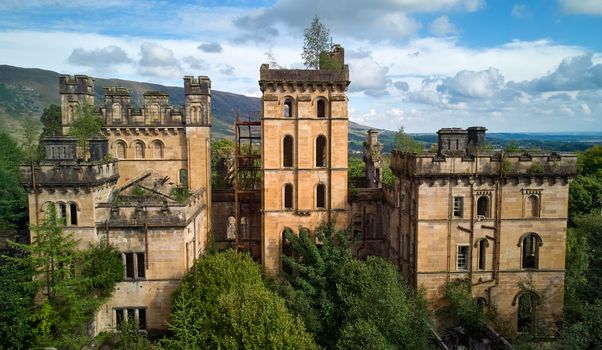
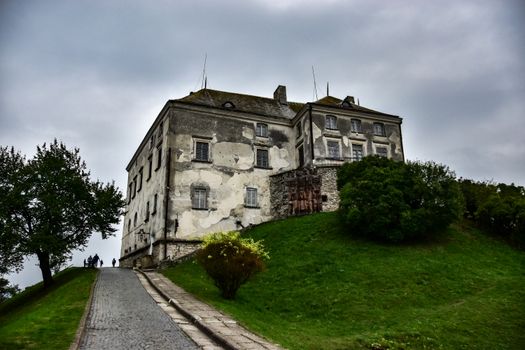
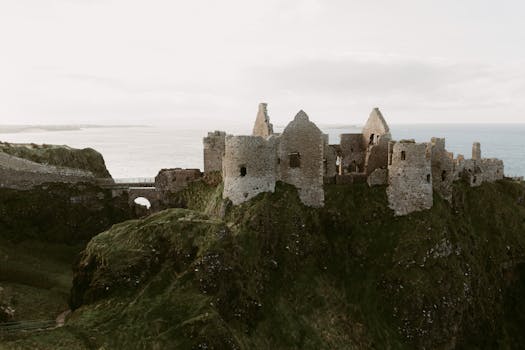
The wind whipped around me, carrying the scent of damp earth and ancient stone. Below, the churning sea gnawed at the cliffs, a relentless sculptor of the rugged coastline. Before me stood the skeletal remains of a once-mighty fortress, its crumbling walls a testament to centuries of forgotten tales. There was no ticket booth, no gift shop, just me, the elements, and the ghosts of history. This wasn't a carefully preserved monument; this was raw, untamed history, and it was utterly exhilarating.
That moment, standing amidst the forgotten grandeur of a nameless ruin, ignited a passion in me: the hunt for abandoned castles. Not the manicured, tourist-heavy ones, but the wild, free-to-explore relics that whisper stories of knights, kings, and everyday lives lost to time. And let me tell you, fellow adventurers, these places aren't just for history buffs; they're for anyone seeking an authentic, awe-inspiring, and incredibly budget-friendly travel experience. They’re places where you can truly connect with the past, let your imagination run wild, and capture photos that will make your friends green with envy.
So, if you’re ready to ditch the queues and embrace the thrill of discovery, grab your hiking boots and a sense of wonder. Tripsora is about to unveil five magnificent abandoned castles across Europe that you can explore for free, offering adventures you absolutely need to experience before you die.
The Irresistible Allure of the Abandoned & How to Find Your Own
Why the obsession with abandoned castles? It's simple: they represent the ultimate fusion of history, mystery, and raw beauty. There's an undeniable magic in walking through a place where nature is slowly reclaiming human endeavor, where every crumbling archway and moss-covered stone hints at a dramatic past. Unlike their restored counterparts, these ruins offer an unvarnished glimpse into history, allowing your imagination to truly run wild. You're not just observing; you're participating in a living, breathing story.
Finding these hidden gems often requires a bit of research and a keen eye. My go-to method involves a combination of:
* Google Maps Satellite View: Zoom in on rural areas, especially in regions known for castles (like the UK, Ireland, France, Germany, Italy, Spain). Look for suspicious clusters of walls or distinct structures.
* Local Forums & Blogs: Search for "ruins near [town name]" or "abandoned places [region]". Local enthusiasts often share information about lesser-known sites.
* Historical Societies & OpenStreetMap: Sometimes, less official mapping projects or local historical groups will list unmaintained ruins.
* Word of Mouth: Chat with locals in small villages; they often know the best hidden spots.
A crucial note on safety and respect:
While these castles are free to explore, they are often unmaintained. Be aware of uneven terrain, crumbling walls, and hidden drops. Always prioritize safety. And remember, "free to explore" doesn't mean "free to destroy." Leave no trace, respect any private property signs (even if the ruins are accessible, the land leading to them might not be), and treat these historic sites with the reverence they deserve.
Now, let's embark on our journey!
1. Kilchurn Castle, Scotland: Island Sentinel of the Highlands
Location:
Loch Awe, Argyll and Bute, Scotland
Accessibility: Free to access the ruins. Approachable via a walk along a causeway from a small car park off the A819, or by boat during higher water levels.
What to Expect: A truly iconic Scottish ruin, Kilchurn Castle stands dramatically on a rocky islet at the northeastern end of Loch Awe. Built in the mid-15th century by the Campbells of Glenorchy, it's a testament to medieval Scottish power, now beautifully surrendered to the elements.
My first encounter with Kilchurn was during a classic moody Scottish morning. A thick mist hung low over Loch Awe, obscuring the distant hills and lending an ethereal quality to the castle's silhouette. As I walked the narrow causeway, the only sounds were the lapping of the loch and the cry of gulls. Stepping into the courtyard, the sheer scale of the ruin hit me. The mighty tower house, though roofless, still dominates, and you can wander through its various levels, imagining the lives lived within these cold, grey walls. The barracks, added in the 17th century, offer further exploration, and from the upper reaches, the panoramic views of the loch and surrounding mountains are breathtaking – especially when the mist begins to burn off, revealing layers of green and blue.
Tripsora Tips for Kilchurn:
* Best Time to Visit: Early morning or late afternoon for dramatic light and fewer crowds. The castle is particularly stunning when reflected in the calm waters of the loch.
* Gear Up: Waterproofs and sturdy footwear are essential, as Scotland’s weather is famously unpredictable, and the ground can be boggy.
* Photography: Bring a wide-angle lens to capture the grandeur of the castle and its stunning natural backdrop. Reflections in the loch are prime photo ops!
* Nearby: The A819 is part of a scenic drive. Consider combining your visit with other stops in the Loch Lomond & The Trossachs National Park.
2. Menlo Castle, Ireland: Galway's Secret Garden Ruin
Location:
On the banks of the River Corrib, just outside Galway City, Ireland
Accessibility: Free to access. Easily reachable by a short drive or a pleasant walk/cycle along the river from Galway.
What to Expect: A picturesque, ivy-clad ruin of a 16th-century mansion, Menlo Castle was once the ancestral home of the Blake family. Destroyed by fire in 1910, it now stands as a romantic, overgrown shell, slowly being reclaimed by the lush Irish landscape.
I stumbled upon Menlo during a cycling trip along the Corrib, and it felt like discovering a secret garden. The castle isn't a formidable fortress, but rather the elegant remains of a grand house, its windows now empty frames looking out over the tranquil river. Ivy clings to every surface, creating a verdant cloak that adds to its fairytale charm. The surrounding grounds are peaceful, a perfect spot for a picnic or simply to sit and contemplate the passage of time. You can walk right up to the walls, touch the ancient stone, and peer into the empty rooms, imagining the lavish balls and quiet family moments that once filled these halls. The way nature has embraced and softened the ruin is profoundly beautiful, making it a unique photographic subject.
Tripsora Tips for Menlo:
* Getting There: Cycle or walk from Galway City for a truly immersive experience along the river. There's also limited parking nearby.
* Explore: Wander the grounds, enjoy the river views, and look for wildflowers that often bloom amidst the ruins.
* Photography: The soft, diffused light of an Irish afternoon is perfect for capturing the romantic, overgrown aesthetic. Look for interesting textures where the ivy meets the stone.
* Respect: While accessible, remember this is a ruin. Be mindful of unstable sections and respect the surrounding natural environment.
3. Rocca Calascio, Italy: Crown Jewel of the Apennines
Location:
Abruzzo region, Italy (Province of L'Aquila)
Accessibility: Free to access the fortress and surrounding village. Requires a hike or shuttle from the nearest parking area.
What to Expect: Perched dramatically at an elevation of nearly 1,500 meters (4,920 ft) in the Gran Sasso e Monti della Laga National Park, Rocca Calascio is one of Italy's most stunning and isolated fortresses. Built in the 10th century and later expanded, it comprises a stunning watchtower, four cylindrical towers, and a curtain wall, all in a remarkable state of preservation for a ruin.
My drive to Rocca Calascio felt like ascending into another world. The winding mountain roads gave way to vast, rolling plateaus, and then, suddenly, there it was: a majestic stone crown atop a desolate peak. The hike from the parking area to the fortress is invigorating, but every step is rewarded with increasingly spectacular views. As you approach, the sheer scale and isolation of Rocca Calascio are breathtaking. You can wander freely within the walls, climb to the base of the central watchtower, and gaze out over the seemingly endless expanse of the Apennine mountains. Below the fortress lies the abandoned medieval village of Calascio, adding another layer to the historical experience. This place simply screams epic adventure.
Tripsora Tips for Rocca Calascio:
* Hiking: Wear sturdy hiking boots. The path can be rocky and steep in places.
* Pack Essentials: Bring plenty of water, snacks, and layers of clothing, as mountain weather can change quickly.
* Best Time: Sunset is legendary here. The golden hour light bathes the stone in a warm glow, and the panoramic views are simply unforgettable.
* Photography: This is a landscape photographer's dream. Capture wide shots of the fortress against the mountain backdrop, and close-ups of the ancient stone.
* Combine Your Visit: Explore the nearby Santo Stefano di Sessanio, another charming medieval village.
4. Moclin Castle, Spain: Moorish Echoes in Andalucía
Location:
Moclin, Granada Province, Andalucía, Spain
Accessibility: Free to access. The extensive walls and towers are integrated into the landscape surrounding the white village of Moclin.
What to Expect: A sprawling, formidable Moorish fortress dating back to the 8th century, Moclin Castle played a crucial strategic role during the Reconquista. Its vast walls snake across the hillsides, encircling the charming white village below, offering a captivating glimpse into Spain's rich Islamic past.
Exploring Moclin Castle felt like stepping onto a giant, outdoor history textbook. Unlike a single keep, this is an entire fortified complex, with sections of its impressive double walls still standing, complete with watchtowers and gateways. I spent hours simply walking the perimeter, tracing the ancient paths, and climbing to various vantage points. From the highest accessible points, the views stretch across the verdant valley, dotted with olive groves, and back towards the whitewashed houses of Moclin. The sheer scale of the engineering, built by the Moors to defend their territory, is astounding. It’s a place that truly allows you to feel the weight of centuries of conflict and cultural exchange. You can touch the rough, sun-baked stone and imagine sentinels peering out over the land.
Tripsora Tips for Moclin:
* Comfortable Shoes: This is a large site with uneven terrain; comfortable walking shoes are a must.
* Stay Hydrated: Andalucía gets hot. Carry plenty of water, especially if exploring in warmer months.
* Explore the Village: Moclin itself is a beautiful "pueblo blanco" (white village) with narrow, winding streets and traditional charm. Grab a coffee or a meal there.
* Photography: Capture the contrast between the ancient, rugged walls and the pristine white village, as well as the expansive valley views.
5. Burg Frankenstein, Germany: Legends and Lore
Location:
Near Darmstadt, Hesse, Germany
Accessibility: Free to wander the outer ruins and grounds. There is a restaurant/event venue within the complex, but the historic ruins are generally open access.
What to Expect: Perched on a hill overlooking the Rhine Valley, Burg Frankenstein is a medieval castle ruin with a name that immediately conjures images of gothic horror. While its direct link to Mary Shelley's novel is debated (she visited the area, but the story is fiction), the castle's history dates back to the 13th century, and its atmospheric ruins certainly fuel the imagination.
My visit to Burg Frankenstein was deliberately timed for dusk, hoping to embrace its legendary, slightly spooky vibe. Even without a direct literary connection, the castle exudes a chilling charm. The outer walls, the main keep (which you can walk around), and the surrounding grounds are freely accessible. I loved exploring the nooks and crannies, peering through crumbling archways, and imagining the knights and noble families who once called this place home. The panoramic views of the Rhine Valley, especially as the lights began to twinkle below, were stunning. While there's a restaurant and sometimes events, the historical ruins retain a powerful, ancient presence, making it a truly unique free castle experience.
Tripsora Tips for Burg Frankenstein:
* Embrace the Legend: Visit around Halloween or at dusk for an extra dose of atmosphere. The castle often hosts Halloween festivals (which are ticketed, but the free exploration can be done separately).
* Views: Head to the highest accessible points for incredible panoramic views of the surrounding Odenwald forest and the distant Rhine.
* Parking: There's usually a small fee for parking, but access to the ruins themselves is free.
* Photography: Experiment with long exposures at dusk to capture the castle's silhouette against the twilight sky.
Essential Tips for Your Free Castle Adventure
Embarking on a quest for abandoned castles is one of the most rewarding travel experiences you can have. To make sure your adventures are safe, respectful, and truly unforgettable, keep these practical tips in mind:
- Research is Your Best Friend: Before you go, double-check accessibility, any potential (even small) fees (though we've aimed for truly free here), and local regulations. Some ruins might be on private land with specific access rules. Use Google Street View to get a sense of the approach.
- Leave No Trace: This is paramount. These sites are fragile. Do not disturb stones, carve graffiti, or leave any litter. Pack out everything you pack in. Respect the historical integrity of the site.
- Safety First, Always: Abandoned structures can be unstable. Watch your step, be aware of loose rocks, crumbling walls, and hidden drops. Avoid climbing on precarious structures. If an area looks unsafe, trust your gut and stay away. Consider bringing a first-aid kit.
- Dress for Adventure: Sturdy, closed-toe shoes with good grip are non-negotiable. Layers of clothing are always a good idea, as weather can change quickly, especially in exposed locations.
- Pack Essentials: Water, snacks, a fully charged phone (for navigation and emergencies), and a power bank are crucial. A headlamp or flashlight can be handy if you're exploring at dusk or in shadowy areas.
- Go with a Buddy: Exploring remote or unmaintained sites is always safer with a companion.
- Capture the Magic (Respectfully): These ruins are incredibly photogenic. Bring your best camera gear! Drones can capture stunning aerial views, but always check local regulations regarding drone usage, especially over historical sites or in national parks. Be mindful of other visitors and historical integrity when flying.
- Respect Local Customs: If the ruin is near a village, be considerate of local residents. Park responsibly, keep noise levels down, and support local businesses if you can.
Your Epic Castle Quest Awaits!
There's a profound sense of connection that comes from standing in a place where history hasn't been polished for public consumption. These abandoned castles aren't just piles of old stones; they're portals to forgotten worlds, waiting for you to discover their secrets. They offer a unique blend of adventure, history, and breathtaking beauty, all without costing a single penny for entry.
So, what are you waiting for? Bookmark this post, pick your first free castle adventure, and prepare to be amazed. The thrill of discovery, the whisper of ancient tales on the wind, and the sheer joy of unearthing history on your own terms await.
Have you explored an incredible abandoned castle for free? Share your experiences, photos, and tips with us in the comments below, and don't forget to tag #TripsoraCastles on your social media posts! Let's inspire more adventurers to seek out these magnificent, forgotten treasures.
---