The Hook: A Blue Stain on the Fingers of Tbilisi
I stepped off the night train in Tbilisi, Georgia, into a damp, lilac-scented morning that smelled of vinegar, cold indigo, and wet limestone. My hands were freezing, but my destination lay down a crumbling brick alleyway in the historic Sololaki district. I was looking for the basement studio of Ana, one of the last master practitioners of Lurji Supra—the traditional Georgian blue tablecloth.
As I pushed open the heavy iron door, the rhythmic thud-thud of a hand-carved pearwood block hitting heavy cotton echoed through the vaulted room. The air was thick with the scent of fermenting indigo. Ana looked up, her fingers stained a deep, permanent cobalt.
"If tourists do not find us this year," she said, lifting a block carved with ancient solar symbols, "the vat goes cold. And when the indigo vat goes cold, three hundred years of history freeze with it."
This is not an isolated crisis. Across the globe, hyper-localized, centuries-old crafts are dangling by a thread. The combination of economic shifts, natural disasters, and aging masters has brought these traditions to a critical tipping point.
However, a counter-movement is rising. Conscious travelers are bypassing mass-produced trinkets in favor of deep-dive, hands-on heritage preservation. Here are five traditional craft revivals needing tourist support emerging this year that you can—and should—plan your next journeys around.
---
1. The Cobalt Renaissance: Georgia’s Cold-Vat Lurji Supra
```
Location: Tbilisi, Georgia
The Threat: Soviet-era industrialization almost wiped out the chemical resist-dyeing recipe.
The Revival: Young designers are blending ancient stencils with modern gastronomy.
```
The Craft Behind the Cloth
The Lurji Supra is more than a tablecloth; it is the canvas of the legendary Georgian supra (feast). Dating back to the 17th century, these deep blue linens are adorned with deer, birds, fish, and cutlery motifs.
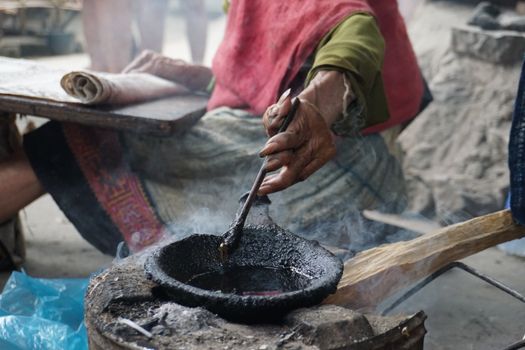
The process is mesmerizingly complex. Artisans use hand-carved wooden blocks coated in a cold-dye resist paste made of beeswax, rosin, and animal fat to stamp patterns onto unbleached cotton or linen. The fabric is then submerged in deep vats of natural indigo. When dried and washed in boiling water, the wax melts away, leaving crisp, white patterns against a rich, midnight-blue background.
During the Soviet era, state-mandated factories replaced these labor-intensive linens with cheap, screen-printed synthetics. The original recipe for the cold-vat resist paste was nearly lost to history, preserved only in dusty museum archives and the memories of a few elderly academics.
How Travelers Can Save It
Today, a small group of artists associated with the Tbilisi State Academy of Arts has resurrected the authentic process. However, without direct tourist support, these workshops cannot compete with cheap factory imitations sold in tourist traps.
- The Insider Experience: Book a hands-on block-printing workshop. You will learn to apply the hot wax-resist paste, stamp your own linen napkin, and dip it into the bubbling indigo vat.
- Pro-Tip: Do not buy the cheap, screen-printed versions sold in the open-air stalls of the Dry Bridge Market. Instead, head to the basement workshop behind the Tbilisi State Academy of Arts (look for the unmarked blue wooden door on Griboedov Street). Here, your money goes directly to the apprentices keeping the craft alive.
---
2. The Cochineal Alchemists: Teotitlán del Valle’s Zapotec Weavers, Mexico
```
Location: Oaxaca, Mexico
The Threat: Synthetic chemical dyes and cheap knock-offs imported from abroad.
The Revival: A return to 100% bio-sustainable, pre-Hispanic dye formulas.
```
The Crimson Secret of the Nopal
In the Zapotec village of Teotitlán del Valle, the air is filled with the rhythmic clatter of heavy wooden foot-pedal looms. But the real magic happens in the backyards, where giant copper cauldrons bubble over open wood fires.
For centuries, these weavers produced vibrant rugs using entirely natural ingredients. The most famous of these is cochineal—a tiny parasite that grows on the pads of the nopal cactus. When dried and crushed in a stone metate, these insects yield a brilliant, blinding scarlet. By altering the acidity of the dye bath with local limes or wild alum, weavers can shift the color from soft pink to deep, royal purple.
Synthetic dyes almost destroyed this knowledge. Chemical dyes are faster and cheaper, but they lack the luminous, light-refracting quality of natural pigments. They also pollute the local water table.
How Travelers Can Save It
A fragile coalition of young, indigenous weavers is rejecting chemicals and returning to the grueling work of wild harvesting mosses, pecan leaves, rock lichens, and cochineal. They are repositioning their village as a hub for ecological textile art.
- The Insider Experience: Spend a day with a master weaver. You will grind raw cochineal on a stone metate, watch the water transform from dull gray to brilliant crimson, and try your hand at throwing the shuttle across a heavy wool warp.
- Pro-Tip: Bypass the primary showrooms on the main highway into town. Take a local shared colectivo to the village plaza, walk three blocks east on Avenida Juárez, and look for the family compounds with drying skeins of red and yellow wool draped over adobe walls. Ask for Maestro Demetrio; his family still uses wild-harvested mountain moss to create their signature moss-greens.
---
3. Rising from the Rubble: Ishikawa’s Urushi Lacquerware, Japan
```
Location: Wajima, Noto Peninsula, Japan
The Threat: The devastating January 2024 earthquake destroyed 90% of the historic workshops.
The Revival: Displaced master artisans rebuilding their lives through collaborative pop-ups.
```
The Liquid Gold of the Noto Peninsula
Urushi is the sap of the lacquer tree (toxicodendron vernicifluum), harvested drop-by-painstaking-drop. When applied in dozens of micro-thin layers to seasoned cypress wood, it cures not by drying, but by absorbing moisture from the air, creating a glossy, incredibly durable, heat-resistant shield.
Wajima lacquerware is legendary because of jinoko—a fine, powdery clay made from fossilized diatomaceous earth found only in the Noto Peninsula. When mixed with the base layers of lacquer, it makes Wajima vessels virtually indestructible.
On January 1, 2024, a massive 7.6 magnitude earthquake struck the Noto Peninsula. The historic morning market of Wajima, the heart of the lacquerware trade, was completely razed by fire. Studios collapsed, family-owned lacquer forests were blocked by landslides, and master artisans were displaced to temporary shelters.
How Travelers Can Save It
The survival of Wajima Urushi is currently hanging by a thread. Artisans are desperately trying to rebuild their workshops, but they need immediate capital. This year, supporting this craft means seeking out displaced artisans who have relocated to nearby Kanazawa or Tokyo, or purchasing pieces from surviving inventory.
- The Insider Experience: While the Noto Peninsula itself undergoes physical rebuilding, visit the temporary workshops and collaborative pop-ups established in Kanazawa. Here, you can participate in kintsugi (the art of repairing broken pottery with urushi lacquer and gold dust) led by displaced Wajima masters.
- Pro-Tip: The Wajima Morning Market association has organized weekend pop-ups at Kanazawa’s Kanaiwa Port. Arrive at 8:30 AM on Saturdays to purchase authentic bowls and chopsticks directly from the artisans. Every purchase directly funds the rebuilding of their home studios in Wajima.
---
4. The Double-Sided Whisper: Chamba Rumal Embroidery, India
```
Location: Himachal Pradesh, India
The Threat: Lack of market access for remote Himalayan women weavers.
The Revival: Female-led cooperatives transforming ancient embroidery into high-fashion accessories.
```
The Stitch with No Backside
In the shadow of the snow-capped Dhauladhar range lies the Chamba Valley. Here, in the 18th century, courtly ladies developed Chamba Rumal—embroidered handkerchiefs that depict intricate scenes from Hindu mythology, courtly life, and local folklore.
What makes the Chamba Rumal a marvel of textile engineering is the Do-rukha (double-sided) stitch. Using untwisted silk threads on fine unbleached muslin, the embroiderer works both sides of the fabric simultaneously. When completed, the pattern is absolutely identical on both sides; there are no knots, no loose threads, and no visible "back" to the textile.
As the royal patronage of the Himalayan kingdoms faded, so did the craft. By the late 20th century, it was practiced by only a handful of women, threatened by cheap, machine-made digital prints.
How Travelers Can Save It
Young women in the Western Himalayas are forming self-help cooperatives to reclaim this courtly art. They are adapting the Do-rukha technique to high-end contemporary items like silk scarves, book covers, and framed wall art.
- The Insider Experience: Travel up the winding roads to Chamba town and visit the Bhuri Singh Museum to study the historic pieces. Afterward, walk to the local cooperative workshop to watch the women map out designs using charcoal dust before executing the flawless double-sided stitch.
- Pro-Tip: Don't buy these pieces in Delhi’s high-end boutiques, where middle-men take up to 70% of the profit. Instead, make the journey to the Himalayan town of Chamba. Look for the small workshop run by Lalita Vakil, a master craftswoman who has trained over 2,000 local women. Buying directly from her cooperative ensures that 100% of your money goes back into the pockets of the female artisans.
---
5. The Willow Weavers of the Serra da Estrela: Gonçalo, Portugal
```
Location: Gonçalo, Guarda District, Portugal
The Threat: Forest fires and an aging population of traditional basket makers.
The Revival: Eco-conscious designers partnering with local elders to create sustainable furniture.
```
Bending Willow to the Human Will
Gonçalo, a rugged stone village clinging to the slopes of the Serra da Estrela mountains, is the basket-weaving capital of Portugal. For generations, almost every household in this village was involved in Cestaria de Vime (willow basketry).
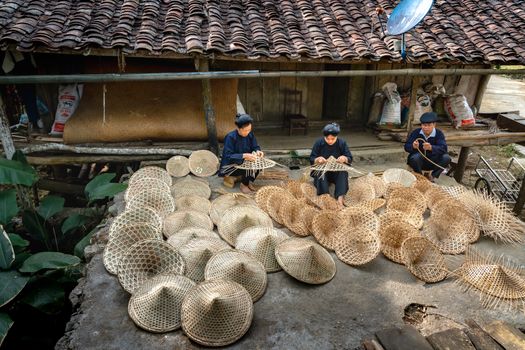
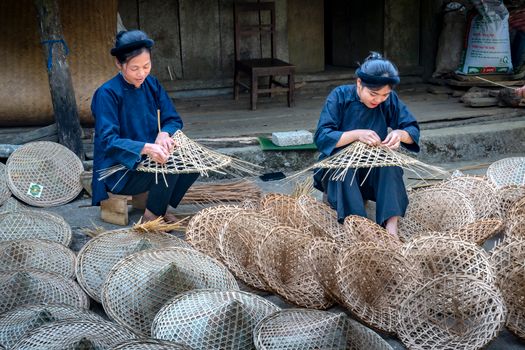
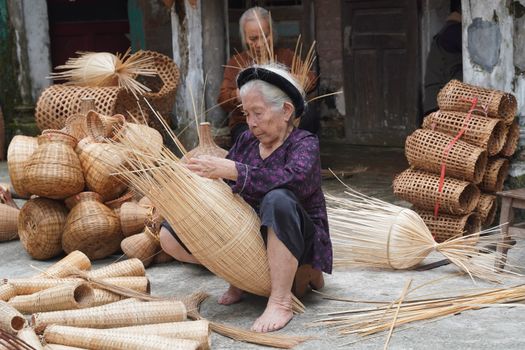
The process begins in the winter, when wild willow branches (vime) are harvested along riverbanks. The branches are boiled in large outdoor vats to soften the bark, peeled by hand, and then split into thin, flexible ribbons. The weavers use their feet, knees, and teeth to hold the structural ribs of the baskets in place as they weave the split willow with astonishing speed.
Climate change has brought devastating forest fires to central Portugal, destroying wild willow beds. Simultaneously, younger generations have migrated to Lisbon and Porto, leaving only a dozen elderly men to keep the tradition alive.
How Travelers Can Save It
A new wave of Portuguese designers is collaborating with the remaining master weavers of Gonçalo. They are combining traditional weaving techniques with modern metal frames to create high-end furniture, lighting fixtures, and architectural installations.
- The Insider Experience: Rent a car and drive the scenic, winding roads of the Guarda district. Spend an afternoon in a master weaver's workshop, learning how to harvest, strip, and bend willow. You will leave with a sturdy, hand-woven basket that will easily outlast any plastic container.
- Pro-Tip: Drive past the main village square of Gonçalo and follow the cobblestone signs toward the chapel of Nossa Senhora da Misericórdia. Along this narrow road, you will find the open-air workshops of the last remaining independent weavers. You will hear the rhythmic thwack of willow being split against stone walls before you see them.
---
The Budget & Logistics: Quick Facts
To help you plan your preservation-focused journeys, here is a quick-reference guide to the logistics and estimated costs of visiting these five craft revivals.
| Location | Craft | Estimated Cost (Workshop/Authentic Souvenir) | Best Time to Visit | How to Get There |
| :--- | :--- | :--- | :--- | :--- |
| Tbilisi, Georgia | Lurji Supra (Indigo Tablecloths) | $30 (Napkin) - $150+ (Full Tablecloth) | May to October | Fly into Tbilisi International Airport (TBS); workshops are centrally located in the Sololaki district. |
| Oaxaca, Mexico | Zapotec Natural Dye Rugs | $100 (Small Rug) - $800+ (Masterpiece) | October to March | Fly to Oaxaca City (OAX), then take a 45-minute colectivo or taxi east to Teotitlán del Valle. |
| Ishikawa, Japan | Urushi Lacquerware | $50 (Chopsticks) - $500+ (Lacquered Bowl) | Spring (Cherry Blossoms) or Autumn | Take the Shinkansen (bullet train) from Tokyo to Kanazawa, then use local buses to access the pop-up markets. |
| Himachal Pradesh, India | Chamba Rumal Embroidery | $40 (Small Patch) - $300+ (Framed Silk Art) | March to June, September to November | Fly to Dharamshala (DHM), then take a scenic 4-hour mountain drive to Chamba town. |
| Gonçalo, Portugal | Cestaria de Vime (Willow Baskets) | $20 (Small Basket) - $150+ (Designer Furniture) | September to November (Harvest season) | Train from Lisbon to Guarda, then rent a car for the 25-minute drive into the Serra da Estrela mountains. |
---
The Ultimate Souvenir: A Living Legacy
When you travel to these places, you are not just buying a physical object. You are purchasing a piece of human ingenuity that has survived wars, industrialization, and natural disasters. Your presence as a traveler—asking questions, paying fair wages, and sharing your experiences online—creates a direct economic incentive for the next generation to pick up the carving tool, the shuttle, or the dye-stirring paddle.
The next time you pack your bags, look past the standard tourist itineraries. Seek out the stains of indigo, the scent of boiling willow, and the clatter of the loom. That is where the real soul of travel lives.
---