The Soul of the Maker: Traditional Craft Revivals Needing Tourist Support Right Now
I stepped off the train in Tokushima, and the first thing that hit me wasn’t the salt air of the Naruto Strait—it was the smell. It’s a pungent, earthy aroma, reminiscent of wet tobacco and fermenting fruit. This is the scent of sukumo, the fermented indigo leaves that produce Japan’s legendary "Japan Blue."
As I walked into the dim, dirt-floored workshop of a 14th-generation master, I saw his hands. They weren't just stained; they were a deep, permanent midnight blue, a living testament to a craft that has survived wars and industrialization but is now facing its toughest opponent: a lack of successors.
We are currently living in a "now or never" moment for global heritage. Mass production has pushed many ancient crafts to the brink. However, a new wave of "impact tourism" is offering a lifeline. By choosing to visit these specific regions, you aren't just a spectator; you are the patron who ensures these skills aren't buried with the current generation of masters.
1. The "Japan Blue" Renaissance: Tokushima Indigo (Aizome)
In the Edo period, indigo was the color of the masses. Today, natural Aizome is a rarity. Unlike synthetic dyes, natural indigo is a living organism. It requires daily "feeding" with sake and lime to keep the bacteria alive.
When you visit a workshop like Buaisou, you aren't just buying a t-shirt. You’re witnessing a year-long cycle of farming, fermenting, and dyeing. The depth of color achieved through 30 or 40 dips in the vat creates a hue that synthetic chemicals simply cannot replicate.
Pro-Tip: The "Suji" Secret
When buying indigo, look for "Suji" (lines) or slight irregularities. This isn't a defect; it’s the mark of hand-dipping. To truly support the revival, book a "Dye-Your-Own" session. Bringing your own vintage white linen shirt to be dipped gives it a second life and puts money directly into the farmer-dyer’s pocket.
2. The Stitched Histories of Kutch: Gujarat, India
In the salt marshes of the Rann of Kutch, the landscape is monochromatic, but the people are technicolor. The women of the Rabari and Ahir tribes carry their family histories on their backs—literally. Their embroidery is a coded language; a specific stitch or mirror placement can tell you a woman's marital status, her sub-tribe, and her wealth.
Post-pandemic, these nomadic communities have struggled as local markets shuttered. Organizations like Kala Raksha are working to preserve these techniques, but they need travelers to venture beyond the "Golden Triangle" of Delhi, Agra, and Jaipur.
Pro-Tip: Avoid the "Middleman" Trap
Don't buy "Kutch-style" work in Mumbai boutiques. Take the overnight train to Bhuj. Visit the Shrujan Living and Learning Gallery, then hire a local driver to take you to the actual villages like Ajrakhpur. Buying a shawl directly from the woman who spent three months stitching it ensures 100% of the profit stays in the village.
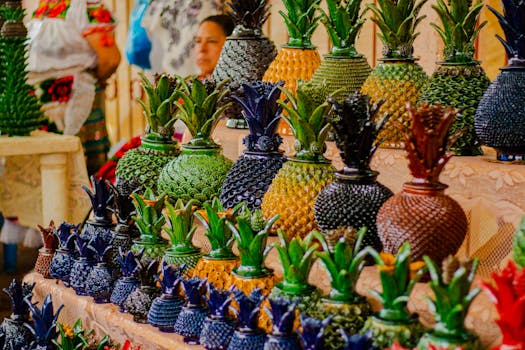
3. The Fire and Clay of Puebla: Talavera Pottery, Mexico
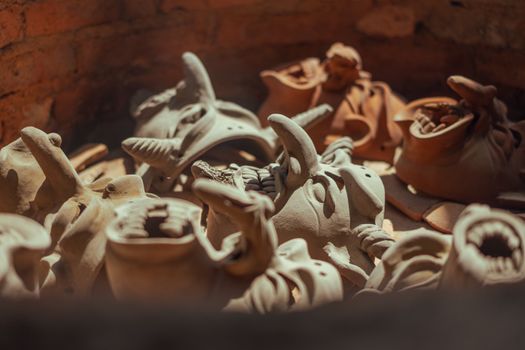
Puebla is a city built on clay. Authentic Talavera is one of the few crafts in the world protected by a Denominación de Origen. To be called "Talavera," the piece must use only six specific mineral pigments and be made using 16th-century techniques introduced by the Spanish.
The problem? Cheap, lead-filled imitations are flooding the markets. The "real" workshops, like Uriarte Talavera, are struggling to compete with factory-made ceramics that look similar to the untrained eye but lack the soul (and safety) of the original.
Pro-Tip: The "Ping" Test
Hold a piece of authentic Talavera and tap it gently with your knuckle. It should produce a clear, metallic "ping" rather than a dull thud. This signifies the high-quality firing process. Look for the holographic sticker and the workshop's signature on the base—it's your guarantee of authenticity.
4. The Needlework of the Moors: Arraiolos Rugs, Portugal
In the sun-bleached Alentejo region, the town of Arraiolos is famous for a unique cross-stitch rug that dates back to the 15th century. Legend says it was developed by Moorish women who stayed in Portugal after the Reconquista.
Unlike heavy Persian rugs, Arraiolos rugs are embroidered on linen or jute. It is a slow, meditative process. Today, the "Roda de Bordadeiras" (circles of embroiderers) are shrinking. Young people are moving to Lisbon, leaving the needles to the grandmothers.
Pro-Tip: The Hidden Entrance
Don't just stick to the main square. The most authentic workshops are often behind unmarked blue-framed doors in the side streets. If you hear the rhythmic tuck-tuck of a needle hitting a frame, knock. Most artisans are happy to show you their work-in-progress if you show genuine interest.
5. The Vanishing Lace of Burano: Venice, Italy
While most tourists in Venice are fighting for a photo on the Rialto Bridge, the island of Burano is quietly losing its heartbeat. Merletto ad ago (needle lace) is so complex that a single small doily can take weeks to complete.
The market is currently saturated with "machine lace" imported from overseas and sold as local. This has driven prices down, making it nearly impossible for the few remaining merlettaie (lacemakers) to earn a living wage.
Pro-Tip: Timing is Everything
Visit the Museo del Merletto first to understand the history, then head to the workshops around 4:00 PM. This is when the day-trippers leave, and the local women often sit outside their brightly colored houses to work in the fading light. If a piece costs €20, it’s machine-made. A real handmade piece will be hundreds of euros—and it’s worth every cent as a piece of wearable history.
---
Quick Facts: Logistics & Budget
| Craft | Location | Best Time to Visit | Est. Workshop Cost | How to Get There |
| :--- | :--- | :--- | :--- | :--- |
| Indigo | Tokushima, Japan | Oct - Nov (Harvest) | $50 - $150 | Express bus from Osaka or flight to Tokushima Awaodori Airport. |
| Embroidery | Kutch, India | Nov - Feb (Cooler) | $20 - $80 | Flight to Bhuj or overnight train from Ahmedabad. |
| Talavera | Puebla, Mexico | Year-round | $30 - $200 | 2-hour ADO bus from Mexico City. |
| Rugs | Arraiolos, Portugal | Spring/Autumn | $100+ (for small) | 1.5-hour drive or bus from Lisbon. |
| Lace | Burano, Italy | April - June | $200+ (for real lace) | Vaporetto (Line 12) from Fondamente Nove, Venice. |
---
Why Your Support Matters
When we buy a mass-produced souvenir, we are supporting a factory. When we support a revival, we are supporting a family, a village, and a lineage of human ingenuity.
These crafts are more than just "things." They are the physical manifestation of a culture's relationship with its land—the clay of Puebla, the indigo of Tokushima, the linen of Portugal. By showing up, asking questions, and paying a fair price, you are ensuring that the next time someone steps off that train in Tokushima, they’ll still be greeted by that funky, earthy smell of the world’s most beautiful blue.
*