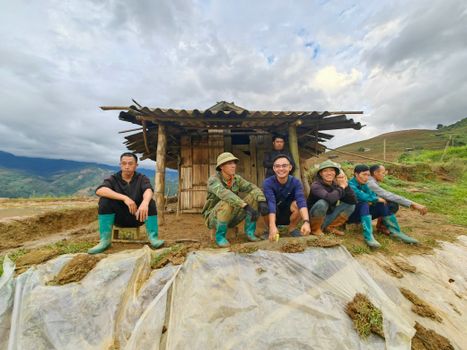
I stepped off the overnight sleeper train in Lao Cai at 5:14 AM. The air was bitingly cold, thick with the scent of roasted cardamom, wet clay, and pine needles. Mist rolled off the Hoang Lien Son mountains like steam from a hot bowl of pho. As I stood on the platform, shivering in my fleece, a young Hmong woman named Soso greeted me with a warm smile and a hand-woven indigo scarf.
Soso wasn’t just my guide; she was a shareholder in her own destiny.
For decades, tourism in northern Vietnam followed a predictable, extractive pattern: foreign-owned agencies pocketed the profits while indigenous communities were treated as mere photo opportunities. But my journey was different. I was traveling with Sapa O’Chau, a pioneer in community-based tourism.
Let’s be honest: buying a mass-produced plastic magnet doesn't help the destination you just spent two weeks photographing. If you want to travel ethically, you need to look at the numbers. Recent data from the World Travel & Tourism Council (WTTC) reveals that while global tourism is booming, less than 5% of travel spend remains within local communities in developing regions. Furthermore, Booking.com’s 2024 Sustainable Travel Report highlights that 65% of travelers actively seek experiences that represent authentic local culture, yet many struggle to find vetted options.
To bridge this gap, I’ve compiled the ultimate, data-driven guide to six world-class social enterprises where your presence directly fuels local prosperity.
---
1. Sapa O’Chau (Sapa, Vietnam)
### The Indigenous-Led Trekking Revolution
Historically, ethnic minority youth in Vietnam's northern highlands were forced to drop out of school to sell trinkets on the streets. Sapa O’Chau changed that narrative by establishing the first ethnic-minority-owned international tour operator in Vietnam.
Operating as a fully accredited social enterprise, they run a boarding facility, offer English classes, and train local youth in sustainable hospitality. When you book a trek through them, you are directly paying for a local guide's salary, their healthcare, and the education of children in remote villages.
- The Vibe: Authentic, challenging, and deeply moving. You will walk through emerald-green rice terraces, sleep in traditional wooden stilt houses, and drink homemade rice wine with village elders.
- The Insider Detail: The indigo dye used in the local textiles is harvested from wild plants. If you look closely at your guide's hands, they are often stained a beautiful, deep blue—a badge of honor representing weeks of meticulous craftsmanship.
- Pro-Tip: Skip the standard two-day trek and opt for the three-day homestay in the Red Dao village of Ta Phin. Ask for Soso as your guide; her knowledge of local medicinal forest herbs is unmatched.
---
2. Phare, The Cambodian Circus (Siem Reap, Cambodia)
### Transforming Lives Through the Performing Arts
If you think circus acts are limited to sequined outfits and trained animals, Phare will shatter your expectations. Located in Siem Reap, just a short tuk-tuk ride from the temples of Angkor Wat, Phare is Cambodia’s premier cultural show.
The performers are all graduates of Phare Ponleu Selpak, an artistic non-profit association founded in 1994 by young Cambodians returning from refugee camps after the Khmer Rouge regime. The school provides free public education and professional artistic training to over 800 vulnerable children daily.
- The Vibe: High-octane, emotional, and visually spectacular. It’s a mix of theater, live music, contortion, and acrobatics that tells distinctly Cambodian stories of war, healing, and modern society.
- The Insider Detail: The live music accompanying the show is performed on traditional Khmer instruments, including the roneat (bamboo xylophone) and kong vong (gong chimes), blended with modern electric guitars.
- Pro-Tip: Book the Row A seats in Section B. You’ll be close enough to feel the wind as the acrobats fly overhead, but far enough back to avoid getting splashed by their sweat during the high-energy tumbling sequences.
---
3. Association Al Kawtar (Marrakesh, Morocco)
### Empowering Women with Physical Disabilities
Tucked away in the labyrinthine alleys of Marrakesh’s Gueliz neighborhood, far from the chaotic sensory overload of the Jemaa el-Fnaa, lies Association Al Kawtar. In Morocco, women with physical disabilities face severe social and economic marginalization. Al Kawtar provides these women with a safe haven, medical care, a fair wage, and professional training in the ancient art of Moroccan embroidery.
- The Vibe: Serene, supportive, and filled with quiet pride. The workshop smells of orange blossom water and mint tea, with the rhythmic click of embroidery needles providing the soundtrack.
- The Insider Detail: The embroidery styles here are regional; the Fezy stitch (from Fes) is completely reversible, meaning the pattern looks identical on both the front and the back of the fabric—a feat requiring immense mathematical precision.
- Pro-Tip: The entrance is unmarked to maintain privacy. Look for the heavy, dark-green iron door next to the local bakery on Rue de la Liberté. Knock twice; they love welcoming travelers who want to buy directly from the source rather than through middlemen in the souks.
---
4. KOTO – Know One, Teach One (Hanoi, Vietnam)
### Culinary Excellence with a Conscience
Founded by Vietnamese-Australian Jimmy Pham over twenty years ago, KOTO (Know One, Teach One) has transformed the lives of over 1,000 street youth and disadvantaged young people in Vietnam through a rigorous 2-year hospitality training program.
This isn't just a basic cooking class; students graduate with an internationally recognized Australian certificate in commercial cookery or food and beverage service. Many alumni now run their own restaurants or work as executive chefs in five-star hotels across Asia.
- The Vibe: Polished, professional, and culinary-forward. Located near the historic Temple of Literature, the restaurant serves up refined Vietnamese classics with a modern twist.
- The Insider Detail: Every dish is prepared and served by current trainees under the watchful eye of experienced alumni mentors.
- Pro-Tip: Order the caramelized pork belly cooked in a clay pot with wild betel leaves. Request a table on the third-floor terrace; it offers an uninterrupted view of the ancient tiled roofs of the Temple of Literature.
---
5. Centro de Textiles Tradicionales del Cusco (Cusco, Peru)
### Preserving 10,000 Years of Quechua Weaving
When travelers head to Peru, their sights are usually set on Machu Picchu. However, the Sacred Valley is home to one of the world's oldest textile traditions. The Centro de Textiles Tradicionales del Cusco (CTTC) was founded in 1996 by Quechua weavers to rescue and preserve pre-Columbian weaving techniques that were on the brink of extinction due to the influx of cheap, synthetic imports.
Today, the CTTC partners with ten weaving communities across the Cusco region, ensuring over 600 weavers receive fair compensation for their complex, labor-intensive work.
- The Vibe: Vibrant, historical, and deeply respectful of indigenous cosmology. The colors are dizzying—vibrant pinks, deep blues, and rich ochres, all derived from natural plants and insects.
- The Insider Detail: The red dye used in their textiles comes from cochineal, a tiny scale insect that lives on prickly pear cacti. When crushed, it yields a brilliant crimson that was once so coveted it was exported to European royalty.
- Pro-Tip: Visit their headquarters on Avenida El Sol in Cusco on a Tuesday morning. You can sit in the courtyard and watch weavers from different villages demonstrate the double-weave technique, a skill that takes over a decade to master.
---
Quick Facts & Budget Logistics
To help you plan your next impact-driven itinerary, here is a quick-reference guide to the logistics of these five world-class social enterprises:
| Social Enterprise | Location | Est. Cost ($ USD) | Best Time to Visit | How to Get There |
| :--- | :--- | :--- | :--- | :--- |
| Sapa O’Chau | Sapa, Vietnam | $45 - $120 (per day) | September to November | Overnight train from Hanoi to Lao Cai, then a local shuttle bus. |
| Phare Circus | Siem Reap, Cambodia | $18 - $38 (per ticket) | November to February | 10-minute tuk-tuk ride from downtown Siem Reap. |
| Association Al Kawtar | Marrakesh, Morocco | Free entry; Items $15 - $200 | October to April | Walkable from Gueliz center; near Plaza Shopping Center. |
| KOTO Restaurant | Hanoi, Vietnam | $8 - $25 (per meal) | Year-round | Taxi or Grab app directly to 59 Van Mieu Street. |
| CTTC Cusco | Cusco, Peru | Free entry; Textiles $20 - $500 | May to September | Located on Avenida El Sol, a 10-minute walk from Plaza de Armas. |
---
Why Your Choices Matter: The Data Speaks
The shift from "sustainable" to "regenerative" travel is more than just a buzzword. According to the Center for Responsible Travel (CREST), every dollar spent at a locally owned social enterprise has a 4x higher multiplier effect on the local economy compared to a dollar spent at a multinational chain hotel or foreign-owned tour agency. This means your morning flat white at a social enterprise cafe doesn't just buy coffee beans; it pays for clean water systems, school books, and maternal healthcare in the surrounding community.
By choosing to support these organizations, you are exercising your power as a global citizen. You are transforming travel from an act of consumption into an act of mutual respect and empowerment.
Next time you pack your bags, don't just think about what you want to see. Think about who you want to support. Your itinerary is your vote for the kind of world you want to live in. Let's make it count.
---