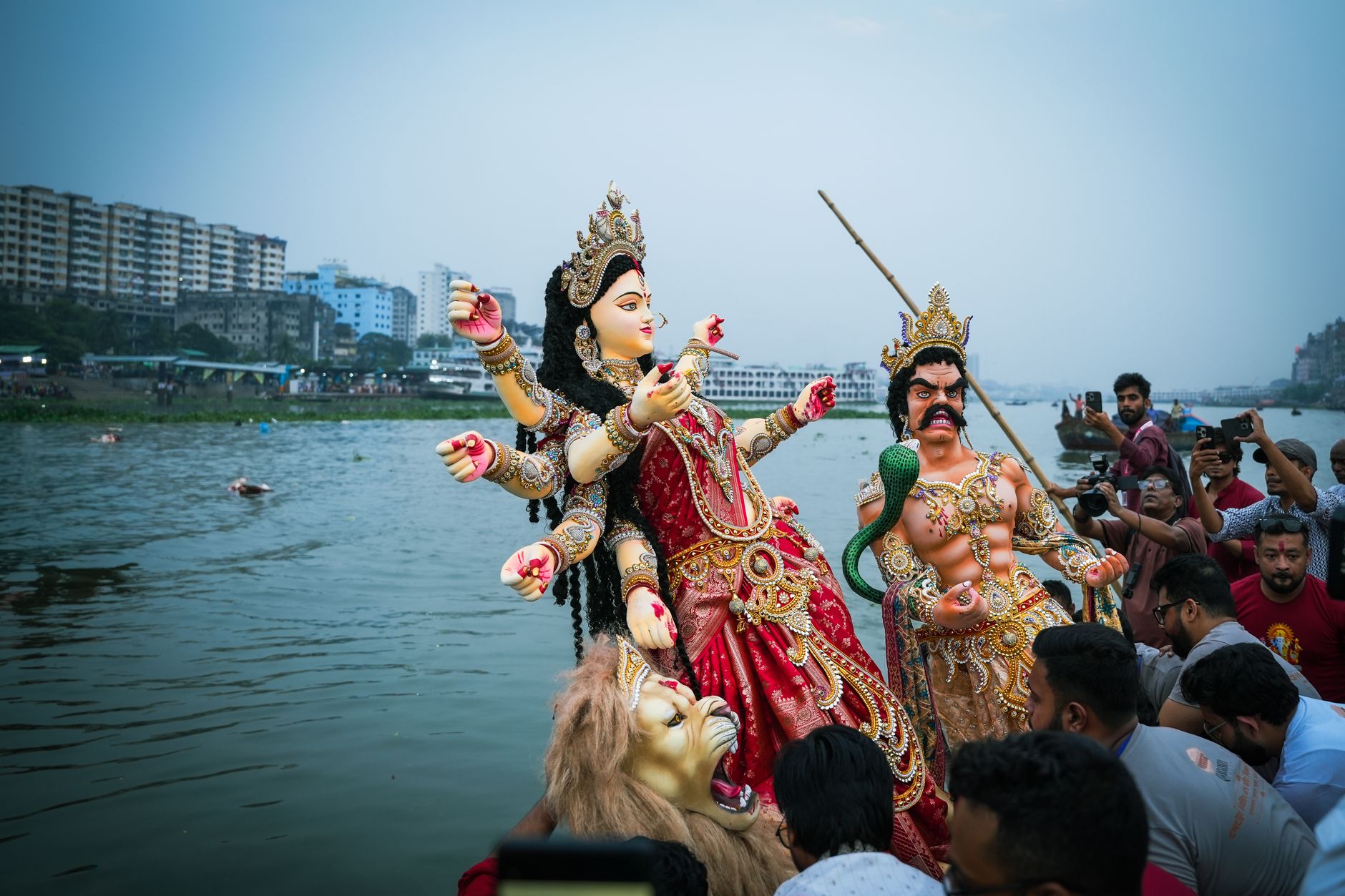
The scent of incense, the rhythm of ancient drums, the kaleidoscope of colors exploding around you – there are moments in travel that transcend mere observation and plunge you deep into the soul of a destination. For me, one such moment happened years ago, amidst the joyous chaos of Holi in Varanasi. A splash of vibrant pink paint hit my cheek, followed by a chorus of laughter from strangers who, moments before, were just faces in a crowd. In that instant, I wasn't just a tourist; I was part of something ancient, sacred, and utterly exhilarating.
That experience ignited a passion within me: to seek out and participate in the world’s most profound religious festivals. These aren't just events; they're living, breathing tapestries of faith, culture, and community, offering a window into humanity's deepest beliefs. And the best part? Many of them welcome foreigners with open arms, inviting us not just to watch, but to truly experience.
If you're ready to move beyond the guidebooks and into the heart of global spirituality, here are 7 religious festivals that deserve a top spot on your bucket list. Prepare for a journey that will challenge your perceptions, open your heart, and leave an indelible mark on your soul.
1. Holi: The Festival of Colors, India
What it is:
Holi is a Hindu festival celebrating the arrival of spring, the triumph of good over evil, and love. It’s infamous for its vibrant, playful chaos where people chase each other, throwing dry colored powders (gulal) and colored water, smearing faces, and dancing to bhangra music.
Why you need to experience it:
Imagine stepping into a living, breathing rainbow. Holi is pure, unadulterated joy. For one glorious day, social norms melt away, and everyone – rich or poor, young or old, local or foreigner – is equalized under a blanket of brilliant color. It's a powerful reminder of unity and renewal.
My story:
My first Holi in Varanasi was a sensory overload in the best possible way. I arrived nervous, clutching a small bag of gulal, wondering how to participate without being too intrusive. Within minutes, a group of local kids, their faces already smeared with every color imaginable, surrounded me with beaming smiles. "Happy Holi!" they chanted, before gently, then enthusiastically, painting my face bright yellow and red. Any apprehension vanished. I spent the rest of the day laughing, dancing, and getting utterly doused in color, sharing sweets and smiles with countless strangers. It felt like a collective release, a joyous celebration of life itself.
Practical Tips:
* Where to go: While celebrated across India, Varanasi, Mathura, and Vrindavan are legendary for their intense celebrations. Goa offers a more relaxed, beach-party vibe.
* When: Usually in March, on the day after the full moon. Dates vary annually.
* What to wear: Old, white clothes you don't mind getting permanently stained. Trust me, it will get everywhere.
* Be prepared: Protect your eyes (sunglasses are a must), hair (oil it beforehand for easier washing), and electronics (waterproof bags!).
* Respect: While playful, always ask before applying color to someone, especially women. Be mindful of your surroundings.
* Cost: Accommodation and transport prices surge, so book well in advance. Gulal is very cheap, a few dollars will get you plenty.
2. Día de los Muertos: The Day of the Dead, Mexico
What it is:
Far from a morbid affair, Día de los Muertos (November 1st and 2nd) is a vibrant, ancient Mesoamerican tradition where families welcome the spirits of their deceased loved ones home for a joyful reunion. It’s a celebration of life, memory, and the cyclical nature of existence.
Why you need to experience it:
This festival challenges Western perceptions of death. Instead of fear, there's love, remembrance, and a profound connection to ancestry. The visual spectacle – elaborate altars (ofrendas), sugar skulls, marigolds, and candlelit cemeteries – is simply breathtaking and deeply moving.
My story:
I arrived in Oaxaca, Mexico, a few days before the main festivities. The city was already buzzing with preparations: markets overflowing with marigolds and pan de muerto, bakeries crafting intricate sugar skulls, and artists painting vibrant calaveras (skeletons) everywhere. On the evening of November 1st, I joined a local family as they visited the cemetery. The air hummed with hushed conversations, the glow of thousands of candles, and the scent of copal incense. Families sat by graves, sharing food, tequila, and stories, making the cemetery feel like a living, breathing park of remembrance. Witnessing their profound love and respect for those who had passed was incredibly powerful, transforming any preconceived notions I had about death.
Practical Tips:
* Where to go: Oaxaca is renowned for its authentic and vibrant celebrations. Mixquic, a small town near Mexico City, also offers a very traditional experience.
* When: November 1st and 2nd.
* Participation: Visit public altars, explore markets, attend parades (comparsas), and if invited, respectfully visit cemeteries. Ask for permission before photographing people or private altars.
* Cost: Flights and hotels book up months in advance, so plan ahead. Prices for local crafts and food are generally reasonable.
* Dress: While not a strict dress code, many people dress up in elegant calavera makeup and traditional attire.
3. Songkran: The Water Festival, Thailand
What it is:
Songkran marks the traditional Thai New Year (mid-April) and is famous worldwide for its exuberant water fights. While it appears to be pure fun, the water carries a deeper meaning: a symbolic cleansing and purification to wash away bad luck and welcome the new year with a fresh start.
Why you need to experience it:
It's a few days of sanctioned, nationwide fun where everyone, regardless of age, gets to be a kid again. The energy is infectious, the smiles are genuine, and the relief from the April heat is welcome. It's a unique blend of spiritual tradition and joyous celebration.
My story:
My first Songkran in Chiang Mai was an absolute blast. I’d bought a super soaker and waterproofed my phone, but nothing could truly prepare me for the sheer scale of the water warfare. Walking down the street meant you were fair game, and everyone – from grandmothers wielding garden hoses to kids on tuk-tuks with buckets – was armed. I remember being completely drenched within minutes, but the feeling of pure, unadulterated joy was overwhelming. Strangers would offer me ice water or a splash of perfumed water for good luck, and the collective laughter echoed through the streets. It was a beautiful, chaotic, and utterly refreshing welcome to the Thai New Year.
Practical Tips:
* Where to go: Chiang Mai is legendary for its massive celebrations around the old city moat. Bangkok (Khao San Road) and Phuket also have huge water fights.
* When: April 13th-15th, but celebrations can extend for a week in some areas.
* What to wear: Light, quick-drying clothes. Swimwear underneath is a good idea.
* Be prepared: Waterproof everything! Ziplock bags for phones, waterproof pouches for wallets. Leave valuables at your hotel.
* Respect: While it's playful, avoid throwing water at monks, babies, or the elderly. Be mindful of traffic.
* Cost: Accommodation can be pricey, book early. Water guns and buckets are readily available and cheap.
4. Thaipusam: The Festival of Penance, Malaysia & Singapore
What it is:
Thaipusam is a Hindu festival celebrated by the Tamil community, primarily in Malaysia and Singapore, dedicated to Lord Murugan (Kartikeya). Devotees carry elaborate "kavadis" (burdens) – decorated structures, often attached to the body via hooks and skewers – as an act of penance, devotion, and thanksgiving.
Why you need to experience it:
This is one of the most visually striking and intensely spiritual festivals you can witness. It's a profound display of faith, endurance, and human will. Observing the unwavering devotion of participants is a truly humbling and unforgettable experience.
My story:
I witnessed Thaipusam at the Batu Caves in Kuala Lumpur, Malaysia. The atmosphere was electric, a cacophony of rhythmic chanting, drumbeats, and the scent of incense. Thousands of devotees, many in a trance-like state, made the arduous climb up the 272 steps to the temple cave, bearing their kavadis. I remember watching one man, his back pierced with dozens of hooks supporting a towering kavadi, his face serene despite the visible effort. His family and friends walked alongside him, offering encouragement and support. It wasn’t about pain, but about devotion and spiritual strength. It was a powerful testament to the human spirit and the depth of faith, leaving me speechless.
Practical Tips:
* Where to go: The Batu Caves outside Kuala Lumpur (Malaysia) are the most famous site. Penang (Malaysia) and Singapore also have significant celebrations.
* When: Usually in January or February, on the full moon day in the Tamil month of Thai.
* Respect: Dress modestly (shoulders and knees covered). Maintain a respectful distance from devotees, especially those in a trance. Ask before taking photos, and avoid flash photography.
* Be prepared: It gets incredibly crowded and hot. Wear comfortable shoes, stay hydrated, and be patient.
* Cost: Free to observe. Transport to Batu Caves will be busy, consider booking a ride-share or taxi well in advance.
5. Obon: Festival of Ancestors, Japan
What it is:
Obon is a Buddhist custom to honor the spirits of one's ancestors. Families clean graves, make offerings, and light lanterns to guide spirits back home. It's a period of family reunion, reflection, and quiet remembrance, culminating in the beautiful Toro Nagashi (floating lantern) ceremonies.
Why you need to experience it:
Obon offers a serene and deeply moving insight into Japanese culture and its profound respect for ancestors. It's a less chaotic, more contemplative festival, filled with beautiful rituals and a sense of peaceful communion between the living and the dead. The sight of thousands of lanterns floating on water at dusk is utterly magical.
My story:
I spent Obon in Kyoto, a city that perfectly blends tradition with beauty. I joined a crowd along the banks of the Kamo River for the Toro Nagashi ceremony. As dusk settled, people lit paper lanterns, inscribed with messages for their ancestors, and gently set them afloat. Each flickering light drifted downstream, a silent prayer, a tangible connection to those who had passed. The collective quiet, broken only by the gentle lapping of water and distant temple bells, was incredibly poignant. It wasn't sad, but rather a comforting sense of continuity and enduring love. It felt like watching a million tiny stars embark on a journey home.
Practical Tips:
* Where to go: Celebrated nationwide. Kyoto, Tokyo, and Hiroshima (for its poignant lantern ceremony) offer beautiful experiences. Many smaller towns have unique local traditions.
* When: Mid-August (typically around August 13th-15th) in most regions, though some areas celebrate in mid-July.
* Participation: You can observe lantern ceremonies, visit temples, and enjoy local Obon dances (Bon Odori). Many temples welcome visitors to write messages on lanterns for a small fee.
* Cost: Accommodation and transport can be busy due to domestic travel, so book early. Observing events is generally free.
* Respect: Be respectful at temples and graveyards. Photography is usually fine, but be discreet.
6. Semana Santa: Holy Week, Spain
What it is:
Semana Santa (Holy Week) is the annual commemoration of the Passion of Jesus Christ. It's an incredibly solemn and visually dramatic Catholic festival, particularly in Spain, where elaborate processions featuring brotherhoods (cofradías) carrying massive floats (pasos) with religious sculptures take over the streets.
Why you need to experience it:
This is a profound cultural and religious experience that transports you back centuries. The atmosphere is intense – a mix of fervent devotion, ancient tradition, and breathtaking artistry. The sound of drums, trumpets, and the mournful saetas (flamenco songs) echoing through narrow streets is truly unforgettable.
My story:
I was in Seville, Spain, for Semana Santa, and the city was transformed. The air hung heavy with the scent of incense and orange blossoms. I found a spot along a narrow street to watch a procession. First came the Nazarenos, hooded figures in their distinctive robes, carrying candles and sometimes walking barefoot in penance. Then, the immense pasos, intricately carved and adorned, depicting scenes from the Passion, carried on the shoulders of dozens of hidden costaleros. The sheer effort, the slow, swaying rhythm, the silence of the crowd broken only by the occasional gasp or a sudden, piercing saeta sung from a balcony – it was overwhelmingly moving. It wasn't just a spectacle; it was a deeply felt act of communal faith.
Practical Tips:
* Where to go: Seville is the undisputed heart of Semana Santa, known for its grandeur and intensity. Other cities like Malaga, Granada, and Zamora also have significant celebrations.
* When: The week leading up to Easter Sunday (March or April). Dates vary annually.
* Participation: As a foreigner, you are a respectful observer. Find a good spot early for processions. Some areas have paid seating, but many spots are free.
* Dress: Dress respectfully, especially if entering churches. Avoid overly casual attire.
* Cost: Accommodation and flights are extremely expensive and book out months in advance. Many streets are closed, so walking is the primary mode of transport.
* Be prepared: Crowds are immense. Be patient, stay hydrated, and wear comfortable shoes.
7. Loi Krathong & Yi Peng: Festivals of Lights, Thailand
What it is:
Often celebrated concurrently in northern Thailand, Loi Krathong and Yi Peng are two distinct but complementary festivals of light. Loi Krathong involves releasing beautifully decorated 'krathongs' (floating baskets) onto rivers and waterways, a symbolic act of letting go of misfortunes. Yi Peng, unique to Northern Thailand, sees thousands of Lanna-style sky lanterns (khom loi) released into the night sky, carrying wishes and prayers.
Why you need to experience it:
This is, without a doubt, one of the most visually stunning and ethereal festivals on Earth. The sight of thousands of flickering lights ascending into the dark sky, or gently drifting down a river, is profoundly beautiful and deeply spiritual. It's an experience that feels truly magical and incredibly Instagram-worthy.
My story:
I timed my visit to Chiang Mai perfectly to witness both Loi Krathong and Yi Peng. The city was aglow. On Loi Krathong night, I bought a small, intricately folded krathong made of banana leaves and flowers. As I knelt by the Ping River, lit the candle, and gently pushed it into the water, I felt a sense of release, a quiet moment of reflection amidst the joyful crowds. The next night, at the mass Yi Peng lantern release, I stood in awe as thousands of glowing lanterns ascended, transforming the night sky into a galaxy of silent stars. It was a collective gasp of wonder, a moment of shared beauty and hope that brought tears to my eyes. The sheer scale and spiritual resonance were overwhelming.
Practical Tips:
* Where to go: Chiang Mai is the epicentre for both festivals. Other northern cities like Sukhothai and Lampang also celebrate Loi Krathong beautifully.
* When: Usually in November, on the full moon of the 12th month in the traditional Thai lunar calendar. Dates vary annually.
* Participation: You can buy and release your own krathong. For Yi Peng, there are often large, ticketed mass release events (book months in advance, these sell out fast) or smaller, local releases.
* Cost: Mass Yi Peng events are expensive (often $100-$200+ USD) but include lanterns, food, and transport. Krathongs are cheap (a few dollars). Accommodation and flights will be very high, book early.
* Safety: Be mindful of fire hazards with lanterns. Follow local guidelines.
---
These festivals are more than just items to tick off a list; they are invitations to connect, to understand, and to be transformed. They remind us of the incredible diversity and shared humanity that binds us all. So, stop dreaming and start planning. Choose one, or two, or all seven, and prepare for a journey that will open your eyes, stir your soul, and leave you with stories that will last a lifetime.
Which festival calls to you first? Share your thoughts in the comments below, and don't forget to tag #TripsoraFestivals in your own adventure photos!
---