The 3:30 AM Wake-Up Call You Won't Regret
I stepped out of the old wooden longtail boat onto the damp, clay shore just as the first hint of violet bruised the night sky. The air smelled of wet moss, decaying teakwood, and the sharp, clean scent of morning rain. My boots sank slightly into the mud, and the only sound was the low, rhythmic hum of cicadas and the distant splash of a gibbon leaping through the jungle canopy.
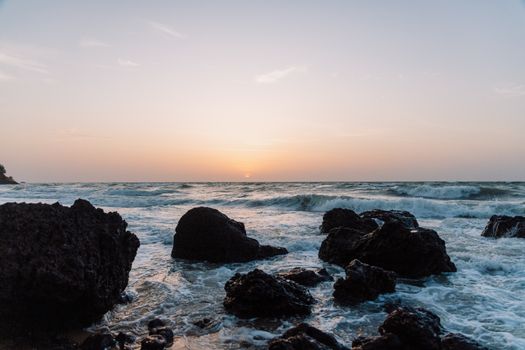
My eyes burned from a 3:30 AM wake-up call, and my camera strap chafed against my neck. But as the sun finally crested the limestone karsts, bleeding liquid gold across the mist-shrouded water, the exhaustion vanished. I pressed the shutter. That single frame was worth every lost hour of sleep.
In the travel world, sunset gets all the glory because it’s convenient. It pairs nicely with a glass of local wine and requires zero sleep deprivation. But sunset is also when the crowds peak, the air is hazy with dust, and the light is harsh from the day's heat.
If you want to create images that stop people mid-scroll on Instagram or earn a double-take on Pinterest, you have to embrace the sunrise mission. This summer, a new wave of visually stunning, off-the-beaten-path locations is trending.
These aren't your typical, over-photographed tourist traps. These are raw, dramatic landscapes that demand effort but reward you with portfolio-defining shots.
Here are the six definitive photography locations worth the sunrise mission this summer.
---
1. The Jagged Teeth of Seceda (Dolomites, Italy)
```
▲▲▲ [Seceda Ridge] - Sharp, dramatic limestone teeth
/ \
/ \ ◄─── Best angle: 100m along the ridge path, shooting South-West
/_______\
```
The Vibe
Standing at 2,518 meters above sea level at dawn feels like standing at the edge of the world. The Seceda mountain crest looks like a giant stone wave frozen mid-break, dropping vertically into the green pastures of the Val Gardena below. In the summer mornings, the air is biting cold, smelling of alpine chert, damp pine needles, and wild thyme.
The Composition
The classic shot here utilizes the leading line of the dramatic ridgeline. Position yourself about 100 meters along the path leading away from the cable car station, shooting back toward the southwest.
Use a wide-angle lens (16-35mm) to emphasize the sheer scale of the drop-off. If you are lucky, a low-lying blanket of cloud will cover the valley floor, leaving only the jagged Odle peaks piercing through like stone monoliths.
- Camera Settings: ISO 100, f/11, 1/15s (use a tripod). Bracket your exposures by 2 stops to capture both the dark shadows of the valley and the bright alpine sky.
The Secret Mission
The Seceda cable car from Ortisei doesn't start running until 8:30 AM—long after the golden hour has faded. To get here for sunrise, you have two options:
1. The Hard Way: Hike up from the Col Raiser parking lot. It’s a steep, 2-hour uphill slog under the stars. Bring a high-intensity headlamp.
2. The Insider Way: Book a night at the Rifugio Fermeda or Rifugio Seceda. You can sleep in a warm alpine bed, wake up at 5:00 AM, and walk just 15 minutes to the ridge before the first light hits.
---
2. The Misty Ruins of Lake Tamblingan (Bali, Indonesia)
```
[Submerged Temple]
_|_|_
[_____] ◄─── Shoot from a twin-canoe (Jukung)
~~~~~~~~~~~/~\~~~~~~~~~~~~ [Misty Lake Water]
```
The Vibe
While the crowds swarm the iconic Lempuyang Temple (where assistants use mirrors to fake a lake reflection), the real magic lies in the northern highlands of Munduk. Lake Tamblingan is a sacred caldera lake surrounded by dense rainforest. At dawn, a thick, ghostly mist clings to the water, partially swallowing the stone ruins of the 10th-century Gubug Temple.
The Composition
This is all about mood and minimalism. You want to capture the contrast between the dark, ornate Balinese stone architecture and the soft, white lake mist.
Use a medium telephoto lens (50mm to 85mm) to compress the scene and make the distant jungle wall feel massive behind the temple.
- Camera Settings: ISO 400 (to compensate for the low light under the canopy), f/4 to create a soft background separation, and a fast enough shutter speed (1/120s) to freeze the motion of your boat.
The Secret Mission
Don't shoot from the shore. When you arrive at the lakeside parking lot at 5:15 AM, look for the local fishermen. For around 200,000 IDR ($13 USD), they will row you out on a traditional jukung (a twin-hulled wooden canoe).
Ask them to position the canoe directly in front of the submerged temple gate. The reflection of your wooden boat on the glass-like, misty water is pure, unrepeatable gold.
---
3. The Lonely Sentinel of Kallur Lighthouse (Kalsoy, Faroe Islands)
```
O [Lighthouse]
/|\
/ | \ ◄─── Dangerous ridge path (Extreme winds!)
/ | \
____/___|___\____ [800m sheer drop to Atlantic Ocean]
```
The Vibe
The Faroe Islands are a masterclass in dramatic geography, but Kalsoy island takes it to another level. The Kallur Lighthouse sits on a narrow, neon-green grassy ridge that plunges 800 meters straight down into the churning, slate-grey North Atlantic. The wind here is fierce, carrying the scent of salt spray and wet peat, accompanied by the nesting puffins screaming from the cliffs.
The Composition
To get the viral shot, you must walk past the lighthouse onto a tiny, narrow dirt path along the northern ridge. Looking back, you can frame the small red-and-white lighthouse against the colossal, vertical rock face of Nestindar.
Use a circular polarizer to cut the glare on the ocean below and saturate the intense green of the basalt grass.
- Camera Settings: ISO 200, f/8, 1/250s. Keep your shutter speed fast; the wind here can cause camera shake even on a heavy tripod.
The Secret Mission
Logistics here are tight. You must take the small car ferry from Klaksvík to Syðradalur. The ferry only holds about 12 cars, and you cannot pre-book.
Queue up at the harbor at least 1 hour before the first departure (usually around 6:00 AM in summer). Once on the island, drive north to Trøllanes, park, and begin the 45-minute hike to the lighthouse.
Safety Warning:
The ridge path past the lighthouse is extremely narrow with sheer drops on both sides. If the grass is wet or the wind exceeds 35 knots, do not attempt it. Your life is worth more than a photo.
---
4. The Cypress-Lined Dreams of Poggio Covili (Tuscany, Italy)
```
▲ ▲ ▲ ▲ ▲ [Symmetrical Cypress Trees]
/ \ / \ / \ / \ / \
/ \ \ \ \ \ ◄─── Shoot from SR2 road with 200mm lens
/_____\___\___\___\___\
```
The Vibe
Tuscany in the summer is hot and crowded, but at 5:30 AM, the Orcia Valley is a quiet sanctuary of rolling clay hills and silver-green olive groves. Poggio Covili is an agricultural estate famous for its perfectly symmetrical, double-row avenue of Italian cypress trees (Cupressus sempervirens). At dawn, a low-lying ground fog often snakes through the trees, making the landscape look like a Renaissance painting.
The Composition
Most tourists stand right at the gate, shooting directly up the driveway. This is a mistake; it looks flat.
Instead, walk about 100 meters north along the main SR2 road. Use a 70-200mm telephoto lens zoomed in to 200mm. This compresses the distance, making the cypress trees look incredibly dense and the rolling Tuscan hills behind them rise up like waves.
- Camera Settings: ISO 100, f/5.6 (to keep the foreground trees sharp while softly blurring the distant hills), 1/80s.
The Secret Mission
The best light occurs about 10 minutes before the sun actually crests the horizon (the blue hour transition). This is when the sky is a soft palette of pastel pink and lavender, and the ground fog is most prominent.
Once the sun rises, the light becomes harsh quickly, and the fog evaporates within 20 minutes. Arrive early, set up your tripod, and use a graduated neutral-density (ND) filter to balance the bright sky with the dark shadows of the cypress avenue.
---
5. The Monolithic Majesty of Hegra (AlUla, Saudi Arabia)
```
___________
| _______ | [Qasr al-Farid]
| | | |
| | (X) | | ◄─── Stand here for scale
| |_______| |
______|___________|______ [Desert Sand]
```
The Vibe
Hegra, Saudi Arabia’s first UNESCO World Heritage site, is a vast desert landscape dotted with over 100 monumental tombs carved directly into sandstone outcrops by the Nabataeans. At sunrise, the desert air is surprisingly cool (around 18°C in early summer), smelling of dry dust and wild desert sage. The silence is absolute, broken only by the crunch of sand beneath your boots.
The Composition
The crown jewel of Hegra is the Tomb of Lihyan, Son of Kuza (Qasr al-Farid). It’s a single, four-story tomb carved out of an isolated sandstone monolith.
Position your camera low to the ground to emphasize the height of the tomb. Use a wide-angle lens and place a person (wearing contrasting clothing, like a white flowy dress or dark linen) near the base of the tomb to provide a sense of scale.
- Camera Settings: ISO 100, f/8, 1/125s. Use a warm white balance setting (cloudy or shade) to bring out the rich, orange-pink tones of the Nabataean sandstone.
The Secret Mission
You cannot simply drive into Hegra on your own; access is strictly controlled. To get in at sunrise, you must book a private, specialized tour through the official Experience AlUla portal well in advance.
Request the "Hegra Morning Tour" and ask specifically to be at Qasr al-Farid at astronomical dawn. The sun rises directly behind the tomb, casting a golden halo around the sandstone block before illuminating the intricate hand-carved facade.
---
6. The Floating Village of Kompong Phluk (Tonle Sap, Cambodia)
```
[Stilt House]
_|_|_
| | ◄─── Houses sit on 10-meter-high bamboo stilts
_|_|_|_|_
~~~~~~~~/~\~~~~~~~~~ [Reflective Water]
```
The Vibe
Located on the edge of the massive Tonle Sap Lake, Kompong Phluk is a village of stilt houses built over the water. In the summer, as the monsoon rains begin to fill the lake, the village appears to float.
At dawn, the water is as smooth as polished glass, reflecting the pastel-colored wooden houses. The village wakes up early: wood smoke drifts from kitchen windows, fishermen untangle their green nylon nets, and children paddle small metal tubs to school.
The Composition
This is a street and documentary photographer's paradise. Focus on reflections.
Find a spot where the 10-meter-high bamboo stilts reflect perfectly into the water. Look for the local women paddling small wooden boats laden with bright green morning glory or fresh fish.
Use a fast prime lens (35mm or 50mm f/1.4) to capture the human elements in low morning light.
- Camera Settings: ISO 800 (for fast-moving boats in low light), f/2.0, 1/250s.
The Secret Mission
Skip the standard tourist boats that leave from the main pier later in the day. Instead, hire a private local boatman from the Roluos area the night before.
Arrange to meet him at the canal at 5:00 AM. This ensures you are deep inside the floating forest and the main village street before the harsh sun hits and the tourist boats start churning up the water, ruining the perfect reflections.
---
Quick Facts: Logistics & Budgets
| Location | Best Time to Visit | Est. Cost ($) | How to Get There |
| :--- | :--- | :--- | :--- |
| Seceda, Italy | Mid-June to August (5:30 AM) | $50 - $120 | Fly to Venice, drive 3 hours to Ortisei, hike or stay at Rifugio Fermeda. |
| Lake Tamblingan, Bali | June to September (5:45 AM) | $15 - $25 | Fly to Denpasar, drive 2.5 hours north to Munduk. Hire a local canoe. |
| Kallur, Faroe Islands | July to August (4:30 AM) | $120 - $200 | Fly to Vágar, drive to Klaksvík, take the car ferry to Kalsoy island. |
| Poggio Covili, Italy | June to September (5:45 AM) | Free | Fly to Florence, rent a car, drive 1.5 hours south along the SR2 road. |
| Hegra, Saudi Arabia | May to June (5:30 AM) | $80 - $250 | Fly to AlUla (ULH), book an official private morning tour. |
| Kompong Phluk, Cambodia| July to September (5:15 AM) | $30 - $50 | Fly to Siem Reap, tuk-tuk 45 minutes to the Tonle Sap lake edge. |
---
The Sunrise Photographer's Gear Checklist
Before you head out into the dark, make sure your camera bag is packed with these non-negotiables:
- A Sturdy Tripod: Essential for long exposures during the blue hour before the sun breaks.
- A High-Intensity Headlamp: Keep your hands free while hiking dark trails.
- Graduated ND Filters: To balance the high dynamic range between bright skies and dark landscapes.
- Lens Wipes & Blower: Morning dew and sea spray will ruin your glass within minutes.
- A Thermos of Hot Coffee: Because a cold morning on a Faroese cliff is significantly better with hot caffeine.
---
Capture the Quiet
There is a distinct difference between taking a photo and making an image. Anyone can pull over at midday, snap a smartphone photo, and move on.
But when you wake up in the dark, navigate unfamiliar mountain passes or misty lakes, and watch the world wake up through your viewfinder, you aren't just capturing a place. You are capturing a mood, a feeling, and a moment of absolute stillness.
This summer, set your alarm early. The sleep can wait; the light won't.
---