Packing Hacks That Changed My Life (And Locals Don't Want Tourists To Know!)
There I was, standing in line at Rome's Fiumicino airport, sweat beading on my forehead, a behemoth of a suitcase threatening to topple me over. My flight to Florence was in an hour, and the airline agent was eyeing my luggage with a look I'd come to dread: the "that's definitely oversized" stare. Sure enough, €75 later, I was begrudgingly checking my bag, feeling defeated, frustrated, and already regretting my decision to pack "just in case" I needed three pairs of heels for a casual Italian getaway.
That trip, though beautiful, was marred by the constant drag of heavy luggage, the anxiety of lost bags, and the sheer inefficiency of it all. It was my rock bottom packing moment. But that moment, my friends, was also my awakening. Over the past decade, crisscrossing continents from the bustling markets of Marrakech to the serene temples of Kyoto, I've transformed from an overpacking disaster into a carry-on connoisseur. I've learned the secrets, the subtle tricks, the local wisdom that makes packing not just tolerable, but an art form. These aren't just "roll your clothes" tips; these are game-changers, hacks so effective, you'll wonder why no one told you sooner. And honestly? Some locals probably prefer you didn't know, because these tips are how they travel light, smart, and often, without paying a penny for checked bags.
Ready to ditch the baggage fees, the back pain, and the travel stress? Let's dive into the packing hacks that literally changed my life, and will change yours too.
1. The Compression Cube Revelation: Beyond Just Rolling (The Real Space Saver)
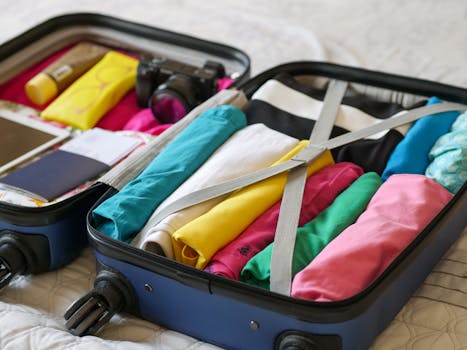
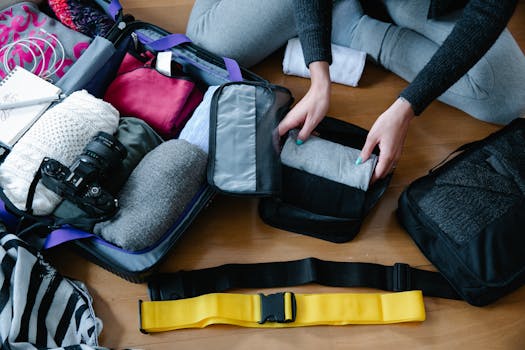
Everyone talks about rolling clothes to save space. And yes, it helps. But it's only half the story. The true magic, the one that allows you to fit a week's worth of clothes into a small carry-on, lies in compression packing cubes.
I discovered these on a last-minute trip to Santorini. My friend, a seasoned backpacker, watched me struggle to zip my already-bulging backpack. She handed me a set of these ingenious fabric cubes. "Watch this," she said, and proceeded to roll my t-shirts, shorts, and a dress into a cube, then zipped the second zipper, watching the cube shrink by almost 50%. My jaw dropped.
The Hack:
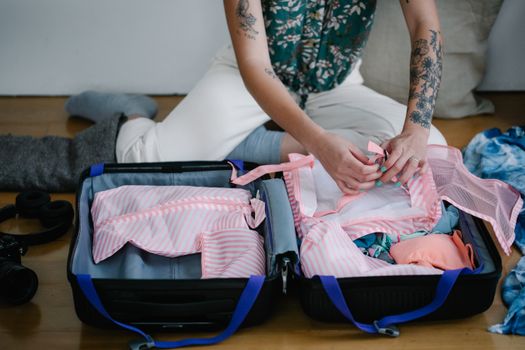
Forget the vacuum-seal bags; they're bulky and require a vacuum. I'm talking about the soft-sided packing cubes with two zippers – one to close the cube, and a second, outer zipper to compress the fabric, squeezing out air and making your clothes incredibly compact.
Why Locals Use It: They're reusable, lightweight, and don't require any special equipment. Locals traveling for short breaks or weekend getaways often use these to maximize space in smaller bags, avoiding the need for larger, more expensive luggage. Think of it: a quick ferry trip to a Greek island or a train journey across Italy, and they're not lugging a massive suitcase.
Actionable Advice: Invest in a good set of compression cubes (I swear by brands like Eagle Creek or Gonex, but even generic ones on Amazon work wonders). Sort your clothes by type or outfit, roll them tightly, and then compress. You'll be astonished by how much you can fit. I once fit 10 days of summer clothes, including two swimsuits and a sarong, into a medium-sized compression cube for a trip through Southeast Asia. It meant I could use a small 40L backpack, easily fitting under the seat on budget airlines.
2. The Multi-Purpose Marvels & The 'Solid' Gold Rule: Less is Truly More
One of the biggest mistakes tourists make is packing a separate item for every conceivable scenario. Locals, especially those living in smaller spaces or frequently moving between cities, master the art of multi-purpose items.
My "aha!" moment here came in a tiny Airbnb in Lisbon. My host, a charming woman named Sofia, showed me her travel kit. Instead of a bulky toiletry bag, she had a small pouch with a shampoo bar, a solid conditioner bar, and a single bar of soap. "No leaks, no liquid limits, no fuss," she smiled.
The Hack:
Every item you pack should ideally serve at least two purposes. And when it comes to toiletries, go solid!
Why Locals Use It: Solid toiletries are a revelation. They don't count towards liquid limits, they last longer, and they eliminate the risk of messy spills. Plus, they're often more eco-friendly. Locals also favor items that can transition from day to night, or serve different functions. A sarong isn't just a beach cover-up; it's a scarf, a makeshift pillow, a picnic blanket, or even a modest wrap for visiting religious sites.
Actionable Advice:
* Solid Toiletries: Switch to shampoo bars, conditioner bars, solid toothpaste tabs, and solid lotion. Brands like Lush or Ethique are popular, but many local pharmacies abroad carry great options. This not only saves space but also bypasses the dreaded 3-1-1 rule for carry-ons.
* Versatile Clothing: Pack neutral colors that can be mixed and matched. A plain black dress can be dressed up with accessories or down for a casual day. A lightweight merino wool top can be worn for days without smelling.
* Shoes as Storage: Don't let the inside of your shoes go to waste! Stuff socks, underwear, or small electronics chargers inside them. This helps maintain their shape and utilizes every cubic inch of space.
* Travel Towel: Ditch the bulky cotton towel for a quick-drying microfiber travel towel. They pack down tiny and are incredibly absorbent, perfect for hostels or beach days.
3. The 'Wear Your Heaviest' & Strategic Layering: Master the Art of the Outfit
This might seem obvious, but you'd be surprised how many people try to cram their heaviest items into their bag. The "wear your heaviest" rule is a golden standard for a reason.
I learned this the hard way trying to fly from a chilly Tokyo autumn to a warmer Okinawa spring. I had packed my heavy denim jacket and boots, only to realize at check-in that they alone were half the weight of my carry-on limit. A kind Japanese couple at the gate, observing my struggle, gestured for me to put on my jacket and tie my boots to my backpack. Simple, yet brilliant.
The Hack:
Wear your bulkiest, heaviest items onto the plane/train. And master the art of strategic layering for varied climates.
Why Locals Use It: Locals often travel between regions with different microclimates or during shoulder seasons. They don't pack a heavy coat and a light jacket. They pack layers that can be added or removed. This saves immense space and weight in their luggage. Think of a Parisian layering a trench coat over a sweater – practical and stylish.
Actionable Advice:
* On the Plane: Wear your heaviest shoes (boots, hiking shoes), your bulkiest jacket, and any heavy sweaters or hoodies. You can always take them off once you're settled. A travel vest with multiple pockets can also be a lifesaver for carrying essentials like your phone, passport, and wallet, freeing up space in your personal item.
* Layering Strategy: Instead of packing one heavy coat, pack several lighter layers: a base layer (e.g., merino wool), a fleece or sweater, and a waterproof/windproof shell jacket. This allows you to adapt to any weather condition without overpacking. I used this system flawlessly on a trip to Iceland, where the weather can change every hour!
4. The Souvenir Strategy & The Local Shipping Secret: Don't Pay for Mementos Twice
This is where tourists often get caught out, racking up exorbitant baggage fees for souvenirs purchased impulsively. Locals, who know the postal system and aren't pressured by limited time, have a much savvier approach.
In Oaxaca, Mexico, I fell in love with a beautiful ceramic alebrije (a folk art sculpture). It was too fragile and too large for my carry-on. I resigned myself to a hefty checked bag fee. But my guesthouse host, Maria, scoffed. "No, mi hija," she said. "You take it to Correos de México. It is much cheaper." She helped me package it securely, and for about $30 USD (including insurance), it was shipped home, arriving safely two weeks later. My airline would have charged me at least $60 for an extra bag.
The Hack:
Don't buy large souvenirs until you're absolutely sure you have space, or better yet, plan to ship them home via local postal services.
Why Locals Use It: Locals know the cost of shipping from their own country is often a fraction of what an airline charges for excess baggage. They also know that certain items are best purchased at the end of a trip, or can be ordered online and shipped directly. They prioritize experiences over accumulating stuff.
Actionable Advice:
* Prioritize: Before buying, ask yourself if you truly need this item. Can you find something similar but smaller?
* Local Post Office: For larger or fragile items, research the local postal service in your destination. In many countries (e.g., Correos in Spain, La Poste in France, Correos de México), shipping via standard international post is significantly cheaper than airline fees. Ask your hotel or guesthouse for assistance with packaging and forms.
* Digital Mementos: Focus on photos and experiences. A beautiful photo is often more impactful and certainly lighter than a physical trinket.
* Flat Packables: Opt for flat, lightweight souvenirs like textiles, prints, or spices that can be easily tucked into your luggage or even mailed in a padded envelope.
5. The Digital Downsize & Document Duplication: Your Phone is Your Everything
Remember the days of bulky guidebooks, paper maps, and a wallet stuffed with various cards? Those days are long gone for the savvy local traveler.
I was once lost in the labyrinthine streets of Venice, fumbling with a large paper map that kept catching the wind. A young Venetian, seeing my struggle, just tapped his phone. "Google Maps, signora," he said with a smile. "And for tickets, everything, it's all here." He showed me how he had all his train tickets, museum passes, and even his ID stored digitally.
The Hack:
Your smartphone is your most powerful travel tool. Digitize everything you can, and always have digital backups.
Why Locals Use It: Locals live in the digital age. They use apps for everything – navigation, public transport schedules, restaurant recommendations, language translation, and mobile payments. They rarely carry physical tickets or multiple cards. This dramatically reduces clutter and the risk of losing important documents.
Actionable Advice:
* Go Paperless: Download offline maps (Google Maps allows this), store airline tickets, train passes, hotel reservations, and museum tickets on your phone. Keep digital copies of your passport, visa, and insurance documents in a cloud service (like Google Drive or Dropbox) and also email them to yourself.
* Digital Wallet: Utilize mobile payment options like Apple Pay, Google Pay, or travel-specific debit cards (like Revolut or N26) to minimize the number of physical cards you carry. Many local markets and small shops are increasingly accepting these.
* E-books & Audiobooks: Ditch physical books. Load your e-reader or phone with books, or download audiobooks for entertainment during transit.
* Travel Apps: Beyond maps, download apps for public transport, local food guides (e.g., Yelp, TripAdvisor, local equivalents), and language translation (e.g., Google Translate).
6. The Laundry Loophole & The Microfiber Magic: Stay Fresh, Stay Light
One of the biggest reasons tourists overpack is the fear of running out of clean clothes. Locals, especially those on extended trips or living in smaller apartments, have mastered the art of doing laundry on the go.
During a month-long backpacking trip through Eastern Europe, I found myself in a tiny hostel in Budapest. I had run out of clean socks. An Australian traveler, who had been on the road for six months with just a carry-on, showed me her "laundry kit": a small universal sink stopper, a tiny bottle of concentrated laundry soap (Dr. Bronner's is fantastic for this), and a lightweight clothesline. Within an hour, my socks were clean and hanging to dry.
The Hack:
Embrace minimalist laundry. You don't need a fresh outfit for every single day.
Why Locals Use It: Whether it's hand-washing a few items in a sink or utilizing local laundromats (lavanderias, laveries automatiques), locals integrate laundry into their travel routine. This allows them to pack fewer clothes, saving space and weight, and travel for longer periods without needing to buy new garments.
Actionable Advice:
* Sink Laundry Kit: Pack a universal sink stopper, a small bottle of concentrated travel laundry soap (or a few laundry detergent sheets), and a lightweight, braided clothesline with suction cups or hooks (no need for clothespins!).
* Quick-Dry Fabrics: Prioritize clothing made from quick-drying materials like merino wool, synthetics, or blends. Cotton takes ages to dry.
* Utilize Laundromats: In many cities, laundromats are affordable and efficient. Ask your accommodation for the nearest one. It's also a great way to experience a slice of local life!
* Microfiber Towel: As mentioned, these are essential for drying yourself, but also come in handy for quickly drying hand-washed clothes by wrapping and squeezing.
7. The 'Empty Bag' Principle & The Daypack Dexterity: Always Plan for More
This final hack isn't about what to pack, but how to manage your belongings once you're at your destination. Tourists often bring one large bag and then buy another for excursions. Locals are more prepared.
I learned this from my friend, a travel writer living in Barcelona. She always travels with a small, foldable daypack tucked into her main carry-on. "It's for groceries, beach trips, or if I find something irresistible at the market," she explained. "Never leave home without one."
The Hack:
Always pack a lightweight, foldable extra bag, and strategically leave some "empty space" in your main luggage.
Why Locals Use It: Locals know that travel isn't just about getting there; it's about living there, even for a short time. They need a bag for daily errands, a trip to the beach, or carrying souvenirs back from a market. They also understand that you might acquire things along the way, and having contingency space prevents last-minute repacking nightmares or expensive extra baggage.
Actionable Advice:
* Foldable Daypack/Tote: Pack a lightweight, foldable nylon daypack or a reusable shopping bag. These can be incredibly useful for day trips, carrying groceries, or as a personal item on budget flights if your main bag is a carry-on.
* Leave 10-20% Empty: Intentionally leave some empty space in your main luggage. This isn't just for souvenirs; it's for flexibility. You might buy a local delicacy, a new outfit, or simply need space for items that expand (like a bottle of wine wrapped in clothes).
* The "One In, One Out" Rule (for long trips): If you're traveling for an extended period, consider adopting a "one in, one out" rule. If you buy a new piece of clothing, donate or discard an old one. This keeps your luggage weight consistent.
---
These packing hacks aren't just about saving space; they're about saving stress, saving money, and ultimately, about gaining freedom. The freedom to move effortlessly through airports, to hop on and off trains without a struggle, to feel light and unburdened as you explore a new city. They're about traveling smarter, not harder, and experiencing your destination like a local – with ease, efficiency, and a touch of insider savvy.
So, next time you're packing, remember these secrets. Ditch the "just in case" mentality, embrace the multi-purpose magic, and unlock the true joy of minimalist travel. Your back, your wallet, and your wanderlust will thank you.
What are YOUR secret packing hacks? Share your wisdom in the comments below! And don't forget to tag #TripsoraHacks on Instagram with your perfectly packed bags!
---