My Secret Packing Hacks: The Game-Changers I Swear By (Before They Went Viral!)
Let's be honest: packing can be the most dreaded part of any trip. The endless "what ifs," the struggle to zip a bulging suitcase, the anxiety of airline weight limits, and the inevitable realization that you've forgotten something crucial while simultaneously dragging half your wardrobe around… sound familiar?
For years, this was my travel reality. I was the queen of the oversized checked bag, perpetually stressed about my luggage. My pivotal "aha!" moment came during a monsoon season trip to Thailand. Picture this: me, drenched to the bone, wrestling a monstrous 25kg suitcase through the muddy streets of Chiang Mai, only to find my carefully packed clothes soaked through despite my best efforts. I looked around at seasoned backpackers, effortlessly navigating the chaos with their compact packs, and a profound realization hit me: there had to be a better way.
That trip was a wake-up call. I vowed to transform my packing strategy, driven by a desire for freedom, flexibility, and less back pain. Over the years, through countless trips across continents – from backpacking through the bustling markets of Morocco to island hopping in the Philippines, and even navigating chic city breaks in Paris – I've experimented, failed, and ultimately discovered a collection of packing hacks that truly changed my life. These aren't just trendy tips; these are the foundational secrets I adopted long before they became Instagram sensations or mainstream travel advice. They empowered me to travel lighter, smarter, and with an unprecedented sense of calm.
Are you ready to ditch the luggage stress and embrace the art of efficient packing? Let's dive into the life-changing hacks that will revolutionize your next adventure.
1. The "Layered Capsule" Revelation: More Outfits, Less Bulk
Long before "capsule wardrobe" became a buzzword, I stumbled upon the concept of a "layered capsule" for travel. My early trips were plagued by the "what if I need this specific top?" syndrome, leading to a suitcase full of mismatched, rarely-worn items. The turning point was a two-week multi-city European adventure – think Rome, Florence, and Venice in varying spring temperatures. I needed versatility, and a carry-on was my challenge.
The Hack:
Instead of packing full outfits, focus on versatile, interchangeable pieces in a cohesive color palette (neutrals like black, grey, white, navy, plus one or two accent colors). The "layered" part comes from selecting items that can be worn on their own, layered over/under others, and mixed and matched to create numerous looks.
How I Discovered It:
I started with a simple experiment: could I create 10 different outfits with just 5-7 core clothing items? I picked a pair of dark jeans, a pair of black trousers, two neutral t-shirts, a long-sleeved top, a light cardigan, and a versatile scarf. Add in a couple of dressier tops, and suddenly I had enough for two weeks. The real magic was in the fabrics: I gravitated towards quick-drying, wrinkle-resistant materials like merino wool (a game-changer for temperature regulation and odor resistance!) and synthetic blends.
Actionable Advice:
* The 5-7-10 Rule: For a week-long trip, aim for 5 tops, 7 bottoms/dresses, and 10 underwear/socks. Adjust proportionally for longer trips.
* Neutrals First: Build your core wardrobe around neutral colors. This ensures everything matches.
* Fabric Focus: Prioritize merino wool, Tencel, modal, and synthetic blends that are lightweight, quick-drying, and resistant to wrinkles and odors. These are an investment but pay dividends in travel comfort.
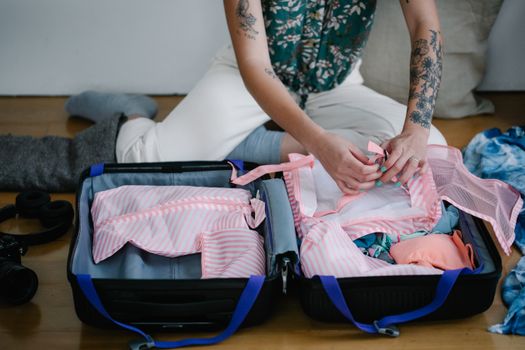
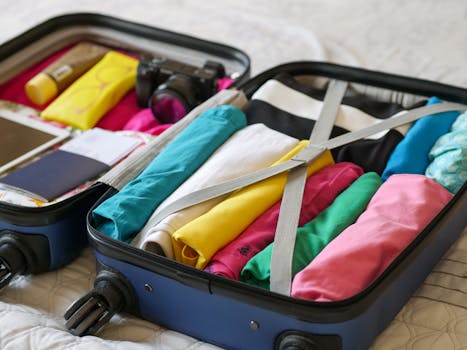
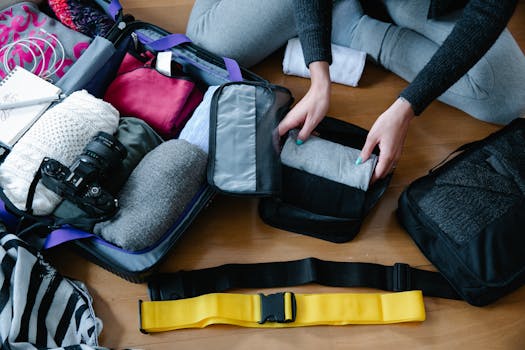
* Packing Cubes are King (for Organization, not just Compression): I use packing cubes not just to compress, but to categorize. One cube for tops, one for bottoms, one for underwear/socks. This keeps everything tidy and makes it easy to find what you need without rummaging. I prefer the structured ones from Eagle Creek or the lightweight ones from Peak Design – a good set usually costs around $30-50 and lasts for years.
* The "File Fold" Method: Forget rolling or traditional folding. I "file fold" my clothes into packing cubes, standing them upright like files in a cabinet. This allows me to see everything at a glance and prevents wrinkles better than rolling.
My Anecdote:
My first trip using this "layered capsule" was to Iceland. I managed to fit everything for a week of hiking, city exploration, and even a fancy dinner into a carry-on, including a packable down jacket! It felt like I had unlocked a superpower. I spent less time worrying about clothes and more time soaking in the stunning landscapes.
2. Tech & Gadgets: The Digital Nomad's Secret Weapon (Before the Pouches)
In the early days of digital nomadism, dedicated tech organizers weren't a common thing. My chargers, cables, and adapters were a tangled mess at the bottom of my bag, a constant source of frustration and wasted time.
The Hack:
Create a dedicated, compact "tech pouch" for all your electronics accessories. The key is to consolidate and organize, making every cable and charger easily accessible.
How I Discovered It:
During a particularly frustrating hunt for my camera charger in a dimly lit hostel in Berlin, I rummaged through my bag for what felt like an eternity. That's when I realized I needed a system. My first "tech pouch" was actually an old, small toiletries bag I repurposed. It wasn't pretty, but it was functional.
Actionable Advice:
* Consolidate & Minimize: Only bring the chargers and cables you absolutely need. Can one USB-C cable charge your phone, tablet, and laptop? Great, ditch the others.
* Multi-Port Charger: Invest in a good quality multi-port USB charger (e.g., Anker or GaN chargers). One brick, multiple devices charging simultaneously. This saves space and outlet arguments. A good one costs around $25-50.
* Universal Adapter: A single universal travel adapter with multiple USB ports is a non-negotiable. I've used the EPICKA Universal Travel Adapter for years, and it's saved me countless times.
* Cable Ties/Velcro Straps: Keep cables neatly coiled with small velcro ties or reusable silicone straps. This prevents tangles and makes your pouch look organized.
* Label Everything: If you have multiple similar-looking cables, use small labels or colored tape to identify what goes with what.
* Repurpose Small Cases: Old sunglass cases are perfect for housing delicate earbuds or small USB drives. Contact lens cases can hold tiny SD cards.
* Power Bank Power: A compact but powerful power bank is essential for long travel days or when outlets are scarce. Make sure it's airline-approved (usually under 27,000 mAh).
My Anecdote:
I was on a remote island in Palawan, Philippines, after a long boat ride, and the power went out at our guesthouse. Thanks to my organized tech pouch and fully charged power bank, I could still charge my phone, read my e-reader, and listen to music, while others were left in the digital dark. It was a small victory, but it felt huge.
3. Bathroom Bliss: Miniaturization & Multi-Tasking Marvels
The bane of every packer's existence? Leaky bottles, bulky toiletries, and the dreaded 3-1-1 rule for carry-ons. My toiletry bag used to be a heavy, messy abyss.
The Hack:
Embrace solid toiletries and multi-purpose products. Decant strategically, and think beyond the standard travel-sized bottles.
How I Discovered It:
A shampoo bottle explosion in my backpack during a bus ride through Vietnam ruined a brand new dress and forced me to rethink my entire toiletry strategy. That's when I started exploring alternatives to liquids.
Actionable Advice:
* Solid Revolution: This is the biggest game-changer. Solid shampoo, conditioner, body wash, and even toothpaste tablets eliminate liquid limits and leak risk. Brands like LUSH, Ethique, and HiBAR offer fantastic options, usually costing around $12-20 per bar, lasting much longer than liquid equivalents. Store them in small tins or reusable silicone bags.
* Toothpaste Tablets: A revelation! No more squished tubes or sticky caps. Just pop a tablet in your mouth, chew, and brush.
* Multi-Purpose Magic: Dr. Bronner's liquid soap (decanted into a small silicone bottle) can be used as body wash, shampoo, laundry detergent, and even dish soap. A simple moisturizer can double as an after-sun balm.
* Silicone Bottles: If you must bring liquids, invest in high-quality, leak-proof silicone travel bottles (e.g., GoToob by humangear). They're easy to fill, squeeze, and clean.
* Contact Lens Cases for Creams: Perfect for tiny amounts of foundation, eye cream, or serum.
* Reusable Cotton Rounds: Ditch disposable cotton pads and bring reusable ones that can be washed and dried.
* Microfiber Towel: A quick-drying, compact microfiber towel is essential, especially for hostels or beach trips.
My Anecdote:
On a backpacking trip through Central America, I exclusively used solid toiletries. My toiletry bag was tiny, light, and completely leak-free. While others were struggling with exploding bottles after altitude changes on bus rides, my solid bars remained perfectly intact. It was a small luxury that made a huge difference to my peace of mind.
4. Food & Sustenance: Smart Snacking & Hydration on the Go
Getting hangry on a long travel day, or paying exorbitant prices for airport snacks? Been there, done that, and learned my lesson.
The Hack:
Always pack emergency snacks, bring a reusable water bottle, and have a plan for coffee.
How I Discovered It:
A 12-hour train journey across India where the only food options were questionable fried items led to a profound appreciation for my small stash of protein bars and dried fruit. I also realized how much single-use plastic I was generating with bottled water.
Actionable Advice:
* Collapsible Water Bottle: My absolute must-have. A collapsible water bottle (like a Hydrapak or Vapur) can be filled after security at airports, saving money and reducing plastic waste. It folds flat when empty, taking up minimal space.
* Reusable Snack Bags: Stasher bags or similar silicone reusable bags are fantastic for packing nuts, dried fruit, granola bars, or even a sandwich. They're durable, washable, and eco-friendly.
* Emergency Rations: Always carry a few high-energy, non-perishable snacks like protein bars, trail mix, or dried fruit. These are lifesavers during unexpected delays or when food options are limited.
* Travel Coffee Solution: If you're a coffee fiend like me, consider instant coffee packets (good quality ones exist!) or a compact travel coffee maker like the AeroPress Go. It's a small luxury that makes early mornings much more bearable.
* Spork/Travel Utensils: A lightweight spork or a set of travel utensils comes in handy for street food, picnics, or impromptu meals.
My Anecdote:
During a long layover in Dubai, I was so grateful for my pre-packed sandwich and a full water bottle. I watched others queueing for overpriced fast food, and I just casually enjoyed my meal and saved a fortune. On a hike in Patagonia, my collapsible bottle meant I could refill from pristine streams, staying hydrated without carrying heavy extra bottles.
5. Document & Security Hacks: Peace of Mind on the Go
Losing a passport or having documents stolen is every traveler's worst nightmare. I learned early on that being prepared is the best defense.
The Hack:
Digitize, diversify, and disguise your valuables.
How I Discovered It:
A close call with a pickpocket in Rome (thankfully, they only got my dummy wallet!) and hearing a horror story about a lost passport in Barcelona made me realize the importance of proactive security.
Actionable Advice:
* Digital Backups: Scan or take photos of your passport, visa, flight tickets, hotel reservations, and credit cards (front and back, noting the emergency numbers but never the CVV). Save them to a secure cloud service (e.g., Google Drive, Dropbox) and email copies to yourself and a trusted family member.
* Physical Copies (Diversified): Keep a physical copy of your passport and visa in a separate bag from your actual passport. If you carry a daypack and a larger backpack, put a copy in each.
* The "Dummy Wallet": This is a brilliant trick. Carry a secondary, old wallet with a small amount of cash, an expired credit card, and some defunct loyalty cards. If you're ever mugged or pickpocketed, hand over the dummy wallet. It often satisfies the thief without you losing your essentials.
* RFID Blocking: Invest in an RFID-blocking wallet or passport holder. While some debate their effectiveness, it's a small added layer of protection against digital theft.
* Carabiner for Zippers: For bags with double zippers, use a small carabiner to clip the zippers together. It's not foolproof, but it acts as a deterrent and makes it harder for opportunistic thieves to quickly open your bag.
* Hidden Cash: Stash emergency cash in multiple, inconspicuous places – a small amount in a shoe, tucked into a toiletry bag, or in a hidden pocket of your clothing.
My Anecdote:
In Marrakech, I was approached by someone trying to distract me. I instinctively clutched my cross-body bag tighter, but I knew that even if they managed to get it, my most valuable documents were backed up digitally and I had my dummy wallet ready. The peace of mind was invaluable.
6. The "Unexpected Item" Theory: Beyond the Obvious Essentials
Sometimes, the most useful items aren't what you'd typically find on a packing list. These are the versatile, multi-purpose items that solve unexpected problems.
The Hack:
Pack items that have at least two, preferably three or more, uses.
How I Discovered It:
Backpacking through Southeast Asia, I quickly learned that space was precious, and anything that could pull double duty was a lifesaver. My sarong became my ultimate travel companion.
Actionable Advice:
* The Mighty Sarong/Buff: This is my ultimate multi-tool. A sarong can be a towel, a beach blanket, a scarf, a makeshift skirt/dress (for temple visits!), a pillowcase, a privacy curtain in a hostel, or even a head covering for sun protection. A Buff (neck gaiter) serves similar purposes for cooler climates – scarf, hat, headband, eye mask.
* Duct Tape (Wrapped Around a Pen): You don't need a whole roll. Wrap a few feet of duct tape around a pen, water bottle, or even a loyalty card. It can fix a torn backpack, seal a leaky bottle, patch a shoe, or even remove lint.
* Zip Ties: A small handful of zip ties can secure luggage zippers, temporarily fix a broken strap, or bundle items together.
* Universal Sink Stopper: In hostels or budget accommodations, a universal sink stopper (a flat silicone disc) allows you to do a quick load of laundry in the sink, saving money and ensuring you always have clean essentials.
* Small Dry Bag: Even if you're not doing water sports, a small (5-10L) dry bag is incredibly useful. It can protect electronics from rain, store wet swimwear, or act as a makeshift laundry bag for dirty clothes.
My Anecdote:
In Laos, my hostel bunk had no curtain. My trusty sarong, clipped with a few safety pins, created instant privacy and darkness. Later, on a boat trip, it served as a sun shield, a towel, and a picnic blanket. It's truly the MVP of my packing list. Another time, my backpack strap started to tear in Peru, and a quick fix with duct tape wrapped around my water bottle saved the day until I could get it properly repaired.
Conclusion: Your Journey to Smarter Packing Starts Now!
These packing hacks aren't just about saving space; they're about gaining freedom. Freedom from baggage fees, freedom from heavy lifting, and most importantly, freedom from travel stress. By adopting these strategies, I've transformed my travel experience from a logistical nightmare into a seamless, enjoyable adventure. I've been able to say "yes" to spontaneous detours, effortlessly navigate busy train stations, and always feel prepared, no matter what the road throws my way.
It's time to ditch the old ways and embrace a smarter, more minimalist approach to packing. Start with one or two of these hacks on your next trip, and I promise you'll feel the difference. You'll not only travel lighter but also experience a profound shift in how you engage with your journey.
What are YOUR secret packing hacks? Have you discovered a game-changer that I haven't mentioned? Share your wisdom in the comments below! Let's build a community of smart, stress-free travelers!
---