The Uncharted Roster: Fresh UNESCO Sites Demanding a Spot on Your 2025 Bucket List
I stepped off the local morning ferry onto the humid riverbank of Siem Reap province long before dawn, the bitter taste of condensed-milk-sweetened กาแฟ (coffee) lingering on my tongue. The air smelled intensely of wet clay, woodsmoke, and blooming wild night-jasmine.
While thousands of tourists were elbowing each other at Angkor Wat to capture a clichéd sunrise photo, I was bouncing in the back of an open-air remork along a dusty dirt track toward Koh Ker. When the towering, 36-meter sandstone pyramid of Prasat Prang reared up through the rainforest canopy—its monoliths carpeted in bright emerald lichen—there wasn't another traveler in sight. Just the hum of cicadas and the morning mist burning off 1,000-year-old Khmer masonry.
Every year, UNESCO updates its World Heritage List, designating places of outstanding universal value. Yet most travelers stick to the classic hits—the Colosseum, Machu Picchu, or Taj Mahal—suffering long lines and sky-high prices.
If you want true discovery, point your compass toward these recently inscribed sites. Here are the top newly minted UNESCO World Heritage sites experts are recommending, complete with insider logistics, precise timings, and hyper-local tips to help you navigate them like a seasoned travel journalist.
---
1. Koh Ker: Cambodia’s Forgotten Seven-Tiered Pyramid
```
Location: Preah Vihear Province, Cambodia
Inscription Type: Cultural
Key Feature: Prasat Prang (7-tiered pyramid temple)
```
The Unspoken History
For a brief, volatile period from 928 to 944 CE, King Jayavarman IV broke away from the traditional capital at Angkor and established his own empire deep in the northern jungle at Koh Ker (ancient Lingapura). What remains today is an astonishing archaeological complex that lay buried under thick vegetation and unexploded ordnance for decades until recent landmine clearance made it fully accessible to global travelers.
What Makes It Unforgettable
Unlike the sprawling horizontal layouts of Angkor Wat or the Bayon, Koh Ker’s main monument, Prasat Prang, is a vertical masterpiece. It resembles a Mayan pyramid dropped squarely into a Southeast Asian forest. The site contains over 40 distinct structures, including massive stone sanctuaries, giant carved lingas, and intricate dry-laid brick towers held together without mortar.
Expert Pro-Tips
* The Golden Hour Strategy: Arrive at the gates right at 7:30 AM. Tour vans from Siem Reap don’t pull up until 10:30 AM. You will have the entire summit of Prasat Prang to yourself.
* The Hidden Photography Angle: Skip the main wooden staircase photo from the front base. Walk around to the eastern side where ancient banyan roots strangle the outer brick wall (Prasat Krahom); the contrast of reddish-brown brick and pale green roots provides superior framing.
* Local Flavor: Stop at the roadside stalls outside the main entrance for Kralan—sticky rice cooked with black beans and coconut milk inside a bamboo pole.
---
2. Zagori Cultural Landscape, Greece: Misty Slate Villages and Deep Gorges
```
Location: Epirus Region, Northwestern Greece
Inscription Type: Cultural Landscape
Key Feature: Vikos Gorge and Xerolithia (dry-stone architecture)
```
Beyond the Aegean Islands
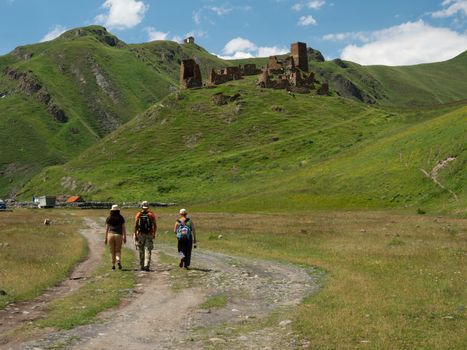
When travelers think of Greece, whitewashed Cycladic structures set against turquoise waters instantly come to mind. But in the Pindus Mountains of northwestern Greece, the Zagori Cultural Landscape offers a completely different aesthetic: dramatic alpine peaks, dense oak forests, and 46 stone-built villages known as Zagorochoria.
Architectural Brilliance
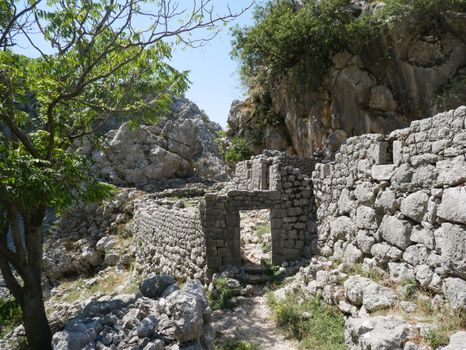
The magic of Zagori lies in its mastery of xerolithia—the ancient art of dry-stone masonry. Houses, churches, schoolhouses, and multi-arched bridges were constructed entirely out of local slate and limestone without cement. Crossing the triple-arched Kalogeriko Bridge near Kipi feels like stepping straight into a medieval fantasy novel.
Expert Pro-Tips
* Trail Choice: Skip the congested viewpoint at Oxya and instead trek the 3-hour trail from Vikos Village down into the Voidomatis River bed. The water is ice-cold, crystal clear, and safe to drink directly from the mountain springs.
* Culinary Essential: Sit down at a family-run tavern in Papingo and order Manitaropita (wild mountain mushroom pie cooked in thin phyllo pastry) paired with a glass of dry, unaged local Tsipouro.
* Best Time to Go: Late October to mid-November. The beech trees turn ablaze in bronze and orange, contrasting sharply with the slate roofs.
---
3. Deer Stone Monuments and Related Bronze Age Sites, Mongolia
```
Location: Khövsgöl & Arkhangai Provinces, Mongolia
Inscription Type: Cultural
Key Feature: Carved megaliths dating back to 1200 BCE
```
Nomadic Megaliths of the Steppe
Scattered across the vast, rolling grasslands of central and northern Mongolia stand hundreds of carved granite pillars known as Deer Stones (Bugan Khallius). Dating from the Late Bronze Age (c. 1200–600 BCE), these monoliths range from 3 to 15 feet high and depict stylized, flying reindeer carved with long, flowing antlers, alongside weapons, tools, and sun-moon motifs.
Why Experts Are Rave About It
These stones are not isolated monuments; they are part of complex ceremonial landscapes that include massive burial mounds (khirigsuurs) and sacrificial altars. Standing amidst these ancient megaliths while the steppe wind howls and wild horses gallop across the horizon offers an authentic encounter with ancient shamanic traditions.
Expert Pro-Tips
* Navigational Secret: The highest concentration of intact stones is at the Uushigiin Övör site, located just 20 kilometers west of Mörön. Hiring an off-road driver from Mörön is far more cost-effective than booking an all-inclusive package from Ulaanbaatar.
* Ethical Travel Note: Never touch the surface of the stones. The natural oils from human hands accelerate the erosion of the delicate, 3,000-year-old lichen-covered carvings.
* Accommodation: Stay in a traditional ger hosted by local nomadic herders rather than concrete hotels in nearby towns. You will gain direct insight into daily life on the steppe.
---
4. The Silk Roads: Zarafshan-Karakum Corridor (Central Asia)
```
Location: Tajikistan, Uzbekistan, and Turkmenistan
Inscription Type: Cultural Corridor
Key Feature: Ancient Caravanserais, Desert Fortresses, and Oasis Settlements
```
The Arteries of Ancient Trade
While Samarkand and Bukhara get all the tourism spotlight, UNESCO’s recent inscription of the Zarafshan-Karakum Corridor highlights the essential sub-routes of the Silk Road spanning 866 kilometers across harsh deserts and high mountain passes. This network contains 34 individual heritage sites across three nations.
Unearthing the Sites
This corridor features mudbrick caravanserai ruins where ancient merchants exchanged silk, spices, glass, and ideas. Highlights include:
* The ruins of Ancient Panjakent (Tajikistan), known as the "Pompeii of Central Asia."
* The remote desert fortress of Varahsha (Uzbekistan).
* The extraordinary water-management systems (sardobas) engineered to survive the Karakum Desert.
Expert Pro-Tips
* Border Logistics: Take the high-speed Afrosiyob train from Tashkent to Samarkand, then arrange a land transfer across the Jartepa border post into Panjakent, Tajikistan. The border crossing takes under an hour if you arrive before 8:00 AM.
* Insider Spot: Visit the site museum at Panjakent to observe detailed frescoes before exploring the open-air mudbrick citadel foundations on the plateau overlooking the modern city.
---
5. Viking-Age Ring Fortresses, Denmark
```
Location: Zealand, Jutland, and Funen, Denmark
Inscription Type: Cultural (Serial Site)
Key Feature: Perfectly circular earthwork fortresses built c. 980 CE
```
The Masterpieces of Harald Bluetooth
Built during the reign of King Harald Bluetooth around 980 CE, these five ring fortresses (Aggersborg, Fyrkat, Nonnebakken, Trelleborg, and Borgring) reveal that the Vikings were not merely raiders, but brilliant military engineers and geometric architects.
The Spatial Design
Each fortress was constructed on an identical geometric template: a perfectly circular earthwork rampart divided into four equal quadrants by two perpendicular streets, with longhouses arranged in precise square modules within the ring.
```
North Gate
|
+--------------+
| [ ] [ ] |
W--|--[ ]-+-[ ]---|--E
| [ ] [ ] |
+--------------+
|
South Gate
```
Expert Pro-Tips
* Top Site Selection: If you can only visit one, choose Aggersborg near the Limfjord. It is the largest of the fortresses, boasting a rampart diameter of 240 meters, and offers sweeping views across the northern Danish landscape.
* Interactive Experience: Head to Fyrkat near Hobro, where a reconstructed Viking farmstead operates nearby with costumed blacksmiths, archers, and weavers during summer months.
* Photographic Angle: Use a small drone (where legally permitted outside restricted airspaces) or an elevated pole-mount camera; the circular precision of these fortresses can only be fully appreciated from above.
---
6. Tell es-Sultan / Ancient Jericho, Palestine
```
Location: Jericho, Palestine
Inscription Type: Cultural
Key Feature: Earth’s oldest fortified urban settlement (9th millennium BCE)
```
The Dawn of Human Civilization
Located in the Jordan Rift Valley 258 meters below sea level, Tell es-Sultan is recognized as the oldest walled town on Earth. Long before the Egyptian pyramids were built, Neolithic hunter-gatherers settled here around the fertile spring of 'Ain as-Sultan, erecting massive stone walls, a defensive ditch, and a mysterious stone tower dating back to 8000 BCE.
What to See
The site consists of a large archaeological mound (tell) revealing layered strata of thousands of years of human habitation—from Natufian hunter-gatherer huts to Bronze Age mudbrick fortifications that once protected the trade routes of the Levant.
Expert Pro-Tips
* How to Get There: Take an Arabic shared taxi (service) directly from the Damascus Gate station in East Jerusalem to Jericho. The journey takes under an hour.
* Timing: Visit early in the day. Because Jericho sits deep in the rift valley, midday temperatures can comfortably exceed 40°C (104°F) during summer.
* Don't Miss: Ride the Jericho Cable Car from the base near Tell es-Sultan up to the Monastery of the Temptation, carved directly into the cliffside of Mount of Temptation.
---
Practical Logistics & Master Matrix
Planning a trip to these newly inscribed sites requires careful logistical preparation. Below is a detailed breakdown of costs, ideal visit windows, and transit methods:
| Destination Site | Country | Est. Daily Budget ($ USD) | Best Time to Visit | Primary Transit Hub |
| :--- | :--- | :--- | :--- | :--- |
| Koh Ker | Cambodia | $45 - $80 | Nov – Feb | Siem Reap International Airport (SAI) |
| Zagori | Greece | $70 - $130 | May – Oct / Autumn | Ioannina Airport (IOA) or Thessaloniki |
| Deer Stones | Mongolia | $60 - $110 | Jun – Sep | Mörön Airport (MXV) via Ulaanbaatar |
| Zarafshan Corridor | Uzbekistan / Tajikistan | $35 - $70 | Apr – May / Sep – Oct | Samarkand International Airport (SKD) |
| Viking Ring Fortresses| Denmark | $120 - $220 | Jun – Aug | Copenhagen Airport (CPH) / Aalborg |
| Tell es-Sultan | Palestine | $50 - $90 | Oct – Apr | Queen Alia Airport (AMM) / Jerusalem |
---
Strategic Advice for Sustainable Heritage Exploration
When visiting newly inscribed World Heritage sites, keep these core principles in mind to maximize your experience while supporting local preservation:
- Hire Local Site Guides: Newly inscribed locations often lack the massive funding of legacy sites. Hiring local guides directly at the entrance gate ensures your money feeds directly into the immediate community economy.
- Respect the Buffer Zones: UNESCO marks every site with a core protected zone and a surrounds "buffer zone." Avoid booking large chain hotels located inside these buffer zones; instead, opt for locally managed guesthouses on the perimeter.
- Check Seasonal Road Access: Sites like the Mongolian Deer Stones or high-altitude stone villages in Zagori can become completely inaccessible in winter due to snow or mud. Always verify road conditions locally before setting out.
---
The Verdict
The world is far too vast to spend your vacation waiting in hours-long security lines at crowded tourist traps. By prioritizing these newly inscribed UNESCO World Heritage sites, you don't just dodge the crowds—you get to experience living history, untouched environments, and genuine cultural interactions long before the rest of the travel world catches on. Pack your boots, set your alarm for sunrise, and go discover them first.
---