The Hook: A Tale of Two Art Lovers
I stepped off the damp pavement of Copenhagen’s H.C. Andersens Boulevard, slipping through a heavy bronze door into a microclimate of damp soil, sweet jasmine, and towering palms. The roar of city traffic vanished, replaced by the gentle trickle of a central fountain and the soft scrape of my boots on terrazzo. There were no metal detectors, no shouting tour guides, and no queues stretching into the next postal code.
Just ten feet away stood an original Rodin bronze, bathed in the soft, diffused northern light of a glass dome. I was entirely alone with it.
Compare this to my last visit to the Louvre: a two-hour wait in a subterranean concrete holding pen, followed by a frantic sprint through the Denon Wing, only to be corralled thirty feet away from a tiny, glinting portrait of Lisa Gherardini while dodging elbows and iPads.
The truth is, the world’s most famous museum has become a victim of its own success. If you actually want to experience art—to feel the brushstrokes, study the chisel marks, and let a masterpiece breathe—you need to look elsewhere.
Here are six world-class museums that are objectively better than the Louvre for the discerning traveler, offering world-class collections with zero line-induced anxiety.
---
1. The Ny Carlsberg Glyptotek (Copenhagen, Denmark)
Ancient Marble Meets a Nordic Winter Garden
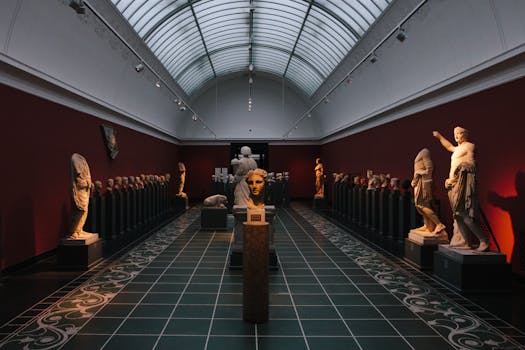
Founded by the brewing magnate Carl Jacobsen (the mind behind Carlsberg beer), the Glyptotek is a masterclass in architectural harmony. The museum is split into two distinct wings joined by a massive, glass-domed Winter Garden filled with palm trees, water lilies, and a cozy café.
```
[Ancient Wing: Greek & Roman Marbles]
│
[The Winter Garden] ─── (Enjoy a cardamom bun here!)
│
[Modern Wing: French Impressionism & Rodin]
```
The Collection
The Glyptotek houses the largest collection of ancient Mediterranean art in Northern Europe, alongside an incredible array of French Impressionist and Post-Impressionist works. You can stand inches away from masterpieces by Monet, Manet, Degas, and Cézanne, or wander through a room containing one of the world's most comprehensive collections of Rodin sculptures outside of Paris.
- Architectural Highlight: The building itself is a marvel. The historicist stairs, colorful mosaic floors, and deep terracotta walls make every room feel like a curated painting.
- The Vibe: Calm, intellectual, and deeply comforting.
> Pro-Tip: Visit on a Tuesday morning right when the doors open at 10:00 AM. Grab a cardamom bun and a flat white from the garden café, then head straight to the Roman portrait bust gallery. The way the morning light hits the marble faces is pure magic.
---
2. The Wallace Collection (London, United Kingdom)
Rococo Opulence in a Marylebone Townhouse
If your favorite part of the Louvre is the lavishly decorated apartments of Napoleon III, the Wallace Collection will blow you away. Housed in Hertford House—a spectacular 18th-century mansion in Manchester Square—this museum feels like the private home of an incredibly wealthy, slightly eccentric aristocrat.
```
[Hertford House Entrance]
│
┌─────────────────────┴─────────────────────┐
▼ ▼
[The Great Gallery] [The Armoury Rooms]
(Fragonard & Rembrandt) (Gothic Plate & Swords)
```
The Collection
The collection features an unparalleled assembly of French 18th-century painting, furniture, and porcelain, alongside world-class Old Masters. This is where you’ll find Jean-Honoré Fragonard’s famous Rococo masterpiece, The Swing, hung in a room with silk-lined walls, entirely free of protective glass barriers.
- The Armoury: Downstairs, you’ll find one of the finest collections of historical arms and armor in the world, featuring intricately etched German parade armor and exquisite Ottoman sabers.
- The Cost: Absolutely free. No tickets, no reservations, no lines.
> Pro-Tip: Avoid the central courtyard restaurant during peak lunch hours (12:30 PM to 2:00 PM) when locals arrive for afternoon tea. Instead, explore the European Armoury rooms during this time; you’ll have the gleaming suits of steel entirely to yourself.
---
3. Kunsthistorisches Museum (Vienna, Austria)
Imperial Grandeur Without the Crowds
Built by Emperor Franz Joseph to house the formidable art collection of the Habsburg dynasty, Vienna’s Fine Arts Museum is an architectural masterpiece that rivals—and arguably surpasses—the Louvre's grandest galleries.
```
[Grand Marble Staircase]
│
┌───────────────┴───────────────┐
▼ ▼
[The Bruegel Gallery] [The Kunstkammer Cabinet]
(World's largest collection) (Cellini's Golden Salt Cellar)
```
The Collection
The museum boasts the world’s premier collection of Pieter Bruegel the Elder, including The Tower of Babel and The Hunters in the Snow. The depth of the Renaissance and Baroque holdings here is staggering, featuring heavyweights like Caravaggio, Vermeer, Titian, and Velázquez.
- The Stairwell: Look up as you ascend the grand staircase; the lunettes and spandrels feature early murals painted by none other than Gustav Klimt.
- The Café: Located under the museum’s main dome, this is widely considered the most beautiful museum café in the world. It features velvet banquettes, soaring marble columns, and excellent Viennese pastry.
> Pro-Tip: The museum stays open late on Thursday evenings until 9:00 PM. Arrive around 6:00 PM. The tour groups will have departed, the galleries will be silent, and you can book a gourmet dinner table right inside the magnificent dome café.
---
4. Museo Nazionale del Bargello (Florence, Italy)
Skip the Uffizi for the Ultimate Renaissance Sculpture Experience
While tourists queue for three hours in the blistering heat outside the Uffizi or the Accademia, those in the know walk five minutes down the street to the Bargello. Housed in a formidable 13th-century fortress that once served as a prison, this museum is the true spiritual heart of Florentine sculpture.
```
[13th-Century Courtyard]
│
┌───────────────┴───────────────┐
▼ ▼
[The Donatello Room] [The Michelangelo Room]
(Bronze David & St. George) (Bacchus & Brutus)
```
The Collection
The Bargello holds a collection of Renaissance sculpture that is second to none. Here, you can stand face-to-face with Michelangelo’s Bacchus, Donatello’s iconic bronze David (which predates Michelangelo's version and is arguably far more scandalous), and masterpieces by Benvenuto Cellini and Giambologna.
- The Courtyard: The open-air courtyard is decorated with the coats of arms of the city's historical magistrates, offering a cool, breezy respite from the narrow Florentine streets.
- The Lines: Virtually non-existent. You can usually walk right up to the ticket window and enter immediately.
> Pro-Tip: Enter the museum at 8:15 AM when it opens. Head straight up to the first-floor Salone di Donatello. The morning sun streams through the high Gothic windows, illuminating the bronze statues in a warm, amber glow that is impossible to capture during midday.
---
5. Musée Gustave Moreau (Paris, France)
The Ultimate Insider Alternative in the Heart of Paris
If you are determined to visit a museum in Paris but want to avoid the crowds of the Louvre and the Musée d'Orsay, head to the 9th arrondissement. Here lies the preserved home and studio of the Symbolist painter Gustave Moreau.
```
[Moreau's Apartment]
│
[The Spiral Staircase Studio]
│
[Sliding Wooden Panel Galleries]
```
The Collection
The museum is a dizzying, romantic time capsule. The first floor contains Moreau's private living quarters, stuffed with heavy drapes, family portraits, and antique furniture. The second and third floors open up into massive, sun-drenched studios packed floor-to-ceiling with thousands of paintings, drawings, and watercolors.
- The Staircase: The architectural centerpiece is a breathtaking, delicate iron spiral staircase that connects the two studio floors. It is an Art Nouveau masterpiece in its own right.
- The Hidden Panels: Underneath the large canvases, you'll find hundreds of swinging wooden frames containing delicate watercolor sketches. Visitors are encouraged to pull them out and examine them manually.
> Pro-Tip: The museum is small and can feel intimate quickly. Visit around 2:00 PM on a weekday. Once you’ve finished looking at the art, walk five minutes north to Rose Bakery in the garden of the Musée de la Vie Romantique for a slice of lemon loaf.
---
6. The Barnes Foundation (Philadelphia, USA)
A Masterpiece Density That Defies Belief
To experience Impressionist and Post-Impressionist art without the maddening crowds of Paris’s Musée d’Orsay or the grand halls of the Louvre, make your way to Philadelphia. Albert C. Barnes, an eccentric chemist, amassed one of the world's most significant collections of avant-garde art and arranged it in highly specific, non-chronological "ensembles."
```
[Light-Filled Court]
│
┌─────────────┴─────────────┐
▼ ▼
[The Ensemble Rooms] [The Matisse Vault]
(Paintings, Hinges, Chairs) (The Dance Mural)
```
The Collection
The sheer numbers are staggering: 181 Renoirs, 69 Cézannes, 59 Matisses, 46 Picassos, and 7 Van Goghs. Barnes’s strict instructions dictate that the art must be hung exactly as he left it—juxtaposed with antique door hinges, Native American pottery, and rustic furniture to highlight patterns, lines, and forms across eras.
- The Crowd Control: The museum operates on a strict timed-entry system. Even on its busiest days, the galleries never feel crowded because the number of tickets sold per hour is highly limited.
- The Lighting: The modern building designed by Tod Williams and Billie Tsien filters natural light through a massive translucent canopy, illuminating the paintings in the most natural way possible.
> Pro-Tip: Book the very first ticket of the day (usually 11:00 AM). Skip the ground floor rooms initially and head straight to the second floor. You will have a solid 30 minutes of uninterrupted silence with some of the most famous paintings on earth before other visitors filter upward.
---
Quick Facts & Logistics
| Museum | Location | Est. Cost ($) | Best Time to Visit | How to Get There (Insider Route) |
| :--- | :--- | :--- | :--- | :--- |
| The Glyptotek | Copenhagen, Denmark | ~$18 USD (Free Tuesdays) | Tuesday, 10:00 AM | Walk 5 mins from Copenhagen Central Station through the Tivoli backrooms. |
| The Wallace Collection | London, UK | Free | Weekdays, 3:00 PM | Walk north from Bond Street Station, cut through St. Christopher’s Place. |
| Kunsthistorisches Museum | Vienna, Austria | ~$23 USD | Thursday, 6:00 PM | Take the U2 or U3 subway line to Volkstheater, walk past the Maria-Theresien-Platz. |
| Museo del Bargello | Florence, Italy | ~$11 USD | Daily, 8:15 AM | Walk down Via del Proconsolo from the Duomo; the entrance is on the right. |
| Musée Gustave Moreau | Paris, France | ~$10 USD | Wednesday, 2:00 PM | Metro Line 12 to Saint-Georges; walk up the quiet Rue de la Rochefoucauld. |
| The Barnes Foundation | Philadelphia, USA | ~$25 USD | Friday, 11:00 AM | Take the Philly PHLASH bus directly to the Benjamin Franklin Parkway stop. |
---
The Verdict: Why We Need to Travel Differently
The era of checking "bucket list" boxes is over. Standing in a three-hour line to take a blurry photo of a painting you can view in high-resolution on your phone is not cultural enrichment; it’s a chore.
By redirecting our attention to these six extraordinary institutions, we don’t just skip the queues. We regain the space, silence, and intimacy that makes engaging with art transformative in the first place. Next time you plan a trip, skip the mega-museums. Choose the light-filled winter gardens, the quiet fortress courtyards, and the private townhouses instead. Your peace of mind—and your appreciation for art—will thank you.
---