The Hook: A Breath of Cardamom and Cool Silicon
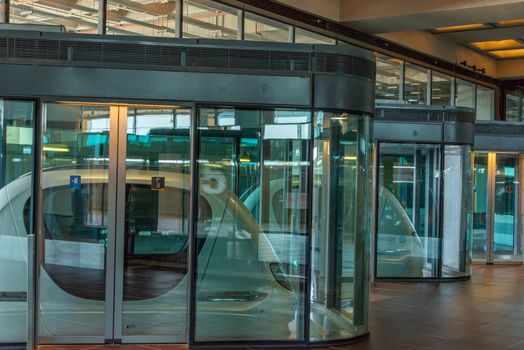
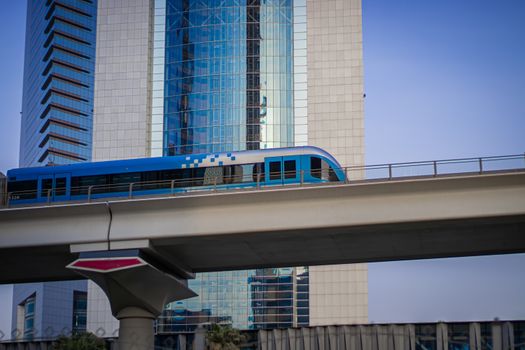
I stepped off the driverless, magnetic-levitation train at the King Abdullah Financial District (KAFD) Metro Station in Riyadh, and my brain struggled to reconcile the sensory inputs.
Outside, the May sun was beginning its seasonal climb toward summer, but inside this cavernous, Zaha Hadid-designed transit hub, the air was a crisp 68°F (20°C). It smelled not of grease and industrial exhaust, but of cold-brewed espresso infused with green cardamom and the faint, clean scent of fresh ozone.
Above me, the ceiling curved like a wave of liquid gold, engineered with structural steel that dynamically filters the harsh desert light into soft, undulating patterns on the polished marble floor.
```
[KAFD Metro Station: A Symphony of Steel & Light]
_________________________________
/ _ _ _ _ _ _ _ _ _ _ \
| (_)(_)(_)(_)(_)(_)(_)(_)(_)(_) | <-- Kinetic Mashrabiya
| / \ | Solar Panels
| / \ |
```
I watched a family of travelers from Tokyo tap their smart-rings against a biometric gate, their luggage already whisked away by automated under-street conveyors directly to their hotel room.
This is not a sci-fi movie set. This is the Middle East in May 2026.
If you haven't visited the Gulf in the last eighteen months, the speed of transformation will shock you. The region has moved past the era of building "the world's tallest" just for the sake of bragging rights. Today, the focus is on hyper-utility, ecological survival, and seamless user experiences.
Here is your definitive, boots-on-the-ground guide to the Middle Eastern modernity that is surprising even the most jaded global travelers this May.
---
1. Riyadh’s Kinetic Architecture: The Living City
For decades, Riyadh was a sprawling, car-centric metropolis. Today, it is a masterclass in walkable, high-tech urbanism. The crown jewel of this transformation is the King Abdullah Financial District (KAFD), which has fully integrated its kinetic architecture systems by May 2026.
The Dynamic Mashrabiya
Traditional Islamic architecture utilized mashrabiya—intricate wooden latticework screens—to provide privacy and natural cooling. Riyadh’s modern skyscrapers have scaled this concept up using carbon-fiber panels controlled by localized AI.
As the sun moves across the sky, thousands of hexagonal panels on the facades of the PIF Tower and surrounding buildings open and close autonomously. They block heat while maximizing natural light, reducing building energy consumption by a staggering 42%.
Walkability in the Desert
To combat the May heat, the city has deployed "Cool Corridors." These are pedestrian pathways lined with specialized geothermally cooled pavement and overhead smart-canopies that mist recycled graywater.
Walking between meetings at 11:00 AM feels like walking through a shaded mountain canyon rather than a desert plateau.
> Pro-Tip: Head to the KAFD skybridge at exactly 6:15 PM. The setting sun hits the kinetic panels of the surrounding towers just as they tilt to catch the evening breeze, creating a glittering, serpentine light show across the skyline.
---
2. Doha’s Msheireb Downtown: The Blueprint for Eco-Modernism
While Doha captured the world's attention during the World Cup, its true architectural legacy is realized in Msheireb Downtown Doha, the world’s first fully built smart-city regeneration project.
```
Traditional Wind Tower Modern Msheireb Design
___________ ___________
| | | | | Solar |
|___|___|___| |__Panels___|
| | | Passive |
| Cool | | Cooling |
| Breeze | | Angles |
|___________| |___________|
```
Passive Cooling and Solar Streets
Instead of fighting the coastal humidity of May, Msheireb’s architecture works with it. The entire district is built on a slight incline, with buildings tightly packed and angled to funnel the cool northern breeze off the Arabian Gulf directly through the streets.
The rooftops are covered in 6,400 solar photovoltaic panels that double as shade canopies.
The Silent Tram
I boarded the free, self-driving Msheireb Tram, which glides silently through the stone-paved streets. The tram cars use special glass that filters out 90% of infrared heat, allowing passengers to look out at the modern interpretation of Qatari limestone architecture without feeling the glare.
- The Scent of the District: Msheireb has its own signature ambient scent—a custom-engineered blend of white oud, sea salt, and wet stone—diffused through the street-level cooling vents.
- The Underground World: Beneath the pedestrian streets lies a massive subterranean network where all deliveries, waste management, and utility maintenance occur, leaving the surface entirely free of trucks, noise, and fumes.
---
3. UAE’s Next Leap: Flying Taxis and AI Art in Dubai
Dubai has officially transitioned from speculative rendering to physical reality. May 2026 marks the first full season of commercial eVTOL (electric vertical takeoff and landing) operations, transforming how visitors navigate the emirate.
```
[Joby S4 eVTOL - Dubai Sky Taxi]
___ ___
/ \_/ \
====[ (o) (o) ]====
\___/ \___/
| |
/=============\
```
Skip the SZR Traffic
Instead of battling the traffic on Sheikh Zayed Road, I booked a flight on a Joby S4 air taxi from the Dubai Marina Vertiport to Dubai International Airport (DXB).
- Travel Time: 9 minutes (compared to 45 minutes by road).
- The Experience: Completely electric, whisper-quiet, and offering a jaw-dropping view of the Palm Jumeirah at 1,500 feet.
- Cost: Approximately $110 USD—comparable to a premium limousine service but infinitely more efficient.
The Museum of the Future: Version 2.0
The iconic torus-shaped building has updated its internal systems for 2026. The entire interior is now managed by a localized quantum-computing network that customizes the exhibition path for each visitor based on their biometric responses (tracked via your digital entry pass).
If the system detects your heart rate settling, it dynamically shifts the holographic displays to show more interactive, high-adrenaline visions of space exploration and deep-sea biomes.
> Pro-Tip: Skip the main queue by booking the "Night at the Museum" pass. It grants entry at 10:00 PM when the crowd thin out, and the building's exterior Arabic calligraphy glows with a brilliant, pulsing LED light show.
---
4. Oman’s Silent Revolution: Green Tech Meets Ancient Stone
While its neighbors build skyward, Oman is building sustainably. Just outside Muscat, The Sustainable City - Yiti has become a global pilgrimage site for eco-travelers this May.
```
+-------------------------------------------------------------+
| THE SUSTAINABLE CITY - YITI |
| [Solar Canopies] -> Powers 100% of residential needs |
| [Biodomes] -> Produces organic local vegetables |
| [Water Recycling]-> 100% graywater used for landscaping |
| [Car-Free Zone] -> Only autonomous electric pods allowed |
+-------------------------------------------------------------+
```
Carbon-Neutral Luxury
Yiti is designed to produce more energy than it consumes. The development features:
* 100% Solar-Powered Villas: Clad in locally sourced Omani desert stone that acts as a natural thermal mass.
* Vertical Farm Biodomes: Located in the center of the community, producing organic leafy greens and strawberries in the middle of the desert using aeroponics.
* Zero-Waste Dining: Restaurants here do not have trash bins; all organic waste is processed on-site within hours into compost for the community gardens.
The sensation of walking through Yiti is remarkably peaceful. There are no combustion engines allowed. The only sounds are the wind rustling through native ghaf trees and the quiet hum of autonomous electric cargo pods delivering locally grown produce to residents.
---
5. Culinary Neo-Gastronomy: Deconstructing the Souq
The culinary landscape of the Gulf in May 2026 is a playground of hyper-local sourcing and molecular gastronomy. The traditional souq has evolved into high-concept dining spaces where ancient flavors are re-engineered using modern technology.
```
[The 2026 Deconstructed Kabsa Plate]
+------------------------------------------+
| * Saffron-infused rice foam |
| * Cardamom-scented air |
| * 48-hour slow-cooked, tender local lamb|
| * Smoked black lime gel droplets |
+------------------------------------------+
```
The Culinary Lab: Al-Balad, Jeddah
In the historic Al-Balad district of Jeddah, UNESCO-protected coral-stone houses host cutting-edge culinary labs.
At Al-Meraaj, I experienced a nine-course tasting menu where traditional kabsa (spiced rice and meat) was served as a saffron-infused rice foam accompanied by smoked black lime gel and lamb that had been slow-cooked sous-vide for 48 hours.
Desert-Grown, Michelin-Starred
Thanks to advanced vertical farming facilities in the UAE and Saudi deserts, restaurants no longer import their specialty produce.
I dined at Orfali Bros Bistro in Dubai, where the heirloom tomatoes, wild arugula, and edible flowers on my plate had been harvested just three hours prior from an indoor vertical farm located less than ten miles away in Al Quoz. The taste was intensely vibrant—proof that technology can enhance, rather than dilute, gastronomic authenticity.
---
6. May 2026 Climate Survival Guide: Beating the Heat with Smart Design
Visiting the Middle East in May used to be considered "shoulder season" due to rising temperatures. In 2026, smart urban planning has turned May into one of the most exciting times to visit.
Here is how the cities are engineered to keep you comfortable:
- Thermodynamic Airflow: City streets are narrower and oriented to create natural wind tunnels, dropping the perceived temperature by up to 10°F (5°C).
- Cooling Hubs: Strategically placed glass pavilions throughout public parks offer instant air-conditioned relief, complete with hydration stations dispensing electrolyte-infused water.
- Dynamic Shading: Smart umbrellas in public plazas automatically open, tilt, and track the sun, ensuring that outdoor seating remains shaded throughout the day.
---
7. The Logistics Blueprint: How to Pull Off This Multi-Country Jet-Set
To experience this futuristic renaissance seamlessly, you need to understand the updated logistics of May 2026.
Quick Facts & Estimated Costs
| Destination | Must-Visit Spot | Best Time to Visit | Est. Daily Cost (USD) | How to Get There |
| :--- | :--- | :--- | :--- | :--- |
| Riyadh, KSA | KAFD Metro & Boulevard | 8:00 AM / 7:00 PM | $250 - $450 | Fly direct to RUH; use Riyadh Metro |
| Doha, Qatar | Msheireb Downtown | 4:00 PM - 9:00 PM | $200 - $400 | Fly to DOH; use Msheireb Tram |
| Dubai, UAE | eVTOL Vertiports & Museum | 10:00 AM (eVTOL) | $350 - $600 | Fly to DXB; book Joby Aviation App |
| Muscat, Oman | Sustainable City - Yiti | 7:00 AM (Gardens) | $180 - $300 | Fly to MCT; rent electric vehicle |
Essential Apps to Download Before You Fly
1. Riyadh Metro (KSA): For purchasing biometric "Horizon" transit passes.
2. Joby Aviation (UAE): To book your flying taxi slots between Dubai Marina and DXB.
3. Hayya 2.0 (Qatar): The unified digital entry portal for seamless, paperless immigration.
4. Yiti GreenPass (Oman): To access the car-free zones and book tours of the biodomes.
---
The Verdict: The Future Has Arrived
The Middle East in May 2026 is a revelation. It is a region that has looked at the ecological and logistical challenges of the 21st century and built its way out of them with breathtaking ambition and precision.
You do not come here to look at the past; you come here to get a sneak peek at how the rest of the world will live, travel, and thrive thirty years from now.
Pack your bags, download your digital passes, and prepare to have your expectations completely shattered.
---