The Hook: Piercing the Turquoise Mirror
I stepped off the rack-and-pinion mountain train at Lauterbrunnen, and the bite of early autumn hit my throat before the station door even clicked shut. It smelled of woodsmoke, wet slate, and decaying pine needles. High above, the hanging glaciers of the Jungfrau massif were shedding their summer runoff—water that had been locked in compressed blue ice since the Middle Ages, tumbling straight down into sheer granite troughs.
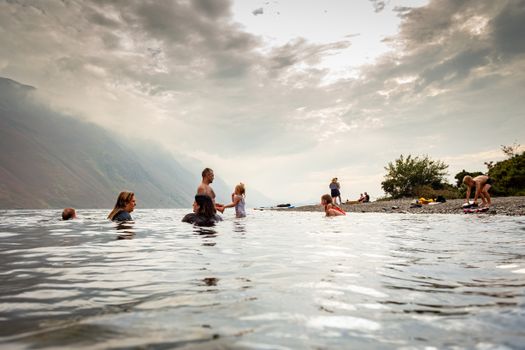
Twenty minutes later, I stood barefoot on a gravel bank along a glacial basin fed by the Rosenlaui glacier. My toes turned bright crimson within seconds of testing the silt-heavy meltwater. The thermometer read 3.8°C (38.8°F). The wind howling off the glacier was dead quiet, broken only by the hydraulic thunder of churning water.
I took three long, diaphragmatic belly breaths, clamped my jaw shut against the instinct to hyperventilate, and submerged to the clavicles.
Your skin doesn't register cold at first; it registers static electricity. Millions of peripheral capillaries slam shut in a violent micro-second of survival. Then comes the stillness: the complete, intoxicating erasure of mental noise. If you have only experienced deliberate cold water immersion inside a stainless steel tub hooked to a commercial chiller, you have not actually plunged. In September 2026, the real work happens out in the wild.
---
1. Why September 2026 Is the Goldilocks Window for Natural Plunges
Most people assume winter is the prime season for cold water exposure. They are wrong. Mid-winter brings dense sheet ice, elevated risk of hypothermia during the rewarming phase, and logistics that require gas-powered chainsaws just to breach the water table.
September is the golden window.
In the Northern Hemisphere, ambient temperatures drop sharply across the sub-arctic and alpine zones, yet access roads, high-altitude passes, and mountain huts remain entirely clear of snowpack. The water temperatures in glacial reservoirs, tarns, and high-latitude rivers sit reliably between 2°C and 7°C (35°F–44°F)—the exact physiological threshold required to trigger cold-shock proteins, norepinephrine surges, and the mammalian dive reflex.
Furthermore, September 2026 aligns with a rare celestial and seasonal balance: the onset of the solar cycle's autumn auroral peaks across Fennoscandia, combined with the transition of sub-alpine larch forests into incandescent golds. You get raw, bone-aching water framed by world-class landscapes, without dodging mid-summer family tour buses or mid-winter blizzards.
---
2. Rosenlaui Glacier Basin, Switzerland: The Alpine Cryo-Chamber
The Rosenlaui valley in the Bernese Oberland feels ancient. Unlike the manicured lawns of Interlaken, this gorge is a raw scar of fractured limestone, carved out by glacial advance and retreat.
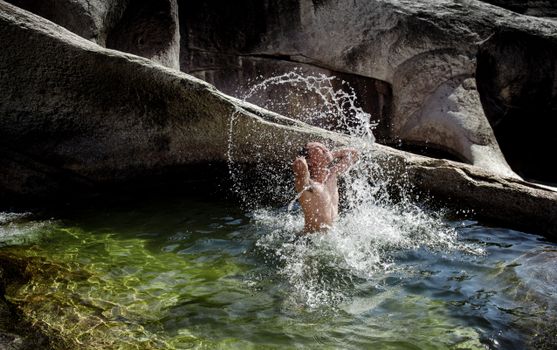
The meltwater pools forming below the tongue of the glacier are hyper-oxygenated, milky turquoise from suspended glacial flour (finely ground rock particles). The water here rarely breaches 4°C, even on a sunny September afternoon.
```
Elevation: 1,327m | Water Temp: 3.2°C – 4.5°C | Submersion Type: Glacial Silt Pool
```
- The Experience: Wade in slowly from the gravel spit located south of the historic Hotel Rosenlaui. The high mineral content gives the water a thick, velvety drag against your skin. Submerge near the inflow pool where the current is slow; avoid the main channel where hydro-pressure is dangerous.
- Pro-Tip: Arrive at 07:15 AM. The sun hasn't crested the Wellhorn yet, keeping the ambient air at a crisp 2°C. When you exit, the morning sun hits the western valley ridge, giving you natural radiant heat to dry off without shivering violently.
- The Post-Plunge Ritual: Hike 12 minutes down-valley to the turn-of-the-century veranda of Hotel Rosenlaui for a ceramic pot of dark-roast coffee and fresh rye bread spread with alpine butter dusted with local caraway.
---
3. Lake Thingvallavatn & The Silfra Fissure, Iceland: Tectonic Cold
Plunging between tectonic plates is not hyperbole here; it is geology. At Thingvellir National Park, the North American and Eurasian plates drift apart at roughly two centimeters per year. Meltwater from the Langjökull glacier filters underground through porous volcanic basalt for over 50 years before bubbling up into the fissure at a relentless, immutable 2°C to 4°C.
While commercially operated drysuit snorkel tours clog the main fissure channel, self-directed wilderness dippers can access dedicated entry platforms around Lake Thingvallavatn’s northern perimeter.
- The Experience: The water is so optically pure you can see basalt shelves 100 meters away. Immersing yourself feels like falling into empty space. The absence of organic sediment means there is no earthy smell—just pure, ozone-tinged liquid that tastes sharper than anything that comes out of a tap.
- Pro-Tip: The entry bay near Davíðsgjá (the deeper, lesser-known cousin of Silfra) offers direct access away from the bus crowds. Park at the unimproved gravel loop off Route 360, walk past the rusty iron gate (public access allowed), and enter the shelf via the natural volcanic slab steps.
- Safety Warning: Never swim alone here. The water visibility induces vertigo in beginner plungers, and the current, while subtle, pulls continuously toward the main lake basin. Keep plunges under 180 seconds.
---
4. Oulanka River & The Finnish Peat Plunge, Lapland: The Ruska Reset
In northern Finland, late September is known as ruska—the two-week explosion when dwarf birches, bilberry shrubs, and aspen turn blood-orange, crimson, and deep mustard. It is also the spiritual homeland of cold exposure: the culture of avanto (ice hole immersion), adapted for autumn’s wild rivers.
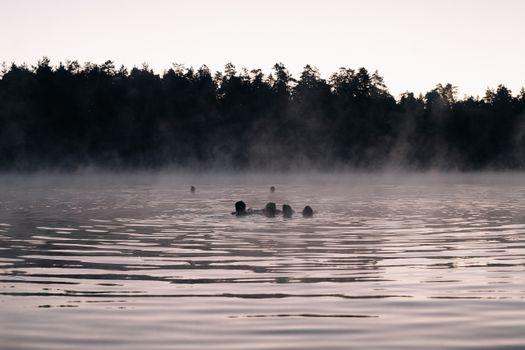
Along the Oulanka River inside Oulanka National Park, the water is naturally stained deep amber by peat and forest humic acids. It looks like black tea, completely soft against the skin, carrying the scent of juniper and damp moss.
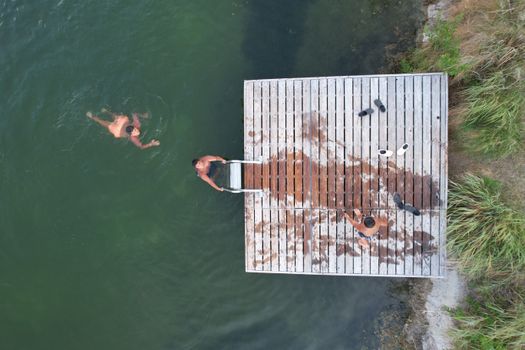
- The Experience: This is an endurance landscape. Pair your natural cold plunge with a wood-fired sauna. You sit in a timber shack breathing birch-scented steam until your core temperature ticks upward, then jog down a cedar boardwalk to cast yourself directly into the black, 5°C river current.
- Pro-Tip: Base yourself near the Juuma rapids. Behind the old watermill off the Karhunkierros trail, there is an eddy where the water slows into a calm, deep pocket. The water is shielded from the main rapid’s sweep by a granite spit.
- The Local Insight: The Finns don't hyperventilate; they practice sisu (stoic grit). Enter the amber water silently, exhale completely through pursed lips, and fix your gaze on the golden birch leaves across the riverbank. Stay for two minutes. Climb out, bypass the towel, and let the boreal air dry you for 60 seconds before stepping back into the sauna heat.
---
5. Emerald Lake, Yoho National Park, Canada: The Larch Plunge
The Canadian Rockies in September are defined by the turning of the alpine larches—deciduous conifers that flush neon yellow before dropping their needles. Emerald Lake, situated in British Columbia's Yoho National Park, sits under the sheer wall of Mount Burgess.
By mid-September, tourist rental canoes vacate the water by 5:00 PM. That is when the glacial cirque transforms into an immense, quiet plunge sanctuary.
```
Elevation: 1,280m | Water Temp: 4.0°C | Submersion Type: Carbonate Silt Alpine Basin
```
- The Experience: The lake gets its turquoise hue from powdered limestone suspended in the water, which reflects sunlight in striking bands of green and blue. The entry from the shoreline near the alluvial fan at the lake’s north end is flat and soft underfoot.
- Pro-Tip: Park at the main lot, but hike 2.5 kilometers along the west shoreline trail to the alluvial gravel bed. You bypass 100% of the Instagrammers trapped at the bridge. Look for the fallen western red cedar trunk that juts out into a deep pool—it serves as a clean, natural entry ladder.
- Gear Requirement: Bring 5mm neoprene water booties. The limestone floor contains razor-sharp shale flakes that will slice numb soles without you realizing it until you warm up.
---
6. Cold Shock, Vagus Nerve, and Avoiding the "Afterdrop"
Plunging into wild, unmonitored alpine waters requires a higher degree of physiological literacy than sitting in a backyard tub with an app timer. The wilderness does not have an emergency shut-off valve.
The Physiology of Natural Water
Wild water has kinetic force, changing depths, and no temperature control. When you immerse in 4°C water, the cold shock response causes an immediate gasping reflex. If your head is submerged during this involuntary inhalation, you risk dry-drowning through vocal cord spasm or water aspiration.
- Rule 1: Never dive in headfirst. Always step in, sit, and keep your carotid arteries (in your neck) clear of the surface for the first 30 seconds until breathing stabilizes.
- Rule 2: Master the prolonged exhale. Inhale for 4 seconds through the nose; exhale smoothly for 8 seconds through the mouth. This stimulates the vagus nerve, firing the parasympathetic nervous system to slow tachycardia (rapid heart rate).
The Real Danger: Understanding the "Afterdrop"
Many novices exit the water feeling invincible, only to start violently shivering, vomiting, or passing out 15 minutes later. This is the afterdrop.
When you exit, peripheral vasoconstriction begins to reverse. Cold, acidic blood from your extremities rushes back into your core, dropping your core body temperature lower than it was while you were submerged.
```
PREVENTING THE AFTERDROP: THE PROTOCOL
├── Step 1: Strip wet layers immediately. Pat skin dry; do not rub violently (protect fragile capillaries).
├── Step 2: Put on a windproof outer shell and wool base layers (Merino 250gsm minimum).
├── Step 3: Put on a wool beanie immediately (30% of radiant heat loss escapes from the head).
├── Step 4: Perform isometric tension exercises (horse stance, gentle squats). Do NOT jump into a hot shower immediately; this forces rapid peripheral vasodilation and causes fainting.
└── Step 5: Sip a warm, sweetened beverage (tea with raw honey) to provide glucose for shivering thermogenesis.
```
---
7. The Logistics Blueprint: September 2026
To pull this off without logistical friction, you need to book high-altitude transport and national park access well in advance. September is shoulder season, meaning reduced schedules for regional trains, ferries, and alpine cable cars.
Quick Facts: The Master Matrix
| Destination | Typical Water Temp (°C) | Optimal Window (2026) | Est. Daily Budget (USD) | Primary Route Access |
| :--- | :--- | :--- | :--- | :--- |
| Rosenlaui Basin, Switzerland | 3.2°C – 4.5°C | Sept 8 – Sept 22 | $220 – $340 | Train to Meiringen, PostBus to Rosenlaui |
| Davíðsgjá / Thingvallavatn, Iceland | 2.5°C – 3.8°C | Sept 15 – Sept 30 | $190 – $280 | 4x4 Rental from KEF, Route 360 |
| Oulanka River, Finland | 4.8°C – 6.2°C | Sept 5 – Sept 18 | $140 – $210 | Fly to Kuusamo (KAO), local shuttle to Juuma |
| Emerald Lake, Canada | 3.8°C – 5.0°C | Sept 12 – Sept 26 | $160 – $250 | Drive Trans-Canada Hwy 1 via Banff/Field |
Essential Field Gear for Wild Cold Water Immersion
Forget synthetic hotel robes. For authentic wild immersion, pack the following:
- Dryrobe Advance Long-Sleeve: Heavy nylon outer, synthetic lambswool interior. You need a windbreak that allows you to change clothes privately in freezing gusts.
- 4mm-5mm Neoprene Booties (e.g., Rip Curl Flashbomb): Essential for maintaining foot dexterity when climbing over algae-covered granite or fractured slate.
- Garmin Fēnix / Epix: Use the cold water tracking function to monitor skin exposure duration without fumbling with an iPhone in freezing winds.
- Insulated Thermos (Hydro Flask 32oz): Pre-loaded with warm bone broth, miso soup, or ginger-spiced black tea. Avoid alcohol completely; it promotes rapid vasodilation and accelerates core cooling.
---
The Verdict: Reclaiming the Raw Edge
Submerging yourself in a wild river as the golden larches shed their needles isn't about bragging rights on an app dashboard. It is an act of radical presence. It strips away modern domestic comforts, clears the neural slate, and reconnects your central nervous system to raw planetary rhythms.
Plan your route now for September 2026. Pack the wool layers, scout the deep eddies, respect the afterdrop, and take the plunge. The water is waiting.
---