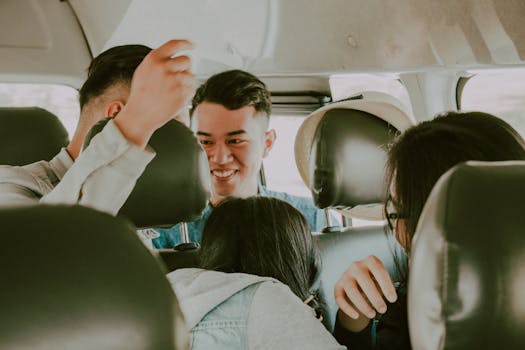
The crisp mountain air of the Dolomites was supposed to be invigorating. The panoramic view, a UNESCO World Heritage site, was nothing short of spectacular. My carefully planned itinerary, months in the making, promised a moment of shared awe. Instead, my 16-year-old, Maya, was meticulously documenting the flaking nail polish on her thumb, while Leo, 14, was deeply engrossed in a YouTube video about competitive gaming.
"Isn't this incredible?" I chirped, my voice laced with an optimism I didn't quite feel.
Maya grunted. Leo mumbled, "Yeah, cool, Mom," without looking up.
That was it. That was the moment. The straw that broke the camel's back of a dozen family vacations peppered with similar scenes. I'd invested time, money, and emotional energy into creating these "unforgettable memories," only to be met with a wall of teenage apathy. I loved my kids fiercely, but traveling with them felt like dragging two reluctant anchors through paradise. I was ready to throw in the towel, convinced that family travel was just a recipe for parental frustration and teenage resentment.
But then something shifted. Not overnight, not without a few more eye-rolls, but slowly, trip by trip, a new paradigm emerged. What started as a desperate attempt to salvage our vacations became a profound journey of connection, understanding, and unexpected joy. My "hating-everything" teens didn't just tolerate our trips; they eventually thrived, and in doing so, they taught me more about travel, life, and myself than any solo adventure ever could. This is how we did it, and how it truly changed my life forever.
Section 1: The Pre-Trip Meltdown – Understanding the Teenage Brain (and its Resistance)
Let’s be honest, teenagers aren't wired for spontaneous awe. Their brains are in a constant state of reconstruction, prioritizing social connection, identity formation, and, let's face it, screen time. My initial mistake was approaching travel with them as I would with younger kids – a series of planned activities they were expected to enjoy. I failed to acknowledge their burgeoning independence and their need for agency.
My first breakthrough came during a planning session for a trip to Portugal. I'd laid out a beautifully curated itinerary of historical sites, charming villages, and scenic drives. Maya looked at me blankly. "So, no Wi-Fi?" Leo asked, his voice dripping with dread.
It hit me: their "hating everything" wasn't personal. It was a symptom of feeling unheard, of being dragged along, and of missing their own world. I realized I needed to reframe the entire conversation. Instead of presenting a finished product, I needed to invite them into the creation process.
Practical Tip #1: The Power of the "Choose Your Own Adventure" (Within Limits)
Before our next trip, I started by giving them options. Not "What do you want to do?" (which usually elicits "Nothing" or "I dunno"), but "Here are three exciting possibilities for our trip to [Destination X]. Which one sparks your interest?" For our Portugal trip, I presented:
* Option A: The History Buff's Dream: Lisbon castles, Sintra palaces, ancient Roman ruins.
* Option B: The Beach & Surf Vibe: Algarve coast, surf lessons, exploring fishing villages.
* Option C: The Urban Explorer: Lisbon's street art, foodie tours, modern art museums, shopping.
They surprisingly gravitated towards Option C, which involved a lot more walking and less traditional "tourist" stuff than I would have chosen. This small shift – giving them a voice, even a limited one – made a monumental difference. Suddenly, it wasn't my trip; it was our trip.
Section 2: The Art of the (Subtle) Sell: Involving Them in the Planning
Once they had a general direction, the real work began: getting them to invest. This wasn't about them planning every detail (hello, parental sanity!), but about finding their specific hooks.
For our chosen "Urban Explorer" Portugal trip, I knew Maya loved photography and Leo was obsessed with sneakers. I assigned them "missions":
- Maya's Mission: Find the most Instagrammable street art spots in Lisbon and research a photo walk.
- Leo's Mission: Identify unique sneaker stores or streetwear markets in Porto and research local skate parks.
Suddenly, they weren't just passengers; they were researchers, contributors, and experts. I even gave them a small budget (€50 each) to plan one activity of their choice within their mission parameters.
Practical Tip #2: Leverage Their Passions, No Matter How Niche
- The Foodie Teen: Challenge them to find the best local dessert, a specific street food vendor, or a unique restaurant. In Lisbon, Maya found a tiny pastelaria where we bought pastéis de nata fresh from the oven for €1.20 each – a memory more vivid than any Michelin-starred meal.
- The Gamer Teen: Look for escape rooms, virtual reality experiences, or even local arcades. Leo found an amazing retro arcade in Porto called "Arcade Bar" where he spent an hour challenging me to Pac-Man, completely off his phone.
- The Fashionista Teen: Seek out vintage markets, local designer boutiques, or unique thrift stores. Maya discovered a vibrant flea market in Feira da Ladra, Lisbon, where she haggled for a vintage denim jacket for €15.
- The Music Lover Teen: Research local music venues, buskers, or music festivals. We stumbled upon a Fado performance in Alfama, Lisbon, that Maya, surprisingly, found "actually pretty cool."
The key is to make it their idea, even if you subtly guide them there. This gives them ownership and a reason to engage.
Section 3: Digital Detox (But Make It Fun): The Tech-Savvy Compromise
The biggest battleground for many traveling parents is screen time. My kids were no exception. My initial approach was "no phones at dinner!" which inevitably led to sulking and resentment. I needed a smarter strategy.
I realized that completely banning screens was unrealistic and counterproductive. Instead, I established clear boundaries and introduced "digital rewards" for real-world engagement.
Practical Tip #3: The "Earn Your Screen Time" Strategy
- The "Photo Challenge": Before an outing, I'd give them a themed photo challenge (e.g., "Find 5 things that are uniquely [city name]," "Capture the essence of local life," "Take the funniest selfie"). The best photos (judged by family vote) earned extra screen time or a small treat. This turned their phone into a tool for engagement, not just a distraction.
- Designated "Connect Zones": We'd agree on specific times or places where screens were acceptable – usually in the hotel room before bed, during long train rides, or during a pre-approved "chill hour" at a café. Outside of these zones, phones were put away.
- Embrace the Tech for Good: Use their phones for navigation, translation apps, looking up local facts, or creating shared Spotify playlists for car rides. Leo became our designated navigator in Lisbon, using Google Maps to guide us through winding alleys, which gave him a sense of purpose.
One afternoon in Lisbon, after a particularly engaging street art hunt (Maya's mission!), we settled into a small café. I saw Maya pull out her phone, but instead of scrolling, she was uploading her photos to Instagram, tagging the artists, and researching more about the movement. She wasn't just consuming; she was creating and sharing her experience. That's when I knew we were onto something.
Section 4: Fueling Adventures (and Teenage Stomachs): Food as a Bridge
Teenagers are often perpetually hungry, and their tastes can be... particular. Trying to force them to eat exotic dishes they hate is a recipe for disaster. But food is also a fantastic way to explore culture and connect.
Practical Tip #4: The "Mix & Match" Culinary Approach
- The Familiar First, Then the Fearless: Don't dive headfirst into tripe stew. Start with familiar options, then gradually introduce new flavors. In Italy, we'd start with pizza or pasta, then challenge them to try arancini or supplì. In Portugal, we'd find a place with delicious grilled chicken before venturing into bacalhau à brás.
- The "One New Thing" Rule: Each person has to try at least one new dish or ingredient per day. No pressure to finish it, just try it. Leo, our resident picky eater, surprised us by loving ginjinha (cherry liqueur) served in a chocolate cup in Óbidos, Portugal.
- Food Markets & Street Food: These are a goldmine for variety and engagement. Everyone can pick what they like, often for a reasonable price. The Mercado da Ribeira (Time Out Market) in Lisbon was a huge hit, offering everything from gourmet burgers to traditional Portuguese dishes. We set a budget of €15-€20 per person, and they loved the freedom of choosing their own meal.
- Cooking Classes: This is a brilliant way to immerse them in local cuisine. We took a pasta-making class in Florence for about €70/person. Maya, who usually avoids the kitchen at home, loved kneading dough and making ravioli from scratch. It was messy, fun, and resulted in a delicious, shared meal.
Food became less about sustenance and more about discovery. We weren't just eating; we were tasting the culture, laughing at our attempts to pronounce menu items, and sharing stories over plates of local delicacies.
Section 5: Beyond the Tourist Trap: Finding Their 'Thing'
While iconic landmarks are important, teens often connect more deeply with experiences that resonate with their personal interests. My biggest lesson was to stop trying to force my travel agenda and start looking for their unique entry points.
For our trip to Berlin, a city steeped in history, I knew a week of museums might be a tough sell. So, I diversified.
Practical Tip #5: Curate Experiences, Don't Just Visit Sights
- The Escape Room Enthusiast: Berlin has fantastic escape rooms, many with historical themes. We did one called "The Cold War Spy" for €30/person, and it was a brilliant way to learn about the era in an interactive, high-stakes way. Leo was completely engaged.
- The Street Art Aficionado: Berlin's street art scene is legendary. We booked a free walking tour (tipped the guide €10 each) that focused on the East Side Gallery and various murals. Maya was in her element, snapping photos and learning about the political messages behind the art.
- The Music/Culture Seeker: We found a small, independent cinema showing a foreign film with English subtitles. Alternatively, look for unique concerts, live music, or even local sporting events.
- The Thrill Seeker: Consider things like indoor skydiving, rock climbing, or even a local amusement park. In the Alps, we tried a mountain coaster – a huge hit for both kids and me! (Around €15/ride).
- The 'Just Chill' Option: Sometimes, the best thing to do is nothing. Find a cool café, let them read, journal, or just people-watch. One afternoon in Berlin, we simply sat in a park near the Spree River, watching boats go by, and it was one of the most peaceful moments of the trip.
This approach transforms travel from a series of obligations into a collection of personalized adventures. When they find "their thing," their enthusiasm is infectious, and it opens them up to other experiences too.
Section 6: The Unplugged Connection: Creating Shared Memories
Despite all the planning and strategizing, some of the most profound moments happened spontaneously, when we simply were together, without an agenda. These were the moments that forged true connection and made the trips truly unforgettable.
One evening in Berlin, after a long day of exploring, we found ourselves on a rooftop bar overlooking the city. The sun was setting, painting the sky in fiery hues. Maya, usually reserved, pulled out her phone, not to scroll, but to take a panoramic video. Leo, surprisingly, started pointing out landmarks he recognized from our earlier explorations. We talked, really talked, about our day, about life, about nothing in particular. No forced fun, just genuine connection.
Practical Tip #6: Prioritize Downtime and Flexibility
- Build in "Free Time": Don't overschedule. Allow for lazy mornings, spontaneous detours, or simply an afternoon spent reading by the hotel pool. This gives everyone a chance to recharge and prevents burnout.
- Embrace the Unexpected: Some of our best memories came from things that weren't planned: getting lost in a charming alley, discovering a hidden bookstore, or striking up a conversation with a local.
- The "No Agenda" Day: Dedicate one day of the trip to having no fixed plans. Let the mood dictate what you do. Sometimes, this leads to the most authentic experiences.
- Journaling/Scrapbooking: Encourage them to keep a travel journal or start a shared digital album. Maya started a travel Instagram account, not just for her friends, but as a way to document our adventures. It became a shared project, and I even contributed some of my photos.
These moments of genuine connection are the true souvenirs, far more valuable than any trinket. They are the stories we tell, the inside jokes we share, and the bonds that strengthen.
Section 7: The Unexpected Gift: How They Changed Me Forever
What started as a mission to make family travel bearable became a journey of personal growth. My kids, with their initial apathy and later, their burgeoning enthusiasm, taught me invaluable lessons.
They taught me patience, the kind that can only be forged in the fire of a teen's eye-roll. They taught me flexibility, forcing me to abandon rigid itineraries and embrace the chaos of the unplanned. They taught me to listen, not just to their words, but to their unspoken needs and desires. They showed me that sometimes, the most profound connections happen when you stop trying so hard.
I used to travel to see the world; now I travel to see the world through their eyes. And what a different world it is. I've learned to appreciate the small moments – the shared laughter over a botched foreign phrase, the silent wonder as they discover a new favorite food, the pride in their voice when they successfully navigate a local market.
The "hating-everything" phase wasn't a roadblock; it was a catalyst. It forced me to evolve as a traveler and as a parent. It taught me that true adventure isn't just about the destination; it's about the journey, the growth, and the unbreakable bonds formed along the way. My kids didn't just tolerate our trips; they transformed them. And in doing so, they transformed me.
So, to all the parents out there grappling with grumpy teens and travel fatigue, don't give up. Embrace the challenge, adjust your expectations, and invite them into the adventure. You might just find that the most life-changing journey isn't to a far-off land, but right there, within your own family.
Your Turn, Tripsora Explorers!
Have you cracked the code to traveling with teenagers? What's your secret weapon for turning eye-rolls into epic memories? Share your stories, tips, and triumphs in the comments below! Let's inspire each other to make every family trip an adventure worth remembering.
---