Eat Like a Local for Pennies: The Delicious Secrets Locals Don't Want Tourists to Know
Let me tell you a story. It was my first trip to Rome, a dream come true. I’d spent weeks poring over guidebooks, dreaming of pasta, pizza, and gelato. On my first evening, exhausted but thrilled, I stumbled into a charming trattoria just steps from the Colosseum. The menu was in English, the waiters spoke perfect English, and the prices… well, let’s just say my "authentic" carbonara cost me a small fortune, and frankly, it was just okay. A few days later, a local friend dragged me down a tiny, unassuming alley, past a bustling market, and into a nondescript little spot where a nonna was rolling pasta by hand. No English menu, just a chalk board with a few scribbled words. With a lot of pointing and a little broken Italian, I ordered. The carbonara that arrived was transcendent – rich, creamy, perfectly al dente – and it cost less than half of what I’d paid at the tourist trap. That, my friends, was my "aha!" moment.
It was the moment I realized that truly experiencing a destination's culinary soul doesn't require a fat wallet. In fact, the most authentic, most delicious, and most memorable meals are almost always found off the beaten path, where locals eat, and where prices are shockingly low. This isn't just about saving money (though you'll save a lot); it's about unlocking a deeper, richer, and infinitely more satisfying travel experience. It’s about tasting the true heartbeat of a culture.
So, ditch the overpriced tourist menus and prepare to embark on a delicious adventure. I’m about to spill the beans on how to eat like a local for pennies – the secrets that will have you feasting like royalty on a backpacker's budget. Get ready to bookmark this, because your taste buds (and your bank account) are about to thank you.
1. Where Flavor Explodes & Prices Plummet: The Undisputed Reign of Street Food
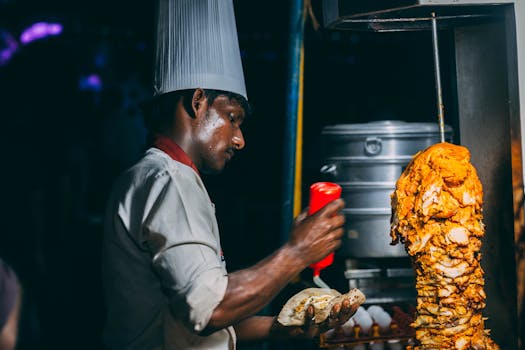
If there's one golden rule for eating like a local for pennies, it's this: EMBRACE STREET FOOD. Forget white tablecloths; the real magic happens on sidewalks, in bustling squares, and at the back of motorcycles converted into mobile kitchens. Street food isn't just a meal; it's a sensory explosion, a cultural immersion, and an absolute masterclass in budget dining.
Why Street Food is Your Best Friend:
* Unbeatable Prices: This is where you'll find meals for literally a dollar or two. Think a steaming bowl of Pho in Vietnam for $1.50, three glorious Tacos al Pastor in Mexico for $2, or a generous plate of Pad Thai in Thailand for $2.50. These aren't snacks; they're often full, satisfying meals.
* Authenticity Guaranteed: Locals eat street food. Period. If you see a long line of locals, you know you've hit the jackpot. These vendors have often perfected a single dish over generations, passed down through families.
* Freshness & Speed: High turnover means ingredients are constantly fresh. You often see your food being cooked right in front of you, a delicious performance in itself.
* Vibrant Atmosphere: The smells, the sounds, the chatter – eating street food is an experience in itself, offering a glimpse into daily life that a formal restaurant simply can't.
Your Street Food Survival Guide:
* Look for the Locals: This is your #1 indicator. A stall with a queue of locals is almost always a winner. If it's empty, move on.
* Observe Hygiene (But Don't Overthink It): A busy stall with visible cooking and fresh ingredients is usually a good sign. Don't expect Michelin-star cleanliness; a little grit is part of the charm, but trust your gut. If it looks genuinely dodgy, skip it.
* Focus on One or Two Dishes: Many street food vendors specialize in just one or two items. This means they've perfected them.
* Point and Smile: Don't speak the language? No problem! Point to what looks good, use a translation app, or just give a thumbs up. A smile goes a long way.
* Carry Small Bills: Many vendors won't have change for large denominations.
* Be Adventurous: Try things you don't recognize. That's half the fun!
My Personal Anecdote:
I once found myself in Chiang Mai, Thailand, absolutely ravenous. I wandered into a night market and saw a tiny, unassuming stall with a woman expertly flipping noodles in a giant wok. A line of locals stretched down the street. I pointed to her biggest pot, mumbled "Pad See Ew," and within minutes, had the most incredible, smoky, perfectly balanced plate of noodles I've ever tasted, all for about 70 Baht (less than $2.50). It was spicy, savory, slightly sweet, and utterly addictive. I went back every night for the rest of my trip. That's the power of street food.
2. Beyond the Souvenir Stands: How Food Markets Revolutionize Your Wallet & Palate
While street food is king for ready-to-eat meals, local food markets are the unsung heroes of budget culinary travel. These aren't just places to buy groceries; they're vibrant hubs where you can assemble incredibly fresh, delicious, and ridiculously cheap meals.
The Market Advantage:
* Fresh Ingredients for Pennies: Imagine buying a kilo of ripe, juicy mangoes in Southeast Asia for less than a dollar, or a basket of fresh berries in Europe for a couple of euros. Compare that to hotel breakfast prices!
* Ready-to-Eat Sections: Many markets, especially in Europe and Latin America, have dedicated sections for prepared foods. Think a whole roast chicken with potatoes in Spain for €8-€10, gourmet sandwiches from a deli in Italy for €4-€6, or a full plate of local delicacies in a Mexican market for $3-$5.
* The Ultimate Picnic Spot: Grab fresh bread, local cheese, cured meats, olives, and fruit from a market, find a scenic park or viewpoint, and you've got a gourmet picnic that costs a fraction of a restaurant meal.
* Cultural Immersion: Markets are sensory feasts – the smells of spices, the vibrant colors of produce, the chatter of vendors and shoppers. It's a true slice of local life.
Navigating the Market Maze:
* Seek Out Wet Markets/Farmer's Markets: These are your best bet for fresh produce, meats, and often, small cooked food stalls.
* Go Early: For the best selection and freshest goods, get there when the locals do – usually in the morning.
* Don't Be Afraid to Sample: Many vendors are happy to offer samples of fruit, cheese, or other products. It's a great way to try before you buy.
* Learn a Few Phrases: "How much?" (¿Cuánto cuesta? / Bao nhiêu tiền?) and "Thank you" (Gracias / Cảm ơn) will serve you well.
* Haggle (Politely): In some cultures, especially in Asia and Latin America, a little polite haggling is expected, especially if you're buying multiple items. Start with a friendly smile.
My Personal Anecdote:
In Seville, Spain, I once spent a glorious morning at Mercado de Triana. I bought a crusty baguette, some local jamón serrano, a wedge of pungent Manchego cheese, and a handful of fat, juicy olives. Total cost? About €7. I then found a sunny spot by the Guadalquivir River and had the most picturesque and delicious lunch imaginable. It beat any overpriced tapas bar in the tourist district by a mile, both in flavor and experience.
3. The Savvy Traveler's Schedule: Lunch Deals & Early Bird Bargains
This is a classic local secret that budget travelers often overlook: lunch is your secret weapon for fine dining on a budget. Many restaurants that are prohibitively expensive for dinner offer incredible deals during lunch hours.
The Lunchtime Loophole:
* "Menu del Día" (Spain), "Pranzo di Lavoro" (Italy), "Plat du Jour" (France): These fixed-price lunch menus are legendary. For €10-€20, you can often get a multi-course meal (starter, main, dessert, sometimes even wine/water) that would cost €40-€60 or more for dinner. The food quality is often identical.
* Off-Peak Deals: Even in countries without specific "lunch menus," many restaurants offer smaller, cheaper portions or special lunch sets.
* Early Bird Specials: In some destinations, especially North America or the UK, dining earlier (before 6 PM) can unlock discounts or special menus.
How to Spot the Deals:
* Look for Signage: Many places will have a chalkboard or small sign outside advertising their "Menu del Día" or lunch special.
* Ask for the Lunch Menu: Don't be shy! If you don't see it, simply ask, "Do you have a lunch menu?" (¿Tiene un menú del día? / Avete un menu del pranzo?).
* Venture a Few Blocks Away: Restaurants directly on major squares or tourist arteries rarely offer these deals. Walk two or three blocks down a side street, and you'll find them.
* Google Maps is Your Friend: Search for restaurants and check their websites or recent reviews. Often, people will mention the lunch deals.
My Personal Anecdote:
In Paris, I was craving a classic French bistro experience but knew dinner prices would decimate my budget. I found a charming little spot in the Marais district, just a few blocks from Notre Dame, that offered a "Formule Midi" (lunch formula) for €18. It included a delicious onion soup, a perfectly cooked steak frites, and a crème brûlée. The same meal at dinner would have easily been €50+. I felt like I'd cracked a code, enjoying an authentic Parisian meal without the guilt of overspending. It was a proper sit-down experience, complete with wine, for the price of a fancy sandwich.
4. Beyond 'Hello': Navigating Menus & Making Friends with Food Vendors
One of the biggest anxieties for budget travelers looking for local food is the language barrier. "What if I can't read the menu? What if I order something weird?" Trust me, the fear is worse than the reality. Learning a few basic phrases and using smart tech can unlock a world of culinary delights.
Your Language & Ordering Toolkit:
* Google Translate (with Camera!): This is a game-changer. Point your phone camera at a menu, and Google Translate will magically translate it in real-time. It's not always perfect, but it's usually good enough to get the gist. Download languages offline before you go!
* Learn Key Food Phrases:
* "How much?"
* "Delicious!" (¡Delicioso! / Ngon quá! / Aroy mak!)
* "Thank you"
* "Please"
* "I want..." (pointing helps here)
* "Water, please"
* "The local specialty" (¿Cuál es la especialidad local?)
* Don't Be Afraid to Point: Seriously, it works. Point to dishes on other tables that look good, or point to pictures if they have them.
* Ask for Recommendations: If you can manage, ask a friendly local or your server, "What's good here?" or "What do you recommend?" (¿Qué me recomienda?). They'll usually be thrilled you're interested in their cuisine.
* Embrace the Unknown: Sometimes, ordering blind is the best adventure. You might discover your new favorite dish!
My Personal Anecdote:
In a tiny ramen shop in Kyoto, Japan, the menu was entirely in Japanese, and the server spoke no English. I pulled out Google Translate, but the handwritten characters were proving tricky. I noticed a local slurping down a massive bowl of what looked like spicy ramen. With a hopeful smile, I pointed at his bowl, then at myself, and gave a questioning "Hai?" He grinned, nodded, and a few minutes later, I had the most incredible, fiery bowl of tantanmen ramen I've ever tasted. It was a moment of connection, and a delicious reward for stepping outside my comfort zone. Total cost: about $7.
5. Fueling Your Adventures: The Power of Bakeries, Delis & Coffee Shops
While street food and markets cover lunch and dinner, what about breakfast and quick snacks? This is where local bakeries (panaderías, boulangeries), delis (alimentari, charcuteries), and coffee shops shine. Forget overpriced hotel breakfasts or bland chain coffee; these local spots are budget-friendly goldmines.
The Early Bird's Advantage:
* Breakfast for Pennies: Instead of paying $20+ for a hotel breakfast buffet, pop into a local bakery. In Paris, a fresh croissant and a café au lait might set you back €3-€4. In Italy, an espresso and a cornetto is often €2-€3. In Mexico, a pan dulce and a coffee is less than $2.
* Quick & Cheap Lunch/Snacks: Delis are perfect for grabbing a fresh, made-to-order sandwich, often with local ingredients, for a fraction of a restaurant price. Many bakeries also sell savory pastries, quiches, or empanadas that make for a perfect, inexpensive lunch on the go.
* Authentic Coffee Culture: Experience coffee the local way – standing at a bar in Italy, or sipping a strong brew at a sidewalk cafe in France. It's cheaper and more authentic.
* Instagram-Worthy: Imagine a perfectly flaky croissant, a colorful array of pastries, or a beautifully crafted coffee. These moments are made for sharing.
How to Find Them:
* Follow Your Nose: The smell of fresh bread or roasting coffee is an undeniable beacon.
* Look for Queues: Again, if locals are lining up, it's a good sign of quality and value.
* Off the Main Drag: Just like with lunch deals, venture a block or two away from major tourist attractions for better prices and more authentic options.
My Personal Anecdote:
One morning in Rome, I skipped the hotel breakfast entirely. Instead, I wandered into a small 'pasticceria' (pastry shop) I'd seen locals darting into. I ordered a 'cappuccino' and a 'cornetto alla crema' (a cream-filled croissant). Standing at the counter, sipping my perfectly frothed coffee and devouring the warm, sweet pastry, I felt like a true Roman. The total bill? €2.80. It was not only delicious but also a more immersive experience than any hotel buffet could offer.
6. Spotting the Red Flags & Finding the Green Lights: Your Local Food Compass
You're armed with knowledge, but how do you apply it on the ground? Learning to distinguish between a tourist trap and an authentic local gem is crucial for your budget and your taste buds.
Red Flags (Avoid These!):
* English Menus with Pictures OUTSIDE: A clear sign they're catering to tourists. Often, the food is mediocre and overpriced.
* Aggressive Touts: If someone is trying to pull you in from the street, run the other way.
* Proximity to Major Landmarks: Restaurants right next to the Eiffel Tower, Colosseum, or Times Square are almost always marked up significantly.
* Multiple Currencies Displayed: If prices are shown in euros, dollars, and yen, it's a tourist trap.
* "Authentic" Claims: If a restaurant loudly proclaims its authenticity, it often isn't. The truly authentic places don't need to advertise it.
* Empty During Peak Hours: If a restaurant is empty at 1 PM for lunch or 8 PM for dinner (when locals usually eat), something's wrong.
Green Lights (Seek These Out!):
* Locals, Locals, Locals: This cannot be stressed enough. If the place is packed with people who look like they live there, you're golden.
* Handwritten Menus / No English Menus: A fantastic sign! It means they're catering to their community. Use your translation app or point.
* Slightly Off the Main Drag: Wander a block or two down a side street. The difference in price and quality can be astounding.
* Busy During Local Meal Times: Locals often eat lunch later (1-3 PM in many European/Latin American countries) and dinner much later (8-10 PM).
* Small, Unassuming Exteriors: Don't judge a book by its cover. The best food often comes from the most humble-looking places.
* Ask for Local Recommendations (with a caveat): Ask hotel staff, but specify "Where do you eat that's cheap and good?" Ask a friendly shopkeeper or a taxi driver. Be specific: "No tourist places, please!"
* Google Maps & Local Reviews: Use Google Maps' "Explore" or "Nearby" features. Filter by "cheap" or "local." Look for places with lots of reviews, especially those written in the local language. Photos from locals are also a great indicator.
My Personal Anecdote:
In Lisbon, I made the mistake of eating at a restaurant right on a main square, lured by its charming facade. It was expensive and forgettable. The next day, determined to do better, I consulted Google Maps, zoomed in on a residential neighborhood, and looked for small, highly-rated spots with reviews in Portuguese. I found a tiny 'tasca' (a traditional Portuguese tavern) tucked away on a steep, winding street. The owner, a sweet elderly woman, only spoke Portuguese, but her smile was universal. I ordered whatever she recommended (a rich seafood stew), and it was easily one of the best meals of my trip, costing less than €10. It felt like I was eating in her home. That's the feeling you're chasing.
Go Forth and Feast!
Eating like a local for pennies isn't just a budget hack; it's a philosophy. It's about shedding the tourist skin, embracing adventure, and connecting with a culture on its most fundamental level: through its food. You'll discover flavors you never knew existed, make memories that last a lifetime, and return home with stories far more compelling than any expensive, bland restaurant meal could ever provide.
So, next time you travel, ditch the guidebooks' restaurant recommendations, silence the touts, and follow your nose (and the locals!). Seek out the bustling street food stalls, dive into the vibrant markets, savor the cheap lunch deals, and don't be afraid to point and smile. Your taste buds, your wallet, and your soul will thank you.
Now it's your turn! What are your favorite cheap local eats around the world? Share your tips and discoveries in the comments below using #TripsoraLocalEats – let's inspire each other to eat better, spend less, and travel more authentically!
---