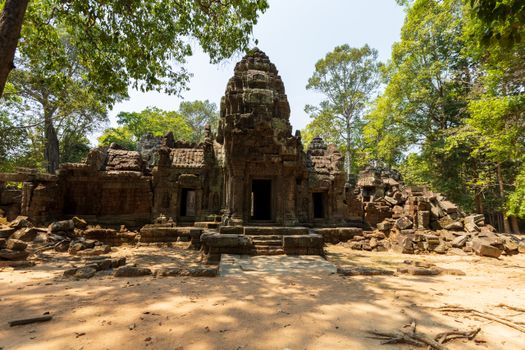
The air was thick with the scent of damp earth and blooming jasmine. Overhead, a canopy of ancient trees filtered the sunlight into dappled patterns on the forest floor, where gnarled roots snaked across moss-covered stones. Sweat trickled down my back, but I barely noticed. My eyes were fixed on the silhouette emerging from the dense foliage ahead – a massive, intricately carved stone gate, its grandeur only amplified by the wild embrace of the jungle.
That moment, standing before the forgotten entrance to Beng Mealea in Cambodia, after an hour-long bumpy tuk-tuk ride and a short trek through what felt like an untouched wilderness, changed me. It wasn't just a temple; it was a living, breathing testament to time, resilience, and the relentless power of nature. Unlike the manicured lawns and throngs of tourists at Angkor Wat, Beng Mealea was an adventure, a whispered secret, a place where you could almost hear the echoes of ancient monks and the rustle of royal silks.
And that, my fellow wanderlusters, is the magic of hidden forest temples. They aren't just destinations; they are journeys into the heart of history, spirituality, and untamed beauty. If you're tired of the same old guidebook recommendations and crave an adventure that will truly blow your mind, read on. I'm about to take you on a journey to some of the planet's most awe-inspiring, jungle-shrouded sanctuaries, complete with my personal stories, practical tips, and everything you need to plan your own epic quest.
The Allure of the Untamed: Why These Temples Call to Us
Why do we crave these forgotten places? Is it the thrill of discovery? The sense of stepping back in time? For me, it's a potent mix of all three, amplified by the sheer power of nature reclaiming what was once man-made.
Imagine the contrast: the bustling, meticulously restored temples of Kyoto or the polished marble of the Taj Mahal versus a temple where ancient banyan roots erupt through stone walls, their tendrils gripping the very foundations, slowly, majestically, pulling them back into the earth. There's a raw, visceral beauty in this struggle, a powerful reminder of nature's ultimate dominion.
These temples offer:
- Authenticity: Fewer crowds mean a more genuine, reflective experience. You're not just observing; you're immersing.
- Adventure: Getting there is often half the fun – treks through jungles, boat rides up rivers, or navigating bumpy backroads.
- Mystery: Each crumbling wall and weathered carving holds untold stories, inviting you to connect with ancient civilizations on a deeper level.
- Photography Gold: The interplay of light, shadow, stone, and foliage creates unparalleled photo opportunities that are genuinely unique.
- Spiritual Connection: Away from the noise, surrounded by the whispers of the forest, it's easier to find a sense of peace and spiritual connection, regardless of your beliefs.
These are the places that etch themselves onto your soul, the stories you'll tell for years to come.
The Quest Begins: How to Find Your Own Sacred Grove
Finding these hidden gems isn't always as simple as typing "temple" into Google Maps. It requires a bit more effort, a dash of daring, and sometimes, a trusting local.
- Go Beyond the Obvious: Start with a region known for ancient civilizations (e.g., Southeast Asia, Central America, parts of India or Nepal). Then, look for "lesser-known ruins," "off-the-beaten-path temples," or "jungle temples" in forums and specialized travel blogs (like, well, Tripsora!).
- Talk to Locals: Once you're in a region, engage with guesthouse owners, local guides, or even taxi drivers. They often know about incredible sites that aren't in any guidebook. My discovery of a small, unnamed cave temple in Laos was purely thanks to a friendly tuk-tuk driver who saw my interest in ancient sites.
- Utilize Satellite Maps (Carefully): Sometimes, you can spot intriguing structures or clearings in remote areas on Google Maps satellite view. This requires cross-referencing with local information, but it can be a fun way to scout potential new discoveries.
- Hire a Local Guide: This is often the best and safest way. Not only will they know the way, but they can also provide invaluable historical context, cultural insights, and ensure you respect local customs and sacred spaces. Plus, it directly supports the local economy.
- Be Flexible and Patient: The journey to a hidden temple can involve unexpected detours, rough roads, or even temporary closures. Embrace the adventure!
My Top Picks: Temples That Blew My Mind
Here are some of the incredible forest temples that have left an indelible mark on my travels, complete with details to inspire your own journey:
1. Beng Mealea, Cambodia: The Ultimate Jungle Embrace
- Where: Approximately 60 km east of Siem Reap, Cambodia.
- Why it's mind-blowing: This 12th-century Hindu temple, dedicated to Vishnu, is still largely unrestored, allowing nature to run wild. Massive trees sprout from its towers, roots entwine around ancient doorways, and collapsed galleries create a natural obstacle course. It feels like you're Indiana Jones on an expedition.
- My Experience: I spent hours here, clambering over rubble, navigating dark corridors with a flashlight, and simply sitting in silent awe as birds chirped and monkeys chattered. The atmosphere is thick with history and a profound sense of peace. I remember squeezing through a narrow passage where a colossal tree root had split the wall, emerging into a sun-drenched courtyard where a single, delicate lotus bloomed in a puddle. Pure magic.
- Practical Tips:
- Getting there: Hire a tuk-tuk or private car from Siem Reap. A round trip typically costs $30-50 USD. Combine it with Koh Ker for a full day.
- Entry Fee: $5 USD (part of the Angkor pass system, but often paid separately).
- What to bring: Sturdy shoes (you'll be climbing over uneven terrain), plenty of water, insect repellent, a flashlight, and a camera with a wide-angle lens.
- Guide: While not strictly necessary for navigation, a local guide can enhance the experience with historical context (expect to pay $10-20 USD).
2. Yaxchilan, Mexico: A Mayan Journey by River
- Where: Deep in the Lacandon Jungle of Chiapas, Mexico, on the banks of the Usumacinta River, bordering Guatemala.
- Why it's mind-blowing: Accessible almost exclusively by boat, Yaxchilan is a Mayan city shrouded in dense jungle. Howler monkeys provide the soundtrack, and the ruins are scattered across terraces and hills, still partially consumed by the forest. Its impressive lintels and stelae depicting rulers and rituals are incredibly well-preserved.
- My Experience: The journey itself was an adventure. We took a collective van from Palenque to Frontera Corozal, then boarded a long, narrow motorized canoe. The river ride, with thick jungle walls rising on either side, felt like venturing into a lost world. Stepping onto the muddy bank, the air was heavy, humid, and alive with the sounds of unseen creatures. Finding the main plaza, with its towering structures and intricate carvings, felt like discovering a secret. I vividly recall a family of howler monkeys roaring from the treetops directly above a temple, their calls echoing through the ancient stones.
- Practical Tips:
- Getting there: Most visitors go on a day trip from Palenque, combining it with Bonampak. Expect to pay around $60-80 USD for transport and boat fees.
- Entry Fee: Around 80 MXN (approx. $4 USD).
- What to bring: Mosquito repellent (this is jungle jungle), light long sleeves/pants to protect from bugs, sturdy walking shoes, plenty of water, and snacks.
- Safety: Stick to marked paths and consider going with an organized tour for ease and safety.
3. Wat Chaloem Phra Kiat Phrachomklao, Thailand: Floating Pagodas in the Clouds
- Where: Lampang Province, Northern Thailand, near the village of Chae Hom.
- Why it's mind-blowing: This isn't just one temple, but a collection of stunning white and gold pagodas perched precariously on top of towering limestone karsts. It feels like a scene from a fantasy movie. The effort required to reach them only amplifies their ethereal beauty.
- My Experience: After a long drive from Chiang Mai, we arrived at the base and took a very steep, open-air pick-up truck ride up the first section. From there, it was a challenging 30-45 minute hike up a winding, rocky path, complete with ropes and ladders. My legs burned, but with every step, a new, breathtaking vista of the surrounding mountains and the gleaming pagodas emerged. Reaching the summit, the cool breeze, the panoramic views, and the absolute silence (save for the distant chanting from a monk) made every drop of sweat worth it. It felt like touching the sky.
- Practical Tips:
- Getting there: Best by private car or rented scooter from Chiang Mai (approx. 2.5-3 hours).
- Entry Fee: Around 200 THB (approx. $6 USD) for foreigners, plus 100 THB for the pick-up truck ride.
- What to bring: Excellent hiking shoes, water, a hat, and be prepared for a strenuous climb. Go early to avoid the midday heat.
- Dress Code: As it's an active temple, dress modestly (shoulders and knees covered).
4. Pura Lempuyang Luhur, Bali, Indonesia: Beyond the Gates
- Where: Eastern Bali, near Mount Lempuyang.
- Why it's mind-blowing: While the "Gates of Heaven" (Pura Penataran Agung Lempuyang) has become an Instagram sensation, the true magic lies in the other six temples that make up the Pura Lempuyang complex, scattered up the side of the sacred Mount Lempuyang. These require a strenuous, spiritual hike through lush forest.
- My Experience: I did the standard "Gates of Heaven" photo op (yes, with the mirror trick!), but my true adventure began when I hired a local guide and set off on the pilgrimage to the higher temples. The path was steep, humid, and sometimes slippery, winding through dense jungle. We passed ancient banyan trees, encountered mischievous monkeys, and stopped at each of the seven temples, each with its own unique energy. The higher we went, the fewer people we saw. At the very top, Pura Lempuyang Luhur, the air was cool and crisp, and the panoramic views of Bali, stretching to the sea, were absolutely breathtaking. It was a journey of physical endurance and spiritual reflection.
- Practical Tips:
- Getting there: Hire a driver for the day from anywhere in Bali (expect $40-60 USD).
- Entry Fee: Donation based for the lower temple, but expect to pay for a sarong rental (if you don't have one) and a guide for the upper temples (negotiate, but around 200,000-300,000 IDR / $13-20 USD).
- What to bring: Sturdy shoes, water, insect repellent, sun protection, and a sarong.
- Dress Code: Sarongs and sashes are mandatory for all temples.
5. Hattiban Temple (Shiva Temple), Nepal: A Serene Escape Near Kathmandu
- Where: Located in Hattiban, a forested area on the outskirts of Kathmandu Valley, near Pharping.
- Why it's mind-blowing: While not as grand as the others, this collection of small Shiva shrines and temples nestled within a thick pine forest offers an incredibly serene and authentic local experience. It's a popular hiking spot for locals but rarely seen by international tourists. The energy here is palpable.
- My Experience: After the chaos of Kathmandu, I craved some peace. A local friend suggested Hattiban. We took a local bus to Pharping and then hiked through fragrant pine forests. The air was crisp, and the only sounds were birdsong and the distant tinkling of prayer bells. We found small shrines tucked into natural caves, ancient lingams adorned with fresh flowers, and simple stone altars. It felt like a truly sacred grove, a place where people came to genuinely connect, away from the tourist gaze. We sat in silence for a long time, just absorbing the tranquility.
- Practical Tips:
- Getting there: Take a local bus or taxi to Pharping, then hike up into Hattiban. It's about an hour's drive from Kathmandu.
- Entry Fee: Free, but donations are welcome.
- What to bring: Comfortable walking shoes, water, and perhaps some offerings (flowers, incense) if you wish to participate respectfully.
Navigating the Wild: Essential Tips for Forest Temple Exploration
Embarking on these adventures requires more than just a passport. Here's what you need to know to ensure a safe, respectful, and unforgettable journey:
- Pack Smart & Light:
- Sturdy Footwear: Absolutely non-negotiable. Hiking boots or sturdy trail shoes with good grip are essential for uneven terrain, mud, and climbing.
- Lightweight, Breathable Clothing: Long sleeves and pants are ideal for sun protection, insect bites, and respecting local customs. Quick-dry fabrics are a lifesaver.
- Insect Repellent: The jungle is home to many creatures, some of whom like to bite. Apply generously.
- Water, Water, Water: Hydration is key, especially in humid climates. Carry more than you think you'll need.
- First-Aid Kit: Blister plasters, antiseptic wipes, pain relievers, and any personal medications.
- Sun Protection: Hat, sunglasses, and high-SPF sunscreen.
- Flashlight/Headlamp: Many temples have dark interiors or require exploration in low light.
- Power Bank: Keep your phone and camera charged.
- Small Backpack: To carry all your essentials comfortably.
- Respect Local Culture & Sacred Spaces:
- Dress Modestly: Always cover shoulders and knees, even if you don't think it's strictly enforced. It shows respect. Carry a sarong for easy coverage.
- Ask for Permission: If you're unsure about entering a specific area or taking photos of people, ask first.
- Silence & Reverence: These are often active places of worship. Keep your voice down, be mindful of rituals, and avoid disruptive behavior.
- Leave No Trace: Pack out everything you pack in. Do not litter. Do not take souvenirs from the ruins.
- Safety First:
- Inform Someone: Let your guesthouse or a trusted friend know your itinerary.
- Stay on Paths: Especially in dense jungle, going off-trail can be dangerous (snakes, hidden drops, getting lost).
- Hire a Reputable Guide: For truly remote or complex sites, a local guide is invaluable for safety and insight.
- Wildlife Awareness: Be aware of local wildlife (monkeys, snakes, insects). Don't feed animals.
- Photography Ethics:
- Be Mindful: Don't disrupt rituals or other visitors for a photo.
- Capture the Essence: Focus on the interplay of nature and architecture, the unique light, and the atmosphere. Instagram-worthy shots come naturally when you're truly present.
Beyond the Instagram Shot: Embracing the Spiritual Journey
While these temples are undeniably photogenic, the true reward lies beyond the perfect Instagram post. It's in the quiet moments of reflection, the feeling of insignificance in the face of ancient grandeur, and the profound connection to something larger than yourself.
I often find myself sitting in these places, not just looking, but feeling. The cool stone beneath my hand, the distant hum of insects, the wind rustling through unseen leaves – it all contributes to a meditative experience. These are places where history isn't just read in books; it's felt in the very air you breathe.
Take the time to simply be. Close your eyes. Listen. Imagine the lives lived here centuries ago. These temples are not just ruins; they are portals to the past, offering lessons in impermanence, resilience, and the enduring human spirit. They remind us that even in ruin, there is incredible beauty and profound wisdom.
Budgeting for the Backwoods: Costs and Savings
Exploring hidden temples often means venturing away from tourist infrastructure, which can sometimes be cheaper, but also requires careful planning.
- Transportation: This will likely be your biggest variable cost.
- Local Buses/Shared Vans: Cheapest option, but slowest and often requires transfers. Expect a few dollars per ride.
- Tuk-tuks/Motorbike Taxis: Great for shorter distances or local day trips. Negotiate fiercely! $10-30 USD for a half-day.
- Private Car with Driver: Most comfortable and flexible, but priciest. $40-80 USD per day, depending on location and distance.
- Rented Scooter/Motorbike: If you're experienced and confident, this offers ultimate freedom, but comes with risks. $5-15 USD per day.
- Accommodation: Often cheaper in smaller towns near these sites compared to major cities. Guesthouses or basic homestays can be found for $10-30 USD/night.
- Guides: Highly recommended for insight and safety. Negotiate rates, but expect $10-30 USD for a half-day or $30-50 USD for a full day.
- Entry Fees: Usually modest, ranging from a few dollars to $10-15 USD.
- Food: Local eateries will be your friend. Delicious and incredibly cheap ($2-5 USD per meal).
- Savings Tip: Travel with a friend or small group to split transportation and guide costs. Pack snacks and water from local markets to save on convenience store markups.
---
The world is full of wonders, many of them still waiting to be truly discovered. The hidden forest temples are more than just ancient stones; they are whispers of civilizations past, sanctuaries of nature's power, and profound invitations to connect with something ancient and awe-inspiring.
So, are you ready to trade the well-trodden path for the rustling leaves? Are you prepared to sweat a little, climb a little, and be utterly, completely blown away? Trust me, the effort is worth it. These places will not only give you incredible stories and stunning photos, but they'll also give you a deeper appreciation for history, nature, and the adventurous spirit within us all.
What's your dream hidden temple adventure? Share your thoughts and tell me which of these temples has sparked your wanderlust in the comments below! And don't forget to share this post with your fellow adventurers!
---