The Hook: The Grit and the Glory
I stepped off the regional train in Poitou-Charentes, and the air immediately hit me: it smelled of damp limestone, wild rosemary, and the faint, metallic tang of an impending spring rain. My hands were clean then, my boots relatively un-scuffed. But three hours later, I was perched on a wooden scaffold, the rhythmic clink-clink-clink of a mallet against a cold chisel echoing through the courtyard of a 12th-century priory.
There is a specific, soul-deep satisfaction in removing a century’s worth of invasive ivy to reveal a hidden gargoyle's face. This isn't "voluntourism" where you paint a fence that doesn't need painting. This is heritage restoration—the gritty, glorious, and trending art of saving our collective architectural DNA. This spring, a new wave of projects is opening their gates to those willing to trade their poolside cocktails for lime mortar and historical integrity.
---
1. The French Connection: REMPART’s Fortress Revival
If you want the gold standard of restoration, you look to France. The REMPART Union manages over 170 sites, but the spring projects in the Occitanie region are currently the ones to watch.
Working here isn't just about the masonry; it’s about the art de vivre. You’ll likely be staying in a communal house, sharing shifts to cook massive pots of cassoulet and drinking local wine that costs less than bottled water.
- The Work: You’ll focus on "taille de pierre" (stone cutting) and traditional lime pointing.
- Pro-Tip: The "hidden" entrance to the communal cellar at the Berzy-le-Sec site is behind the rusted blue door in the eastern curtain wall—it’s where the best aged cider is kept.
- Insider Language: Don't call it cement. It’s chaux (lime). Using the word "cement" around a French conservator is the fastest way to get relegated to dish duty.
2. The Italian Renaissance: Fresco Recovery in Puglia
While everyone else is crowding the Trevi Fountain, the real magic is happening in the "heel" of Italy’s boot. Messors, an organization led by the visionary Tonio Creanza, offers workshops that feel more like a cinematic masterpiece than a volunteer gig.
Spring in Puglia is a riot of wildflowers. You’ll be working in ancient cave churches or masserie (fortified farmhouses), carefully stabilizing 14th-century pigments that have survived centuries of neglect.
- The Work: Cleaning frescoes with distilled water and scalpels, and learning the "strappo" technique.
- Pro-Tip: Visit the local bakery in Altamura at 7 AM. Ask for the "pane di Altamura" still warm from the wood-fired oven; it’s the only bread in Europe with a PDO status.
- The Vibe: High-brow but humble. You’ll be covered in dust by noon and debating Caravaggio over orecchiette by sunset.
3. The Samurai Spirit: Kyoto’s Machiya Machizukuri
In Japan, the trend is shifting toward "Machizukuri" (town-making). Kyoto is losing its traditional wooden townhouses, or Machiya, at an alarming rate. This spring, several NPOs (Non-Profit Organizations) are inviting international volunteers to assist master carpenters.
- The Work: You won’t be allowed near the master’s saws immediately. Expect to spend your first few days learning the art of Shikkui (traditional lime plastering) or restoring the intricate Kigoshi (wooden lattices).
- Pro-Tip: Wear dark, slip-on shoes. You will be taking them off and putting them on fifty times a day, and white socks are a death sentence on dusty worksites.
- Authenticity: Notice the smell of the Hinoki cypress wood. It’s citrusy, sharp, and instantly calming.
4. The Highland Walls: Dry Stone Walling in Scotland
There is something primal about the Scottish Highlands in spring. The mist clings to the glens, and the gorse is just beginning to bloom. The Gatliff Hebridean Hostels Trust and the National Trust for Scotland often run "Thistle Camps" focusing on the ancient art of dry stone walling.
- The Work: This is the most physical of all the projects. No mortar, no glue—just gravity and the perfect placement of stones. It’s a 3D puzzle that will leave your forearms screaming and your mind silent.
- Pro-Tip: Invest in high-quality, waterproof goat-skin gloves. The Scottish schist is sharp, and standard garden gloves will be shredded within two hours.
- The Reward: A pint of Talisker by a peat fire after a day of "lifting and laying."
5. Transylvanian Timelines: The Ambulance for Monuments
In Romania, the Ambulance for Monuments (Ambulanța pentru Monumente) is a viral sensation in the heritage world. Supported by King Charles III, this project rushes to stabilize crumbling churches and manor houses before they collapse entirely.
- The Work: Replacing hand-made clay tiles on steep roofs or repairing timber frames using medieval joinery.
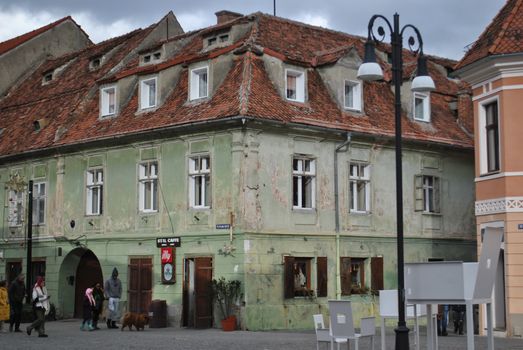
- Pro-Tip: If you’re working in the Sibiu region, look for the "eyes" in the roofs. These are characteristic attic windows that look like drooping eyelids—a specific architectural quirk of the area.
- Logistics: This is for the rugged traveler. You’ll likely be camping or staying with local villagers who will ply you with tuică (plum brandy).
---
The Budget & Logistics: Quick Facts
| Project Location | Estimated Cost (Weekly) | Best Time to Visit | How to Get There |
| :--- | :--- | :--- | :--- |
| France (REMPART) | $300 - $450 (Includes food/lodging) | April - June | TGV to nearest regional hub + local bus. |
| Italy (Messors) | $1,500 - $2,200 (All-inclusive/Expert led) | May | Fly into Bari; pick-up usually arranged. |
| Japan (Kyoto NPO) | $500 - $800 (Excludes housing) | March - May | Haruka Express from KIX Airport to Kyoto Station. |
| Scotland (NTS) | $250 - $400 (Subsidized) | May - June | Train to Inverness, then regional coach. |
| Romania (Ambulance) | $100 - $200 (Donation-based) | April - October | Fly to Cluj-Napoca; car rental recommended. |
---
How to Rank Your Experience (and Your SEO)
To make your trip go viral on Pinterest or Instagram, focus on the "Before & After."
1. The Macro Shot: A close-up of your weathered hands holding a 500-year-old nail.
2. The Process: A time-lapse of a stone wall rising from the dirt.
3. The Community: A long-table dinner with people from six different countries, all unified by a single building.
Final Thoughts from the Field
Heritage restoration isn't about looking back; it’s about ensuring the future has a foundation. When you spend your spring scraping moss off a Gothic archway, you aren't just a tourist. You become a part of that building's timeline. You are the reason it will stand for another hundred years.
So, pack your work boots, leave the "tapestry of culture" clichés at home, and go get some real history under your fingernails.
---