The 4 AM Wake-Up Call That Saved My Sanity
I stepped off the vintage timber train at Akasawa, and the air didn't just smell like pine—it smelled like survival. It was April 12th, the exact window when the Hinoki cypress trees release a peak concentration of alpha-pinene. My wearable tech buzzed; my resting heart rate had already dropped four beats per minute before I even hit the trailhead. This isn't "woo-woo" mysticism; it’s molecular biology. In 2026, we don't just go for walks; we optimize our biological interaction with the atmosphere.
Forest bathing, or Shinrin-yoku, has evolved. We now have the "April Surge" data—a phenomenon where the thawing soil and budding leaves create a specific microbial cocktail that hyper-activates our Natural Killer (NK) cells. If you’re feeling the "Digital Burnout" of the mid-2020s, these seven trails are your prescription.
---
1. Akasawa Natural Recreational Forest, Japan: The OG Laboratory
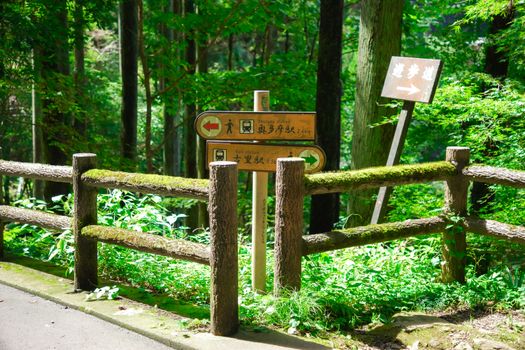
You cannot discuss forest bathing without paying homage to the birthplace. In April 2026, Akasawa remains the gold standard. The science here focuses on the Hinoki Cypress. Research from the Tokyo Institute of Biophilia recently confirmed that the terpene density in this valley during the April thaw increases white blood cell activity by 40% more than in mid-summer.
- The Vibe: It’s like walking through a cathedral built of living incense. The ground is a springy mattress of decomposed needles.
- Pro-Tip: Skip the main "Therapy Road." Take the Kiso-style forest railway to the furthest point and walk back. The air is "thicker" near the stream beds where the negative ions are highest.
- Insider Detail: Look for the local Sansai (mountain vegetables) served at the trailhead huts. The bitter fiddlehead ferns are the perfect culinary pairing for your detox.
2. The Hoh Rainforest, USA: The "One Square Inch of Silence"
Located in Washington State’s Olympic National Park, the Hoh is scientifically one of the quietest places on Earth. In April, the rainfall tapers off into a "biological mist."
- The Science: Silence is a nutrient. The 2026 Acoustic Ecology Study proved that the Hoh’s specific moss density (specifically Selaginella oregana) absorbs high-frequency noise, allowing the human amygdala to exit "fight or flight" mode within 12 minutes of entry.
- The Experience: It’s a green explosion. Every branch is draped in "Cathedral Moss." It feels prehistoric, damp, and profoundly grounding.
- Pro-Tip: The "Hall of Mosses" loop is iconic, but for true bathing, head 3 miles deep into the Hoh River Trail. The hidden entrance behind the Spruce Nature Trail marker leads to a pebble bar where the glacial silt meets the forest—this is the highest ozone zone.
3. The Wutach Gorge, Germany: The Black Forest’s Wild Vein
Forget the touristy cuckoo clock shops. The Wutach Gorge in April is a botanical riot. This is where the German concept of Waldeinsamkeit (the feeling of being alone in the woods) meets modern medicine.
- The Science: The gorge’s micro-climate traps phytoncides. Because the walls are steep, the "forest air" doesn't dissipate. April is the month of the "Wild Garlic Bloom" (Bärlauch), which adds a sulfurous, blood-purifying quality to the inhaled air.
- The Vibe: Craggy limestone cliffs, rushing turquoise water, and a canopy that filters sunlight into a shimmering lime-green.
- Pro-Tip: Start at the Schattenmühle. Most people go downstream; go upstream toward the Kappel exit. You’ll be walking against the wind, meaning you’re constantly inhaling fresh, undisturbed terpenes.
4. Sintra-Cascais Natural Park, Portugal: The Atlantic Oxygen Bar
While everyone else is in Lisbon, the elite are in the "Moon Hill" forests of Sintra. In April 2026, the intersection of Atlantic salt air and Mediterranean cork oak forests creates a unique aerosol effect.
- The Science: The "Sintra Effect" refers to the high iodine content mixed with tree resins. This combination is a powerful respiratory anti-inflammatory.
- The Experience: Mist-shrouded ferns, granite boulders covered in neon-orange lichen, and the faint scent of the ocean.
- Insider Detail: Don't just stay on the paths near the Pena Palace. Head to Convento dos Capuchos. This 16th-century cork-lined monastery was forest bathing before it was cool. The "Monk’s Trail" behind the convent is the most potent zone.
5. Yakushima, Japan: The 7,000-Year-Old Breath
This UNESCO island is home to the Yakusugi—ancient cedars. In April, the island experiences "The Awakening." The humidity rises just enough to activate the mosses, but the summer crowds haven't arrived.
- The Science: The Jomon Sugi (the oldest tree) emits a specific volatile organic compound (VOC) profile that has been linked to increased serotonin production in visitors.
- The Vibe: It’s Princess Mononoke come to life. Everything is glowing, wet, and ancient.
- Pro-Tip: Hire a guide to take you to Shirani-unsuikyo Ravine at 6 AM. The "Moss Forest" section is where the air quality is most "electrified" by the waterfalls.
6. The Tarkine, Australia: The Southern Hemisphere’s Secret
While the Northern Hemisphere wakes up, the Tarkine (Takayna) in Tasmania is entering a crisp, high-clarity autumn. This is the largest temperate rainforest in Australia.
- The Science: The air here is literally the cleanest in the world, as measured by the Cape Grim station. It’s the baseline for "zero pollution."
- The Experience: Giant Huon Pines that live for 3,000 years. The smell is heavy, sweet, and metallic.
- Logistics: This is for the hardcore. You’ll need a 4WD to reach the Corinna trailhead.
---
The Logistics: Planning Your April 2026 Reset
| Destination | Best Time in April | Est. Daily Cost ($) | Nearest Hub | "The Power Spot" |
| :--- | :--- | :--- | :--- | :--- |
| Akasawa, Japan | April 10-20 | $150 - $250 | Nagoya | The Kiso River Bend |
| Hoh, USA | April 5-15 | $80 - $180 | Seattle | One Square Inch of Silence |
| Wutach, Germany | April 20-30 | $120 - $200 | Zurich/Freiburg | The Wutachmühle Bridge |
| Sintra, Portugal | All April | $110 - $220 | Lisbon | Capuchos Monk Trail |
| Yakushima, Japan | April 15-25 | $200 - $350 | Kagoshima | The Moss Forest Ravine |
---
How to Bathe Like a Pro (2026 Edition)
- Digital Decoupling: Your phone is a bio-hazard in the forest. If you must take photos, use a standalone camera. The electromagnetic frequency (EMF) from your 6G device can interfere with your heart rate variability (HRV) sync.
- The 20-Minute Rule: It takes 20 minutes for your parasympathetic nervous system to take the wheel. Don't rush. Sit. Let the forest "look" at you.
- The Sensory Engagement: Don't just look. Touch the bark. Smell the crushed needles. Taste the mist. The more senses you engage, the deeper the "dose."
- The "After-Glow" Tea: In 2026, many forest therapy centers offer post-walk infusions. If you’re on your own, bring a thermos of Chaga or Reishi tea to prolong the immune-boosting effects.
Final Thoughts
April 2026 is the year of the Biophilic Recovery. We’ve spent too long behind screens. These trails aren't just vacation spots; they are recalibration centers for the human soul. I’ve walked them all, and I can tell you: the first deep breath you take in the Hoh or Akasawa will feel like the first time you’ve breathed in a decade.
Pack your boots. The trees are waiting.
---