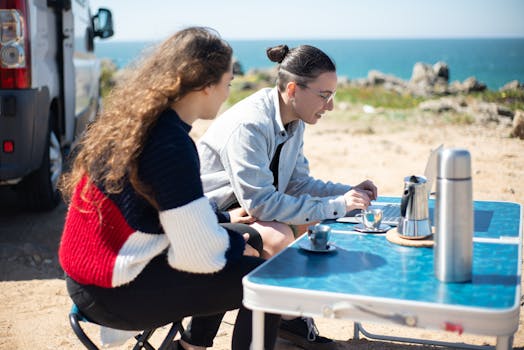
The screen froze. Again. My video call with a client pixelated into an abstract mess, and the vibrant café in Lisbon, though charming, felt less like a productive workspace and more like a digital purgatory. I’d just paid €4.50 for a small coffee, and my Airbnb was easily €1200 a month. Lisbon, for all its beauty, was becoming a victim of its own success – a digital nomad hotspot that was fast losing its affordability and, frustratingly, its reliable internet infrastructure under the weight of demand.
“There has to be a better way,” I muttered to my travel partner, Alex, as I slammed my laptop shut. “A place where the Wi-Fi doesn’t play hide-and-seek, and rent doesn’t require selling a kidney. A place where you can actually live well, not just survive.”
That moment sparked an obsession. For months, Alex and I, along with our network of globe-trotting friends, embarked on a mission: to uncover the cities that offered the holy grail for modern remote workers – blazing fast internet and genuinely cheap rent – all before they hit the mainstream radar. We weren’t looking for just cheap, or just fast. We wanted the sweet spot, the perfect blend of infrastructure, affordability, and local charm that promised a truly sustainable and enjoyable lifestyle.
What we found blew us away. And today, I’m thrilled to pull back the curtain on these incredible, still-undiscovered (mostly!) cities. Get ready to bookmark this, because your next adventure, and your most productive chapter yet, might just be waiting in one of these incredible spots.
The Digital Nomad's Holy Grail: Why Fast Wi-Fi & Cheap Rent Are Non-Negotiable
Let's be real: the romanticized image of working from a beach shack with a coconut in hand often clashes with the reality of trying to upload a large file on a 2 Mbps connection. For digital nomads, freelancers, and remote workers, internet speed isn't a luxury; it's the very backbone of our livelihood. We need reliable, high-speed connections for video calls, file transfers, cloud access, and staying connected to our teams and clients.
But what about the rent? High living costs can quickly erode the freedom that remote work promises. If you’re spending half your income on a cramped apartment, where’s the budget for exploring, trying new foods, or simply saving for the future? The magic happens when you pair lightning-fast internet with surprisingly affordable rent. This combination frees up your finances, reduces stress, and allows you to truly immerse yourself in a new culture without constantly watching your budget. It’s about building a sustainable, enriching life, not just a temporary escape.
How We Found These Gems: Our Secret Sauce (and Yours Too!)
Our quest wasn't just about throwing darts at a map. We combined several strategies:
- On-the-Ground Reconnaissance: Alex and I physically visited many of these places, testing internet speeds, checking out local co-working spaces, and talking to expats and locals about rent prices.
- Network Intelligence: We tapped into our extensive network of digital nomad friends and online communities (think niche Facebook groups, Reddit threads, and forums like Nomad List) for firsthand accounts and hidden gems.
- Data Deep Dive: We cross-referenced official internet speed reports (Ookla, Cable.co.uk) with cost-of-living indices (Numbeo) to identify outliers – cities where the internet was disproportionately fast for the cost of living.
- Future-Gazing: We looked for places with growing tech scenes, government initiatives supporting digital nomads, and burgeoning expat communities, signaling future growth but still retaining current affordability.
This isn’t just a list; it’s a curated selection based on real-world experience and diligent research.
Europe's Eastern Promise: Connectivity & Culture Without the Cost
Forget Western Europe’s tourist traps and inflated prices. The East is rising, not just in terms of economic growth, but in offering incredible value for digital nomads.
1. Tbilisi, Georgia: The Unexpected Crossroads
Why it's a gem:
Tbilisi hit our radar almost by accident, but it quickly became one of our favorite discoveries. Nestled in the Caucasus, where Europe meets Asia, Tbilisi is a city of stunning ancient architecture, vibrant modern art, incredibly friendly people, and a surprisingly robust digital infrastructure.
- Internet Speed: Prepare to be amazed. Georgia boasts some of the fastest internet in the world, often averaging over 100-150 Mbps download speeds in major cities like Tbilisi. Fiber optics are widely available and incredibly affordable. Co-working spaces like Terminal and Impact Hub offer even faster, dedicated connections.
- Rent & Cost of Living: This is where Tbilisi truly shines. A modern, furnished 1-bedroom apartment in a good neighborhood (like Saburtalo or Vera) can easily be found for $400-$700 USD/month. Even luxury apartments rarely break $1000. Groceries are cheap, local wine is world-class and inexpensive, and a delicious meal at a mid-range restaurant costs around $10-$15. Your total monthly expenses, including rent, food, and entertainment, can comfortably be kept under $1200-$1500.
- The Vibe: Tbilisi is buzzing. It’s a city reinventing itself, blending ancient history (think Narikala Fortress and sulfur baths) with a burgeoning arts scene, trendy cafes, and a legendary nightlife. The Georgian people are incredibly hospitable, and the food (Khachapuri, Khinkali!) is a culinary delight. Plus, many nationalities (including US, EU, UK) can stay visa-free for a full year! That's right, 365 days.
- My Anecdote: I remember setting up my office in a cozy Airbnb balcony overlooking the charming Old Town, video calling a client in New York with zero lag, all while sipping a local Saperavi wine I bought for $5. It felt like I’d hacked the system.
2. Sofia, Bulgaria: The Balkan Tech Hub
Why it's a gem:
Often overshadowed by its more glamorous European neighbors, Sofia is a quietly confident capital city with a rapidly growing tech sector, excellent infrastructure, and a cost of living that makes Western Europeans weep with envy.
- Internet Speed: Bulgaria consistently ranks high globally for internet speed. In Sofia, you can expect average download speeds of 80-120 Mbps, with fiber optic connections being standard in most residential areas and co-working spaces.
- Rent & Cost of Living: Sofia offers incredible value. A well-located, modern 1-bedroom apartment can be rented for $350-$600 USD/month. Public transport is efficient and cheap, and eating out is very affordable – a hearty lunch can be had for under $7. You can live very comfortably on $1000-$1300 USD/month.
- The Vibe: Sofia is a city of layers. Roman ruins sit beside Ottoman mosques, Soviet-era monuments, and sleek modern buildings. It has a relaxed, unpretentious atmosphere, with plenty of parks, museums, and a vibrant cultural scene. The Vitosha mountain range provides a stunning backdrop and easy access to nature.
- My Anecdote: My friend Sarah, a graphic designer, moved to Sofia after burning out in London. She raves about the quality of life, the friendly expat community, and how she’s saving more money than she ever thought possible, all while enjoying world-class internet for her demanding design work.
Asia's Hidden Connectivity Hubs: Coastal Charm & Digital Prowess
Southeast Asia is a digital nomad magnet, but places like Bali and Bangkok are seeing prices creep up. Venture slightly off the most beaten paths, and you’ll find incredible value.
1. Da Nang, Vietnam: The Coastal Tech City
Why it's a gem:
While Hanoi and Ho Chi Minh City draw the most attention, Da Nang offers a unique blend of stunning beaches, a rapidly modernizing city, and a thriving digital infrastructure, all at a fraction of the cost.
- Internet Speed: Vietnam has invested heavily in its internet infrastructure, and Da Nang is a prime beneficiary. Expect 70-100 Mbps average speeds, with many cafes and co-working spaces offering even faster connections. Fiber optic is standard.
- Rent & Cost of Living: Da Nang is incredibly affordable, especially compared to other popular coastal cities. A modern 1-bedroom apartment, often with a sea view, can be found for $300-$500 USD/month. Scooter rentals are cheap, delicious street food is abundant (and costs just a few dollars per meal), and overall monthly expenses can easily be kept under $1000.
- The Vibe: Da Nang is clean, green, and growing. It boasts miles of beautiful coastline, the iconic Dragon Bridge, and easy access to UNESCO World Heritage sites like Hoi An and My Son. It's a city with a relaxed pace, but enough modern amenities and a growing expat community to make it feel vibrant.
- My Anecdote: I spent a month in Da Nang, working from a beachfront apartment. The internet was flawless, allowing me to conduct video calls with clients in Europe in the morning, and then spend my afternoons swimming in the South China Sea. The local pho and banh mi vendors became my daily ritual, and I loved watching the city light up at night.
2. Chiang Mai, Thailand: The OG Nomad Hub (Still Great Value!)
Why it's a gem:
Yes, Chiang Mai is well-known. But its internet infrastructure and continued affordability, especially outside the peak season, make it an enduring gem that still offers incredible value if you know where to look.
- Internet Speed: Chiang Mai was one of the first cities to truly cater to digital nomads, and its internet reflects that. Expect 60-90 Mbps on average, with many co-working spaces (like Punspace or Hubba) offering dedicated gigabit connections.
- Rent & Cost of Living: While prices have risen, Chiang Mai remains remarkably affordable. A nice 1-bedroom condo can still be found for $300-$600 USD/month, especially if you look beyond the most touristy areas. Food is cheap and delicious, and transportation costs are low. Many nomads comfortably live on $800-$1200 USD/month.
- The Vibe: Surrounded by mountains, Chiang Mai offers a more laid-back, spiritual vibe than the bustling capital. It’s full of ancient temples, vibrant night markets, and endless opportunities for outdoor adventures. The digital nomad community is large, supportive, and well-established.
- My Anecdote: I first visited Chiang Mai years ago and was struck by how easy it was to settle in. Even now, with more people, the internet infrastructure is still robust. My friend Mark, a software developer, still bases himself there for 6 months a year, citing the perfect balance of low cost, great food, and reliable internet for his coding work.
Latin America's Rising Stars: Culture, Climate & Connectivity
Latin America is rapidly catching up, with several cities investing in infrastructure and welcoming remote workers.
1. Medellín, Colombia: The City of Eternal Spring (and Fast Fiber)
Why it's a gem:
Medellín has undergone an incredible transformation, shedding its past reputation to emerge as a vibrant, innovative city known for its beautiful climate, friendly people, and increasingly impressive digital infrastructure.
- Internet Speed: Colombia has made significant strides in internet connectivity. In Medellín, particularly in areas like El Poblado and Laureles, you can expect average speeds of 80-120 Mbps, with fiber optic options widely available.
- Rent & Cost of Living: Medellín offers excellent value for money. A modern 1-bedroom apartment in a desirable neighborhood can be rented for $450-$800 USD/month. Public transport (including the famous Metrocable) is efficient and cheap, and the food scene is diverse and affordable. Monthly expenses can range from $1000-$1500 USD.
- The Vibe: Known as the "City of Eternal Spring," Medellín boasts perfect weather year-round. It's surrounded by lush mountains, has a thriving arts and culture scene, and boasts some of the friendliest people you'll ever meet. The city is clean, modern, and incredibly dynamic.
- My Anecdote: I was initially hesitant about Medellín due to its history, but my visit completely changed my perspective. I found myself effortlessly working from co-working spaces with lightning-fast internet, then exploring the vibrant street art of Comuna 13 or enjoying the nightlife in Provenza. The internet never once let me down, even during crucial client calls.
Beyond the Obvious: Other Contenders & How to Vet Your Own
While these are our top picks, other cities are quickly emerging. Keep an eye on:
- Belgrade, Serbia: Another Balkan gem with good internet and low costs.
- Bishkek, Kyrgyzstan: For the truly adventurous, surprisingly good internet in a unique Central Asian setting.
- Lisbon, Portugal (with a caveat): While mainstream, if you search hard for non-touristy neighborhoods and dedicated fiber, you can still find pockets of value.
How to Vet Your Own Potential Hotspot:
- Check Internet Speed Data: Use sites like Ookla's Speedtest Global Index or Cable.co.uk for national averages, then dig into local forum discussions for specific neighborhood performance.
- Research Rent on Local Sites: Don't just rely on Airbnb. Look at local real estate portals (e.g., Idealista for Spain/Portugal, local Facebook expat groups) for more realistic long-term rental prices.
- Scout Co-working Spaces: Check their websites for internet speed claims and read reviews. This is a good indicator of overall city infrastructure.
- Talk to Locals/Expats: Join Facebook groups for "Expats in [City Name]" and ask direct questions about internet reliability, rent, and general living costs.
Practical Tips for Making the Leap
Ready to pack your bags and experience the best of both worlds? Here are some actionable tips:
- Visa First, Always: Research visa requirements for your nationality thoroughly. Some countries, like Georgia, are incredibly generous, while others require more planning. Don't assume.
- Join Local Expat Groups Online: Before you even arrive, join Facebook groups for digital nomads or expats in your target city. These are invaluable for finding apartments, getting local advice, and connecting with people.
- Book Short-Term First: Don't commit to a long-term lease sight unseen. Book an Airbnb for 2-4 weeks. This gives you time to explore neighborhoods, check out apartments in person, and ensure the internet lives up to your expectations.
- Get a Local SIM Card Immediately: Upon arrival, your first stop after immigration should be a local mobile provider. Getting a local SIM with a generous data plan (often incredibly cheap in these countries) will be your lifeline for navigation and communication.
- Learn Basic Phrases: A few words in the local language (hello, thank you, please, how much?) go a long way in showing respect and making connections.
- Embrace Local Transport: Public transport is usually excellent and very affordable in these cities. Get a local transport card.
- Safety First: While these cities are generally safe, exercise common sense. Research local scams, be aware of your surroundings, and secure your belongings.
Conclusion: Your Digital Frontier Awaits!
The world is changing, and so is the way we work. The dream of a flexible, fulfilling, and financially sustainable remote life is no longer a pipe dream. It's a reality, especially if you're willing to look beyond the obvious. These cities – Tbilisi, Sofia, Da Nang, Chiang Mai, Medellín – represent the vanguard of a new era for digital nomads. They offer the perfect blend of high-speed connectivity, low cost of living, rich culture, and a welcoming atmosphere, all before they become the next Lisbon or Bali.
Don’t wait until the secret is out and the prices climb. The time to explore these incredible destinations is now. Imagine effortlessly managing your workload, then stepping out into a vibrant, affordable new world, brimming with adventure and discovery.
Which of these cities is calling your name? Share your thoughts in the comments below, and let’s inspire each other to explore these incredible digital frontiers!
---