The Hook: A Symphony of Steel and Serenity
I stepped off the train in Tokyo, the crisp morning air carrying the faint scent of yakitori and something floral – maybe cherry blossoms, even though it wasn’t quite spring. The sheer efficiency of it all hit me first. Not the frantic, chaotic rush of a lesser city, but a ballet of commuters, each moving with purpose, guided by clear signage and the reassuring hum of approaching trains. No honking horns, no endless search for parking. Just a smooth, almost meditative transition from the quiet of my apartment to the vibrant pulse of Shibuya. It was then I knew: the city’s soul isn't just in its landmarks, but in how its people move through it.
The Art of the Urban Journey: Why Public Transport Reigns Supreme
In a world increasingly focused on sustainability and smart living, cities that prioritize excellent public transport are no longer just convenient; they're visionary. These aren't just places to visit; they're destinations that offer a more authentic, less stressful, and often more budget-friendly way to experience the heart of a culture. Forget the anxiety of navigating unfamiliar roads or the exorbitant cost of taxis. When a city’s public transport system is top-notch, it unlocks a level of freedom and immersion that’s truly unparalleled. You become part of the city's rhythm, not an outsider looking in.
Beyond the Bus Stop: What Makes a Public Transport System "Great"?
It’s more than just having a metro line. A truly exceptional public transport system is a complex, interconnected organism that boasts:
- Reliability and Punctuality: Trains and buses that arrive on time, every time. This is the bedrock of a stress-free experience.
- Extensive Coverage: Reaching not just the major tourist hubs, but also the charming residential neighborhoods and off-the-beaten-path attractions.
- Ease of Use: Intuitive ticketing, clear signage in multiple languages, and accessible platforms for all travelers.
- Integration: Seamless transfers between different modes of transport (metro, tram, bus, ferry, even bikes).
- Affordability: Reasonable fares that make it a viable and attractive option for daily travel.
- Cleanliness and Safety: A comfortable and secure environment for all passengers.
Our Top Picks: Cities Where Transit is a True Travel Advantage
After countless miles logged and countless transit cards punched, here are the cities that consistently impress, offering an experience where getting around is as much a part of the adventure as the destination itself.
1. Tokyo, Japan: The Epitome of Precision and Politeness
Stepping into Tokyo's transit network feels like entering a meticulously engineered ecosystem. The sheer scale is mind-boggling, yet the user experience is remarkably smooth. The JR East network, particularly, is a marvel, connecting the sprawling metropolis with incredible efficiency.
Insider Insight:
Don't be intimidated by the crowds during rush hour. Observe the locals and you'll see a surprisingly orderly flow. Pro-Tip: Purchase a Suica or Pasmo card upon arrival. These rechargeable smart cards work across almost all public transport (and even many convenience stores and vending machines), making travel incredibly seamless. For navigating the complex web of lines, the Japan Travel by NAVITIME app is your best friend.
Quick Facts: Tokyo
- Estimated Daily Transport Cost: $5 - $15 (using IC card for multiple journeys)
- Best Time to Visit: Spring (cherry blossoms) or Autumn (fall foliage) for pleasant weather.
- How to Get There: Major international airports (Narita - NRT, Haneda - HND) with excellent train connections to the city center.
2. Zurich, Switzerland: The Swiss Watch of Urban Mobility
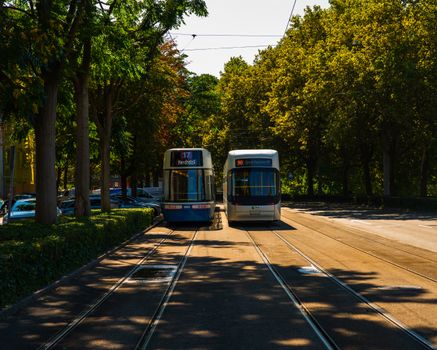
Zurich isn't just beautiful; it's a masterclass in integrated public transport. The Zürcher Verkehrsverbund (ZVV) seamlessly connects trams, buses, trains, and even ferries across the canton. The punctuality is, as you'd expect from Switzerland, second to none.
Insider Insight:
The trams are the lifeblood of the city center. They’re frequent, clean, and offer fantastic views of the charming streets and the Limmat River. Pro-Tip: If you plan on visiting multiple attractions and using public transport extensively, consider a Zurich Card. It offers free public transport and free or discounted entry to many museums and sights. Look for the trams with the '11' or '7' route numbers for iconic city views.
Quick Facts: Zurich
- Estimated Daily Transport Cost: $10 - $20 (depending on card/zone usage)
- Best Time to Visit: Summer for outdoor activities, or December for festive Christmas markets.
- How to Get There: Zurich Airport (ZRH) is well-connected to the city center via frequent train services.
3. Seoul, South Korea: Futuristic Tech Meets Ancient Charm
Seoul's subway system is a technological marvel, boasting extensive lines, digital displays, and Wi-Fi on most trains. It’s incredibly efficient, affordable, and a fantastic way to explore a city that effortlessly blends ancient palaces with hyper-modern districts.
Insider Insight:
The subway stations themselves are often destinations, with art installations, underground shopping, and even small performance spaces. Pro-Tip: Get a T-Money card. Similar to Tokyo's IC cards, it’s rechargeable and makes hopping on and off buses and subways a breeze. Don't miss the Gyeongbokgung Palace – the subway station is conveniently located right outside.
Quick Facts: Seoul
- Estimated Daily Transport Cost: $4 - $10
- Best Time to Visit: Spring (cherry blossoms) or Autumn (vibrant foliage) are ideal.
- How to Get There: Incheon International Airport (ICN) is a major hub with direct AREX express trains to Seoul Station.
4. Singapore: The Garden City's Green Commute
Singapore is a testament to urban planning, and its public transport is a shining example. The Mass Rapid Transit (MRT) system is clean, efficient, and remarkably easy to navigate, making it a pleasure to explore the diverse neighborhoods, from the hawker centers of Chinatown to the futuristic Gardens by the Bay.
Insider Insight:
The MRT is incredibly well-integrated with bus routes, allowing you to reach almost any corner of the island. Pro-Tip: The EZ-Link card is your best friend here. It's a contactless smart card that can be topped up and used on both MRT and buses. For a truly unique experience, take the MRT to Changi Airport – it’s one of the most convenient and cost-effective ways to get to one of the world’s best airports.
Quick Facts: Singapore
- Estimated Daily Transport Cost: $6 - $12
- Best Time to Visit: Year-round, but February to April offers slightly less humidity.
- How to Get There: Changi Airport (SIN) is a major international hub with direct MRT connections to the city.
5. Berlin, Germany: A Historical Tapestry Woven by Transit
Berlin’s public transport, managed by the BVG, is a sprawling network of U-Bahn (subway), S-Bahn (urban rail), trams, and buses. It’s not only incredibly extensive, covering even the outer districts, but also a living piece of history, with some U-Bahn stations showcasing remnants of the city's divided past.
Insider Insight:
The U-Bahn lines are color-coded and easily distinguishable. The U2 line, for instance, passes through many iconic historical sites. Pro-Tip: Consider a day ticket or a multi-day pass if you plan on extensive travel. They offer great value. For a truly local experience, hop on a tram in the former East Berlin districts; it’s a charming way to see a different side of the city. The East Side Gallery is easily accessible via public transport.
Quick Facts: Berlin
- Estimated Daily Transport Cost: $7 - $15 (depending on ticket type)
- Best Time to Visit: Spring and Autumn offer pleasant temperatures for exploring.
- How to Get There: Berlin Brandenburg Airport (BER) is connected to the city center by train and S-Bahn.
6. Hong Kong: Island Hopping and Sky-High Views via Tram and MTR
Hong Kong is a city that truly embraces its public transport. The MTR is incredibly efficient, clean, and fast, connecting the bustling island of Hong Kong to Kowloon and the New Territories. But don't forget the iconic double-decker trams on Hong Kong Island or the Star Ferry, offering breathtaking harbor views at a fraction of the cost of a dedicated cruise.
Insider Insight:
The Octopus Card is essential for navigating Hong Kong. It’s a rechargeable stored-value card that works on the MTR, buses, trams, ferries, and even in many convenience stores. Pro-Tip: For unparalleled views of Victoria Harbour, take the Star Ferry from Tsim Sha Tsui to Central. It’s a classic Hong Kong experience and incredibly affordable. The Peak Tram is another must-do for panoramic cityscapes.
Quick Facts: Hong Kong
- Estimated Daily Transport Cost: $8 - $18 (using Octopus Card)
- Best Time to Visit: Autumn (October to December) for pleasant weather and clear skies.
- How to Get There: Hong Kong International Airport (HKG) is connected to the city by the Airport Express train.
Navigating the System: Your Pro-Tips for Seamless Travel
Beyond the specific cities, here are some universal truths for maximizing your public transport experience:
- Download Offline Maps: Apps like Google Maps and Citymapper are invaluable, but having an offline version can save you in areas with spotty service.
- Embrace the Local Card: Most cities with excellent transit have a reloadable smart card. Invest in it; it simplifies everything.
- Learn Basic Phrases: A simple "thank you" or "excuse me" in the local language goes a long way.
- Observe and Adapt: Watch how locals use the system. They'll often reveal the most efficient ways to navigate.
- Be Mindful of Peak Hours: If you have flexibility, travel outside of morning and evening rush hours for a more comfortable journey.
- Look for the 'Hidden' Entrances: Sometimes, the most convenient entrance to a metro station isn't the most obvious one. Keep an eye out for less conspicuous signs.
- Consider a Multi-Day Pass: If you plan on using public transport frequently, these often offer significant savings.
The Budget Traveler's Best Friend
One of the most significant advantages of prioritizing cities with excellent public transport is the cost savings. When you're not shelling out for taxis, ride-shares, or rental cars, your travel budget stretches considerably further. This allows you to spend more on experiences, local cuisine, and perhaps even an extra night in that charming boutique hotel. Think of that daily metro fare as an investment in authentic exploration.
The Future is Public: Sustainable Travel Starts Here
Choosing to rely on public transport is a conscious decision to travel more sustainably. It reduces your carbon footprint, alleviates traffic congestion, and contributes to the overall livability of a city. As travelers, we have the power to support and encourage these eco-friendly initiatives by making them our preferred mode of transport.
Your Next Adventure Awaits, Seamlessly
These cities offer more than just efficient transit; they offer a gateway to authentic experiences, a chance to connect with the local pulse, and a stress-free way to explore. So, pack your bags, grab your travel card, and get ready to discover the world, one perfectly timed train or tram ride at a time. Your next unforgettable journey is just a ticket away.