The Echo of the Deep: Why We Go Underground
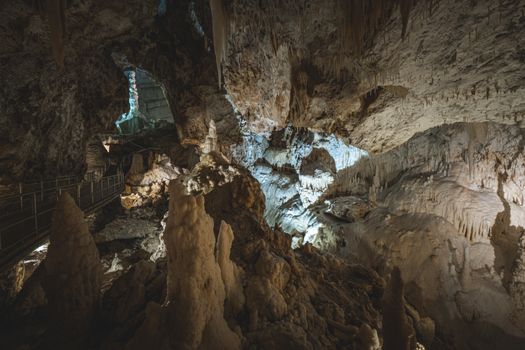
I stepped off the narrow-gauge electric train and was immediately hit by a wall of damp, 50-degree air that smelled faintly of ancient stone and wet iron. The silence in the Great Mountain hall of Slovenia’s Postojna Cave isn't actually silent; it’s a rhythmic, percussive symphony of single droplets hitting limestone basins—a sound that has continued uninterrupted since the Pleistocene.
As a travel journalist, I’ve spent years chasing horizons, but some of the most profound "Aha!" moments I’ve ever had didn't happen under the sun. They happened hundreds of feet beneath it.
Travel advisors are seeing a massive surge in "Micro-Adventures"—high-impact experiences that fit into a tight itinerary. You don't need to be a professional spelunker with a carbon-fiber helmet to witness the earth’s inner architecture. Here are the definitive cave systems you can explore in an afternoon travel advisors suggest for your next bucket-list getaway.
---
1. Postojna Cave, Slovenia: The Subterranean Queen
If there is a "Grand Central Station" of the underworld, this is it. Postojna is the only cave system in the world with a double-track railway.
The Experience:
You board a small open-air train that whisks you 3.7 miles into a karst wonderland. The wind whips past your face as you pass through "chandeliers" of white stalactites. Once deep inside, you’ll walk through the "Brilliant"—a 5-meter-tall white crystalline stalagmite that looks like it was carved by Bernini himself.
Insider Language:
Keep an eye out for the Proteus anguinus, or the "Human Fish." These translucent, blind salamanders can live for 100 years and were once thought to be baby dragons by locals.
- Pro-Tip: Even in mid-July, the cave stays a constant 10°C (50°F). Don't be the tourist in a tank top; rent a traditional wool felt cloak at the entrance for that authentic "explorer" vibe.
---
2. Waitomo Glowworm Caves, New Zealand: The Galaxy Beneath
Imagine drifting in total darkness on an underground river, looking up to see a swirling Milky Way of sapphire light. No, it’s not a sci-fi film; it’s the Waitomo Glowworm Caves on the North Island.
The Experience:
The tour is a two-part harmony. First, you walk through the Cathedral—a massive cavern with world-renowned acoustics (even opera singers perform here). Then, you board a flat-bottomed boat. The guides use a series of overhead ropes to pull the boat silently through the Glowworm Grotto.
The Science of the Glow:
These aren't actually worms; they are the larvae of the fungus gnat (Arachnocampa luminosa). They hang shimmering silk threads to catch prey, creating a bioluminescent canopy that defies description.
- Pro-Tip: This is a "no-photo" zone to protect the larvae. Put the phone away and let your retinas do the work. Book the 9:00 AM slot to avoid the tour bus rush from Auckland.
---
3. Cenote Dos Ojos, Mexico: The Mayan Portal
Located just north of Tulum, Dos Ojos (Two Eyes) is a flooded cave system that offers a surreal mix of jungle greenery and crystal-blue subterranean waters.
The Experience:
This is the premier "afternoon" cave because it doubles as a swimming hole. You can snorkel through the "Bat Cave" line, where light filters through ceiling vents, illuminating the turquoise water in a way that looks like CGI. The visibility is staggering—often exceeding 100 feet.
Authenticity Note:
This isn't just a swim; it’s a spiritual site. The ancient Maya believed cenotes were gateways to Xibalba (the underworld). Respect the water; use only biodegradable sunscreen or, better yet, just wear a rash guard.
- Pro-Tip: The "hidden entrance" to the most photogenic spot is a small wooden staircase labeled 'Cenote 2'. Most people congregate at 'Cenote 1'—skip the crowd and head straight for the second 'eye'.
---
4. Luray Caverns, Virginia, USA: The World’s Largest Instrument
Tucked into the Shenandoah Valley, Luray Caverns is a masterpiece of American geology. It’s famous for its "Mirror Pools," where perfectly still water creates the illusion of towering underwater cities.
The Meat:
The highlight here is the Great Stalacpipe Organ. It’s a lithophone—a musical instrument that uses rubber-tipped mallets to strike ancient stalactites across 3.5 acres. The sound is haunting, mellow, and perfectly in tune.
Travel Advisor Insight:
Advisors love Luray because it’s one of the few "all-access" caves. The paths are paved and step-free, making it the best afternoon cave for multi-generational families or those with mobility concerns.
- Pro-Tip: After the cave, your ticket includes entry to the Car and Carriage Caravan Museum. It’s a quirky, high-value add-on that rounds out the afternoon.
---
5. The Dark Cave (Hang Toi), Vietnam: The Adrenaline Grotto
If the other caves are about "looking," Hang Toi in Phong Nha-Ke Bang National Park is about "doing." This is for the traveler who doesn't mind getting a little dirty.
The Experience:
You start by ziplining across a turquoise river to the cave entrance. Once inside, you navigate the darkness with only a headlamp. The path leads to a massive, thick mud bath deep within a side chamber. The mud is so buoyant you literally cannot sink.
Insider Language:
This is "karst" heaven. The limestone here is over 400 million years old. After the mud bath, you kayak back across the river to wash off. It’s the ultimate 3-hour adventure.
- Pro-Tip: Wear a dark swimsuit. The cave mud is mineral-rich and will permanently stain your favorite white bikini or trunks.
---
Quick Facts & Logistics Table
| Cave System | Location | Est. Cost (USD) | Duration | Best Way to Get There |
| :--- | :--- | :--- | :--- | :--- |
| Postojna | Slovenia | $30–$40 | 1.5 Hours | 1-hour drive from Ljubljana |
| Waitomo | New Zealand | $55–$65 | 1 Hour | 2.5-hour drive from Auckland |
| Dos Ojos | Mexico | $15–$20 | 2-3 Hours | Colectivo or Taxi from Tulum |
| Luray | USA (VA) | $32 | 1.5 Hours | 2-hour drive from DC |
| Dark Cave | Vietnam | $20 | 2 Hours | Easy Rider or Scooter from Son Trach |
---
Why Travel Advisors Suggest These Specific Systems
When I spoke to elite advisors at Virtuoso and Condé Nast Traveler, they all pointed to three criteria for a perfect "afternoon" cave:
- Infrastructure: These caves have managed paths or professional guides. You won't spend four hours just trying to find the entrance.
- Sensory Contrast: Each of these offers something beyond "just a rock"—be it music, bioluminescence, or a mud bath.
- Proximity: They are located near major travel hubs (Tulum, Ljubljana, Auckland), meaning you can be back at your hotel for a sundowner cocktail by 6:00 PM.
Final Thoughts: The Subterranean Shift
There is a specific kind of hum you feel when you’re deep underground—a vibration of the earth that resets the nervous system. Whether you’re floating through a glowworm galaxy or listening to a stalactite organ, these cave systems you can explore in an afternoon travel advisors suggest offer a profound connection to the planet without requiring a month of training.
Pack a light jacket, leave the claustrophobia at the door, and go see what the earth has been building in the dark for the last million years.
---