The Breaking Point: Why Santorini Has Lost Its Magic
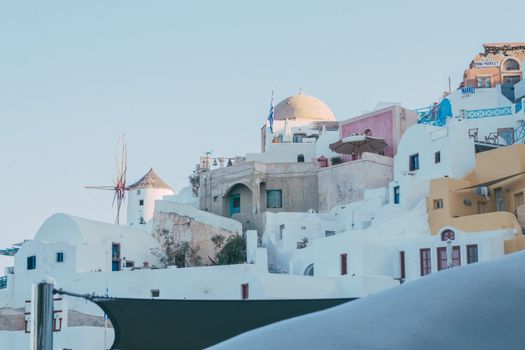
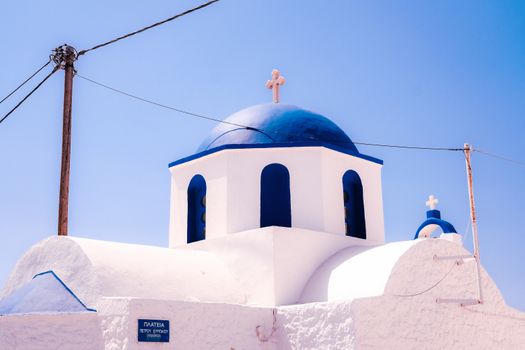
I stepped off the morning catamaran onto the sun-baked asphalt of Athinios Port last July, and within thirty seconds, a diesel-fumed tour bus clipped my backpack. Twenty minutes later, I found myself wedged in a foot-traffic gridlock along the marble path of Oia. I was trapped behind two hundred tourists, all waiting forty-five minutes under a scorching 95°F sun just to snap a three-second photo of a blue-domed church through a gap in a linen shirt. It smelled like warm diesel, stale sweat, and overpriced Aperol Spritzes. Santorini hadn't just reached capacity; it had traded its Greek soul for Instagram engagement.
With local authorities moving to cap cruise ship passengers and locals protesting the skyrocketing cost of living, the message is clear: the era of overtourism in Santorini is unsustainable.
Fortunately, the Aegean Sea holds over 200 inhabited islands. By stepping off the exhausted tourist trail, I discovered a wilder, tastier, and radically authentic side of Greece. Here are the six definitive, emerging alternatives to Santorini where you can still feel the pulse of true Greek island life.
---
1. Milos: The Volcanic Marvel That Outshines the Caldera
If you come to Santorini strictly for dramatic geology, Milos will break your heart—in the best possible way. Born from the same subterranean volcanic arc, Milos trades Santorini's commercialized caldera for surreal, lunar coastal formations and colorful fishing villages built into the rock face.
```
_____
/ \ SARAKINIKO COASTLINE
~~~| o o |~~~~~~~~~~~~~~~~~~~~~~~~~~~
\ ___ / Bleached volcanic pumice
\_______/ meeting electric-turquoise sea
```
The Architecture and Vibe
In villages like Klima and Mandrakia, you won't find boutique chain hotels. Instead, you'll find syrmata—two-story fishermen’s structures built directly into sea caves, featuring doors painted in eye-searing shades of cobalt blue, emerald green, and crimson red. Upstairs was where the fisherman lived; downstairs was where he parked his boat during winter storms.
At Sarakiniko Beach, white volcanic pumice stone has been smoothed by millennia of meltemi winds into smooth, bone-white waves that drop into glowing turquoise water. Swimming here at dawn feels like floating on the moon.
Food & Culture
Skip the white-glove fusion spots. Dine at O! Hamos! in Adamas, where the menu is handwritten on parchment and every cheese, cut of meat, and vegetable comes from the owner’s family farm.
- Must-Try Dish: Pitarakia—flaky, hand-folded pastry pockets stuffed with aged, sharp myzithra cheese, wild mountain onions, and a pinch of spearmint, fried until blistered.
> PRO-TIP: Rent a 4x4 quad bike at 8:00 AM from Pollonia and head directly to the remote beach of Tsigrado. To reach the sand, you must climb down a sheer rock crevice using a wooden ladder and a thick hemp rope. Arrive before 9:30 AM to have the entire cove to yourself.
---
2. Folegandros: The Cliffside Queen Without the Cruise Ships
Perched on an isolated spine of rock in the southern Cyclades, Folegandros delivers the dramatic cliffside drop-offs of Santorini’s caldera without a single giant cruise ship blocking the horizon.
```
[ Church of Panagia ]
/\
/ \ <- 200m Zig-zagging cliff path
/____\
============== [ Chora Cliff Edge ]
~~~~~~~~~~~~~~~~~~~~~~~~~~~~~~~~~~~~~~
~~~~~~~~~~~~~~~~~~~~~~~~~~~~~~~~~~~~~~ (Aegean Sea Below)
```
The Architecture and Vibe
The main village, Chora, is arguably the most breathtaking settlement in the Aegean. Built inside the walls of a medieval Venetian Kastro, Chora is entirely car-free. Its life revolves around three interconnected plazas (piatsas) shaded by leafy plane trees and bougainvillea vines. At dusk, table legs interlock on the flagstones as locals and traveler-insiders share carafes of chilled white wine.
High above the village, a white stone path snakes like a pale ribbon up the mountain to the church of Panagia.
Food & Culture
Life moves slowly here. In the evening, the air smells of blooming night-jasmine and roasted garlic from traditional tavernas like To AsyGkrito.
- Must-Try Dish: Matsata—thick, handmade ribbon pasta cooked to order and smothered in a rich, slow-braised wild goat or rooster ragù spiked with cinnamon and tomato paste.
> PRO-TIP: Skip the sunset crowd at the Church of Panagia and instead walk 15 minutes past the village of Ano Meria to the old lighthouse at Cape Aspropounta. Built in 1919, it stands solitary on a desolate cliff face where the wind feels like fine velvet.
---
3. Sifnos: The Uncontested Culinary Capital of the Cyclades
If your ideal trip revolves around food, ceramics, and quiet, low-slung luxury, Sifnos is your sanctuary. While Santorini struggles with mass-produced gyros and tourist trap menus, Sifnos maintains a culinary lineage that raised Nikolaos Tselementes, the father of modern Greek gastronomy.
```
____
/ \ Clay Pot (Tsikali)
| | Slow-cooked 15 hours over embers
|______| Yields: Legendary Sifnian Revithada
```
The Architecture and Vibe
Sifnos is an elegant tapestry of olive groves, ancient terrace walls, and whitewashed villages connected by centuries-old stone hiking trails. The village of Kastro, built on a rocky promontory jutting into the sea, features ancient marble sarcophagi built straight into house walls and dark, tunnel-like alleyways (loggie) designed to confuse 16th-century pirates.
Food & Culture
Sifnos cuisine is defined by terracotta. Potters have worked the clay-rich soil here since antiquity, crafting deep baking dishes called tsikalia. Every Sunday morning, the island eats revithada—a chickpea stew baked overnight in a clay vessel with rain-harvested water, sweet onions, bay leaves, olive oil, and lemon.
- Must-Try Dish: Mastelo—locally raised lamb or goat marinated in wild marjoram and red wine, cooked slowly inside a clay pot lined with vine wood twigs over an open flame until the meat collapses off the bone.
> PRO-TIP: Walk down the 300 stone steps from Kastro to the tiny, rock-bound bay of Seralia. Order fresh sea urchin harvested that morning at Captain Sifnakis, paired with a glass of crisp, un-oaked Assyrtiko.
---
4. Naxos: Ancient Monuments, Endless Sands, and Mountain Harvests
Santorini’s beaches—composed mostly of hot, coarse black pebble sand—are frankly underwhelming. If pristine shoreline, crystal waters, and deep history are your priorities, head to Naxos, the largest and greenest island in the Cyclades group.
```
+-------------------------------------------------+
| NAXOS HIGHLIGHTS |
+-----------------------+-------------------------+
| Coastline | 60km of golden sand |
| Top Sight | Portara (Apollo's Gate) |
| Signature Product | Graviera Naxou PDO |
| Local Beverage | Kitron Liqueur |
+-----------------------+-------------------------+
```
The Architecture and Vibe
As you enter the port, you are greeted not by resort towers, but by the Portara—a massive 2,500-year-old marble gate frame that remains from an unfinished temple dedicated to Apollo. Inland, the island ascends into the jagged Mount Zeus, hiding mountain villages where old men still sit on wooden chairs outside traditional coffee shops (kafenia), wearing black headscarves and speaking in thick island dialects.
Food & Culture
Unlike Santorini, which imports nearly all its food, Naxos is agriculturally self-sufficient. Its interior valleys produce sweet potatoes, mountain olive oil, and some of the finest cheeses in Europe.
- Must-Try Dish: A cheese platter featuring PDO Graviera Naxou (aged cow’s milk cheese with a buttery, nutty profile) paired with a splash of Kitron, an aromatic liqueur distilled from the leaves of local citron trees at the historic Vallindras Distillery in Halki.
> PRO-TIP: Avoid the developed beach strip at Agios Prokopios. Drive south down the dirt coast road to Hawaii Beach (Aliko), where natural cedar forests grow directly out of sand dunes adjacent to abandoned, sea-splattered concrete ruins covered in street art.
---
5. Astypalaia: The Eco-Revolutionary Butterfly of the Aegean
Geographically situated between the Cyclades and the Dodecanese, Astypalaia is shaped like a butterfly spreading its wings across the southern Aegean Sea. It is rapidly gaining international acclaim as Greece's first fully sustainable, zero-plastic, smart-mobility island.
```
/ \ / \
/ \ / \
( L )---(i)---( R ) <-- Butterfly-shaped geography
\ / | \ /
\_/ | \_/
Isthmus
```
The Architecture and Vibe
Astypalaia offers the quintessential blue-and-white aesthetic of the Cyclades combined with the fortress architecture of the Dodecanese. The Chora cascades down a knife-edge hill, crowned by the dark stone walls of the 13th-century Querini Castle. Below, eight vintage red-roofed windmills sit in a line along the central square, their sails humming softly in the breeze.
The island operates on an eco-conscious ethos: gasoline rental cars are being phased out in favor of an island-wide fleet of electric vehicles powered by solar and wind installations.
Food & Culture
The seas around Astypalaia are rich fishing grounds. Local life centers around sustainable harvesting, small-scale farming, and artisanal cheese production.
- Must-Try Dish: Poungia—savory, pouch-shaped pastries filled with creamy, fresh chlori cheese, drizzled with aromatic wild thyme honey harvested from hives scattered across the island's hillsides.
> PRO-TIP: Use the island's astyMOVE app to hail an electric ride-share van that will take you up the winding roads to the isolated pebble beach of Vatses. Take a short climb up the cliffside path behind the beach to reach the atmospheric Cave of Negros.
---
6. Symi: Neoclassical Grandeur in the Dodecanese
If your aesthetic leanings run toward pastel colors, historic architecture, and deep maritime heritage rather than whitewashed sugar-cube houses, Symi is your ultimate match.
```
/| /| /|
/ | Neoclassic Mansion |
|__|________|__|________|__| <- Terracotta, ochre & pale yellow facades
~~~~~~~~~~~~~~~~~~~~~~~~~~~~~ <- Fjord-like natural harbour
```
The Architecture and Vibe
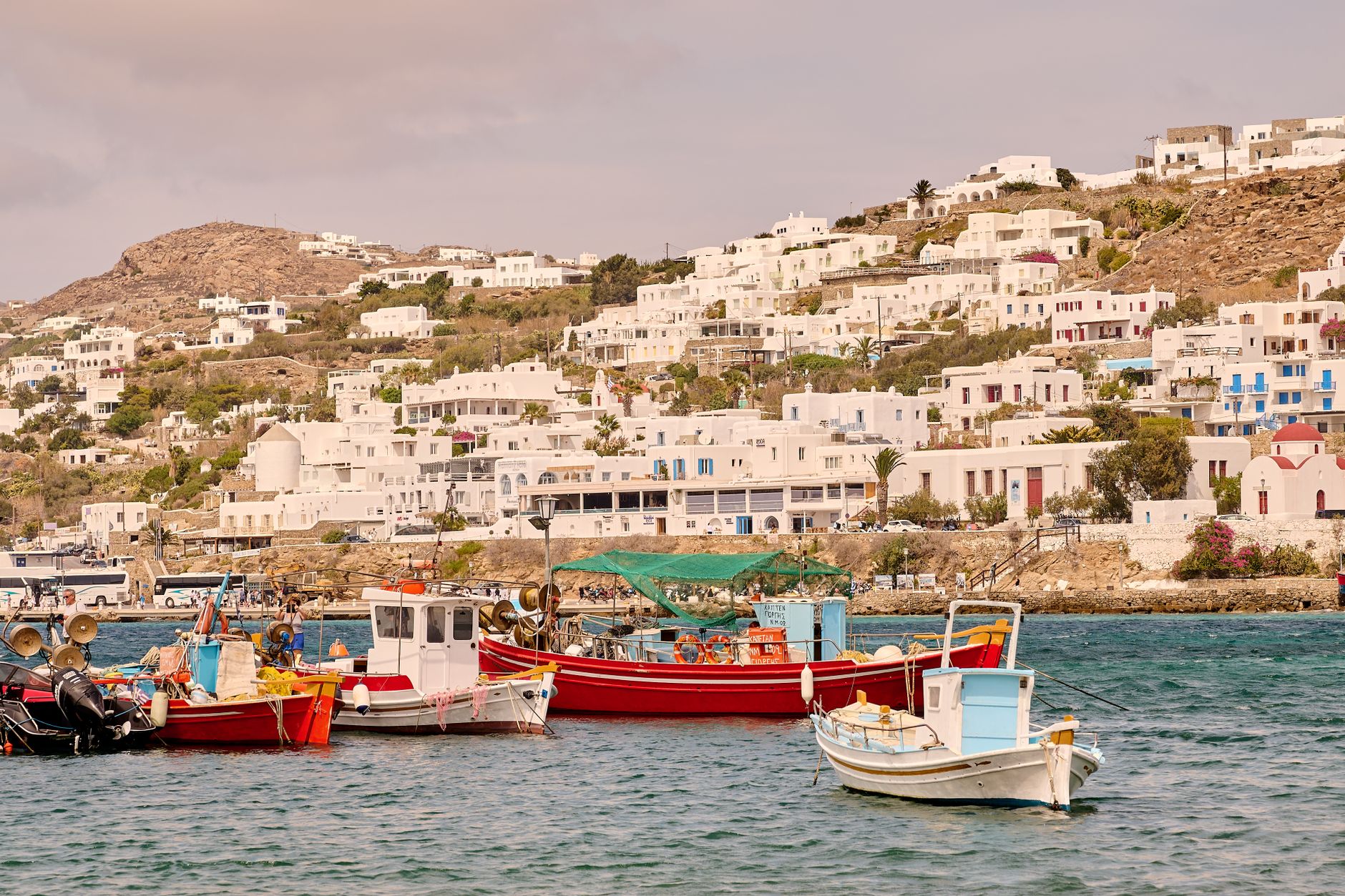
Sailing into Symi's port of Gialos feels like entering an amphitheater painted during the 19th century. Instead of Cycladic cubes, three-story neoclassical mansions painted in warm terracotta, soft mustard yellow, pale pink, and Aegean blue cascade down steep rock faces toward clear, emerald harbor waters.
There are no massive resort developments here; strict heritage protection laws mandate that every restoration project preserve the island’s authentic architectural proportions.
Food & Culture
Symi was historically built on sponge diving and shipbuilding, traditions that gave its people wealth to import Italian architects and fine furnishings. That refined taste carries straight over to the waterfront dining tables today.
- Must-Try Dish: Symi Shrimp—an indigenous species of tiny, crimson-colored deep-sea shrimp found only in these waters. They are quickly flash-fried whole in local olive oil with sea salt and garlic, and eaten entire—heads, tails, and shells—like crunchy sea popcorn.
> PRO-TIP: Wake up early to climb the Kali Strata—a broad, sweeping stone staircase of 500 steps connecting the port to the historic upper town of Chorio. At 7:00 AM, the morning light paints the pastel facades in shades of deep rose and amber, and the harbor below is quiet save for the fishing boats returning with their morning catch.
---
Logistics, Budget & Essential Travel Data
To help you choose your ideal alternative, here is a direct logistical breakdown comparing daily costs, travel times, and ideal visit windows.
| Island | Daily Budget ($USD)* | Ideal Months | How to Get There | Vibe / Primary Highlight |
| :--- | :--- | :--- | :--- | :--- |
| Milos | $140 - $220 | May - Oct | 3h High-speed ferry from Piraeus OR 45m flight from Athens | Volcanic landscapes & surreal swimming coves |
| Folegandros| $120 - $190 | June - Sept | 4h Ferry from Piraeus OR 1h ferry from Santorini | High cliffside views & car-free medieval village |
| Sifnos | $110 - $170 | May - June, Sept | 2.5h High-speed ferry from Piraeus | Gastronomy, ceramic trails & quiet bays |
| Naxos | $90 - $150 | May - Oct | 3.5h Ferry from Piraeus OR 40m flight from Athens | Endless sandy beaches, mountain farms & history |
| Astypalaia | $85 - $140 | June - Sept | 1h Flight from Athens OR 8h regional ferry | Eco-focused, remote tranquility & fortress views |
| Symi | $100 - $160 | May - Oct | 50m Ferry from Rhodes (Direct flight from EU to Rhodes) | Neoclassical harbor elegance & seafood culture |
\*Daily budget estimates include mid-range boutique accommodation (double occupancy split), one scooter/car rental share, and two meals at local tavernas.
---
The Insider's Aegean Travel Blueprint
```
[ ATHENS (Piraeus Port) ]
|
(High-Speed Ferry)
|
v
+-------------+-------------+
| |
v v
[ SIFNOS ] ----(1.5 Hours)---> [ MILOS ]
(Food) (Geology)
|
(Regional Ferry)
|
v
[ FOLEGANDROS ]
(Cliffside Dusk)
```
1. Master the Ferry System
Do not rely on third-party aggregators that lose live updates. Download Ferryhopper for live GPS tracking of Greek ferries. In high summer, wind storms (meltemi) regularly delay high-speed catamarans like Seajets. If you are prone to seasickness, book the larger, steel-hulled Blue Star Ferries vessels—they take an hour longer, but slice smoothly through swells and cost 40% less.
2. Time Your Arrival
Avoid mid-July through August 20th if you want true quiet. The sweet spot for island hopping is from May 20th to June 25th, or September 5th to October 15th. During these months, sea temperatures are warm, taverna staff are refreshed, accommodation prices drop by up to 50%, and you can secure tables without a reservation.
3. Ditch the Rolling Suitcase
Greek island alleyways are paved with rough, hand-cut stone and slate tiles set with thick mortar. Hard-shell rolling suitcases will ruin your wrists and alert the entire village to your arrival. Pack light using a 40L travel backpack and soft leather or canvas duffels that can easily be loaded onto scooter footboards or small ferry racks.
---
The Final Verdict
Santorini will always hold a place in history for its dramatic geological collapse and iconic volcanic vistas. But if you want to experience the vibrant, sensory reality of Greek island life today—where fresh fish sizzles over olive wood coals, old stone paths lead to empty beaches, and sunset belongs to the quiet sea rather than a sea of smartphones—it's time to chart a new course.
Pack your bag, book the ferry, and discover the islands where the authentic spirit of the Aegean still reigns supreme.
*