Remember that feeling of wandering through a bustling market, eyes wide, trying to find that perfect souvenir? The one that encapsulates your trip, tells a story, and isn't just another mass-produced trinket. I used to spend hours, haggling over prices, ultimately settling for something pretty, but often lacking a deeper connection.
Then, on a trip to Morocco, something shifted. I was in Fes, the air thick with spices and the calls of vendors, when I stumbled upon a small leather workshop. Instead of just buying a pair of babouches (traditional leather slippers), I watched, mesmerized, as an old artisan meticulously cut, stitched, and dyed. A thought sparked: "What if I could learn this?"
That single moment opened a new world of travel for me – one where the souvenir wasn't just bought, but made. Where the experience wasn't just observed, but lived. Learning an ancient craft from a local artisan is more than just a class; it's a profound dive into culture, history, and the human spirit. It's about connecting with traditions that have shaped communities for centuries, getting your hands dirty, and creating something tangible that holds the essence of your journey.
Forget passive tourism. This is active, immersive, and utterly mind-blowing. And trust me, your Instagram feed will thank you.
The Magic of Moroccan Leather: Crafting Babouches in Fes, Morocco
There’s nothing quite like Fes. The labyrinthine medina, a UNESCO World Heritage site, is a sensory overload in the best possible way. And if you venture deep enough, you’ll find the Chouara Tannery, where centuries-old methods of leather processing are still practiced. The smell is… unforgettable, to say the least. But beyond the vats of dye and pigeon droppings (yes, really!), lies a world of incredible craftsmanship.
My first foray into artisan workshops began here. After navigating the bustling alleys, I found a small, family-run workshop tucked away from the main tourist routes, thanks to a friendly local who pointed me in the right direction. The workshop was a small, dusty room filled with leather scraps, tools, and the sweet scent of cured hide. My instructor, a man named Rashid with hands gnarled from decades of work, spoke little English, but his smile was universal.
He didn't just teach me to cut and stitch; he showed me the ritual. We started with selecting the perfect, supple piece of goat leather, dyed a vibrant sapphire blue. He guided my hands as I traced the intricate pattern of a babouche, explaining how each cut needed to be precise, each stitch firm. The rhythmic snip-snip of the scissors and the gentle tap-tap of the hammer became a meditative soundtrack. I spent half a day there, completely engrossed, creating a pair of slippers that were far from perfect, but utterly mine. They were a testament to Rashid's patience and my own clumsy enthusiasm.
Specifics & Tips for Fes:
* Where to go: Look for smaller workshops around the Chouara Tannery or near Bab Bou Jeloud. Ask your riad host for recommendations for family-run places.
* What to expect: Half-day workshops typically range from 200-500 Moroccan Dirham (MAD), including materials. You’ll likely learn basic cutting, stitching, and embellishment.
* Insider Tip: Wear old clothes and closed-toe shoes. The tanneries can be messy, and you might get dye on yourself. Be prepared for the strong smells, but embrace them – it’s part of the experience!
* Instagram Moment: The vibrant colours of the leather and the intricate details of the stitching make for stunning close-ups. Capture the hands-on process!
Embracing Imperfection: Kintsugi & Raku in Kyoto, Japan
Japan, a land steeped in ancient traditions and profound aesthetics, offers a truly unique craft experience: Kintsugi. This isn't about making something new, but about repairing something broken, celebrating its flaws with gold lacquer. It's a philosophy as much as a craft, teaching us to find beauty in imperfection.
My own Kintsugi journey began after a clumsy moment at a ryokan, where I accidentally chipped a beautiful ceramic teacup. My heart sank. But then, my host, with a gentle smile, suggested a Kintsugi workshop. I found a small studio in a quiet Kyoto backstreet, its doors sliding open to reveal a serene space filled with delicate ceramics and the faint scent of lacquer.
The instructor, a woman with incredibly steady hands and a calm demeanor, explained the process. We meticulously cleaned the broken pieces of my teacup, then applied a special lacquer made from tree sap, carefully rejoining them. The magic happened when we applied the gold powder along the fault lines. Watching the cracks transform into shimmering veins of gold was utterly captivating. It wasn't just a repair; it was an artistic elevation, giving the cup a new, more profound story.
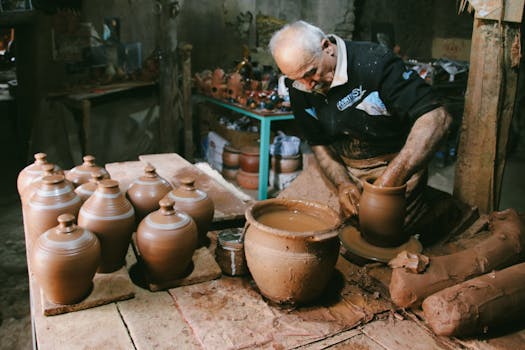
Another incredible pottery experience in Japan is Raku firing – a rapid firing process that creates unique, unpredictable glazes. It’s a fiery, dramatic craft that yields stunning, one-of-a-kind pieces.
Specifics & Tips for Kyoto:
* Where to go: For Kintsugi, look for studios like Kyoto Kintsugi Experience or workshops associated with traditional craft centers. For Raku, check out pottery studios in areas like Gojozaka or museums that offer workshops.
* What to expect: Kintsugi workshops can range from 5,000-15,000 JPY, often taking 2-3 hours. Raku experiences are similar in price and duration. Some workshops allow you to bring your own broken item, others provide pieces.
* Insider Tip: Kintsugi involves natural lacquer which requires time to cure. You might need to arrange shipping for your finished piece, or allow several days for it to dry before travel.
* Instagram Moment: The delicate application of gold dust, the dramatic reveal of a Raku-fired piece, and the serene studio environment are all perfect photo ops.
Culinary Artistry: Mastering Pasta in Bologna, Italy
While not a "craft" in the traditional sense of weaving or carving, the art of making fresh, handmade pasta is an ancient skill passed down through generations, embodying centuries of Italian culture and culinary passion. And nowhere is this more true than in Bologna, the gastronomic heart of Italy.
I grew up watching my Nonna roll out pasta dough on her worn wooden board, her hands moving with an almost mystical grace. It always seemed like an impossible feat. So, when I found myself in Bologna, I knew I had to try. I booked a small group class at "La Vecchia Scuola Bolognese," a charming school housed in a historic building.
Our sfoglina (pasta maker) instructor, a lively woman named Maria, greeted us with a warm smile and a sprinkle of flour. She spoke with a melodic Italian accent, demonstrating how to mix the simple ingredients – flour and eggs – into a perfect dough. The real challenge was rolling it out by hand, paper-thin, using a long wooden rolling pin. My arms ached, my forehead beaded with sweat, but under Maria's encouraging eye, I eventually managed something resembling a sheet of dough. Then came the magic: cutting it into perfect tagliatelle, shaping tortellini filled with ricotta and spinach, and even learning the secret to a rich Bolognese sauce.
Eating the pasta we had made, fresh and steaming, paired with local wine, was an experience that transcended a mere meal. It was a connection to tradition, a taste of history, and a moment of pure, unadulterated joy.
Specifics & Tips for Bologna:
* Where to go: "La Vecchia Scuola Bolognese," "Bologna Cooking School," or ask your accommodation for local chefs offering private classes. Many culinary tours also include hands-on pasta making.
* What to expect: Classes typically cost 80-150 EUR for 3-4 hours, including ingredients and a meal. You’ll usually learn 2-3 types of pasta and a sauce.
* Insider Tip: Go hungry! These classes often end with a feast of your creations. Ask about local producers for ingredients like Parmigiano Reggiano or balsamic vinegar.
* Instagram Moment: Flour-dusted hands, perfectly rolled pasta sheets, colorful tortellini, and the final delicious plate – all make for mouth-watering content.
Sacred Carvings & Batik Dreams: Ubud, Bali, Indonesia
Bali, often called the "Island of the Gods," is a place where art and spirituality are interwoven into daily life. Ubud, in particular, is a hub for traditional Balinese crafts, from intricate wood carving to the mesmerizing art of Batik.
Walking through the villages surrounding Ubud, you’ll hear the rhythmic tap-tap-tap of chisels on wood and see vibrant textiles drying in the sun. I decided to try my hand at both, starting with wood carving in Mas Village, renowned for its master carvers.
I found a small, open-air studio run by a family whose carving lineage stretched back generations. My instructor, Wayan, a man with a serene smile, handed me a block of local hibiscus wood and a set of chisels. He demonstrated how to create the flowing lines of a traditional Balinese mask, emphasizing the spiritual connection to the wood. It was challenging – far more difficult than it looked! But with Wayan's gentle guidance, I slowly chipped away, feeling the wood yield under my tools, revealing a form. My mask was rudimentary compared to Wayan’s masterpieces, but the process was deeply meditative and incredibly satisfying.
Later, I ventured into a Batik workshop in Ubud. Batik is a wax-resist dyeing technique, creating intricate patterns on fabric. The delicate application of hot wax with a canting (a pen-like tool) to draw patterns, followed by dyeing and boiling to remove the wax, was a fascinating process. The vibrant colours and complex motifs tell stories of Balinese mythology and nature. Creating my own Batik scarf, seeing the patterns emerge as the wax was removed, felt like magic.
Specifics & Tips for Ubud:
* Where to go: For wood carving, visit Mas Village. For Batik, many workshops are located along the main roads in Ubud (e.g., Nyoman Warta Batik Class).
* What to expect: Wood carving classes typically cost 250,000-750,000 Indonesian Rupiah (IDR) for 3-5 hours, including materials. Batik classes are similarly priced and duration.
* Insider Tip: Choose a smaller, family-run workshop for a more authentic experience. Ask about the symbolism behind the designs you’re carving or painting.
* Instagram Moment: The intricate details of the carvings, the vibrant dyes of Batik, and the serene, tropical settings of the workshops are incredibly photogenic.
Woven Stories: Andean Textiles in Peru's Sacred Valley
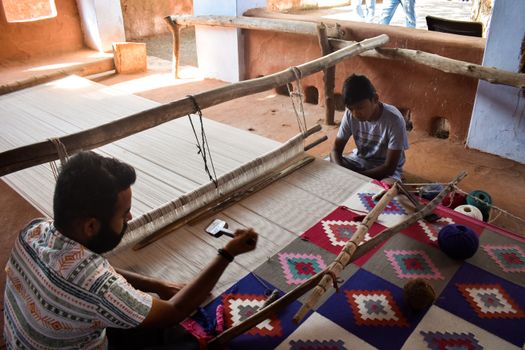
The Peruvian Andes are not just breathtakingly beautiful; they are also home to a living tradition of textile artistry that dates back millennia. In the Sacred Valley, communities like Chinchero and Pisac are renowned for their vibrant, naturally dyed, and hand-woven textiles, often created using ancient backstrap looms.
My visit to a weaving cooperative in Chinchero was one of the most moving experiences of my trip to Peru. High in the mountains, amidst stunning terraced fields, I met a group of Quechua women, their faces weathered by the sun, their hands moving with incredible speed and precision on their looms.
They welcomed me with warmth, inviting me to learn. The workshop began with a demonstration of natural dyeing – using plants like cochineal (for brilliant reds), local leaves (for greens), and even corn flowers (for purples). The vibrant colours they achieved were astonishing, all from nature’s bounty. Then came the weaving. Sitting on the ground, with a backstrap loom strapped around my waist, I tried to mimic their movements. It was incredibly complex, requiring coordination, strength, and a deep understanding of the threads. Each pattern told a story, representing mountains, rivers, or local animals. While I only managed a small, simple swatch, the experience of sitting with these women, sharing their laughter and learning their ancient craft, was a profound connection to their culture and history.
Specifics & Tips for Sacred Valley:
* Where to go: Chinchero, Pisac, or the Awana Kancha Living Museum near Cusco. Look for community-based weaving cooperatives.
* What to expect: Half-day workshops range from 50-100 USD, often including a demonstration of natural dyeing and basic weaving techniques. You might weave a small bracelet or a coaster.
* Insider Tip: Support fair trade by purchasing textiles directly from the artisans. Learning a few basic Quechua phrases will be greatly appreciated.
* Instagram Moment: The vibrant colours of the naturally dyed yarns, the intricate patterns of the textiles, and the stunning mountain backdrop make for incredible photos and videos.
The Whispers of Ink: Ebru & Calligraphy in Istanbul, Turkey
Istanbul, where East meets West, is a city brimming with history and artistic heritage. Among its most enchanting ancient crafts are Ottoman calligraphy and Ebru, the mesmerizing art of marbling paper.
I’d always been fascinated by the fluid beauty of Arabic script, so I sought out a calligraphy workshop near the historic Sultanahmet district. The instructor, a master calligrapher, taught me the proper way to hold the reed pen (qalam) and the meditative strokes required to form individual letters. It wasn't about writing quickly; it was about intention, control, and the elegant dance of ink on paper. I spent hours practicing, feeling a connection to the scribes of the Ottoman Empire.
But it was Ebru that truly blew my mind. I found a small studio in a charming medrese (historic school) where the art was being preserved. Ebru involves floating paints on a thickened water surface, manipulating them with styluses and combs to create intricate patterns, then carefully transferring the design to paper.
The process is almost alchemical. Watching the instructor effortlessly swirl and drop colours onto the water, forming flowers and intricate designs, was like witnessing magic. When it was my turn, my first attempts were chaotic blobs, but with guidance, I slowly learned to control the paint, to coax it into delicate petals and swirling patterns. The moment you gently lay the paper onto the water, and then lift it to reveal your unique masterpiece, is pure exhilaration. Each piece is truly one-of-a-kind, a fleeting moment captured on paper.
Specifics & Tips for Istanbul:
* Where to go: Caferağa Medresesi (near Hagia Sophia) offers workshops in various traditional arts, including Ebru. Also look for private studios in Sultanahmet or Beyoğlu.
* What to expect: Ebru or calligraphy workshops typically cost 100-300 Turkish Lira (TL) for 2-3 hours.
* Insider Tip: For Ebru, wear an apron or old clothes – paint can splash! For calligraphy, focus on the meditative aspect rather than immediate perfection.
* Instagram Moment: The vibrant paints floating on water, the intricate patterns forming, and the reveal of the marbled paper are incredibly visually appealing and shareable.
Practical Tips for Your Artisan Adventure
Ready to swap your passport for a paintbrush, or your travel guide for a chisel? Here are some actionable tips to make your artisan workshop experience truly unforgettable:
- Research & Book Ahead: Popular workshops, especially those with English-speaking instructors or limited class sizes, can fill up quickly. Check reviews and book a few weeks or months in advance, particularly during peak travel seasons.
- Budget Beyond the Class Fee: Factor in materials (sometimes included, sometimes extra), potential shipping costs for delicate items, and transportation to and from the workshop location.
- Embrace the Language Barrier: Don't let a language difference deter you. Many artisans use gestures, demonstrations, and the universal language of craft. A translator app can also be a lifesaver.
- Go with an Open Mind & Patience: You're learning an ancient skill, not just taking a quick selfie. Be patient with yourself, with the process, and with your instructor. Imperfections are part of the charm!
- Support Local Artisans: Whenever possible, choose family-run workshops or cooperatives that directly benefit the local community. This ensures the preservation of these precious traditions.
- Capture the Moment (Respectfully): Most artisans are happy for you to take photos or videos, especially of your own work. Always ask permission first, and be mindful not to disrupt the class or other participants. A time-lapse video of your creation process can be incredibly engaging!
- Pack Appropriately: Depending on the craft, you might get dirty! Wear comfortable, old clothes and closed-toe shoes. An apron might be provided, but it's always good to be prepared.
- Ask Questions: Show genuine interest in the history of the craft, the materials, and the artisan's personal story. This enriches your experience immensely.
Your Hands, Your Story, Your Souvenir
Stepping into an artisan workshop is more than just learning a new skill; it's a journey into the heart of a culture, a connection to generations of tradition, and an investment in an experience that transcends the ordinary. It transforms you from a passive observer into an active participant, leaving you with not just a unique souvenir, but a profound story and a newfound appreciation for human creativity.
The items you create, however imperfect, will carry the memories of your adventure, the scent of the workshop, and the spirit of the artisan who guided you. They'll be conversation starters, tangible reminders of a moment when you stepped outside your comfort zone and truly immersed yourself.
So, on your next trip, dare to get your hands dirty. Which ancient craft will you master first? Share your experiences and creations with us using #TripsoraArtisanAdventures – we can't wait to see what masterpieces you bring to life!
---