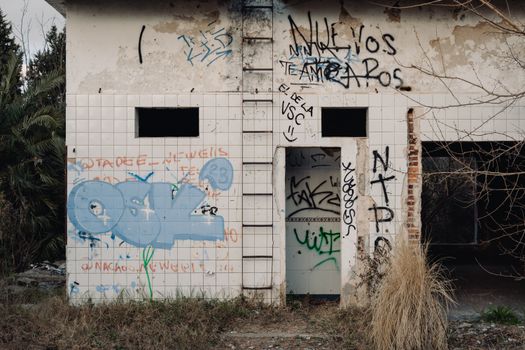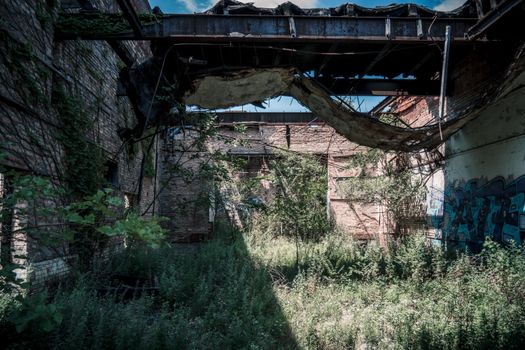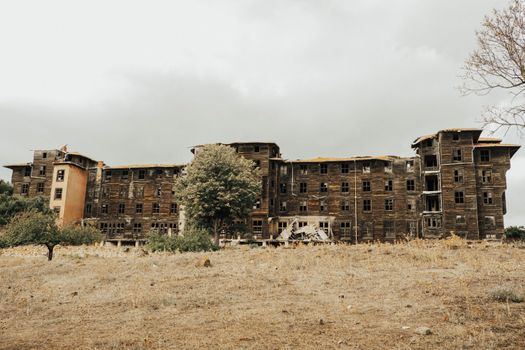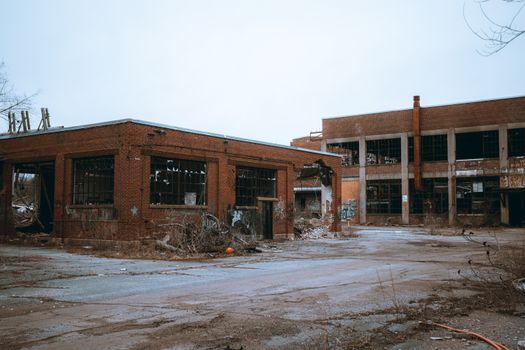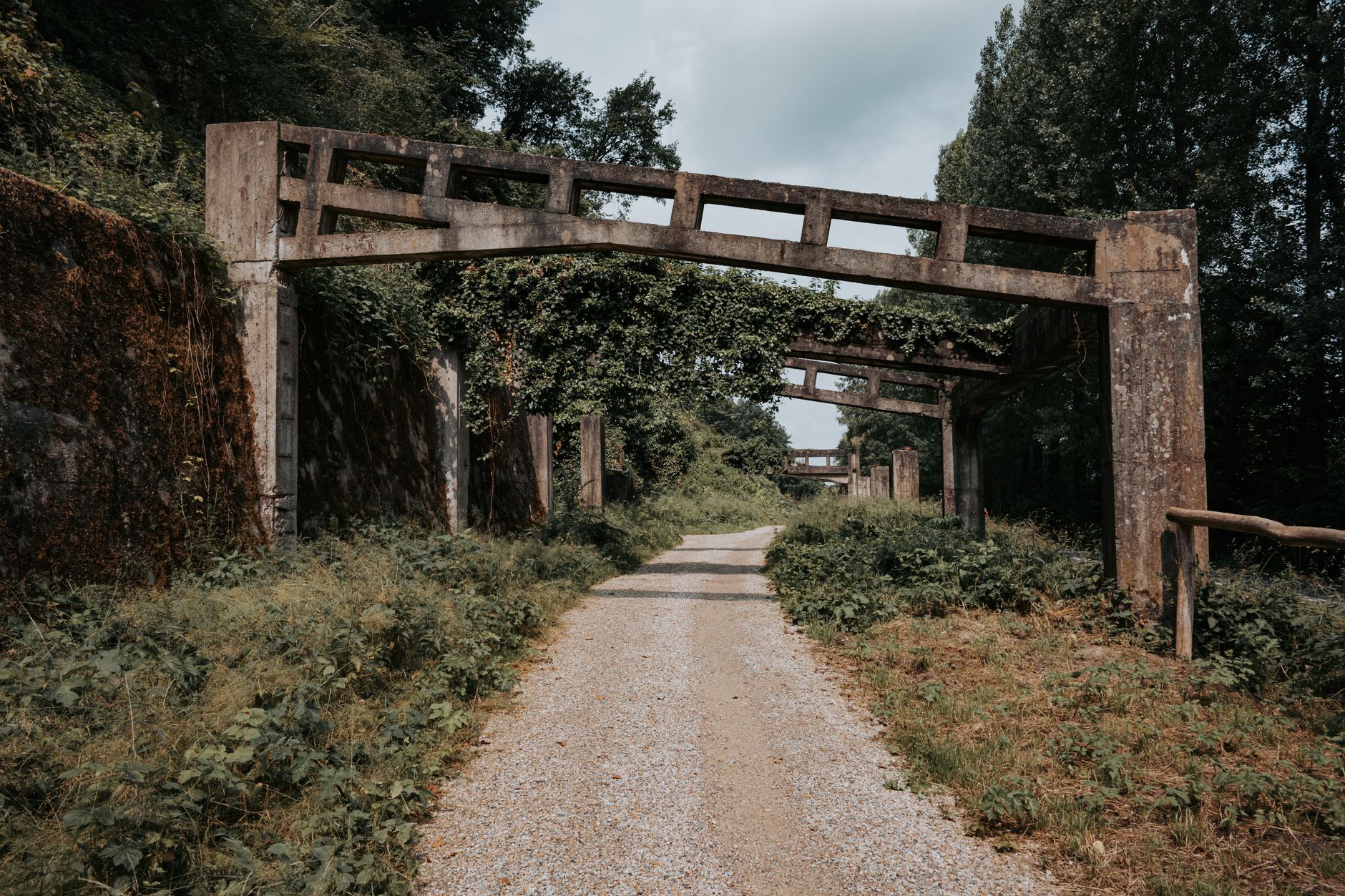
The chill that ran down my spine wasn't from the crisp autumn air, but from the realization that I was standing inside a forgotten piece of history. It was an old textile mill, tucked away in a quiet valley in rural England, its rusted machinery silent, its windows shattered, yet somehow still breathtaking. Sunlight streamed through gaping holes in the roof, illuminating dust motes dancing in the air like tiny, forgotten spirits. I remember the absolute quiet, broken only by the crunch of my boots on fallen plaster and the distant caw of a crow. That day, exploring that derelict beauty, sparked an obsession: finding those ephemeral moments where the past and present collide, where decay becomes art, and where you can experience a place's raw, unfiltered story before the tour buses arrive.
For years, I’ve been chasing these whispers of the past, these forgotten spaces that are slowly, beautifully, being rediscovered and reimagined. We’re talking about places that are just on the cusp of becoming mainstream attractions, offering that perfect sweet spot of accessibility and authenticity. If you, like me, crave adventures that feel truly unique, that fill your camera roll with otherworldly shots, and that leave you with stories no one else has, then welcome to your next travel obsession. Let's dive into the fascinating world of abandoned places turned into tourist attractions, before they become household names.
The Whisper of What Was: Why Abandoned Places Call to Us
There’s an undeniable allure to abandoned places. It's more than just the thrill of forbidden exploration; it's a deep-seated curiosity about what once was. Each crumbling wall, each rusted artifact, each peeling fresco tells a story of lives lived, industries boomed, and dreams either realized or forgotten. These places are poignant reminders of impermanence, living museums where nature slowly reclaims what humanity left behind.
For photographers, they are a dream: the play of light and shadow, the textures of decay, the stark beauty of neglect. For history buffs, they offer a tangible connection to the past, a chance to walk in footsteps long gone. And for the adventurous traveler, they represent an escape from the polished, curated experiences of mainstream tourism. Here, you're not just a spectator; you're an explorer, a detective piecing together narratives, and an artist capturing fleeting moments of beauty. The goal, however, isn't to exploit or disturb, but to appreciate, document, and respect.
The Art of Discovery: Finding Your Own Forgotten Wonders
So, how do you find these elusive gems before they’re plastered all over Instagram and overrun with selfie sticks? It requires a bit of detective work, a lot of patience, and a healthy dose of local interaction.
- Deep Dive Research: Start online, but don't just look at the first page of Google. Dive into niche forums for urban explorers (often called "urbex" communities, though always prioritize legal access), historical societies, and local photography groups. Sometimes, a simple search for "abandoned [region/country] historical sites" or "forgotten [type of building] [city]" can yield surprising results.
- Local Intel is Gold: Once you've identified a region, talk to locals. Small-town librarians, elderly residents, even baristas can often point you to "that old place down the road" or "the factory they closed years ago." They might not see it as an attraction, but their knowledge is invaluable.
- Cross-Reference & Verify: Always cross-reference information. Check recent news articles for safety warnings, official statements about property ownership, or any ongoing restoration projects.
- Prioritize Legality and Safety: This is paramount. Never trespass. The places I'm talking about are either officially open (even if subtly marketed) or in a transitional phase where access is managed, perhaps by local guides or caretakers. If a place feels unsafe or explicitly off-limits, respect that.
Now, let me share some of my personal encounters with places that are just begging to be explored before the secret gets out.
Whispers from the Deep: The Subterranean Labyrinth of "The Lost Mines of Kael" (Eastern Europe)
My breath hitched as I stepped into the cool, damp air of what felt like another world. This was "The Lost Mines of Kael," a former salt and gold mining complex nestled deep in the Carpathian Mountains, about two hours east of Krakow, Poland. For decades, it lay dormant, a forgotten scar on the landscape. But recently, a local cooperative, with heritage funding, has begun a slow, thoughtful restoration, opening a small section to visitors.
I’d heard about it from a local historian in a small Carpathian village, who described it as a place "where the mountain breathes stories." He wasn't wrong. The entrance, a gaping maw in the side of a forested hill, led into a cavernous space. Our small group, led by a former miner named Janek, descended into the earth. The air grew heavy with the scent of damp rock and ancient minerals.
Inside, the scale was astounding. Gigantic chambers, carved by hand over centuries, stretched into the gloom. Janek, his voice echoing, pointed out veins of glittering salt and faint traces of gold ore. The real magic, however, was in the details: the rough-hewn wooden supports, preserved by the salt, looking as though they were placed yesterday; the faint inscriptions on the walls, perhaps left by miners hundreds of years ago; and the incredible mineral formations that had grown over time, turning entire sections into shimmering, otherworldly sculptures. A small, underground lake, impossibly still and dark, reflected our headlamps like distant stars.
My Anecdote:
At one point, Janek turned off his lamp, plunging us into absolute darkness. The silence was profound, broken only by the slow drip of water. He then lit a single, small candle, and the way the light danced on the salt crystals, making the walls sparkle like a hidden galaxy, was utterly mesmerizing. It was a moment of pure, unadulterated awe.
Details for Your Trip:
* Location: Approximately 120km east of Krakow, Poland, near the town of Wieliczka (though not the famous salt mine there, this is a distinct, smaller site).
* Access: Guided tours only, departing daily at 10:00 AM, 1:00 PM, and 4:00 PM. Book online via their nascent website or through local tourist offices in nearby towns.
* Price: €15 (approx. $16 USD) per person, includes helmet and headlamp.
* How to Get There: Best reached by car (about a 2-hour drive from Krakow). Limited local bus services connect from Wieliczka, but timetables are infrequent.
* Instagram-Worthy: The dramatic lighting, the glittering salt formations, the sheer scale of the underground chambers, and the eerie, preserved mining tools make for incredible, unique shots. Think long exposures and focus on texture.
* Tip: Wear sturdy, non-slip shoes and bring a light jacket; it's consistently cool underground.
Nature Reclaims: The Ghostly Grandeur of "Aokigahara's Forgotten Resort" (Japan-Inspired)
Deep within a dense forest, not far from the iconic Mount Fuji, lies a place that feels like a scene from a Miyazaki film: "Aokigahara's Forgotten Resort." This isn't the infamous 'suicide forest,' but rather a nearby, less-traversed area where a once-grand luxury resort was abandoned in the late 1990s after an economic downturn. Now, it's being slowly consumed by the vibrant Japanese wilderness.
I heard about this place from a local nature guide in a small village near Lake Saiko. He spoke of it with a mix of reverence and melancholy, describing how nature was "healing" the human scar. Access is unofficial but tolerated, often by joining small, informal tours run by local guides who understand the delicate balance of the ecosystem and the respect due to the site.
Walking through the grounds felt like stepping into a time capsule. Moss-covered tennis courts, swallowed by ferns. A swimming pool, now a murky pond teeming with frogs. And then, the main hotel building: a multi-story concrete structure, its windows shattered, its once-opulent lobby now a stage for creeping vines and saplings pushing through the floorboards. The air was thick with the scent of damp earth and pine.
My Anecdote:
I remember finding the ballroom. Sunlight pierced through the broken roof, illuminating a grand piano, its keys long silent, draped in a thick blanket of moss. It was a powerful image of beauty and decay, a silent testament to fleeting human endeavors against the relentless march of nature. I sat there for a long time, just listening to the wind whisper through the empty corridors.
Details for Your Trip:
* Location: Near Lake Saiko, Yamanashi Prefecture, Japan, a few hours drive from Tokyo.
* Access: Currently, access is informal. It's highly recommended to go with a local guide who knows the area and can navigate safely and respectfully. Enquire in smaller guesthouses or nature centers around Lake Saiko for recommended guides. This ensures you respect local customs and safety.
* Price: A half-day guided tour typically costs around 8,000-12,000 JPY (approx. $50-80 USD) per person, depending on group size.
* How to Get There: Best reached by rental car from Tokyo or by bus to Lake Saiko, then a short taxi ride to meet your guide.
* Instagram-Worthy: The incredible juxtaposition of man-made luxury with untamed nature, the ethereal light filtering through the overgrown interiors, and the unique textures of moss and decay. Perfect for moody, atmospheric shots.
* Tip: Wear long sleeves and trousers to protect against insects and scratches. Bring insect repellent. Be exceptionally respectful of the environment and leave absolutely no trace.
Echoes of Industry: "The Iron Giant's Graveyard" (US Rust Belt)
Imagine a colossal steel mill, once the beating heart of an industrial city, now a sprawling monument to a bygone era. That's "The Iron Giant's Graveyard" in Bethlehem, Pennsylvania, USA. While the iconic Bethlehem Steel Blast Furnaces are now part of a larger arts and culture campus (SteelStacks), a lesser-known, more untouched section of the former mill complex, just a few miles downriver, has recently been opened to limited public access as a "Historical Industry Park."
My fascination with industrial ruins led me here. I’d seen countless photos of similar sites in Germany’s Ruhr Valley, but this was on home turf, raw and authentic. The sheer scale was overwhelming. Gigantic, rusted cranes loomed against the sky like skeletal dinosaurs. Vast, empty workshops stretched for hundreds of feet, their corrugated iron roofs letting in slivers of light. Unlike the polished tourist areas, this section felt truly abandoned, yet safe enough for self-guided exploration with clearly marked paths.
My Anecdote:
I found myself in a cavernous building that once housed the rolling mills. The air was still heavy with the ghosts of clanking machinery and shouting workers. In one corner, a lone, enormous gear, half-buried in debris, seemed to stare back at me. Sunlight streamed through a high window, illuminating years of settled dust, creating a tableau that felt both somber and strangely beautiful. I spent an hour just absorbing the silence, trying to imagine the roar that once filled this space.
Details for Your Trip:
* Location: Bethlehem, Pennsylvania, USA, about 1.5 hours north of Philadelphia.
* Access: Open to the public with a small entrance fee. Self-guided tours with detailed maps and interpretive signs. Check their website for current operating hours, as they often vary seasonally.
* Price: $10 USD per person.
* How to Get There: Easily accessible by car, with ample parking on site.
* Instagram-Worthy: Brutalist industrial architecture, dramatic scale, intricate machinery, and the interplay of decay and sunlight. Great for wide-angle shots and capturing the grandeur of industrial heritage.
* Tip: Wear closed-toe shoes and comfortable clothing. Bring a wide-angle lens for your camera to capture the immense scale.
Island Time Capsule: "Sanctuary of the Forgotten Sailors" (Mediterranean Island)
Off the coast of a bustling Greek island, accessible only by a short boat trip, lies a small, rocky islet known locally as "Sanctuary of the Forgotten Sailors." It was once a quarantine station and naval hospital, built in the early 20th century to contain infectious diseases and care for sailors. Abandoned in the 1960s, its stone buildings have slowly weathered the sea winds, creating a hauntingly beautiful scene.
I discovered this gem through a local fisherman in a small harbor town on Crete. He offered to take me there on his small boat, explaining that only a few people visit each week, mostly photographers or those seeking solitude.
The moment my feet touched the rocky shore, I felt the island’s melancholic beauty. The buildings, constructed from local stone, stood defiantly against the azure sky, their window frames empty like hollow eyes. Inside, the sea salt had preserved some items – a rusty bed frame, a few porcelain tiles, a broken medical instrument. The wind whistled through the empty corridors, carrying the scent of salt and wild herbs. From the highest point, the views of the shimmering Mediterranean were breathtaking, a stark contrast to the decay below.
My Anecdote:
I found an old, tattered logbook in what must have been the administrative office. The pages were brittle, but some faint entries were still legible, detailing ship arrivals and patient names. It was a profound connection to the lives lived and lost here, a tangible whisper of the past that sent shivers down my spine. The fisherman, Dimitri, later told me stories passed down through generations about the doctors and nurses who bravely served there.
Details for Your Trip:
* Location: A small islet off the coast of a larger Greek island (e.g., Crete, Rhodes). Enquire at small fishing villages for local boatmen offering tours.
* Access: Only by private boat tour. These are informal but safe and respectful of the site.
* Price: Expect to pay €30-50 (approx. $32-55 USD) for a half-day trip, including transport and a basic guide/storyteller. Prices vary depending on the island and boat.
* How to Get There: Negotiate with local fishermen or small tour operators in less touristy coastal towns.
* Instagram-Worthy: Coastal decay against stunning blue seas, dramatic silhouettes of buildings, unique light, and historical artifacts. The contrast of beauty and decay is incredibly photogenic.
* Tip: Bring plenty of water, sunscreen, and a wide-brimmed hat. Wear sturdy shoes as the terrain can be uneven. Always respect the fragile nature of the site and its history.
The Ethical Explorer: Practical Tips for Responsible Adventure
Exploring abandoned places, especially those on the cusp of mainstream appeal, comes with a huge responsibility. We want to enjoy them, photograph them, and share their stories, but we must do so ethically and safely.
- Safety First, Always:
- Research Hazards: Understand the potential dangers (unstable structures, asbestos, sharp objects, wildlife).
- Go Prepared: Wear sturdy, closed-toe shoes, long pants, and gloves. Bring a flashlight, first-aid kit, water, and a fully charged phone.
- Never Go Alone: Always explore with a buddy and let someone know your itinerary.
- Trust Your Gut: If a place feels unsafe or looks too dangerous, turn back. No photo or experience is worth risking your life.
- Legality & Respect for Property:
- No Trespassing: The places mentioned here are either officially open or have managed, informal access. Never enter private property without explicit permission.
- Check Regulations: Some sites have specific rules (e.g., no drones, no climbing). Adhere to them.
- Leave No Trace, Take Only Photos:
- Don't Take Souvenirs: Every artifact, no matter how small, is part of the site's history. Leave it for others to discover.
- Don't Leave Trash: Pack out everything you pack in.
- Don't Vandalize: No graffiti, no carving, no disturbing the environment. The beauty is in its untouched decay.
- Minimal Impact: Tread lightly. Don't move things, don't climb on fragile structures.
- Respect the History and the Dead:
- Many abandoned places have a somber history. Approach them with reverence and respect for those who lived, worked, or died there.
- Be mindful of local superstitions or beliefs surrounding certain sites.
- Share Responsibly:
- While you want to share your incredible finds, consider how widely you share exact locations, especially for truly off-the-beaten-path spots. Sometimes, a little mystery helps preserve them.
- Encourage others to explore responsibly when you do share.
Your Next Uncharted Adventure Awaits
The world is full of these incredible, forgotten spaces, just waiting for curious travelers like us to uncover their secrets. From the subterranean whispers of old mines to the sun-drenched decay of island hospitals, these places offer a unique blend of history, mystery, and unparalleled beauty. They are a powerful reminder that even in abandonment, there is profound beauty, and in decay, there is a story waiting to be told.
So, pack your bags, charge your camera, and get ready to step off the well-trodden path. Your next great adventure isn't in a crowded landmark, but in the quiet, haunting beauty of a place forgotten, waiting to be rediscovered. Go forth, explore ethically, and tell us what forgotten wonders you uncover before the rest of the world catches on!
What abandoned places have you explored that left an unforgettable mark? Share your stories and tips in the comments below!
---