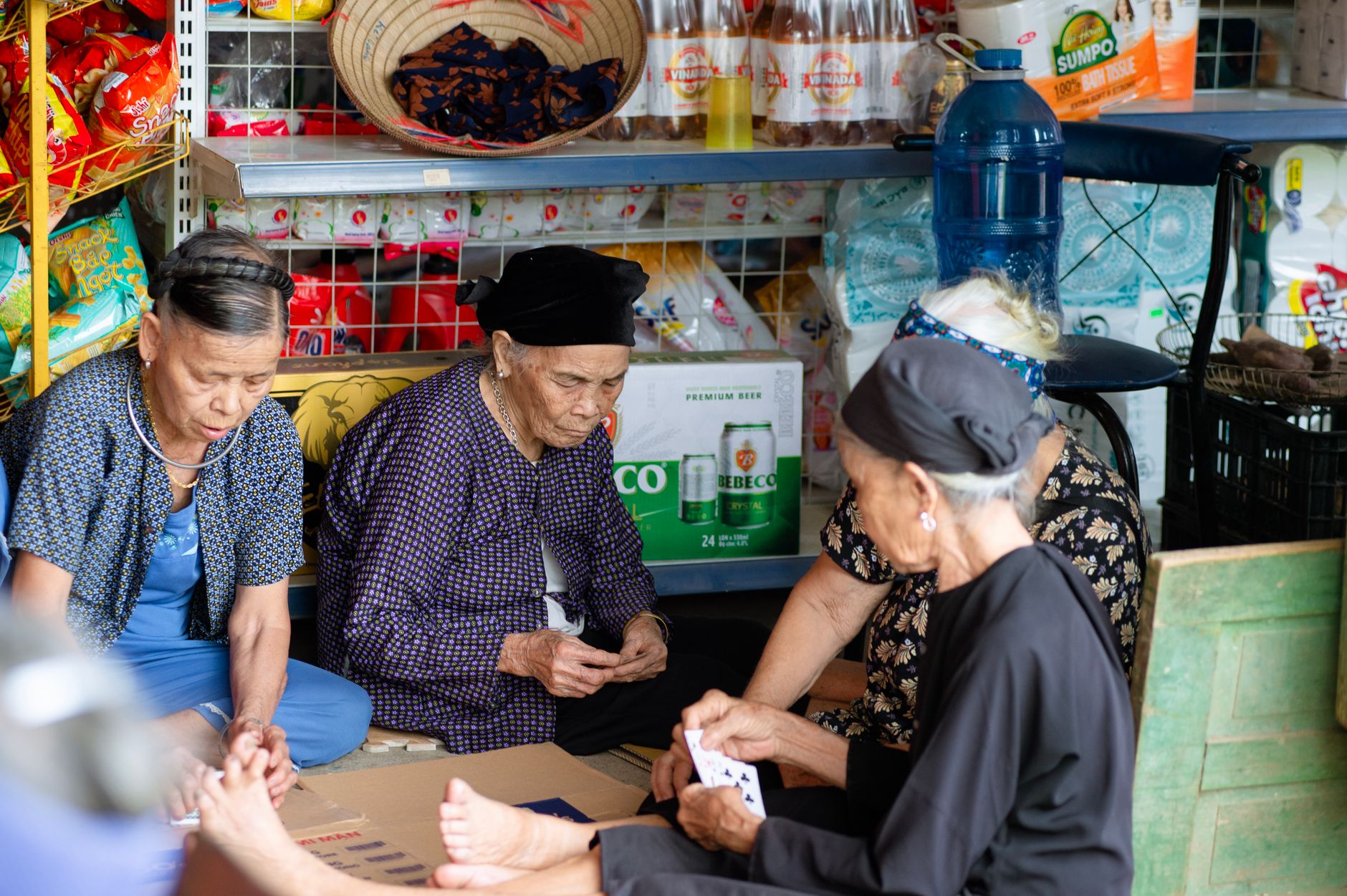
Ditch the Feed, Find the Fun: Why Traditional Games Are Your Next Travel Obsession
I remember standing on a dusty, sun-baked patch of ground in a remote village in northern Thailand, sweat trickling down my back, trying desperately to kick a woven rattan ball over a net with my foot. Around me, a group of teenagers, initially curious, were now roaring with laughter – not at me, but with me. My attempts at Sepak Takraw were clumsy, my balance non-existent, and my kicks mostly air, but in that moment, as the sun dipped below the horizon painting the sky in fiery hues, I felt more connected, more genuinely happy, than I had in weeks of meticulously planned, Instagram-worthy excursions.
This wasn't on any influencer's itinerary. There was no chic café backdrop, no perfectly styled outfit, just me, a bunch of grinning kids, and a game that transcended language barriers. It was raw, authentic, and utterly unforgettable. And it got me thinking: in our quest for the perfect travel shot, are we missing the very soul of a place? Are we so busy chasing what influencers want us to see that we overlook the real, messy, joyful experiences locals are living every day?
At Tripsora, we believe travel is about more than just checking off landmarks. It's about immersion, connection, and discovering the hidden rhythms of a culture. And few things offer a purer, more direct gateway to that than traditional games. These aren't just pastimes; they're living traditions, stories passed down through generations, and a vibrant expression of community spirit. They’re the secret handshake into a local’s world, and trust me, they’re way more fun than another perfectly plated avocado toast.
The Unfiltered Allure: Why You Need to Play Like a Local
In an age dominated by curated feeds and staged experiences, there's a profound beauty in the unscripted. Traditional games offer exactly that:
- Genuine Cultural Immersion: Forget museums for a moment. Learning a game from a local is a direct lesson in their culture, their values, their history. You'll observe teamwork, strategy, sportsmanship, and the unique social dynamics that define a community.
- Break Down Language Barriers: A smile, a gesture, a shared laugh – these are universal. When you're focused on the game, language often becomes secondary. It's a fantastic way to connect beyond words, fostering understanding and friendship.
- Unforgettable Memories: Let's be honest, how many more sunset photos do you really need? The memory of fumbling through a game with newfound friends, the sound of their laughter, the simple joy of shared play – these are the stories you'll tell for years.
- Support Local Traditions: By engaging with these games, you're helping to keep living traditions alive. You're showing appreciation for their heritage and encouraging the passing down of these skills to younger generations.
- A Digital Detox (Without Even Trying): When you're fully engrossed in a game, your phone becomes an afterthought. It's a natural, joyful way to unplug and be truly present in the moment.
Your Playbook: How to Find (and Join) a Game
So, how do you ditch the tourist trail and find these hidden playgrounds? It's easier than you think, but requires a dash of openness and a willingness to step outside your comfort zone.
- Observe and Approach: My number one tip. Walk through local parks, town squares, markets, or even quiet side streets. Look for groups of people, especially children or older folks, gathered around a game. Make eye contact, smile, and if they seem receptive, politely ask, "Can I watch?" or "Can you teach me?" A few words in the local language (like "hello" or "thank you") go a long way.
- Ask Your Hosts: Staying in a guesthouse, homestay, or a small, locally-run hotel? Your hosts are a goldmine of information. Ask them about local games, where they're played, and if they know anyone who might be willing to teach you. They might even teach you themselves!
- Local Markets and Community Centers: These are hubs of local life. Vendors, shopkeepers, and community workers are often happy to share insights into local pastimes.
- Be Respectful and Patient: Don't interrupt a game in progress. Wait for a natural break. Be humble; you're there to learn, not to show off. And remember, cultural etiquette varies, so observe how locals interact before jumping in.
- Offer a Small Exchange: Sometimes, a simple "thank you" is enough. Other times, offering to buy a round of drinks, a small snack, or even teaching them a simple game from your own culture (like Rock-Paper-Scissors) can be a wonderful gesture of appreciation.
Game On! Global Playgrounds and My Adventures
The world is a giant playground, and these are just a few of the traditional games that have stolen my heart (and occasionally, my dignity) on my travels.
1. Sepak Takraw (Southeast Asia: Thailand, Malaysia, Indonesia, Philippines)
- What it is: Often called "kick volleyball," Sepak Takraw is an acrobatic sport played with a woven rattan ball. Teams of three use their feet, knees, chest, and head to get the ball over a net, much like volleyball, but no hands allowed!
- My Experience: My first encounter was in a bustling public park in Chiang Mai, Thailand. I saw these incredibly agile teenagers practically flying through the air, contorting their bodies to spike the ball. Intrigued, I sat down to watch. After about ten minutes, a young man, probably no older than 16, gestured for me to join. My initial attempts were pathetic. The ball seemed to have a mind of its own, ricocheting off my shin or sailing wildly past the net. But the kids were incredibly patient and encouraging, dissolving into fits of laughter whenever I made a particularly spectacular miss. I didn't master a single move, but the sheer joy of trying, the camaraderie, and the feeling of being truly in the moment with them was pure magic. We ended up sharing some cheap sodas afterward, communicating mostly through smiles and gestures.
- Why you'll love it: It's fast-paced, visually stunning, and an incredible way to witness local athleticism. Even if you just watch, the energy is infectious.
- Practical Tip: Look for games in public parks, schoolyards (after hours), or open community spaces. No cost to watch or join. Just bring your sense of humor!
2. Mancala / Oware (Africa, Caribbean, Middle East, Asia)
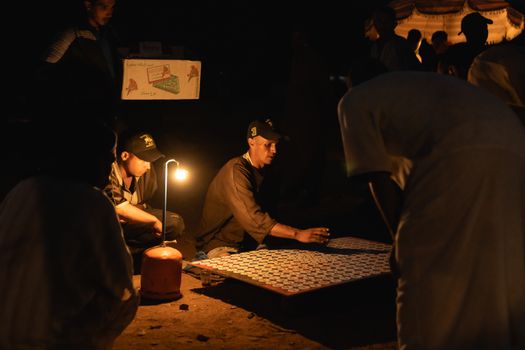
- What it is: Mancala is a family of board games played with small stones, beans, or seeds and a board with rows of holes. The objective is typically to capture all or some of your opponent's pieces. It's a game of strategy, counting, and foresight.
- My Experience: I learned a variant called Oware from an elderly gentleman in a small village outside Kumasi, Ghana. He was sitting under a giant mango tree, meticulously arranging small, smooth stones into holes carved into a wooden board. I was fascinated. With the help of his grandson, who spoke a little English, he patiently taught me the rules. It was a slow, deliberate game, punctuated by long silences as we each calculated our moves. He told me stories of his youth, of playing this game with his own grandfather, and how it taught him patience and wisdom. We played for hours, the rhythmic clinking of the stones the only sound besides the chirping of crickets. I bought a beautifully carved wooden Oware board from a local artisan to remember the experience.
- Why you'll love it: It's a mental workout and a fantastic way to engage with locals in a more contemplative setting. It often sparks conversations about history and local wisdom.
- Practical Tip: Look for people playing in markets, tea houses, or community areas. Many local artisans sell beautifully crafted boards, making for a perfect souvenir.
3. Patintero (Philippines)
- What it is: A traditional Filipino street game, Patintero is a tag-based game played on a rectangular grid drawn on the ground. One team acts as "guards" on the lines, trying to tag members of the "runners" team who are attempting to cross the grid without being caught.
- My Experience: Wandering through a residential neighborhood in Cebu City, Philippines, I heard shrieks of laughter and saw a flurry of motion. A group of kids, ranging from tiny tots to pre-teens, were intensely playing Patintero in a cleared section of the street. Their energy was infectious! One of the older girls, noticing me watching, waved me over with a huge smile. Before I knew it, I was one of the "runners," dodging and weaving between the lines, trying to make it to the other side. My long legs were a disadvantage in the tight grid, and I was tagged out almost immediately, but the sheer, unadulterated joy on those kids' faces was contagious. We played until dusk, my face aching from smiling so much.
- Why you'll love it: It's pure, unadulterated fun, especially with kids. It's active, social, and requires no equipment, making it incredibly accessible.
- Practical Tip: Keep an eye out for chalk lines on the pavement or open spaces in residential areas, especially in the late afternoon. Just join in!
4. Bocce / Pétanque (Europe: Italy, France, Spain, and beyond)
- What it is: A relaxed yet strategic lawn bowling game where players aim to roll their weighted balls (bocce) as close as possible to a smaller target ball (pallino/cochonnet).
- My Experience: In a small, sun-drenched piazza in Tuscany, Italy, I stumbled upon a group of elderly men, their faces weathered by years of sun and laughter, engaged in a spirited game of Bocce. The clink of the balls, the low murmur of Italian conversation, and the occasional burst of good-natured argument created a scene straight out of a movie. I sat on a bench, sipping an espresso, mesmerized. Eventually, one of the men, noticing my interest, offered me a glass of local wine and gestured for me to join. They explained the rules with patient hand gestures and broken English, and soon I was trying my hand at rolling the heavy balls. It was less about winning and more about the shared ritual, the gentle competition, and the feeling of being welcomed into their daily rhythm.
- Why you'll love it: It's a slower, more contemplative game, perfect for connecting with older generations and soaking in the local atmosphere.
- Practical Tip: Look for designated bocce courts in town squares, parks, or even some village restaurants. Often, the equipment is already there, and locals are happy to share.
5. Guli Danda (Indian Subcontinent: India, Nepal, Pakistan)
- What it is: A traditional bat-and-ball game played with two sticks: a larger one (danda) used to hit a smaller, spindle-shaped one (guli). The objective is to hit the guli as far as possible and then run to designated points before the opponent retrieves it.
- My Experience: During a walk through the narrow, winding alleys of Varanasi, India, I spotted a group of boys in a dusty open space, intently focused on their game. They were using simple, rough-hewn sticks. The younger boys were struggling to hit the guli, while the older ones demonstrated impressive skill. Curious, I paused. A boy, probably about ten, noticed me and, with a shy smile, offered me the danda. My first swing was comical, missing the tiny guli entirely. They erupted in giggles, but then patiently showed me how to prop the guli up and strike it just right. I never got the hang of the distance, but the sheer joy of playing a game that felt so ancient and simple, connecting with these kids in their everyday environment, was incredibly humbling and fun.
- Why you'll love it: It's a testament to the ingenuity of simple play, requiring minimal equipment but plenty of skill. It’s a great way to interact with children and experience grassroots culture.
- Practical Tip: This game is often played in open fields, parks, or even quieter streets. The sticks are usually homemade, so just ask if you can join!
Beyond the Scoreboard: Etiquette and Authentic Connection
Remember, when you join a traditional game, you're not just playing a sport; you're entering a cultural exchange.
- Be a Good Sport: Win or lose, maintain a positive attitude. Laughter and good humor are universal languages.
- Respect the Rules (and the Teachers): Listen attentively, follow instructions, and don't try to change the game to suit your preferences.
- Mind Your Manners: A polite "please" and "thank you" (in the local language if possible) goes a long way.
- Don't Overstay Your Welcome: Be sensitive to cues. If the game winds down or people start dispersing, thank them warmly and take your leave.
Capturing the Moment: Instagram-Worthy, Not Influencer-Washed
Yes, you can still capture these moments for your social media, but do it authentically. Ditch the staged poses and focus on the genuine interaction.
- Candid Shots are King: Focus on the laughter, the concentration, the movement, the expressions on people's faces. These tell a far more compelling story than a selfie.
- Ask Permission: Especially when photographing children or older individuals, always ask before you snap away. A simple gesture often suffices.
- Focus on the Details: The worn texture of a game board, the unique design of a traditional ball, the dusty ground, the vibrant clothing – these add depth to your photos.
- Tell a Story: Use your captions to share the experience, the people you met, and what you learned. This is where the true "influencing" happens – inspiring others to seek out similar, genuine connections.
- Hashtags to Use: #AuthenticTravel #LocalGames #CulturalImmersion #TravelUnfiltered #PlayLikeALocal #TripsoraAdventures #HumanConnection #UnpluggedTravel #HiddenGems
Your Next Adventure Awaits: Play Your Way Around the World
The world is full of incredible, unscripted moments waiting to be discovered. While influencers might show you the prettiest backdrops, locals will show you the heart and soul of their home – often with a game and a shared laugh. These are the experiences that truly enrich your travels, break down barriers, and leave you with memories far richer than any perfectly curated feed could ever offer.
So, on your next trip, dare to ditch the itinerary, put down your phone, and ask a local, "Will you teach me to play?" Your greatest travel story awaits, one playful challenge at a time.
What traditional game have you played on your travels? Share your stories and tips in the comments below! Let's inspire each other to play like locals!
---