Unlocking the Gates to Paradise: My Quest for the World's Most Secret Gardens
I remember it like yesterday. Scorching August sun beating down on the cobblestone streets of Rome. I’d just battled my way through a throng of selfie sticks at the Trevi Fountain, my patience as frayed as the ancient stone itself. “There has to be more than this,” I muttered to my travel companion, sweat trickling down my back. Just then, an elderly Roman woman, noticing my exasperation, caught my eye. She smiled, a knowing glint in her gaze, and pointed a gnarled finger down a narrow, unassuming alleyway no wider than my shoulders. “Vai, signorina. Qui, c'è pace.” Go, miss. Here, there is peace.
Curiosity piqued, and with nothing to lose, we squeezed through. What lay beyond was a small, sun-dappled courtyard, bursting with jasmine and the gentle trickle of a forgotten fountain. A handful of locals sat on stone benches, reading, chatting in hushed tones, or simply enjoying the quiet. There wasn’t a tour group in sight. It was pure, unadulterated bliss – a secret garden, hidden in plain sight, a sanctuary locals had guarded from the tourist hordes. That moment changed how I travel forever.
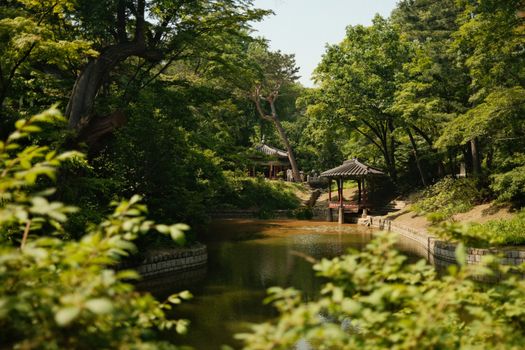
Since then, my mission has been clear: to uncover these whispered-about, often-unmarked oases that offer a true glimpse into a city's soul. These aren't your grand, manicured botanical parks listed in every guidebook. These are the intimate, the unexpected, the places where time seems to slow down and the city's frantic pulse fades into a gentle hum. They are the spots locals cherish, where they escape, reflect, and recharge. And today, my fellow adventurers, I'm going to share some of my most prized discoveries and teach you how to find your own.
The Allure of the Undiscovered: Why Seek Out Secret Gardens?
Why bother with the hunt when famous gardens are just a Google search away? Because the magic of a secret garden isn't just in its beauty; it's in the discovery. It's the thrill of feeling like you've unlocked a hidden level in a game, a privileged peek behind the curtain of everyday life.
Authenticity and Serenity:
Unlike their famous counterparts, secret gardens retain an untouched charm. They're not designed for mass tourism; they’re often maintained by passionate locals, small communities, or even just time itself. This translates to an unparalleled sense of peace. Imagine sipping coffee surrounded by ancient roses instead of jostling for a view.
A Deeper Connection:
When you find a place locals love, you connect with the city on a more profound level. You’re no longer just a spectator; you're a temporary resident, sharing in their quiet joys. These gardens are living museums of local culture, often tied to historical homes, forgotten churches, or community initiatives.
Instagram-Worthy, Without the Crowds:
Let's be honest, we all love a good photo op. But capturing that perfect, serene shot is near impossible when you're elbow-to-elbow with hundreds of others. Secret gardens offer stunning backdrops – crumbling ivy-clad walls, vibrant blooms, sun-dappled paths – all without the photobombers. Your feed will thank you!
Decoding the Whisper Network: How to Find Your Own Hidden Oasis
Finding these elusive pockets of green isn't always easy, but it’s part of the adventure. It requires a blend of curiosity, observation, and a willingness to step off the well-trodden path.
- Ask the Right Locals (Politically!): Don't just ask "Where's a good garden?" Instead, try, "I'm looking for a quiet spot to read, away from the main tourist areas. Do you know of any hidden courtyards or small parks where locals go to relax?" Coffee shop baristas, independent bookstore owners, and elderly residents are often the best sources. Be polite, genuine, and ready to respect their recommendations.
- Become a Google Maps Detective: Switch to satellite view and zoom in on dense urban areas. Look for patches of green surrounded by buildings, particularly those without obvious public entrances. Sometimes, a tiny green square on the map can hide an entire world.
- Look for Unassuming Entrances: Many secret gardens are accessed through archways, narrow alleys, or even seemingly private gates that are often left ajar during the day. Keep an eye out for small, faded signs, or even just a hint of greenery peeking over a wall.
- Local Blogs and Forums: Dive deep into local travel blogs, community forums, or even expat groups. Often, these communities share tips on lesser-known spots. Search terms like "hidden parks [city name]" or "secret courtyards [city name]."
- Follow Your Nose (Literally!): Sometimes, the scent of jasmine, honeysuckle, or blooming roses can lead you down an unexpected path. Trust your senses and allow yourself to wander.
Parisian Paradox: Jardin des Rosiers – A Marais Marvel
Ah, Paris. The city of lights, love, and… falafel. My first encounter with a true Parisian secret garden came after an epic falafel feast in the Marais district. Stuffed and happy, I noticed a tiny, unassuming archway next to a bustling shop on Rue des Rosiers. It looked almost like a service entrance. My Roman lesson echoing in my mind, I peered through.
Beyond the archway, a small, cobbled path opened into a breathtaking courtyard. This was the Jardin des Rosiers – Joseph Migneret, a public garden often overlooked because its entrance is so discreet. Ancient rose bushes, some climbing high up weathered stone walls, released a heady perfume into the air. Benches were scattered beneath shady trees, occupied by just a few locals engrossed in books or quiet conversation. The sounds of the bustling Marais faded to a whisper.
I spent a blissful hour there, simply breathing in the scent of roses and soaking up the tranquility. It felt like stepping back in time, into a private Parisian moment. It’s not on every tourist map, and that’s precisely its charm.
- Location: Access via 10 Rue des Rosiers, or 22 Rue des Écouffes, 75004 Paris, France.
- How to Find It: Look for the small archway on Rue des Rosiers (it's easy to miss amongst the shops) or the slightly more visible entrance on Rue des Écouffes.
- Best Time to Visit: Early morning or late afternoon for the best light and fewest people. Spring and early summer for peak rose bloom.
- Price: Free.
- Tripsora Tip: Grab a falafel beforehand and enjoy it on a bench inside for the ultimate local experience!
Rome's Green Heartbeat: Hortus Secretus on the Aventine Hill
My initial Roman discovery was just the beginning. On a subsequent trip, determined to find more 'peace' in the Eternal City, I ventured to the Aventine Hill. While the Giardino degli Aranci (Orange Garden) is lovely and offers panoramic views, it can still draw a crowd. My quest led me to a truly hidden gem, a place I affectionately dubbed Hortus Secretus (the Secret Garden) – though its official name is the Roseto Comunale di Roma (Rome Rose Garden), many parts of it are so secluded and quiet that they feel entirely private, especially outside of peak rose season.
I stumbled upon a particularly quiet section, tucked away on the lower slopes, almost as if it were a forgotten corner of the main rose garden. Here, ancient ruins were integrated into the landscape, with fragrant herbs spilling over crumbling walls and a small, almost invisible fountain offering a gentle murmur. It wasn't about the grand vistas, but the intimate details: the buzzing of bees, the scent of lavender and rosemary baking in the sun, the feeling of history seeping from every stone.
I watched a local artist sketching, completely absorbed in her work, and knew I'd found another sacred space. This part of the garden, less about the showy roses and more about quiet contemplation, felt truly off-limits to the casual tourist. It was a place for Romans to reconnect with their city's ancient soul in peace.
- Location: Via di Valle Murcia, 6, 00153 Roma RM, Italy. While it's officially the Rose Garden, look for the less-trodden paths on the lower slopes near the Circus Maximus side.
- How to Find It: Walk towards the Aventine Hill. Instead of going directly into the main Giardino degli Aranci, follow the roads that skirt the base of the hill towards the Circus Maximus. Look for discreet pathways leading upwards into the greenery.
- Best Time to Visit: Early morning, particularly outside of May (peak rose bloom) to avoid any crowds. The quiet corners are always there, regardless of the season.
- Price: Free.
- Tripsora Tip: Pack a small water bottle and a sketchbook. The light here is incredible for drawing or photography.
Kyoto's Hidden Zen: The Moss Garden of Kōtō-in
Kyoto, with its myriad temples and gardens, might seem an unlikely place for a "secret" garden. Yet, amidst the grandeur of the major sites, there are countless smaller, more intimate temple gardens that offer profound tranquility, often overlooked by those rushing between the big names. One such place that captured my heart is a tiny, almost ethereal moss garden within the Kōtō-in Temple, part of the larger Daitoku-ji complex.
While Daitoku-ji itself is vast, many tourists only visit one or two of its sub-temples. Kōtō-in, however, felt like stepping into a whispered poem. After paying a modest entrance fee, I followed a narrow, bamboo-lined path. What awaited me was a small, perfectly minimalist garden dominated by lush, velvety moss. Raked gravel paths wound gently through the verdant carpet, leading to a small tea house overlooking the serene scene.
The air here was different – cooler, hushed, imbued with centuries of contemplation. There were no grand waterfalls or vibrant flower displays, just the subtle beauty of moss, stone, and filtered light. I sat on the veranda, sipping the complimentary green tea, and felt an incredible sense of peace wash over me. It was a moment of pure, unadulterated Zen, a quiet escape from the otherwise busy temple grounds. The few other visitors were equally respectful, speaking in whispers, almost as if afraid to disturb the profound silence.
- Location: Kōtō-in Temple, Daitoku-ji Temple complex, Murasakino Daitokuji-cho, Kita-ku, Kyoto, Japan.
- How to Find It: Daitoku-ji is a large complex. Kōtō-in is one of its many sub-temples. Look for the specific signs for Kōtō-in within the complex. It’s slightly tucked away compared to some of the more prominent sub-temples.
- Best Time to Visit: Any time of year, but especially beautiful during autumn for the changing leaves and during the rainy season when the moss is at its most vibrant. Go early morning.
- Price: Typically around 400-500 JPY for entry to Kōtō-in.
- Tripsora Tip: Practice mindful photography here. Focus on the textures, the play of light, and the quiet details. Remove your shoes before entering the temple buildings and respect the silence.
London's Urban Oasis: St. Dunstan in the East
London, a city of bustling markets, iconic landmarks, and double-decker buses. A secret garden here seems almost impossible, doesn't it? Yet, tucked away between the Tower of London and London Bridge, lies one of the most atmospheric and surprising urban oases I’ve ever encountered: St. Dunstan in the East.
This isn't a garden in the traditional sense, but rather a public park built within the bombed-out ruins of a medieval church. Destroyed during the Blitz of World War II, the church was never fully rebuilt. Instead, nature was allowed to reclaim the space. Ivy now climbs the remaining Gothic arches, trees grow through the roofless nave, and flowers bloom where pews once stood.
My first visit was on a dreary, drizzly London afternoon. Ducking through a narrow gate from a busy street, I was immediately struck by the eerie beauty and profound sense of history. The damp, cool air, the silence broken only by birdsong, and the sight of ancient stone intertwined with vibrant greenery created an almost sacred atmosphere. It’s a powerful reminder of nature’s resilience and the passage of time. Locals often use it for quiet lunch breaks, a quick escape from office life, or simply a moment of reflection. It’s breathtakingly photogenic, yet somehow manages to remain a tranquil haven.
- Location: St Dunstan's Hill, London EC3R 5DD, United Kingdom.
- How to Find It: It's a short walk from Monument or Tower Hill tube stations. Look for a small, easily missed gate on St Dunstan's Hill.
- Best Time to Visit: Any time, but particularly magical on a misty morning or a sunny afternoon when light filters through the arches.
- Price: Free.
- Tripsora Tip: Bring a good book or simply sit on one of the benches and soak in the unique atmosphere. It’s also an incredible spot for a quiet photoshoot.
Practical Tips for the Secret Garden Hunter
Now that you're armed with the knowledge of where to go and how to look, here are a few more tips to enhance your secret garden adventures:
- Go Off-Peak: The earlier in the morning or later in the afternoon you visit, the better your chances of having these tranquil spaces almost entirely to yourself. Weekdays are always better than weekends.
- Respect the Space: These are often cherished local spots, sometimes privately maintained. Be quiet, don't litter, and stick to designated paths. If you see signs, respect them. Ask before taking photos of people.
- Pack Light: A small bag with a water bottle, a snack, a good book, and your camera is all you need. Comfortable walking shoes are a must for all the exploring you’ll be doing.
- Be Observant: Look up, look down, look sideways. Sometimes the most beautiful details are in the smallest nooks and crannies.
- Charge Your Devices: You'll want your phone or camera fully charged for those Instagram-worthy shots and for navigating with maps.
- Embrace the Journey: Sometimes the joy isn't just in finding the garden, but in the unexpected detours and discoveries you make along the way.
The Ultimate Reward: A Deeper Connection to the World
The world is full of wonders, many of them splashed across billboards and travel brochures. But the truly profound experiences, the ones that linger in your memory long after your tan has faded, are often found in the quiet corners, the hidden gems, the places locals keep to themselves. These secret gardens offer more than just beauty; they offer a moment of peace, a connection to a city's true heartbeat, and the thrill of genuine discovery.
So, on your next adventure, challenge yourself. Put down the guidebook, silence the tourist chatter, and go on a quest for your own secret garden. Ask a local, peer down that unassuming alley, or simply follow your intuition. You might just uncover a piece of paradise that changes the way you see the world, one whispered secret at a time.
What secret gardens have you discovered on your travels? Share your finds in the comments below! Let's build a community of secret garden hunters!