The clinking of cutlery, the hushed murmurs of conversation, the tantalizing aroma of something utterly delicious… these are the familiar symphony of a restaurant. But what if one crucial element was removed? What if you couldn't see a single thing?
I remember my first time, a few years ago, in a dimly lit waiting area in Paris. My heart was thumping with a mix of excitement and genuine apprehension. My partner, ever the adventurous one, had booked us a table at Dans le Noir? – a restaurant where you dine in absolute, pitch-black darkness, served by visually impaired guides. "It's an experience," he'd said, "not just a meal." And he was right. As I was led by a gentle hand, one step at a time, into the void, the familiar world melted away. The door closed, and suddenly, my entire perception of food, conversation, and even myself, was about to be profoundly challenged.
This wasn't just a quirky novelty; it was a revelation. And now, this incredible concept of dining in complete darkness is sweeping the globe, becoming one of the most talked-about and trending culinary adventures. If you’re a traveler seeking genuinely unique experiences, something that will ignite your senses and leave you with a story to tell for years, then buckle up. This is your ultimate guide to the world of dark dining.
The Allure of the Unseen: What Exactly is Dark Dining?
At its core, dark dining, often referred to as "blind dining" or "dinner in the dark," is precisely what it sounds like: enjoying a meal in an environment of absolute, unyielding darkness. There are no candles, no emergency lights, no glowing phone screens (which are usually strictly prohibited). The concept originated in Europe, notably with the "Blindekuh" (Blind Cow) restaurant in Zurich, Switzerland, which opened in 1999, building on the "Dialogue in the Dark" exhibition that aimed to foster empathy and understanding for the visually impaired.
The magic happens when your dominant sense – sight – is taken away. Suddenly, your other senses kick into overdrive. The aroma of your dish becomes more potent, the texture of each ingredient more pronounced, the subtle flavors on your tongue more complex and surprising. It's not just about eating; it's about a complete sensory realignment. You learn to trust your touch, your hearing, and especially your taste buds in a way you never thought possible. And perhaps most importantly, it offers a fleeting glimpse into the daily reality of those who navigate the world without sight, fostering a profound sense of empathy and connection.
Why Plunge into Pitch Black for Your Next Meal?
Beyond the initial novelty, there are compelling reasons why dark dining is more than just a passing fad and why it’s gaining such immense popularity:
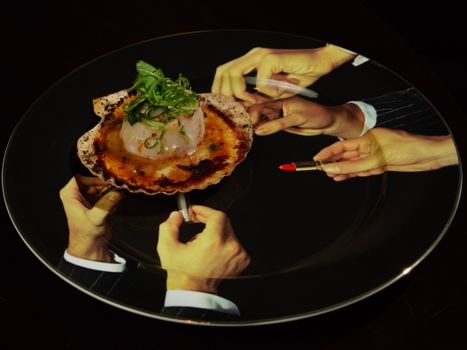
- Heightened Sensory Experience: This is the big one. Without visual cues, your brain allocates more resources to smell, taste, touch, and sound. That humble carrot on your plate? It might reveal a sweetness you never noticed before. The texture of a perfectly seared scallop becomes an exquisite discovery. Every mouthful is an adventure, a guessing game that delights and surprises.
- Unleash Your Inner Food Detective: Part of the fun is trying to identify what you're eating. Is that chicken or fish? Are those mushrooms or olives? It turns dinner into an interactive game, sparking conversation and laughter among your companions. I vividly remember trying to discern if the dessert was a chocolate mousse or a rich brownie – the texture was so deceptive!
- Enhanced Communication & Connection: When you can't rely on facial expressions or body language, your conversations become more direct, more auditory. You listen more intently, you speak more clearly, and you often find yourself engaging in deeper, more meaningful dialogue with your dining partners. It strips away distractions and fosters a unique intimacy.
- Empathy and Awareness: Many dark dining establishments, like Dans le Noir?, employ visually impaired individuals as their guides and servers. This provides meaningful employment opportunities and allows sighted diners to experience a sliver of their world, gaining a powerful perspective on their abilities and resilience. It's a humbling and eye-opening experience that stays with you long after the meal.
- A Unique Date Night or Group Outing: Forget the usual dinner-and-a-movie. Dark dining offers an unparalleled experience for couples, friends, or even corporate teams looking for something truly memorable and bonding. It’s an instant conversation starter and a shared adventure.
- Confronting Your Comfort Zone: For some, the idea of complete darkness can be daunting. But overcoming that initial apprehension leads to a sense of accomplishment and a reminder of how adaptable our senses truly are. It’s a safe space to explore a different way of experiencing the world.
Global Hotspots: Trending Dark Dining Restaurants You Need to Visit
Ready to book your sensory adventure? Here are some of the most renowned and trending dark dining establishments around the world, offering specific details to help you plan your trip:
- Dans le Noir? (Paris, London, Barcelona, Madrid, St. Petersburg, Auckland, and more)
- Concept: This pioneering global chain is arguably the most famous. "Dans le Noir?" translates to "In the Dark?". Their mission extends beyond just a meal; it's a social enterprise that aims to challenge prejudices and demonstrate the competence of visually impaired individuals who serve as your guides. They often feature surprise menus – you choose a general category (meat, fish, vegetarian) but the exact ingredients remain a secret until after the meal.
- My Experience: My first time in Paris, I opted for the "surprise meat" menu. Each course was a delightful mystery. I found myself focusing intensely on the temperature of the food, the subtle crunch of a vegetable, the way a sauce clung to the main ingredient. The wine, which I usually "see" before I taste, felt utterly different; I had to rely solely on its aroma and initial taste profile to guess its origin. The conversations with our guide, who navigated the room with effortless grace, were enlightening and often humorous.
- Typical Price Range: Expect to pay around €60-€100+ per person for a multi-course meal, often with wine pairing options available at an additional cost. Prices vary by location (e.g., London can be pricier than Paris).
- Booking: Essential to book well in advance, especially for weekend evenings. Check their official website for specific location details and online booking.
- O.Noir (Montreal & Toronto, Canada)
- Concept: Inspired by the original Blindekuh, O.Noir offers a similar concept, employing visually impaired servers to guide you through your meal in total darkness. They focus on fresh, often locally sourced ingredients, and their menus typically offer a choice of appetizers, main courses, and desserts, with the option to select a "surprise" item for any course.
- My Experience: During a trip to Montreal, I visited O.Noir. What struck me was the immediate sense of community among the diners. Everyone was a little disoriented, a little giggly, and eager to share their guesses about the food. I distinctly remember a salmon dish that tasted incredibly fresh, but it was the texture of the accompanying risotto that truly blew me away – perfectly al dente, each grain distinct. The experience felt incredibly intimate, even in a bustling restaurant.
- Typical Price Range: Main courses typically range from CAD $50-$70, with tasting menus (2 or 3 courses) often priced between CAD $70-$100 per person, excluding drinks.
- Booking: Highly recommended, particularly for peak times. Their website offers online reservations.
- Blindekuh (Zurich & Basel, Switzerland)
- Concept: The original pioneer! "Blindekuh" means "Blind Cow" (a play on words, as "Kuh" also sounds like "cue"). This foundation-run restaurant has been offering dark dining since 1999, providing employment and training for visually impaired individuals. They offer seasonal menus with a focus on Swiss and international cuisine, often with both surprise and pre-selected options.
- Why it's Trending: As the first of its kind, Blindekuh holds a special place in the dark dining movement. It's not just a restaurant; it's a social institution that has inspired countless others. Visiting here is like a pilgrimage for experiential diners.
- Typical Price Range: Expect to pay CHF 70-100+ per person for a multi-course meal.
- Booking: Essential. Visit their website for reservation details and current menus.
- Nocti Vagus (Berlin, Germany)
- Concept: One of Europe's largest dark dining restaurants, Nocti Vagus ("Night Wanderer") takes the experience a step further by offering not just dinner, but also "Darkness Thrillers" and "Darkness Concerts" – live performances experienced solely through sound. Their culinary offerings include a range of international dishes, with options for meat, fish, vegetarian, and vegan diners.
- Why it's Trending: The addition of entertainment in the dark elevates the experience beyond just food, making it a truly immersive sensory event. It’s a fantastic option for those looking for a complete evening of unique entertainment.
- Typical Price Range: Dinner menus typically range from €50-€80 per person, with additional costs for drinks and special event packages.
- Booking: Reservations are a must, especially for their themed evenings.
Navigating the Darkness: Practical Tips for Your Sensory Journey
To ensure your dark dining experience is as enjoyable and transformative as possible, here are some practical tips and actionable advice:
- Book Ahead: Dark dining restaurants are popular and often have limited seating. Secure your spot well in advance.
- Arrive Early: Give yourself time to check in, use the restroom, and mentally prepare in the reception area before entering the dark dining room.
- Embrace the Surprise Menu: Many establishments offer "surprise" menus where you don't know the exact ingredients until after the meal. This is where the real fun lies! If you have allergies or dietary restrictions, make sure to inform the restaurant when booking. They are usually very accommodating.
- Dress Comfortably: You won't be seeing your food (or your clothes), so opt for comfortable attire. Avoid anything too restrictive or precious, as spills can happen when you're navigating without sight.
- Leave Your Lights Outside: This is crucial. Phones, smartwatches, light-up shoes, and anything that emits light must be left in lockers or with the host. Even a tiny glow can disrupt the experience for everyone.
- Trust Your Guide: Your visually impaired server is your eyes and your guide. Listen to their instructions, ask for help if you need it, and trust their expertise in navigating the dark room. They are incredibly skilled!
- Mind Your Manners (and Your Utensils): Eating in the dark can be messy. Don't be afraid to use your fingers if it helps, especially for trickier items. Take small bites, and try to keep your plate centered in front of you. Cutlery can feel alien at first; use your non-dominant hand to locate the food on your plate.
- Engage with Your Companions: This is an incredible opportunity for conversation. Without visual cues, you'll find yourself listening more intently and speaking more openly. It’s a bonding experience like no other.
- Take Your Time: Don't rush. Savor each bite, each aroma, each sound. This isn't a race; it's an exploration.
- Prepare for Disorientation (and Laughter): You will feel disoriented at first, and that's perfectly normal. Embrace the awkwardness, laugh at your fumbles, and enjoy the unique challenge.
Beyond the Plate: The Deeper Impact of Dark Dining
While the culinary adventure is undoubtedly the main draw, the impact of dark dining often extends far beyond the plate. For me, it was a profound lesson in gratitude. I left the restaurant with a heightened appreciation for my sight, but also for the incredible adaptability of the human body and mind.
The conversations I had with my partner during that meal were unlike any we'd had before. Without the distraction of eye contact or external stimuli, we truly listened to each other, our voices becoming the sole focus. It fostered a deeper connection, a shared vulnerability in the face of the unknown.
Moreover, knowing that these establishments often provide meaningful employment and a platform for visually impaired individuals to showcase their abilities adds another layer of significance. It transforms a meal into a statement, a small act of support for inclusion and understanding. It's a powerful reminder that disability does not equate to inability, and often, it fosters a unique set of strengths that we, in our sighted world, rarely get to appreciate.
It's an experience that encourages you to step outside your comfort zone, challenge your assumptions, and truly feel your way through a meal. It's a reminder to slow down, engage all your senses, and appreciate the nuances of food, conversation, and human connection.
Is Dark Dining Right For You?
If you're an adventurous eater, a curious traveler, someone looking for a truly unique date night, or simply want to challenge your perceptions, then absolutely, yes!
However, if you suffer from severe claustrophobia or have an intense fear of the dark, it might be a challenging experience. While the environments are safe and controlled, the complete absence of light can be unsettling for some. Most establishments are understanding, and you can always discuss your concerns with them beforehand.
For everyone else, I urge you to take the plunge. It’s more than just dinner; it’s an immersive, transformative journey that will awaken your senses, broaden your perspective, and leave you with unforgettable stories.
So, next time you're planning a trip or a special evening out, consider stepping into the void. Let your senses be your guide, and prepare for a culinary revelation. Have you ever tried dark dining? Share your incredible stories and recommendations in the comments below! Let's inspire more travelers to embark on this extraordinary sensory adventure.