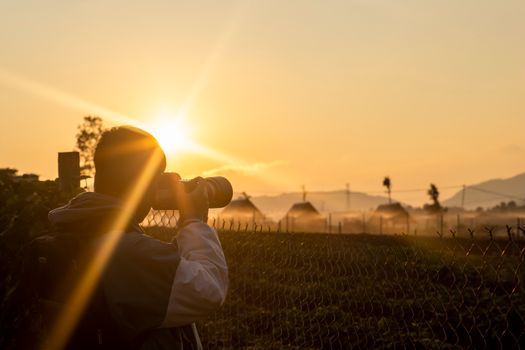
The Alarms You Can't Afford to Snooze
My boots crunched over frost-hardened soil at 4:15 AM, the air thick with the scent of damp pine needles, wet basalt, and stale espresso from my thermos. The valley below was buried under a blanket of ocean mist, still pitch-black save for the flickering lights of a distant trail groomer. My breath bloomed in front of my headlamp as I adjusted the carbon-fiber tripod legs on a wet ledge. Ten minutes later, the horizon split open. A slice of deep violet dissolved into burning magenta, casting a sharp crimson glow across the razor-toothed ridgeline in front of my lens.
That single 1/15th-of-a-second exposure made three weeks of red-eye flights, damp socks, and dawn alarms completely worth it.
Executing a proper sunrise photography mission is not about luck; it is a calculated blend of logistics, weather tracking, gear discipline, and local knowledge. While mid-day tourists fight over overcrowded viewpoints, the first thirty minutes of dawn offer pristine atmosphere, empty trails, and soft, directional light that transforms average topography into high-art compositions.
Here are the top photography locations worth sunrise missions right now—along with the exact, field-tested intel you need to shoot them like a seasoned professional.
---
1. Seceda Ridge, Dolomites, Italy
```
[Seceda Pinnacle]
/\
/ \ <-- Aim lens southeast for alpine glow
/ \
______/______\_________________
[ Meadow Foreground ]
```
The Shot
The jagged, knife-edge spires of the Odle Group punching through morning cloud inversion, lit by the first beam of red alpine glow (enrosadira).
Why It’s Worth the Dawn Mission
During normal operating hours, Seceda is overrun with day hikers taking cable car selfies. Arriving before dawn means you get the dramatic 2,500-meter precipice almost entirely to yourself, framed by rolling green alpine meadows bathed in soft directional light.
Field Notes & Camera Settings
* Optimal Lens: 24-70mm f/2.8. A focal length around 35mm captures both the sharp falloff of the ridgeline and the vastness of the Val Gardena below.
* Camera Settings: ISO 100, f/8 for maximum edge-to-edge sharpness, shutter speed variable (bracket 3-5 exposures to compensate for the extreme dynamic range between bright sky and shadowed rock faces).
* Pro-Tip: Cable cars don't run at 4:30 AM. You must stay overnight at Rifugio Fermeda (a 20-minute pre-dawn walk to the ridge) or commit to a steep, 2.5-hour uphill climb from the Col Raiser parking lot.
Quick Logistics
* Cost: Free trail access; ~$120–$160/night for nearby rifugio stay.
* Best Time of Year: Late June to mid-September (wildflowers peak in July).
* How to Get There: Drive to Ortisei, park at Col Raiser cable station, and hike Trail 1 to the ridge before first light.
---
2. Lake Tamblingan, Bali, Indonesia
```
/ \ (Mist)
/ \
~~~~~~~~~~~~~~~~~~~~~~~ <-- Lake Horizon
[Junkung Boat] <-- Frame in lower left third
```
The Shot
An ancient, weather-worn Candi Bentar (split gate) partially submerged in calm water, enveloped by thick, rolling volcanic mist while local fishermen glide past in wooden dugout canoes (junkung).
Why It’s Worth the Dawn Mission
Forget the long queues and artificial mirrors at the Lempuyang "Gates of Heaven." Lake Tamblingan, hidden in the central highlands of Bedugul, remains raw and uncommercialized. At dawn, cooling highland temperatures meet warm lake water, creating a dense atmospheric fog that looks straight out of an cinematic epic.
Field Notes & Camera Settings
* Optimal Lens: 70-200mm f/2.8 telephoto. Compressing the boat, the misty water, and the distant jungle canopy creates depth without clutter.
* Camera Settings: ISO 400 (to compensate for low dawn light without sacrificing shutter speed), f/4, 1/250s to freeze the motion of the canoe paddle.
* Pro-Tip: Do not shoot from the muddy bank. Hire a local boatman at the shore for 150,000 IDR (~$10 USD). Have them paddle you out onto the water just as the sun rises over the crater rim to get a low-angle shot looking back at the temple ruins.
Quick Logistics
* Cost: ~50,000 IDR ($3.50 USD) park entry + boat hire fee.
* Best Time of Year: May to October (Dry season yields cleaner sunrise colors and controllable mist levels).
* How to Get There: 2-hour motor scooter or private driver ride north from Canggu/Ubud. Arrive at the shore by 5:15 AM sharp.
---
3. Meteora, Thessaly, Greece
The Shot
Centuries-old Eastern Orthodox monasteries perched atop towering conglomerate rock pillars, rising like isolated islands out of a sea of morning valley fog.
Why It’s Worth the Dawn Mission
Meteora is magnificent at sunset, but sunset brings tour buses and crowded pull-offs. Dawn brings silence, church bells ringing through the valley, and a soft pink light that cuts through the moisture drifting off the Pindus Mountains.
```
+----+ (Monastery)
| |
/---|----|---\
/ Rock Pillar \
/________________\
~~~~ Fog Layer ~~~~
```
Field Notes & Camera Settings
* Optimal Lens: 16-35mm wide-angle for sweeping landscape panels, or 85mm prime for isolation shots of single monastic spires.
* Camera Settings: ISO 100, f/11, 2-5 second long exposure (requires a sturdy tripod) to smooth out the drift of the valley fog. Use a 2-stop Soft Graduated ND filter to keep the bright sky balanced with the dark sandstone cliffs.
* Pro-Tip: Skip the primary tourist lookouts. Head directly to Psaropetra Overlook or the small rock outcrop just south of the Monastery of Rousanou. Position your tripod low to the rock face to use lichen-covered stone as lead-in foreground lines.
Quick Logistics
* Cost: Free to photograph from public roads; €3 per monastery if entering later in the morning.
* Best Time of Year: October to November (autumn colors in the trees below + optimal chances for low-lying morning fog).
* How to Get There: Rent a vehicle in Kalambaka, drive up the main loop road toward Kastraki by 5:30 AM.
---
4. Deadvlei, Namib-Naukluft National Park, Namibia
The Shot
900-year-old, sun-blackened camelthorn tree skeletons standing against a stark, scorched-white clay pan, framed by towering, bright-orange sand dunes half-shrouded in sharp dawn shadow.
```
[Sun Light] ---> Dune (Orange Side) | Dune (Shadow Side)
|
[Black Skeleton Tree]
======================== Clay Pan (White)
```
Why It’s Worth the Dawn Mission
Deadvlei is one of the most visually striking high-contrast environments on the planet. The magic happens during a fleeting 15-minute window when the sun hits the top of Big Daddy dune, painting it brilliant orange, while the floor of the clay pan remains in deep, cool blue shade.
Field Notes & Camera Settings
* Optimal Lens: 70-200mm telephoto. Stand far back on the clay pan and zoom in to isolate individual tree silhouettes against the orange sand wall. This flattens perspective, making the dune look like a painterly backdrop.
* Camera Settings: ISO 100, f/8, 1/125s. Keep a close eye on your histogram; do not blow out the bright orange sand while trying to capture detail on the dark tree trunks.
* Pro-Tip: The main park gate at Sesriem opens at sunrise, which is too late to make the 45km drive and 1.1-mile sand trek in time for first light. Book a campsite at Sesriem Rest Camp inside the inner gate. This grants you access to the dunes one hour before the general public.
Quick Logistics
* Cost: 150 NAD (~$8 USD) park entrance fee per person.
* Best Time of Year: May to September (cooler morning temperatures mean comfortable dune hiking).
* How to Get There: Fly into Windhoek, rent a 4x4 vehicle (essential for the final 5km sand track to Deadvlei), drive 5 hours south to Sesriem.
---
5. Hang Mua Peak, Ninh Binh, Vietnam
The Shot
A winding dragon scale staircase clinging to sharp limestone karsts, overlooking mist-covered emerald rice fields and winding rivers bathed in golden sunrise light.
Why It’s Worth the Dawn Mission
By 9:00 AM, the 500 steps up Hang Mua are packed with tourists sweating in the humid heat. At 5:30 AM, you share the summit dragon sculpture with a handfull of dedicated photographers, cool air, and the distant sounds of the rural countryside waking up.
```
_/\_ (Dragon Head)
/ \
__/\_______/ \
/ Staircase \
/ \
/____Karst Peak_________\
================================ Ngo Dong River
```
Field Notes & Camera Settings
* Optimal Lens: 16-35mm ultra-wide-angle. You need a wide perspective to wrap the dragon’s tail into the frame along with the valley below.
* Camera Settings: ISO 200, f/5.6, 1/500s. You will likely be shooting handheld while balancing on uneven, sharp limestone rocks at the top—prioritize a fast shutter speed to avoid camera shake.
* Pro-Tip: Watch your step at the top summit. The jagged limestone peaks are knife-sharp, and there are no guardrails near the dragon sculpture. Wear high-traction trail shoes—leave the flip-flops at your homestay.
Quick Logistics
* Cost: 100,000 VND (~$4 USD) entrance fee.
* Best Time of Year: Late May to early June (the harvest season turns the entire valley into a carpet of brilliant yellow and green).
* How to Get There: Rent a motor scooter from Tam Coc town center; it is a short, 10-minute drive to the base of the peak.
---
Mastering the Sunrise Mission: The Photography Field Guide
Executing early morning photography requires more than just showing up. Follow this core technical checklist to ensure you come away with portfolio-grade files every single time.
```
[Pre-Dawn Planning Checklist]
|
+------------------+------------------+
| | |
[Weather Check] [Gear Prep] [Logistics]
- Fog levels - Clean sensor - Inner gate access
- Wind speed - Charge packs - Scout entrance
- Cloud base - Format cards - Park permits
```
1. Essential Gear Checklist
* Carbon Fiber Tripod: Aluminum is too heavy for steep pre-dawn hikes, and cheap plastic tripods will shake in early morning alpine wind.
* L-Bracket: Allows you to flip your camera from landscape to portrait orientation instantly without changing your tripod head's center of gravity.
* Headlamp with Red Light Mode: Red light preserves your night vision while navigating treacherous trails and setting camera parameters before blue hour.
* Lens Heaters / Microfiber Cloths: Rapid temperature shifts at dawn cause condensation on cold glass elements. Keep lens cloths easily accessible in an warm inside pocket.
2. Composition Techniques for Dawn Light
* Establish a Strong Foreground: In low-light early morning shots, a high-sky composition often feels empty. Search for lead-in rocks, dew-covered foliage, or water reflections within two to four feet of your lens.
* Use Blue Hour for Base Exposures: Arrive 45 minutes before sunrise. The deep blue light of civil twilight is perfect for capturing shadow detail across the landscape. You can later blend this exposure with your golden hour shots.
```
[Timeline for a Flawless Sunrise Shoot]
3:30 AM ---------------- 4:30 AM -------- 5:15 AM ----- 5:45 AM ----- 6:15 AM
| | | | |
Wake Up & Trail Head Hike Blue Hour Golden Hour Pack Up &
Coffee Prep in the Dark Framing Sun Breaks Head to
& Base Shot Horizon Breakfast
```
3. Exposure Management
* Shoot Raw: JPEG processing discards critical shadow detail and white balance flexibility needed to recover dynamic morning skies.
* Monitor the RGB Histogram: Do not rely on your camera's LCD screen in the dark; it will look brighter than it actually is. Check your histogram to verify that the red channel isn't clipping during rich golden hour blooms.
---
The Ultimate Sunrise Location Comparison
| Location | Primary Subject | Difficulty Rating | Best Camera Lens | Essential Gear Tip |
| :--- | :--- | :--- | :--- | :--- |
| Seceda (Italy) | Alpine Peaks & Ridges | Moderate–Strenuous | 24-70mm f/2.8 | Sturdy Tripod + Wind Cover |
| Lake Tamblingan (Bali) | Water Temple & Mist | Easy | 70-200mm f/2.8 | Waterproof Boots / Dry Bag |
| Meteora (Greece) | Monasteries on Karsts | Easy | 16-35mm wide | 2-Stop Soft ND Grad Filter |
| Deadvlei (Namibia) | Skeletons & Red Dunes | Moderate (Sand Hike) | 70-200mm telephoto | Rocket Blower (Sand Protection) |
| Hang Mua (Vietnam) | Dragon Peak & Valley | Moderate (500 Steps) | 16-35mm wide | High-Traction Trail Shoes |
---
Final Words: Leave No Trace at First Light
The spots listed above are fragile ecosystems and sacred cultural sites. Getting the shot never justifies stepping past security fences, flying drones illegally over restricted sites, or leaving trash behind on the trail.
Respect the terrain, tip local guides generously, and leave every location pristine for the next photographer climbing the trail in the dark. Now, pack your camera bag, charge your batteries, and set that alarm.
---