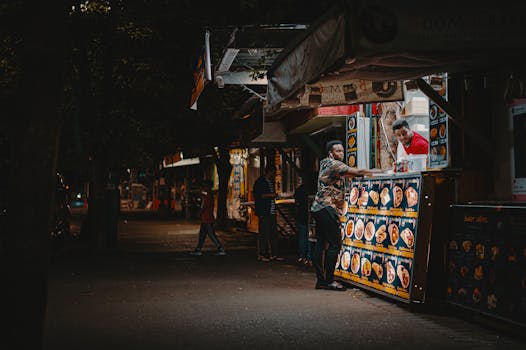
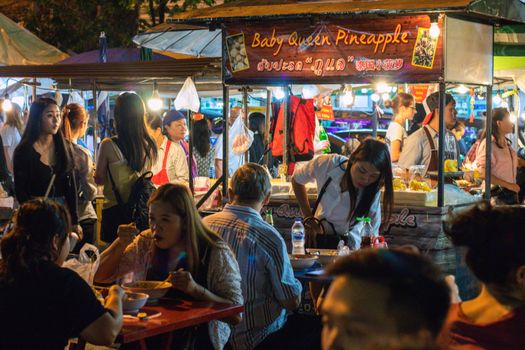
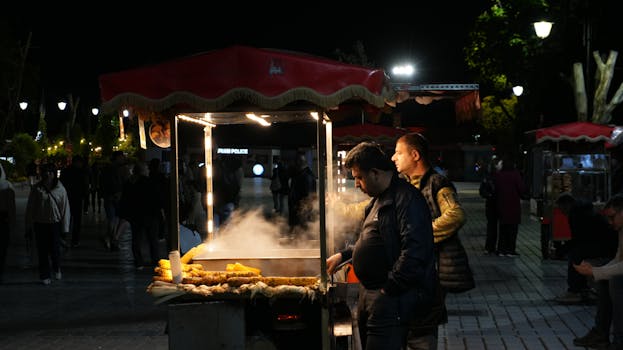
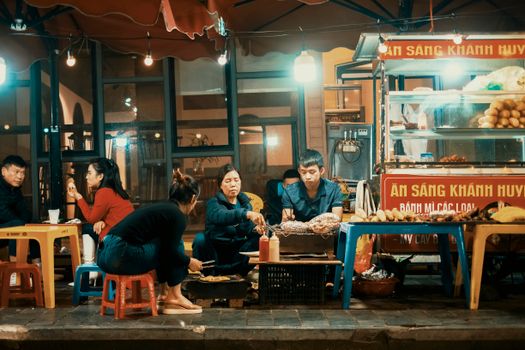
The aroma hit me first – a complex symphony of sizzling garlic, sweet chili, and something unidentifiable yet utterly intoxicating. I’d been wandering the neon-lit streets of Bangkok, determined to escape the well-trodden Khao San Road tourist circuit. My mission: find the real food, the kind locals queue for, the kind that whispers tales of generations. I’d asked a friendly tuk-tuk driver, using my limited Thai and a lot of hand gestures, for "ตลาดคนท้องถิ่น" (local market). He’d given me a knowing wink and a slightly conspiratorial smile before dropping me off in a bustling residential area, far from any backpacker hostel.
What I found was pure magic. Not a single English menu in sight. Stalls overflowed with exotic fruits I couldn't name, bubbling pots of curry, and skewers of meat glistening under bare bulbs. Families shared plastic stools, laughing, slurping noodles, and pointing at dishes with animated chatter. This wasn't just a market; it was the vibrant, beating heart of a community. And in that moment, devouring the most incredible khao soi I’d ever tasted for less than two dollars, I realized something profound: the best food experiences often lie just beyond the tourist map, in places locals cherish and, perhaps, prefer to keep to themselves.
Welcome, fellow food adventurer, to the world of night markets where locals actually eat. This isn't about the famous, Instagram-hyped spots (though those have their charm). This is about the gritty, authentic, utterly delicious culinary havens that offer a true taste of a destination. Are you ready to dive in?
The Allure of the Unseen Market: Why Go Off-Grid?
Why bother seeking out these "secret" spots when there are perfectly good, English-menu-wielding markets everywhere? Simple: authenticity. Tourist-centric markets, while convenient, often cater to a generalized palate, sometimes sacrificing traditional flavors for broader appeal. Prices can be inflated, and the atmosphere, while lively, can feel more like a show than a genuine slice of local life.
Local night markets, on the other hand, are a different beast entirely. Here, vendors aren't trying to impress foreigners; they're cooking for their neighbors, their families, their regulars. This means:
- Uncompromised Flavors: Dishes are prepared according to time-honored recipes, using seasonal, local ingredients. You'll taste the true essence of the cuisine.
- Budget-Friendly Feasts: Since they cater to local incomes, prices are significantly lower. You can feast like royalty for a fraction of what you'd spend elsewhere.
- Cultural Immersion: Beyond the food, these markets are social hubs. You'll witness daily life unfold, hear the local language, and experience the genuine rhythm of the city.
- The Thrill of Discovery: There's an undeniable thrill in finding something truly special, a place that feels like your own secret.
My first experience in that Bangkok market wasn't just about the food; it was about the feeling of being a temporary insider, a privilege I now chase on every trip.
Decoding the Local Vibe: How to Spot an Authentic Market
So, how do you find these elusive gems? It requires a bit of detective work, a dash of courage, and a willingness to step outside your comfort zone.
- Ask the Right People (and the Right Way): Don't ask your hotel concierge, "Where's a good night market?" They'll likely send you to the most popular, tourist-friendly one. Instead, ask a street vendor, a taxi driver, or even a local shopkeeper (especially one who seems to be eating something delicious). Use phrases like "Where do you eat?" or "Where do locals go for dinner?"
- Look for Clues, Not English: The fewer English signs, the better. If you see mostly local script, hear predominantly local languages, and notice a distinct lack of souvenir stalls, you’re likely on the right track.
- Observe the Crowd: Are there families with children? Elderly couples? Groups of friends sharing meals? If the market is packed with locals, it's a good sign. If it's mostly other tourists with cameras, it might be a tourist trap.
- Follow Your Nose (and the Queues): The most popular stalls will have lines of locals. This is your cue! Don't be afraid to join the queue, even if you don't know what you're waiting for. The smell of freshly cooked food is an unmistakable beacon.
- Venture Beyond the City Center: Often, the most authentic markets are found in residential neighborhoods, a short taxi or public transport ride away from the main tourist hubs. Google Maps can be your friend here – look for "night market" (or its local translation) in less central areas.
One time in Ho Chi Minh City, I was struggling to find a "local" market. A young woman at a coffee shop noticed my map. She simply wrote down "Chợ Hồ Thị Kỷ" on a napkin, pointed me to a specific bus, and smiled. It was a flower market by day, transforming into a vibrant, food-lover's paradise by night. Pure gold!
My Top Secret Stash: Unveiling Hidden Night Market Gems
While I can't give away all my deepest, darkest secrets (a blogger has to keep some mystery!), I can point you towards the type of markets and experiences that fit the bill. These are places I've personally explored, where the food speaks for itself.
1. Chiang Mai's Wua Lai Walking Street (Saturday Nights - Beyond the Main Drag)
While Saturday Night Walking Street is well-known, most tourists stick to the souvenir-heavy main road. The real magic, where locals flock, is found in the smaller sois (alleys) branching off, and particularly towards the southern end near the Silver Temple (Wat Sri Suphan).
- The Vibe: Less about trinkets, more about incredible Northern Thai food. You'll find families sharing large bowls of Khao Soi (curry noodle soup), crispy Sai Oua (Northern Thai sausage), and exotic fruit shakes. The air buzzes with conversation, not hawkers.
- Must-Try: Seek out the stall with the longest queue for Khao Soi – often served in humble plastic bowls but packed with flavor. Also, look for Khanom Krok (coconut pancakes) cooked over charcoal, a sweet, creamy delight.
- Price Point: A full, satisfying meal with a drink for around 80-150 THB ($2.50 - $5 USD).
- My Anecdote: I remember stumbling upon a stall selling Gaeng Hung Lay (Burmese-style pork curry) that was so rich and tender, I went back for seconds, despite barely understanding the vendor. She just laughed, pointed at the pot, and gave me a generous scoop. That interaction, fueled by delicious food, transcended any language barrier.
- Instagram Moment: The vibrant colors of the freshly prepared curries, the intricate patterns of Khanom Krok being cooked, and the general buzz of local life. #ChiangMaiEats #LocalFoodie #HiddenGems
2. Oaxaca City's Tlacolula Market (Sunday Mornings - A Feast for the Senses)
Okay, this isn't strictly a "night market," but the Tlacolula Market, about an hour outside Oaxaca City, is such an authentic, overwhelming, and utterly local food experience that it had to be on this list. It's a Sunday morning ritual for thousands of Zapotec people from surrounding villages.
- The Vibe: Raw, ancient, and incredibly vibrant. You'll find everything from live animals to traditional clothing, but the food section is where it truly comes alive. The "Pasillo de Humo" (Aisle of Smoke) is legendary, where vendors grill meats to order right in front of you.
- Must-Try: Head straight to the Pasillo de Humo. Choose your cut of tasajo (thinly sliced beef), cecina (spicy pork), or chorizo. It’s grilled on the spot and served with fresh tortillas, roasted onions, and salsas. Also, try a traditional tejate (a refreshing corn and cacao drink) and memelas (thick corn tortillas with toppings).
- Price Point: A massive plate of grilled meat, tortillas, and toppings for two will set you back around 200-300 MXN ($10-$15 USD). Tejate is around 20-30 MXN ($1-$1.50 USD).
- My Anecdote: The first time I walked into the Pasillo de Humo, the smoke was so thick it was almost disorienting. But the smell! It was pure magic. I sat on a tiny plastic stool, watching a woman hand-press tortillas, and devoured the most incredible cecina I'd ever tasted. It felt like stepping back in time, a truly primal food experience.
- Instagram Moment: The smoky atmosphere of the Pasillo de Humo, colorful piles of fresh produce, and the vibrant textiles worn by the Zapotec women. #OaxacaFood #TlacolulaMarket #MexicanStreetFood
3. Palermo's Mercato di Ballarò (Evening Transition - Raw Sicilian Delights)
While Ballarò is famous as a daytime market, as evening approaches, a different energy takes hold. Many stalls pack up, but the street food vendors, especially those selling fried delights, come alive, catering to locals grabbing a quick, delicious dinner. It’s less polished than the touristy Vucciria market, and that’s its charm.
- The Vibe: Gritty, bustling, and authentic Sicilian street life. The sounds of vendors hawking their wares mix with the chatter of locals and the rumble of Vespas. It's an experience for all senses.
- Must-Try: Panelle (chickpea fritters) and crocchè (potato croquettes), often served together in a soft bread roll. Also, look for arancine (fried rice balls, usually filled with ragu or butter and ham) and sfincione (a thick, spongy Sicilian pizza).
- Price Point: A panelle and crocchè sandwich for €2-3. An arancina for €2-4. You can eat incredibly well for under €10.
- My Anecdote: I remember being slightly intimidated by Ballarò initially – it felt so raw compared to other European markets. But then I saw an elderly man expertly frying panelle in a huge vat of oil, his movements practiced and swift. I pointed, he smiled, and handed me a paper cone filled with the crispy, savory fritters. It was simple, perfect, and profoundly Sicilian.
- Instagram Moment: Close-ups of golden-fried panelle, the vibrant displays of fresh produce before dusk, and the lively street scenes. #PalermoStreetFood #SicilianEats #BallaroMarket
Navigating the Culinary Labyrinth: What to Eat and How to Order
Once you've found your local market, the next challenge is choosing what to eat. Here's your strategy:
- Look for the Crowds: As mentioned, a queue of locals is a strong indicator of good food. Don't be shy; join the line!
- Observe and Point: If language is a barrier (and it often will be), simply point to what looks good on someone else's plate, or directly at the ingredients you want. A smile and "thank you" (in the local language if you know it) go a long way.
- Embrace the Unknown: Part of the adventure is trying things you can't identify. Ask "What is this?" (in the local language, if possible, or just with an inquisitive gesture). You might discover your new favorite dish.
- Hygiene Hints: While local markets are generally safe, use common sense. Look for stalls that are busy (high turnover means fresh ingredients), where food is cooked to order, and where the cooking area appears reasonably clean. Trust your gut (literally!).
- Small Portions, Big Variety: Order smaller portions from multiple stalls. This allows you to sample a wide array of dishes without getting too full too quickly.
Beyond the Plate: Immersing in Local Culture
These markets are more than just food stalls; they are living museums of local culture.
- Engage with Vendors: Even a simple smile or a "hello" can open up a small interaction. I’ve learned basic cooking tips, shared laughs, and even received extra portions just by being friendly and respectful.
- People-Watching Paradise: Find a quiet corner (or a busy one!) and just observe. The interactions, the bartering, the way families eat together – it's a fascinating insight into local life.
- Respectful Photography: These are real people in their daily lives. Always ask permission before taking close-up photos of vendors or individuals. A general shot of the market atmosphere is usually fine, but be mindful and discreet.
- Soak in the Sounds and Smells: Let the sensory overload wash over you. The sizzle, the chatter, the exotic spices – it's all part of the authentic experience.
The Unwritten Rules: Etiquette and Safety
To make your local market experience enjoyable for everyone, keep these tips in mind:
- Bargaining: In food stalls, prices are generally fixed. Don't try to haggle over the price of a plate of noodles. In other sections (like clothing or souvenirs), polite bargaining might be acceptable, but always do so respectfully and with a smile.
- Cash is King: Many local vendors only accept cash, often in small denominations. Have plenty of local currency on hand.
- Be Mindful of Your Belongings: While generally safe, busy markets can be prime spots for pickpockets. Keep your wallet and phone secure, preferably in a front pocket or a cross-body bag.
- Dress Respectfully: While not always strict, dressing modestly can show respect for local customs, especially in more conservative regions.
- Leave No Trace: Dispose of your trash properly. Help keep these local treasures clean.
Your Next Culinary Quest Awaits
The world is brimming with these hidden culinary treasures, waiting to be discovered by intrepid travelers like you. From the fragrant street food of Southeast Asia to the spicy delights of Latin America and the comforting fried treats of Europe, these local night markets offer an unparalleled window into a destination's soul.
It's about more than just a meal; it's about the adventure of the hunt, the thrill of discovery, and the profound connection you forge with a place through its food and its people. So, next time you travel, skip the well-trodden paths. Ask a local, follow your nose, and prepare to uncover the delicious secrets they might just prefer to keep to themselves. Your taste buds (and your travel memories) will thank you.
Now it's your turn! Have you stumbled upon a secret local night market? Share your finds and tips in the comments below, and let's inspire each other to eat more authentically!
---