The Hook: The Night the Ocean Laughed Back
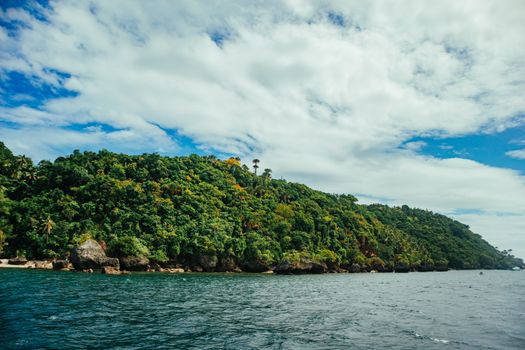
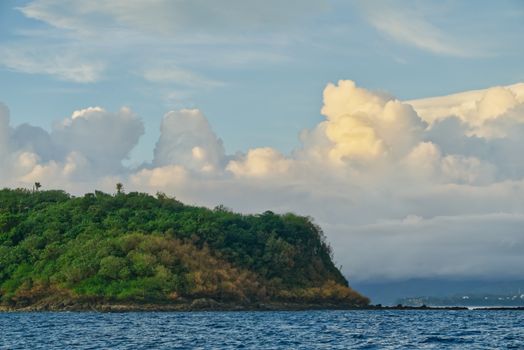
I stepped off the zodiac onto the slick volcanic basalt of Santa Maria Island in the Azores, and the first thing that hit me wasn't the smell of salt—it was the sound.
Through the pitch-black Atlantic night came a chorus of cagarros (Cory’s shearwaters). They don't sing; they cackle like hysterical, high-pitched babies. My neoprene wetsuit was still dripping cold seawater onto my boots, and my fingers were stiff from clutching a hydrophone receiver for three hours in open swells.
But as I uploaded the acoustic data of sperm whale clicks to a local research database, the exhaustion vanished. I wasn't just a tourist staring at a blue horizon anymore. I was a functioning gear in the machinery of ocean conservation.
```
_..._
.'_..._'.
/ / \ \ [Citizen Science: From Passive Tourist
| | | | to Active Ocean Protector]
\ \_..._/ /
'._..._.'
```
For decades, marine conservation was a closed shop. You needed a PhD, a research grant, and years of academic seasoning to do anything more than pick up plastic on a beach. Not anymore.
This year, a radical shift in ocean management has birthed a new class of Marine Protected Areas (MPAs). These zones don't just lock humans out; they actively invite travelers in to do the heavy lifting of data collection.
If you want to dive with purpose this year, skip the resort pools. Here are the five emerging marine protected areas offering citizen science that should be on your radar right now.
---
1. The Azores Marine Park (Portugal): Acoustic Tracking & Cetacean ID
The Azores recently declared the largest MPA network in the North Atlantic. This isn't just a win on paper; it’s a massive playground for pelagic giants and the citizen scientists who track them.
```
+-----------------------------------------------------------------+
| AZORES CITIZEN SCIENCE FOCUS |
+-----------------------------------------------------------------+
| * Acoustic Hydrophone Monitoring (Listening for sperm whales) |
| * Tail Fluke Photo-ID (Uploading to Happywhale database) |
| * Sea Surface Temperature (SST) sampling in deep ocean trenches |
+-----------------------------------------------------------------+
```
The Science You'll Do
You’ll be working with marine biologists to document the migratory patterns of blue, fin, and sperm whales. Armed with a DSLR camera, your job is to capture crisp, perpendicular shots of whale tail flukes. Each fluke is as unique as a human fingerprint. You will upload these to Happywhale, an AI-driven database that tracks individual animals across global oceans.
You’ll also drop hydrophones into the deep blue to record vocalizations, helping scientists map acoustic pollution levels in the archipelago.
- Insider Language: We don't say "whale watching." We call it cetacean census-taking. You’ll learn to distinguish the blow of a blue whale (vertical, up to 12 meters) from that of a sperm whale (angled forward and to the left).
- Pro-Tip: Skip the crowded harbor docks in Ponta Delgada. Head to the quieter island of Santa Maria. Before you board the boat, stop by Pastelaria Os Netos and grab three pastéis de nata and a double espresso. You’ll need the sugar rush when the Atlantic swells start tossing the boat.
---
2. Raja Ampat’s Micro-MPAs (Indonesia): Reef Health & Manta Ray Photogrammetry
While Raja Ampat is famous among elite divers, a new network of community-led "Micro-MPAs" has emerged. These zones are managed by local indigenous villages using the traditional Sasi system—a practice where specific reef areas are closed to fishing to allow ecosystems to regenerate.
```
.---.
/ \
| () () | <- Manta Ray Belly Pattern
\ ^ / (Your target for photo-ID)
|||||
```
The Science You'll Do
Here, you’ll trade casual reef-gazing for benthic surveys. Using underwater slates and waterproof paper, you will conduct line-intercept transects to measure live coral cover versus macroalgae.
You will also use laser photogrammetry rigs—underwater cameras fitted with parallel green lasers spaced exactly 50 centimeters apart—to measure the wingspan of reef mantas (Mobula alfredi) at cleaning stations without stressing them.
- Insider Language: You’ll be looking out for recruit corals (baby corals the size of a coin) settling on substrate. High recruitment means the Sasi closure is working.
- Pro-Tip: Stay at a local homestay on Arborek Island. The local youths are trained reef guardians. Ask for Yussef; he knows the exact cleaning station where the giant oceanic mantas hang out at 7:30 AM before the dive boats from the larger resorts arrive.
---
3. Cocos Island National Park (Costa Rica): Pelagic Shark Tracking
Cocos Island is a jagged emerald spike thrusting out of the Pacific, famous for its schooling hammerheads. The Costa Rican government recently expanded the MPA to connect with Ecuador's Galapagos marine reserve, creating a massive "super-highway" for migratory sharks.
```
=================================================================
COCOS EXPEDITION LOGISTICS
=================================================================
* Crossing Time: 36 hours from Puntarenas via expedition vessel
* Target Species: Sphyrna lewini (Scalloped Hammerhead)
* Core Task: Maintaining acoustic receiver arrays at 30 meters
=================================================================
```
The Science You'll Do
This is high-octane citizen science for advanced divers. You’ll assist researchers in retrieving and redeploying acoustic receivers anchored at depths of up to 30 meters. These receivers log the pings of sharks tagged with acoustic transmitters.
You’ll also use laser-scaling cameras to document the size and sex of pregnant female hammerheads, which use the offshore seamounts as pit stops.
- Insider Language: You’ll learn to spot mating scars on female hammerheads—rough bite marks on their pectoral fins that indicate recent breeding activity.
- Pro-Tip: The 36-hour boat crossing across the Costa Rica Dome can be brutal. Start taking ginger tablets 48 hours before boarding the vessel in Puntarenas. Once on the island, look for the historic "carvings" on the rocks at Chatham Bay, where pirates and whalers carved their names into the stone centuries ago.
---
4. The Red Sea Hope Spot (Egypt): Heat-Resilient Coral Nurseries
The northern Red Sea houses some of the most climate-resilient corals on Earth. As global sea temperatures rise, these corals are surviving where others bleach. The newly designated Great Fringing Reef MPA is the epicenter of global reef restoration research.
```
\ \ / /
-- * -- [Resilient Coral Micro-Fragments:
/ / \ \ The future of reef restoration]
```
The Science You'll Do
You will work in underwater nurseries, cleaning algae off coral "trees" (PVC structures suspended in the water column where coral fragments are grown).
Using underwater epoxy, you’ll help transplant mature micro-fragments back onto degraded reef sections. You will also use the Coral Reef Monitoring Consortium protocols to log coral bleaching percentages using color-matching charts.
- Insider Language: You’ll be working with micro-fragmenting—a process where corals are cut into tiny pieces, stimulating them to grow up to 40 times faster than normal.
- Pro-Tip: Dive at 6:30 AM. The water is glassy, the light is perfect for assessing coral color charts, and you’ll avoid the mid-day wind that kicks up sand from the Sinai Desert, ruining underwater visibility. After your dive, ask the crew for Karkadeh—a sweet, chilled hibiscus tea that cuts through the salt in your throat instantly.
---
5. Patagonia Azul (Argentina): Kelp Forest Mapping & Penguin Census
Far from the warm waters of the tropics lies Patagonia Azul, a cold, wild marine park in Chubut, Argentina. Here, massive giant kelp (Macrocystis pyrifera) forests harbor a dizzying array of life, from southern right whales to Magellanic penguins.
```
(o_
//\ <- Magellanic Penguin
V_/_ (Count them along the rocky shoreline)
```
The Science You'll Do
This is a multi-terrain expedition. On land, you will conduct nest counts and GPS-tagging of Magellanic penguin colonies.
In the water (wearing a thick 7mm wetsuit or drysuit), you will map the density of the kelp canopy using Secchi disks to measure water turbidity and collect water samples for eDNA (environmental DNA) analysis, which reveals every species that passed through the kelp forest in the last 48 hours.
- Insider Language: You’ll be measuring holdfasts—the root-like structures that anchor giant kelp to the rocky sea floor. Healthy holdfasts mean a resilient kelp forest.
- Pro-Tip: The wind in Patagonia is relentless. If you are tracking penguins on the beaches of Bahia Bustamante, look for the rusted shipwreck of the Avila. The windward side of the wreck offers a natural windbreak where you can calibrate your GPS gear without getting sandblasted.
---
Quick Facts: Logistics & Budget
| Destination | Best Time to Visit | Estimated Cost | Core Science Task | How to Get There |
| :--- | :--- | :--- | :--- | :--- |
| Azores, Portugal | June to September | $$ | Cetacean Acoustic ID | Fly to Ponta Delgada (PDL), then take a regional flight to Santa Maria (SMA). |
| Raja Ampat, Indonesia| October to April | $$$ | Coral Benthic Surveys | Fly to Sorong (SOQ), take the public ferry to Waisai, then a local longboat. |
| Cocos Island, Costa Rica| June to November | $$$$ | Pelagic Shark Tracking | Fly to San José (SJO), shuttle to Puntarenas, board an expedition liveaboard. |
| Red Sea, Egypt | March to May | $ | Coral Nursery Restoration | Fly to Hurghada (HRG) or Sharm El Sheikh (SSH), transfer by road to El Quseir. |
| Patagonia Azul, Argentina| November to February| $$ | Kelp Mapping & Penguin Census| Fly to Trelew (REL), rent a 4x4 vehicle, and drive south to Bahia Bustamante. |
---
How to Be a Citizen Scientist Without Being a Liability
Before you pack your bags and head out to save the oceans, let's keep it real: scientists are busy. They do not have time to babysit tourists who can’t control their buoyancy or don't know how to clear their masks.
To ensure you are an asset rather than a liability, follow these hard rules:
- Get Your Buoyancy Dialed In: If you are kicking coral or stirring up silt while trying to write on a slate, you are destroying the very ecosystem you came to study. Practice your hover skills in a pool before you go.
- Manage Your Expectations: Real science is tedious. You might spend three hours staring at empty water, or four hours scraping algae off PVC pipes with a toothbrush. If you expect a Disney movie, stay home.
- Verify the Operator: Ensure the tour operator or dive center is directly partnered with a registered NGO or university (e.g., Reef Check, Project Baseline, or local marine institutes). If they can't tell you where the data goes, it's greenwashing.
```
+-----------------------------------------------------------------+
| CHECKLIST BEFORE YOU BOARD |
+-----------------------------------------------------------------+
| [ ] Advanced Open Water Certification (Highly recommended) |
| [ ] Reef-safe, non-nano zinc oxide sunscreen |
| [ ] A rugged, waterproof notebook (e.g., Rite in the Rain) |
| [ ] Polarized sunglasses (essential for spotting marine life) |
+-----------------------------------------------------------------+
```
The oceans are changing faster than science can keep up with. By stepping up as a citizen oceanographer, you provide the boots on the ground—and fins in the water—that researchers desperately need. Choose your destination, pack your grit, and go make your dives count.
---