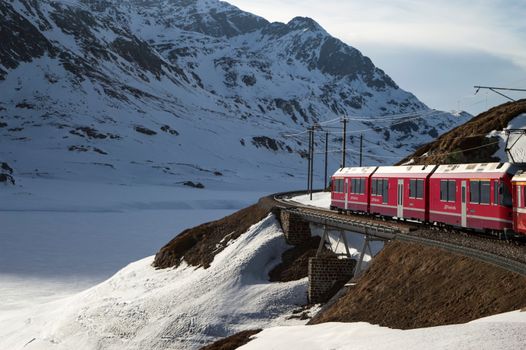
Trains as experiences
The best thing about travelling by train in Europe is that you do not have to treat the journey as lost time. Some routes cross landscapes so dramatic that the window is the main event, and overnight services turn travel into a way of saving a night's accommodation. With a little planning, you can design a trip around a few memorable rail journeys.
This guide covers the most celebrated scenic routes, explains how night trains work, and offers practical advice about reservations, seat choice and what to pack.
Scenic routes worth building a trip around
Switzerland
Switzerland is the home of scenic rail. The Swiss network is punctual, well connected and designed for sightseeing.
- Bernina Express: Runs from Chur or Davos to Tirano in Italy, crossing the Bernina Pass with glaciers, high lakes and spiral viaducts. The route is a UNESCO World Heritage site. Panoramic coaches require seat reservations.
- Glacier Express: A slow journey between St Moritz and Zermatt across the Alps, taking around eight hours. It is more about the experience than speed, with panoramic windows and optional meals.
- GoldenPass Line: Connects Lucerne, Interlaken and Montreux, with changes of train and views of lakes and mountains.
- Jungfrau region railways: Cogwheel trains climb to Kleine Scheidegg and the Jungfraujoch.
Switzerland's travel passes can include many scenic trains, though reservations and supplements may be needed for panoramic services.
Norway
- Flåm Railway: One of the steepest standard-gauge railways in the world, descending from the mountains to the Aurlandsfjord. It is short, often combined with a fjord cruise.
- Bergen Railway: From Oslo to Bergen across the Hardangervidda plateau, one of the most scenic main lines in Europe.
- Nordland Line: A long northern route to Bodø, crossing the Arctic Circle.
Austria and Germany
- Semmering Railway, Austria: An early mountain railway with viaducts and tunnels, also UNESCO-listed.
- Munich to Salzburg: A pleasant route through Bavarian countryside.
- Rhine Valley Line, Germany: Castles, vineyards and river views between Mainz and Cologne.
- Black Forest Railway (Schwarzwaldbahn): From Offenburg to Konstanz, winding through forested hills.
Italy, France and Spain
- Cinque Terre line, Italy: Short hops between the five villages, with sea views and tunnels.
- Venice to Verona or Rome to Naples: Fast trains with simple pleasures of the countryside.
- Little Yellow Train, France: A narrow-gauge mountain railway in the Pyrenees.
- Coastal routes in Spain, such as Barcelona to Valencia.
The British Isles
- West Highland Line, Scotland: From Glasgow to Fort William and Mallaig, through lochs and mountains.
- Settle to Carlisle, England: A beautiful route across the Pennines.
Eastern Europe
- Prague to Dresden along the Elbe: Sandstone cliffs and river views.
- The Tatra mountain railway in Slovakia.
- Balkan routes, such as Belgrade to Bar in Montenegro, famed for dramatic mountain scenery. Check current service status and timetables.
How to choose a scenic train
Think about what you enjoy.
- If you want grand mountain drama, choose Switzerland or Norway.
- If you want a relaxed riverside journey, consider the Rhine or Danube valleys.
- If you want short, easy rides, look at coastal lines.
- If you want a full-day luxury experience, consider the premium panoramic services, which may include meals.
Also consider season. Some routes are best in summer, others in autumn for foliage or winter for snow. Mountain lines can have weather disruption.
How night trains work
Night trains let you travel while you sleep and wake up in a new city. A good night's sleep depends on choosing the right accommodation.
Seats:
The cheapest option. Reclining seats are fine for short trips but uncomfortable for many travellers on long journeys.
Couchettes:
Compartments with bunk beds, typically four or six per compartment, shared with other travellers. They provide a flat bed, a blanket and a pillow. Single-sex compartments are sometimes available.
Sleepers:
Private compartments with beds for one to three people, sometimes with a washbasin or en-suite facilities. They cost more but give privacy and security.
Night trains connect cities including Vienna, Zurich, Berlin, Prague, Budapest, Hamburg, Rome, Stockholm and others. Routes and operators change, so check which services are currently running.
Tips for sleeping well
- Book a sleeper or couchette if you value sleep.
- Bring earplugs and an eye mask.
- Pack a small overnight bag so that you do not have to open your main luggage.
- Keep valuables secure. Use compartment locks and keep important items close.
- Bring snacks and water, since catering may be limited.
- Check arrival times. Some trains arrive early in the morning, and you may need somewhere to leave luggage.
Booking scenic and night trains
Reservations are often required.
Panoramic coaches and night trains usually require reservations, even if you hold a pass. Seats can sell out, especially in summer.
Book early.
Tickets for popular routes may become available three to six months ahead. Set a reminder.
Compare operators.
Night trains and scenic services may be run by different companies. Look at official sites.
Check what is included.
Some premium trains include meals or drinks, while others do not.
Combine routes into a trip
Here are three ideas.
Swiss scenic loop (7 days):
Zurich, Lucerne, GoldenPass to Montreux, Zermatt, Glacier Express to St Moritz, Bernina Express to Tirano, then to Milan.
Norway in a nutshell (5 days):
Oslo, the Bergen Railway, Bergen, the Flåm Railway and a fjord cruise.
Central Europe by night (8 days):
Berlin, night train to Vienna, Budapest, night train to Prague, Dresden.
What to pack
- Layers. Trains can be cold or hot.
- A power bank and charging cable.
- Snacks, water and a reusable bottle.
- Motion sickness remedies if you are susceptible, since mountain lines are curvy.
- A camera or phone with room for photos.
- A good book or downloaded entertainment.
Photography tips
Sit on the side of the train with the best view if you can choose. Panoramic coaches have large windows, but reflections can be an issue. Hold the camera close to the glass, and use a fast shutter speed. Open windows are rare, so be ready to take photographs through the glass.
Accessibility
Many modern trains have accessible features, but older heritage lines may not. Contact the operator in advance to arrange assistance, and check station facilities.
Frequently asked questions
Are night trains safe?
Generally yes, but take sensible precautions. Lock your compartment, keep valuables close and consider a sleeper rather than a seat.
Do I need to reserve for scenic trains?
Often yes. Check each service.
Is it worth paying for premium classes?
It depends. First class offers more space and sometimes better views, but standard class is perfectly good on many routes.
What if there is bad weather?
Mountain lines can be disrupted by snow or storms. Build flexibility into your plans.
Summary
Scenic and overnight trains turn transport into a highlight of your trip. Choose routes that match your interests, book reservations early, and prepare for comfort on overnight journeys. Services, schedules and fares change, so always confirm details with the operators.