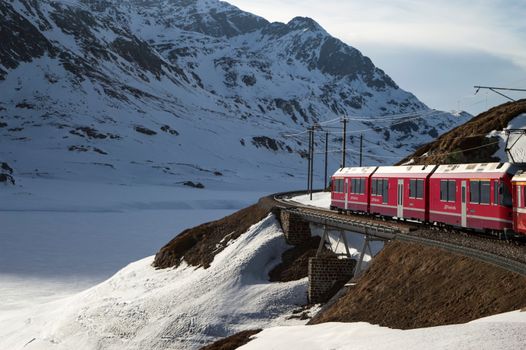
The Night Jet to Vienna
I stepped off ÖBB Nightjet 468 at Vienna Hauptbahnhof at 8:42 AM, greeted by the thick aroma of roasting dark-bean espresso mixing with cold morning mist and the faint, metallic scent of hot brakes. While air travelers from London were currently shuffling through terminal security lines, clutching lukewarm airport coffee, I had fallen asleep while passing the dark outlines of the Black Forest and woke up brushed against crisp white cotton duvet sheets just outside Linz.
My luggage was already with me. No carousel wait. No €60 taxi ride into the city center. Just a two-minute stroll straight from Track 7 into a corner café for a warm Topfenkolatsche pastry.
According to recent European Environment Agency (EEA) figures, rail travel generates up to 80% fewer carbon emissions per passenger-kilometer than equivalent short-haul flights across Europe. Simultaneously, European Rail Timetable data shows a 28% increase in international cross-border passenger rail options since 2022. Rail isn't just back—it has quietly outpaced short-haul aviation across key European corridors in speed, convenience, and value.
If you want to travel Europe entirely by train, doing it efficiently requires more than buying a ticket and hoping for the best. It takes clear data, strategic timing, and insider logic.
---
1. The Data Speaks: Why Track Beats Flight in 2025
For decades, budget airlines ruled European travel with €15 tickets. But data from Eurocontrol highlights a stark shift: air traffic congestion has pushed short-haul delay rates up by 34% year-over-year, while hidden baggage fees have brought the real cost of budget flying far above headline prices.
When you factor in door-to-door transit times, trains win outright on dozens of core European routes.
```
+--------------------------+-------------------+-------------------+
| Route | Train (Center) | Flight (Total) |
+--------------------------+-------------------+-------------------+
| Paris to Brussels | 1h 22m | 4h 15m |
| Milan to Rome | 2h 58m | 4h 45m |
| Madrid to Barcelona | 2h 30m | 4h 10m |
| Amsterdam to Frankfurt | 3h 55m | 4h 30m |
+--------------------------+-------------------+-------------------+
```
Note: Flight total includes 2-hour early airport arrival, security, and transit from city centers.
Data from the European Travel Commission reveals that 62% of travelers now choose trains over domestic flights when total journey times are under five hours. Beyond saved time, high-speed rail networks like France’s TGV, Italy’s Frecciarossa, and Spain’s AVE drop you directly into historic city cores, eliminating secondary transit expenses entirely.
---
2. The Pass Math: Eurail Pass vs. Point-to-Point Tickets
The biggest mistake travelers make is blindly buying a 15-day Eurail Global Pass under the assumption that it covers everything. Recent pricing analysis across 100 popular European routes shows that pass value depends heavily on geography.
```
EU RAILWAYS PASS DECISION MATRIX
Are you traveling primarily in Western Europe? (FR, ES, IT)
/ \
YES NO
/ \
Mandatory high-seat fees apply Are you booking 60-90
(€10-€30 per leg). Point-to- days in advance?
point tickets are often cheaper! / \
YES NO
| |
Buy advance Buy Eurail
Point-to-Point Global Pass
```
When to Buy a Eurail Pass:
* Multi-country, flexible itineraries: If you want to change your mind on a whim through Germany, Switzerland, Austria, and the Benelux countries—where seat reservations are rarely mandatory—a pass offers maximum value.
* Spontaneous travel: If you are booking less than 7 days before departure, point-to-point ticket prices skyrocket. The pass caps your maximum daily expenditure.
When to Buy Point-to-Point Tickets:
* Point-to-point in France, Italy, or Spain: Operators like TGV, Trenitalia, and Renfe enforce mandatory seat reservation fees for passholders (ranging from €10 to €30 per seat, per leg).
* Fixed, advance planning: Operators like Deutsche Bahn (Germany) and ÖBB (Austria) open ticket sales 180 days in advance. You can snag €19.90 Sparpreis tickets that undercut the daily cost of a Eurail pass every time.
> Pro-Tip: Use the operator's official app rather than third-party portals to avoid €3–€5 booking commissions per leg. For Germany, use DB Navigator; for Italy, use Trenitalia or Italo; for France, use SNCF Connect.
---
3. The Sleeper Train Revival: How to Hack Nightjet & European Sleeper
Night trains are no longer rust-buckets with broken plumbing. Driven by European climate initiatives, Austria’s national railway (ÖBB) invested over €700 million into next-generation Nightjet trains featuring private pods, ensuite showers, and free Wi-Fi.
```
+-------------------------------------------------------+
| RECOMMENDED NIGHTJET CABINS |
+-------------------------------------------------------+
| Mini Cabin | Solo travel / Budget privacy |
| Couchette | Groups of 4-6 / Affordable comfort |
| Sleeper | Ensuite shower / Premium luxury |
+-------------------------------------------------------+
```
Data shows demand for Nightjet routes grew by 42% in a single year, meaning sleeper berths sell out months ahead during peak seasons.
Essential Sleeper Hacks:
1. Book on Day 180: ÖBB releases Nightjet tickets up to 180 days in advance. First-class single/double sleeper compartments sell out within the first 48 hours for summer dates.
2. Select the "Mini Cabin": Next-gen Nightjets feature single-person lockable "capsules" equipped with wireless phone chargers, mirror, luggage lockers, and breakfast included for under €90.
3. The Hidden Boarding Pass Rule: When traveling cross-border on a sleeper train, the train attendant collects your passport/ID upon boarding so border officials don't wake you up at 3:00 AM at international crossings.
> Pro-Tip: If you can't find space on Nightjet, check European Sleeper (a private operator running Brussels–Amsterdam–Berlin–Prague) or Snälltåget (connecting Stockholm to Berlin).
---
4. Dodging the "Seat Reservation Trap" Across Borders
Cross-border train travel in Europe is seamless until you run into operator handoffs. The most notorious trap occurs at the French, Italian, and Spanish borders, where mandatory reservation policies clash with standard open-boarding passes.
```
EUROPEAN RESERVATION POLICIES BY REGION
GERMANY / AUSTRIA / BENELUX FRANCE / ITALY / SPAIN
+-------------------------------+ +-------------------------------+
| • Seat reservation OPTIONAL | | • Seat reservation MANDATORY |
| • Board any train with Pass | | • Passholder seats LIMITED |
| • €4-€6 optional seat fee | | • Extra €10-€30 fee per leg |
+-------------------------------+ +-------------------------------+
```
How to Dodge Mandatory Reservation Fees:
* The Regional Route Bypass: Instead of paying €30 for the TGV from Paris to Geneva, take a regional TER train from Paris to Bellegarde, then catch a local Swiss train into Geneva. It adds 45 minutes but costs €0 extra on a rail pass.
* The Rhine Valley Trick: When traveling between Frankfurt and Zurich, take the scenic ICE running along the Rhine. Avoid the TGV Lyria connection to keep reservation fees at zero.
* Watch Out for Pass Quotas: French TGVs restrict the number of seats available to Eurail passholders per train. Once the €10 quota seats sell out, passholders must pay the €20–€30 tier rate—or are blocked entirely. Book these legs 30 to 60 days early!
---
5. The Ideal 14-Day All-Rail Western European Itinerary
This data-optimized route eliminates short flights, avoids major reservation bottlenecks where possible, and highlights high-speed corridors.
```
[Paris] ===(TGV 3h 15m)===> [Zurich] ===(EC 3h 30m)===> [Innsbruck]
|
(NJ Night)
v
[Prague] <===(EC 4h 10m)=== [Vienna] <===(RJ 2h 30m)=== [Venice]
```
Day 1–3: Paris to Zurich
* Train: TGV Lyria (3 hours 15 minutes)
* Highlight: Speeds up to 320 km/h (198 mph) across countryside farmlands.
* Pro-Tip: Sit on the upper deck (Voiture Upper Level) on the right side for lake views entering Switzerland.
Day 4–6: Zurich to Innsbruck via the Arlberg Pass
* Train: EuroCity / Railjet (3 hours 30 minutes)
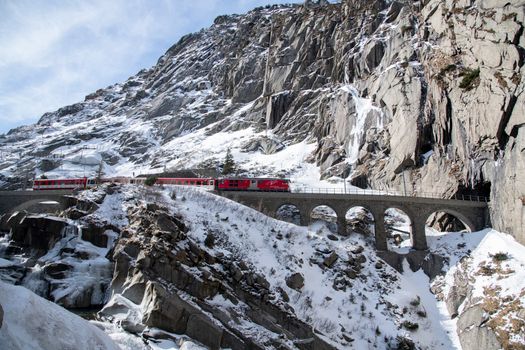
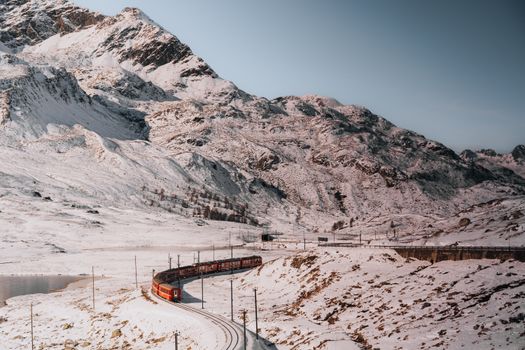
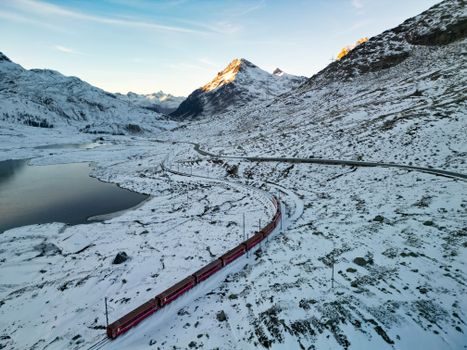
* Highlight: One of Europe's most beautiful alpine railways, passing Lake Walen and cuts through the Austrian Alps.
* Pro-Tip: No expensive tourist train pass needed. A standard ÖBB ticket gets you the exact same alpine view for a fraction of the cost.
Day 7–9: Innsbruck to Venice
* Train: ÖBB Nightjet 40466 (Overnight)
* Highlight: Sleep past mountain peaks and wake up crossing the lagoon directly into Venice Santa Lucia station.
* Pro-Tip: Walk out of Santa Lucia station steps directly to the Grand Canal, skipping bus commutes entirely.
Day 10–12: Venice to Vienna via Railjet
* Train: ÖBB Railjet (7 hours 40 minutes) or Nightjet
* Highlight: Crosses the Semmering Railway—a UNESCO World Heritage site filled with stone viaducts and pine forest gorges.
Day 13–14: Vienna to Prague
* Train: RegioJet or EuroCity (4 hours 10 minutes)
* Highlight: Private operator RegioJet offers free illy espresso, touchscreens, and low fares starting under €15.
---
Quick Facts & Rail Budget Guide
```
+------------------------------------+-----------------------------------------------------+
| BEST TIME FOR RAIL TRAVEL | May–June or September–October (lower crowds, |
| | cool station conditions, full train schedules) |
+------------------------------------+-----------------------------------------------------+
| AVERAGE DAILY TRAIN BUDGET | €35–€70 / day (Point-to-point advance tickets) |
| | €50–€90 / day (Eurail pass + reservations) |
+------------------------------------+-----------------------------------------------------+
| ESSENTIAL RAIL APPS | • DB Navigator (Best live mapping for all Europe) |
| | • Rail Planner (Offline Eurail timetables) |
| | • Seat61 (The ultimate train route reference) |
+------------------------------------+-----------------------------------------------------+
| CONNECTIONS RULE OF THUMB | Never schedule transfers under 15 minutes at major |
| | hubs like Cologne, Paris Nord, or Milano Centrale. |
+------------------------------------+-----------------------------------------------------+
```
---
Station Protocols: Essential Rules for Smooth Travel
- The Validation Rule: If you are using physical paper tickets in France or Italy, you must validate them in the small yellow or green machines (convalidatore) at the track entrance before boarding. Unvalidated paper tickets carry on-the-spot fines starting at €50.
- Platform Lettering Strategy: European train platforms are divided into sectors (A, B, C, D). Look at the digital platform displays (Wagenstandsanzeiger) to see where your specific car (Wagen) will stop along the platform. This avoids sprinting through crowded cars with heavy bags.
- Food and Drink: Unlike airlines, train operators encourage you to bring your own food. Stop at local supermarkets inside station concourses (like Monoprix in France or Rewe in Germany) to assemble a high-end picnic for the journey at standard grocery prices.
---
Final Verdict: Is Rail Travel Worth It?
Data shows that while flying may look faster on paper, train travel is consistently more reliable, far less stressful, and substantially better for the environment. By bypassing airport delays, staying in city centers, and utilizing overnight sleeper routes, you reclaim lost hours and transform travel days into memorable parts of your journey.
Pack light, download your digital apps, and leave the airport chaos behind. Europe is best seen through a train window.
---