Solo Travel Secrets: How to Make Local Friends (They Won't Tell You!)
I remember my first solo trip to Paris. It was everything the postcards promised: the Eiffel Tower sparkling, the Louvre majestic, the Seine shimmering under romantic bridges. I dutifully checked off every item on my meticulously planned itinerary, snapped hundreds of photos, and ate at all the "must-try" spots. Yet, something was missing. I felt like an observer, a ghost moving through a beautiful city, never quite touching its soul. I saw Paris, but I didn't feel Paris.
Fast forward a few years, and I found myself in Oaxaca, Mexico. No rigid itinerary, just an open mind and a desire to connect. I spent an afternoon at a bustling mercado, not just buying souvenirs, but observing, smiling, and attempting broken Spanish with a woman selling vibrant textiles. By the end of the day, she'd invited me to try her homemade mole and shared stories of her family, her hands stained with the colors of her craft. That simple interaction, born from curiosity and a shared smile, was more profound than any museum visit. It was then I realized: the best parts of travel aren't in guidebooks, but in the laughter shared over a street food stall, or the quiet conversation in a local bakery. What if the true 'secret' to solo travel isn't just seeing the sights, but living them alongside the people who call them home?
This isn't about tricking locals or finding some magic phrase. It's about cultivating an approach, a mindset, and a set of actionable strategies that help you genuinely connect with the heart and soul of a place – its people. These are the insights that often get overlooked by the average tourist, the pathways to connection that locals cherish and often keep to themselves, not out of malice, but because they're simply living their lives, not performing for visitors. Ready to transform your solo adventures? Let's dive in.
1. The Mindset Shift: From Tourist to Temporary Local
Before you even step off the plane, the most crucial shift happens in your head. Ditch the "tourist" label and embrace the idea of being a "temporary local." What does this mean?
It means humility. It means curiosity. It means slowing down.
When you arrive somewhere with a checklist of sights to see and a strict schedule, your focus is inward – on your experience, your photos, your agenda. This creates a barrier. A temporary local, however, arrives with an open heart and an outward gaze, ready to observe, learn, and adapt.
My Berlin Revelation:
I remember trying to navigate Berlin on my second solo trip, feeling frustrated because I expected everyone to speak English, and I was too focused on hitting every museum. I missed so many opportunities to connect. Later, in Seville, I made a conscious effort to learn basic Spanish phrases beyond "hello" and "thank you." Even a clumsy "Hola, ¿cómo estás?" (Hello, how are you?) or "Me encanta su ciudad" (I love your city) broke down walls instantly. People appreciate the effort, even if your accent is terrible.
Actionable Advice:
* Learn the Basics: Before you go, dedicate 15-30 minutes a day to a language app like Duolingo or Babbel. Focus on greetings, "please," "thank you," "excuse me," "how much?", and phrases for expressing appreciation.
* Observe and Adapt: Watch how locals interact. Do they make direct eye contact? Is personal space different? Are conversations quiet or boisterous? Mimic their rhythm, not to be fake, but to show respect.
* Ditch the Agenda (Sometimes): While planning is good, leave room for spontaneity. An unplanned detour or a lingering conversation can lead to the most memorable moments. Be open to changing your plans if a local invites you to something.
* Embrace Discomfort: You'll make mistakes. You'll feel awkward. That's part of the journey. Lean into it. These are often the moments where genuine connection begins.
2. The Unbeaten Path: Where Locals Actually Hang Out
Guidebooks are fantastic for the main attractions, but they rarely point you to the true pulse of a city. To meet locals, you need to go where they live, work, and play, not just where they cater to tourists. These are the "secrets" because they're simply the fabric of everyday life, invisible to those only seeking landmarks.
Markets (Beyond the Tourist Traps):
Everyone knows La Boqueria in Barcelona, but how many tourists venture to the smaller, more local Mercado de la Cebada? Or the vibrant street markets in Palermo, Sicily, where nonnas haggle over fresh produce?
* Tip: Look for neighborhood markets, not central ones. Observe first. Buy something small – a piece of fruit, a local snack. Smile. Ask a question about the produce ("What's this called? How do you eat it?"). I once spent an hour at a spice stall in Marrakech, learning about different blends and sharing tea with the owner, not because I was buying a lot, but because I was genuinely interested.
Community Spaces & Hidden Gems:
* Parks: Not just for admiring, but for observing life. In Buenos Aires, I'd often sit in a park and watch people dancing tango spontaneously or families having picnics. A simple compliment about their dog or a shared laugh at a child's antics can open a door.
* Local Cafes & Bakeries: Find the "mom-and-pop" panadería or the independent coffee shop that's not a global chain. These places often have regulars. Sit at the counter if possible, or a communal table. The baristas or owners are often a wealth of local information and open to a chat. In Kyoto, I stumbled into a tiny artisanal matcha shop where the owner, seeing my fascination, patiently explained the tea ceremony, even though we communicated mostly through gestures and a translation app. It was magical.
* Laundromats: Yes, really! Everyone needs to do laundry. It's a mundane task that forces you to sit and wait, often alongside locals. A perfect low-pressure environment to strike up a conversation. "Is this machine usually this slow?" or "Do you know a good place for coffee nearby?" can be an icebreaker.
* Libraries & Bookstores: Quiet, reflective spaces where people pursue personal interests. If you see someone reading a book you recognize, or browsing a section you're interested in, it can be a natural conversation starter.
Local Events (Beyond the Tourist Calendar):
Forget the flamenco show designed for tourists. Seek out genuine community gatherings.
* How to Find Them: Look for posters on lampposts, check local community center websites, ask at your hostel/hotel (specifically for local events, not tourist recommendations), or browse local Facebook groups (more on this later).
* Examples: A free concert in a local park in Lisbon, a neighborhood festival in Oaxaca, an amateur football match in Medellín, a craft fair in Berlin. These are places where people are relaxed and engaged in their own culture, not performing for outsiders. I once stumbled upon a small, spontaneous street party in Rome after hearing music. I just joined in, smiled, and ended up dancing with a group of locals for hours – an unforgettable night.
3. The Art of the Soft Approach: How to Initiate Connection (Without Being Creepy)
This is where many solo travelers hesitate. How do you go from observing to engaging without feeling awkward or intrusive? It's all about a gentle, respectful approach that shows genuine interest.
Observe, Then Engage:
Don't just barge into a conversation. Watch, listen, and wait for a natural opening. A shared moment – a funny sight, a beautiful sunset, a common struggle (like deciphering a confusing sign) – can be your cue.
* Tip: A shared smile and brief eye contact (respectfully) can often signal your openness without words.
The "Genuine Interest" Query:
Instead of a generic "Where's the best place to eat?", try something more specific that shows you've done your homework and are genuinely curious about their culture.
* Examples:
* "I'm trying to find [a specific local ingredient] to try making a [local dish]. Do you know where I could find the freshest ones?" (e.g., chapulines in Oaxaca, or a specific type of cheese in Italy).
* "I'm really fascinated by [local craft/art form]. Do you know if there are any workshops or local artists I could visit?"
* "I've heard about [a local tradition or festival]. Could you tell me more about it?"
This shows you're not just looking for a handout, but for an experience and knowledge.
Shared Activities: The Ultimate Icebreaker:
Doing something together is the quickest way to build rapport.
* Cooking Classes: Especially small, local ones. In Hoi An, Vietnam, I joined a class where we went to the market first, then cooked together. By the end, we were laughing, sharing stories, and exchanging contact info.
* Language Exchange Meetups: Many cities have groups where locals want to practice English, and travelers want to practice the local language. Search "language exchange [city name]" on Google or Facebook.
* Volunteer Opportunities: Even a few hours helping out at a local animal shelter, community garden, or charity event can introduce you to like-minded locals. It also feels good to give back.
* Local Tours (with a twist): Instead of a big bus tour, try a free walking tour led by a local. At the end, if you've connected with the guide or other participants, suggest grabbing a coffee or a drink.
Compliments & Curiosity:
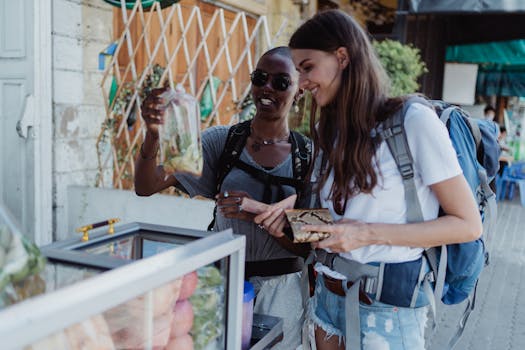
A sincere compliment can go a long way. "That looks delicious! What is it?" at a street food stall, or "Your shop is beautiful, I love [specific item]." Ask open-ended questions that invite more than a yes/no answer. People generally love talking about their passions, their city, or their culture.
4. Digital Bridges, Real-World Friendships: Leveraging Tech (the Right Way)
While the goal is real-world connection, technology can be a powerful tool to find those opportunities. It's not about hiding behind a screen, but using it as a bridge.
Local Facebook Groups & Meetup.com:
This is gold. Before you even arrive, search for groups related to your interests in your destination city.
* Examples: "Hiking Group [City Name]", "Board Games [City Name]", "Photography Walks [City Name]", "Expats & Locals [City Name]" (though focus on groups with local participation).
* My Success Story: In Medellín, Colombia, I joined a "Medellín Hiking" Facebook group. Within days, I was on a trek with a group of locals and other travelers, exploring stunning landscapes and sharing conversations in Spanglish. I made friends I still keep in touch with.
* Meetup.com: Similar to Facebook groups, but specifically designed for events. Browse by interest and join something that catches your eye.
Couchsurfing Hangouts (Beyond Accommodation):
Couchsurfing isn't just for free accommodation. Their "Hangouts" feature allows you to see who's nearby and wants to meet up for a coffee, a walk, or a meal. It's a fantastic, low-pressure way to connect with both locals and other travelers. I've had spontaneous coffee dates and evening strolls thanks to this feature.
Local Instagram/TikTok:
Follow local businesses, artists, cafes, and community pages. Engage with their posts. Sometimes, this can lead to an invite to an event or a natural conversation opener if you visit their establishment. Use local hashtags to find these accounts. For example, search #OaxacaFood or #BerlinArt to find local creators and spots.
Language Exchange Apps (Tandem, HelloTalk):
These apps connect you with native speakers who want to learn your language, and vice-versa. Many users are open to meeting in person for a coffee or a walk after connecting virtually.
* Safety Note: Always prioritize your safety. When meeting someone for the first time through an app or group, always choose a public place, let a friend or family member know your plans, and trust your gut.
5. Beyond the Transaction: Nurturing Lasting Bonds
Making an initial connection is one thing; nurturing it into a genuine friendship is another. This requires authenticity, respect, and a willingness to give as much as you receive.
Be a Giver, Not Just a Taker:
Don't view locals as tour guides or sources of free information. Offer to buy a coffee, share a story from your own culture, or offer help if appropriate (e.g., "Can I help you carry that?"). Reciprocity is key to friendship.
* Tip: If someone has gone out of their way for you, a small, thoughtful gesture – a postcard from your home country, a small gift, or simply a heartfelt "thank you" – goes a long way.
Respect & Reciprocity:
Show genuine interest in their lives, not just what they can show you. Listen more than you talk. Ask about their families, their work, their dreams. Be present. Avoid dominating the conversation with stories about your own travels unless prompted.
* My Experience: I once met a local artist in Lisbon who showed me his favorite hidden viewpoints. Instead of just taking photos, I asked him about his art, his inspirations, and his challenges. We spent hours discussing life and art, forming a connection far deeper than just a "tourist and guide" interaction.
Exchange Contact Info:
If the conversation is flowing and you feel a genuine connection, don't be shy to ask for their WhatsApp or Instagram. It's the global standard for staying in touch. A simple, "I've really enjoyed our conversation, I'd love to stay in touch!" is usually well-received.
Follow Up:
A quick "Thank you for the coffee!" or "It was great meeting you!" message the next day can solidify the connection. If you took photos together, share them! This shows you valued the interaction. I've had friends I met in Mexico City years ago suddenly message me, "Are you coming back soon?" These are the true souvenirs.
Embrace Imperfection & Avoid Tourist Faux Pas:
Language barriers are part of the fun. Don't be afraid to make mistakes; often, they lead to laughter and deeper connection. But also, be mindful of common tourist mistakes that can build walls:
* Complaining: About differences in food, service, or culture. It's their home; embrace the differences.
* Expecting English: While many people speak it, assume they don't, and appreciate it when they do.
* Aggressive Haggling: While haggling is part of some cultures, understand when it's appropriate and don't aggressively bargain for a few cents from someone trying to make a living.
* Being Entitled: You're a guest. Be polite, patient, and respectful.
The True Souvenirs
Traveling solo is an incredible journey of self-discovery, but it doesn't have to be a solitary one. The "secrets" locals don't want tourists to know aren't about exclusive access or hidden spots, but about the timeless art of human connection: genuine curiosity, respect, openness, and a willingness to step outside your comfort zone.
These aren't just tips for making friends; they're principles for richer, more meaningful travel. The friendships you forge – the shared meals, the whispered stories, the laughter in an unfamiliar tongue – will be the souvenirs you truly cherish, long after the postcards fade and the photos are archived. They are the moments that transform a trip into a profound, life-altering experience.
So, on your next solo adventure, ditch the rigid itinerary, embrace the unexpected, and open your heart to the world. The people you meet will show you a side of your destination that no guidebook ever could.
What's your favorite story of connecting with a local while traveling solo? Share your experiences and tips in the comments below! Let's inspire each other to travel deeper.
---